
Prayer
Prayer to St Jude, Patron of Hopeless Causes
The prayer to St Jude, the Apostle invoked as patron of hopeless causes — the well-known 'Most holy Apostle, St Jude' prayer, the novena, why he is invoked for the impossible, and how to pray rightly.
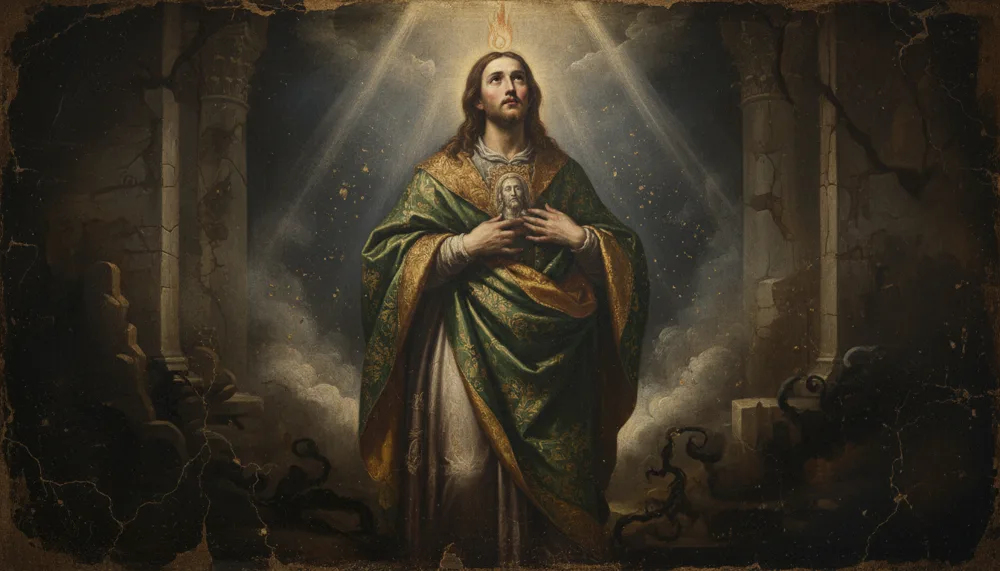
The prayer to St Jude is the petition by which the faithful place a desperate cause under the protection of the Apostle invoked by popular devotion as the patron of hopeless cases. St Jude Thaddeus, one of the Twelve, is the saint to whom we turn when every human remedy has failed. Below is the well-known St Jude prayer — "Most holy Apostle, St Jude…" — together with the novena, the reason he is invoked for the impossible, and how such a prayer is rightly used.
The prayer to St Jude
This is the St Jude prayer of the prayer-books, the form most often sought. It is a devotional composition, with no liturgical text and no approval of its own that we can cite; the Church's prayer is the collect of the feast of Ss. Simon and Jude, 28 October.
Most holy Apostle, St Jude, faithful servant and friend of Jesus, the Church honoureth and invoketh thee universally as the patron of hopeless cases, of things almost despaired of. Pray for me, who am so miserable; make use, I implore thee, of that particular privilege accorded to thee, to bring visible and speedy help where help is almost despaired of. Come to mine assistance in this great need, that I may receive the consolation and succour of Heaven in all my necessities, tribulations, and sufferings, and that I may praise God with thee and all the elect for ever. I promise thee, O blessed Jude, to be ever mindful of this great favour, and I will never cease to honour thee as my special and powerful patron, and to do all in my power to encourage devotion to thee. Amen.
A shorter invocation may be added, and is often joined to the longer prayer:
St Jude, Apostle and martyr, great in virtue and rich in miracles, near kinsman of Jesus Christ, faithful intercessor of all who invoke thee in cases despaired of, pray for us. Amen.
To the prayer of St Jude the faithful customarily add the Our Father, the Hail Mary, and the Glory Be — the prayers of every Catholic, said here for the intention confided to the Apostle.
Who St Jude is
St Jude — Judas in the older spelling, called also Thaddeus — is one of the Twelve, named in the Gospels as "the brother of James," and the author of the short canonical epistle that bears his name. We give his life more fully in St Jude, Patron of Hopeless Causes. After the dispersal of the Apostles he carried the Gospel into Mesopotamia and Persia, where, with St Simon, he laboured and at last suffered martyrdom; for this the Western Church keeps their feast together on the 28th of October, in the red of the martyrs. The manner of his death is firm tradition, the details less certain — he is commonly held to have been killed with a club; we treat the martyrdoms of the Twelve in How Did the Apostles Die?
Scripture preserves a single trace of his voice. At the Last Supper, when our Lord promised to manifest Himself to those who love Him, it was this Jude who asked how God would do so:
Judas saith to him, not the Iscariot: Lord, how is it, that thou wilt manifest thyself to us, and not to the world? Jesus answered, and said to him: If any one love me, he will keep my word, and my Father will love him, and we will come to him, and will make our abode with him. (John xiv. 22-23, Douay-Rheims)
The Apostle now invoked in the darkest straits is remembered for asking how God comes to dwell with men — and the answer he received, that the Father and the Son make Their abode in the soul that keeps Christ's word, is the only true ground of hope.
St Jude Thaddeus: the Apostle's name
The full name by which the Church most often invokes him is St Jude Thaddeus. Jude (Latin Iudas) is the name the Gospel of St Luke and the Acts give him; Thaddeus (or Lebbaeus) is the surname St Matthew and St Mark set down, used precisely to distinguish this faithful Apostle from Judas Iscariot, the traitor. The two names are joined in piety so that no confusion may remain: the St Jude Thaddeus we invoke is the kinsman and friend of Christ, never the betrayer. He is also the Jude whose name stands at the head of the canonical Epistle of St Jude. When a prayer, medal, or image bears the name "St Jude Thaddeus," it is this same Apostle of hopeless causes who is meant.
Why St Jude is the patron of hopeless causes
St Jude is honoured above all as the patron of desperate cases and of causes despaired of — the saint of last resort. The devotion rests on an old explanation that has the character of pious tradition rather than of formal definition. Because his name was so close to that of Judas Iscariot, the traitor, the faithful for long centuries were slow to invoke him, fearing confusion with the betrayer; and so, the tradition holds, this neglected Apostle became all the more ready to assist those who finally turned to him in extremity, that his patronage might be the more conspicuous.
Whatever the origin, the practice is firmly fixed in Catholic piety: when a cause seems lost — sickness, ruin, estrangement, or sin appearing beyond all remedy — the faithful place it under the protection of St Jude. His own epistle bears the same confidence, closing with a doxology to "the only God our Saviour," who is "able to preserve you without sin, and to present you spotless before the presence of his glory" (Jude 24-25, Douay-Rheims). The God who can preserve the soul when nothing else can is the God to whom the Apostle bears our petition.
How the prayer to St Jude is rightly used
A prayer to St Jude is not a charm, and the Apostle is not a worker of marvels on demand. To call him the patron of hopeless causes is not to claim that he answers every petition as we frame it, nor to make of his name a formula that compels Heaven. It is to confess that no case is hopeless to God, and to ask one of His Apostles to bear our cause before Him.
This is the constant teaching on the saints, which we set out in The Communion of Saints and Catholic Saints: that they reign with Christ and intercede for us, and that to seek their prayers is to honour, not to diminish, the one Mediator who has willed to be glorified in His members. To pray to St Jude is to ask his prayers, as we ask the prayers of a friend — not to address a rival to Christ. The same truth answers the objection raised against Catholic devotion by those outside the Church, which we treat in Are Catholics Christian? and Catholic vs Protestant.
The Christian who invokes St Jude does not abandon the ordinary means. He uses prudence and labour; he keeps the Sacraments; in serious matters he goes to confession and, in sickness, asks for the Anointing of the Sick. To the human means that cannot reach his cause he adds the intercession of an Apostle. And he prays in conformity to the will of God — asking to receive what he seeks if it be for the good of his soul, and to receive peace if it be not.
The petition that ends "that I may praise God with thee and all the elect for ever" already subordinates every earthly want to the one thing necessary, and the soul whose cause is heard is bound in justice to return a prayer of thanksgiving, as the long prayer itself promises "to be ever mindful of this great favour."
The novena to St Jude
A novena to St Jude is nine successive days of prayer for a particular intention. The custom flows naturally from his patronage of the desperate, for the soul in distress is moved to persevere. The number nine recalls the nine days the Apostles spent in prayer with the Mother of God between the Ascension and Pentecost, awaiting the promised Spirit; the novena imitates that waiting, asking the same Lord through the hands of His Apostle. It is the same form the faithful keep in the novena to St Joseph and other approved novenas, and it belongs to the same temper of trust that animates the deeper consecration to Mary of St Louis de Montfort, by which a soul places its whole cause in surer hands.
There is no single fixed text required. The faithful may repeat the prayer above on each of the nine days, joined to the Our Father, the Hail Mary, and the Glory Be, and to whatever amendment of life the petition calls for. A short daily form often used in the St Jude novena runs thus:
O glorious Apostle St Jude, faithful servant and friend of Jesus, the name of the traitor who delivered thy beloved Master into the hands of His enemies has caused thee to be forgotten by many; but the Church honoureth and invoketh thee universally as the patron of hopeless cases — of things despaired of. Pray for me, that I may receive the consolations and the succour of Heaven in all my necessities, and particularly (here name the request), and that I may bless God with thee and all the elect throughout eternity. Amen.
What the Church asks is not a formula recited as a debt to be discharged, but perseverance, humility, and conformity to the will of God. A novena said with the heart set on having one's way, come what may, is not the prayer of a Christian; a novena said in trust, ready to accept God's answer, is.
St Jude Catholic church and the shrines of the Apostle
The name of St Jude is given to many a Catholic church and parish, and his devotion has its great centres. A St Jude Catholic church is simply a parish placed under the Apostle's patronage, where his feast on 28 October is kept and where the faithful come to confide their desperate causes to his prayers. The most famous of these is the National Shrine of St Jude, long served by the Claretian Fathers, from which the modern spread of his devotion in the English-speaking world is commonly dated; in Rome his relics, with those of St Simon, are venerated beneath an altar in St Peter's Basilica.
To pray at a St Jude church or shrine adds nothing the Apostle cannot hear from any place — God is everywhere, and the saints hear us wherever we are — yet the Church has always blessed such places of pilgrimage, where the faithful are stirred to greater fervour and where the prayer of many is joined together. A votive candle lit before his image, a Mass offered on his feast, a pilgrimage made in trust: these are honest aids to devotion, ordered always to the will of God and never used as though the place itself worked the favour. The grace is from God; the Apostle bears the petition; the church is the house of prayer in which it is made.
St Jude among the saints we may invoke
St Jude takes his place among the many holy patrons the faithful invoke in their needs — St Joseph, the patron of the dying and of the universal Church; St Anthony of Padua, sought for things lost; St Benedict, whose protection the Church attaches to a blessed sacramental. The Church also gives the faithful blessed objects as aids to prayer — among them the Miraculous Medal. Whether through a patron's prayers or a sacramental, the help is real but it is never magic: it works through the prayer and faith of the Church, and is ordered always to the salvation of the soul.
The Apostle who asked our Lord how God would make His dwelling in the soul is a fitting patron for the hopeless, for the answer he received is the only ground of hope: that the Father and the Son come and abide with the one who keeps the word of Christ. To pray to St Jude is to ask that this indwelling God, to whom no cause is lost, would hear an Apostle pleading for a soul in extremity.
Frequently Asked Questions
Who is St Jude?
St Jude — Judas in the older spelling, called also Thaddeus — is one of the Twelve Apostles, named in the Gospels as "the brother of James," and the author of the short canonical epistle that bears his name. After the dispersal of the Apostles he carried the Gospel into Mesopotamia and Persia, where, with St Simon, he suffered martyrdom. He is honoured above all as the patron of hopeless causes.
Who was St Jude?
St Jude Thaddeus was one of the original twelve Apostles chosen by Our Lord, a kinsman of Jesus. Scripture preserves a single trace of his voice: at the Last Supper he asked how the Lord would manifest Himself to His own and not to the world (John xiv. 22). The Western Church keeps his feast with St Simon on 28 October, in the red of the martyrs; we give his life more fully in St Jude, Patron of Hopeless Causes.
What is St Jude the patron saint of?
St Jude is honoured above all as the patron of hopeless causes and of things almost despaired of — the saint of last resort. The devotion rests on an old tradition: because his name was so close to that of Judas Iscariot, the traitor, the faithful were long slow to invoke him, and so this neglected Apostle became all the more ready to help those who finally turned to him in extremity. To call him patron of the hopeless is to confess that no cause is hopeless to God.
How do you pray a novena to St Jude?
A novena to St Jude is nine successive days of prayer for a particular intention. There is no single fixed text required: the faithful may repeat the prayer "Most holy Apostle, St Jude" on each of the nine days, joined to the Our Father, the Hail Mary, and the Glory Be, and to whatever amendment of life the petition calls for. What the Church asks is not a formula recited as a debt but perseverance, humility, and conformity to the will of God.
What is the difference between St Jude and St Jude Thaddeus?
There is no difference: they are one and the same Apostle. Jude is the name given in St Luke and the Acts; Thaddeus (or Lebbaeus) is the surname used by St Matthew and St Mark. The two are joined as "St Jude Thaddeus" precisely to distinguish this faithful Apostle and kinsman of Christ from Judas Iscariot, the traitor. He is also the author of the Epistle of St Jude.
What is a St Jude Catholic church?
A St Jude Catholic church is a parish placed under the patronage of the Apostle, where his feast is kept on 28 October and where the faithful come to confide desperate causes to his intercession. The most famous centre of the devotion is the National Shrine of St Jude; in Rome his relics rest with those of St Simon beneath an altar in St Peter's Basilica. Praying at such a church adds nothing the Apostle cannot hear elsewhere, but the Church has always blessed places of pilgrimage where the prayer of many is joined together.
Is praying to St Jude allowed for Catholics?
Yes. To pray to St Jude is not to worship him or to address a rival to Christ, but to ask one of His Apostles to bear our cause before God, exactly as we ask the prayers of a friend. This is the constant teaching on the communion of saints: the blessed reign with Christ and intercede for us, and to seek their prayers honours, not diminishes, the one Mediator who has willed to be glorified in His members.
The Iter Fidei app carries the Douay-Rheims Bible, the catechism, and the traditional prayers and devotions — including the prayers to the saints and the form of the novena. Join early access here.
Sources. Holy Scripture, Douay-Rheims version (John xiv. 22-23; the Epistle of St Jude, vv. 24-25); the devotional prayer to St Jude as found in prayer-books; Butler, Lives of the Saints (feast of Ss. Simon and Jude, 28 October); the Roman Missal of 1962 and its calendar (Ss. Simon and Jude, feast of the second class, 28 October — ranked a "double of the second class" before the rubrics of 1960).