
Prayer
The Guardian Angel Prayer (Angel of God)
The guardian angel prayer, Angel of God, is the short prayer by which a Catholic asks his own guardian angel to light, guard, rule, and guide him. Here is the traditional text in English and the Latin Angele Dei, with what it means and when to pray it.
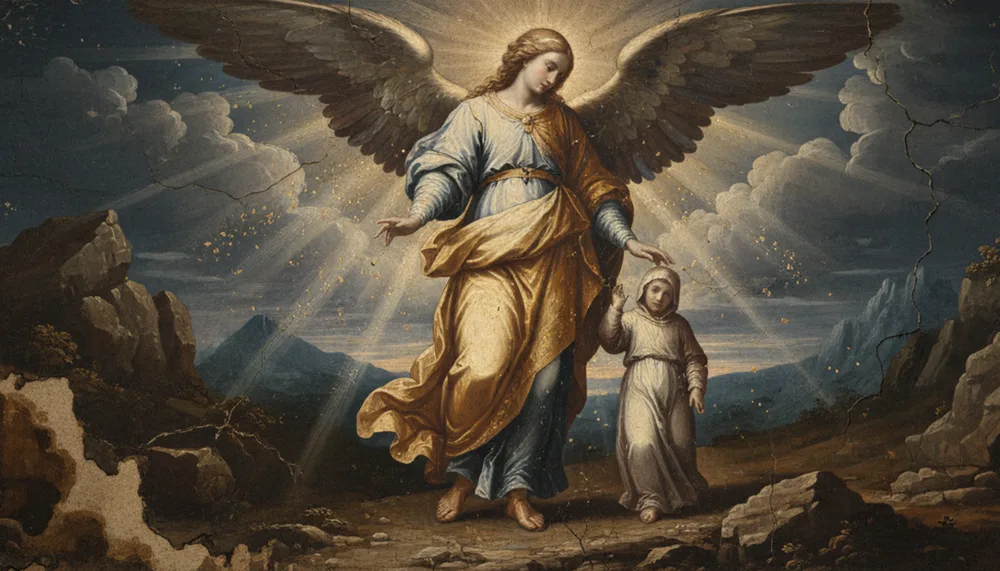
The guardian angel prayer, known from its first words as the Angel of God, is the short prayer in which a Catholic asks his own guardian angel to light, guard, rule, and guide him through the day. It rests on a settled truth of the faith — the Catholic teaching on the guardian angels: God in His providence gives to each of us an angel to keep us, and we are taught to honour that angel, to invoke his help, and to follow his inspirations. We give below the traditional text, in English and in the Latin Angele Dei.
The guardian angel prayer (English text)
Angel of God, my guardian dear,
to whom His love commits me here,
ever this day be at my side,
to light and guard, to rule and guide.
Amen.
This is the form long received in English-speaking countries, a rhymed rendering of an older prayer ascribed to the school of Saint Anselm. It is plain enough for a child to learn and exact enough to carry the whole doctrine of the angelic guardianship in four lines.
The Latin Angele Dei
The Latin original, indulgenced in the traditional manuals of devotion, runs:
Angele Dei, qui custos es mei,
me tibi commissum pietate superna,
illumina, custodi, rege et guberna.
Amen.
The English verse follows the Latin closely: illumina, custodi, rege et guberna — enlighten, guard, rule, and govern — are the four acts the prayer asks of the angel, and they are the four acts the Church assigns to the guardian angel's office.
The Angel of God prayer
Many know this prayer simply as the Angel of God prayer, and the name is exact: the prayers of the tradition are named from their opening words, as the Our Father and the Hail Mary are. The Angel of God prayer and the guardian angel prayer are therefore one and the same — the English verse given above, with the Latin Angele Dei behind it. The name is worth keeping, for it states whose the angel is before it states whose keeper he is: an angel of God, sent by Him and invoked within the worship owed to Him alone. Under whichever title it is found — in a catechism, a manual of devotion, or a child's first prayer book — the text and the doctrine are the same.
What the guardian angel prayer means
The prayer is built on a doctrine, not on sentiment. The first article of the Creed teaches that God created heaven and earth, and among His creatures the noblest are the angels — "intelligent and purely spiritual creatures," as the Catechism of Saint Pius X puts it, having "neither figure nor sensible form, because they are pure spirits." Those who remained faithful when others fell through pride were confirmed in grace and now "enjoy for ever the sight of God." God does not keep these spirits idle. He "makes use of the Angels as His ministers, and in particular He entrusts to many of them the charge of being our guardians and our protectors" (Catechism of Saint Pius X, First Article).
That each soul is given such a keeper is the ground of the prayer. The Roman Catechism, treating of the Lord's Prayer and of God's fatherly care, says plainly that "divine Providence has confided to Angels the keeping of the human race," charging them "to protect all men without ceasing, in order to preserve them from the dangers that might threaten them." It draws the comparison a parent will recognise at once: "As parents give guards and defenders to their children, when they see them undertake some difficult and perilous journey, so in this journey that we all make toward the heavenly Country, God our Father has confided us to the keeping of an Angel" (Roman Catechism, on the Our Father). The whole of life is that perilous journey, and the angel is given for it.
The four verbs of the prayer answer point for point to that office. To light — the angel enlightens the mind, suggesting good thoughts and recalling us to the truth. To guard — he wards off the snares "secretly prepared by our enemies," repelling, in the words of the Roman Catechism, "the most terrible attacks directed against us." To rule and guide — he keeps us walking "constantly in the right way," so that no "trap laid by our perfidious adversary" makes us "depart from the road that leads to heaven." We ask, in short, that the angel do for us exactly what God appointed him to do.
There is a duty owed in return. The Catechism of Saint Pius X asks whether we ought to have a particular devotion to our guardian angel and answers: yes, "to honour him, to invoke his support, to follow his inspirations, and to be grateful to him for the continual assistance which he renders us." The guardian angel prayer is the simplest way of doing all four at once — it honours him, asks his support, opens us to his inspirations, and gives thanks for his keeping.
This invocation is no breach of the worship owed to God alone. The Roman Catechism, explaining the First Commandment, distinguishes carefully: we adore God, but we may rightly invoke the angels, "both because they behold God continually, and because they take charge with joy of the care confided to them of watching over our salvation." The angel does not save us; he is sent by the One who saves, and "present to God our prayers and our tears." To ask his help is to lean on a help God Himself has provided. The Latin me tibi commissum pietate superna — "committed to thee by the love of heaven" — says it exactly: it is God's love that has placed us in the angel's care, and we are simply consenting to the arrangement.
"Angel of God, my guardian dear" — the opening line
The prayer is most often called simply by its first line, Angel of God, my guardian dear. Each word of that opening carries weight. Angel of God names whose servant the keeper is — he belongs to God and is sent by God, not summoned by us. My guardian states the office: not an angel in general, but the one assigned to me. Dear is not loose affection but the gratitude the Church teaches we owe him, "for the continual assistance which he renders us" (Catechism of Saint Pius X).
The Latin behind it, Angele Dei, qui custos es mei — "Angel of God, who art my guardian" — says the same in fewer words. To begin the prayer with these words is to acknowledge, before asking anything, both the dignity of the angel and the closeness of his charge.
Who is my guardian angel?
People rightly ask who their guardian angel is — his name, his rank, whether he was with them from birth. The Church answers plainly on what is certain and is reserved on what is hidden.
What is certain: every soul has one. The Roman Catechism teaches that "divine Providence has confided to Angels the keeping of the human race," and the Catechism of Saint Pius X states that God "entrusts to many of them the charge of being our guardians and our protectors." This guardianship is not earned and is not limited to the baptised; the angel is given for the whole "journey that we all make toward the heavenly Country."
What is hidden: the angel's own name. The Church does not reveal it, and we are not to seek it out by curiosity or private means. Only three angels are named in Scripture — Michael, Gabriel, and Raphael — and these are not anyone's private guardian but messengers of particular missions. To invent or "channel" a name for one's guardian angel, or to consult so-called angel guides, is a superstition the Church condemns; it abandons the plain doctrine for a counterfeit. We do not need the name. We know the angel by his office, and the prayer addresses him exactly as God presents him: Angel of God, my guardian dear.
The holy guardian angel and his feast
The phrase holy guardian angel points to the angel's confirmed sanctity — he is among those who, the Catechism of Saint Pius X teaches, "remained faithful" when others fell through pride, were "confirmed in grace," and now "enjoy for ever the sight of God." Because he stands in that vision of God unceasingly, he is holy, and his keeping of us is itself a holy work. The Church names this grace in the Collect of St Frances of Rome, the Roman widow who was granted to see her own angel at her side for many years.
The Church sets apart one day to give thanks for this protection: the Feast of the Holy Guardian Angels, kept on the second of October. It is the proper occasion to pray the Angel of God with deliberate gratitude, and a fitting day to teach it to children — placing it, with the household's prayer for the family, among the protections asked over those in one's care. The feast does not honour a vague benevolent force but the real, personal spirit God has appointed to each of us.
A short prayer to my guardian angel through the day
Besides the Angel of God, the tradition keeps shorter invocations a soul can breathe at any moment. One received form runs:
Holy Angel, my guardian, pray for me.
Or, when a particular need presses:
Angel of God, my guardian dear, watch over me this hour, and keep me from all sin. Amen.
The same keeping can be asked for those one loves — a wife, for instance, breathing a prayer for her husband under his guardian angel's care. These are not substitutes for the Angel of God but extensions of it — the same four acts (to light, guard, rule, and guide) asked in passing through the day. They honour the same doctrine and the same keeper, and they fall within the Church's teaching that we ought "to invoke his support" and "to follow his inspirations."
When to pray the guardian angel prayer
The Angel of God belongs first to the morning, prayed on waking among the traditional Catholic morning prayers, when the day's "difficult and perilous journey" begins and the request to "ever this day be at my side" is most literal. It is the prayer parents teach children to say before sleep, when the soul is most defenceless, and many keep that habit for life.
It is fitting at the threshold of any danger or temptation, since the angel's proper work is to "repel the most terrible attacks directed against us." And it is the prayer of the Feast of the Holy Guardian Angels, kept on the second of October, on which the Church gives public thanks for this hidden protection. Because it is so short, it can be said at any moment the road grows steep — which is its purpose.
Frequently Asked Questions
What is the guardian angel prayer?
The guardian angel prayer, known from its first words as the Angel of God, is the short prayer in which a Catholic asks his own guardian angel to "light and guard, to rule and guide" him through the day. It rests on the settled doctrine that God in His providence gives each soul an angel to keep it, as the Roman Catechism teaches: "divine Providence has confided to Angels the keeping of the human race." To pray it is to honour that angel, to ask his support, and to consent to a guardianship God's own love has already arranged.
Who is my guardian angel?
Every soul has a guardian angel — this is certain, and given to all without exception, since "divine Providence has confided to Angels the keeping of the human race" (Roman Catechism). But the Church does not reveal the angel's own name, and we are not to seek it by curiosity or private means. Only Michael, Gabriel, and Raphael are named in Scripture, and they are not anyone's private guardian. To "channel" or invent a name for one's guardian angel is a superstition; we know the angel by his office and address him as God presents him: Angel of God, my guardian dear.
What is the Catholic guardian angel prayer?
It is the Angel of God — the prayer given above in English and as the Latin Angele Dei. It is fully Catholic in its doctrine: it rests on the teaching of the Roman Catechism and the Catechism of Saint Pius X that God gives each soul an angel to keep it, and it asks of that angel only the four acts the Church assigns to his office — to enlighten, guard, rule, and govern.
Is the Angel of God prayer Catholic?
Yes. The Angel of God is the traditional Catholic guardian angel prayer: its Latin original, the Angele Dei, is the indulgenced text of the traditional manuals of devotion, and its doctrine is that of the Roman Catechism and the Catechism of Saint Pius X. Other Christians have adopted the English verse, but the prayer is Catholic in origin, in text, and in the teaching it carries — that God gives each soul an angel to enlighten, guard, rule, and govern it.
What is the Angel of God prayer in Spanish?
The traditional Spanish rendering of the Angele Dei runs: Ángel de Dios, que eres mi custodio, pues la bondad divina me ha encomendado a ti, ilumíname, guárdame, defiéndeme y gobiérname. Amén. Spanish-speaking households also keep the older children's verse, Ángel de la Guarda, dulce compañía, no me desampares ni de noche ni de día. Both ask the same keeping that the English and Latin forms ask, and either may be used.
Does praying to my guardian angel take away from worship owed to God?
No. The Roman Catechism, on the First Commandment, distinguishes carefully: we adore God alone, but we may rightly invoke the angels, "both because they behold God continually, and because they take charge with joy of the care confided to them of watching over our salvation." The angel does not save us; he is sent by the One who saves and "present to God our prayers and our tears." To ask his help is to lean on a help God Himself has provided.
When is the feast of the Holy Guardian Angels?
The Feast of the Holy Guardian Angels is kept on the second of October, the day the Church gives public thanks for this hidden protection. It is the fitting occasion to pray the Angel of God with deliberate gratitude.
The guardian angel watches whether we mark it or not; the prayer simply opens our consent to a guardianship already at work. It stands beside the great angelic prayers of the tradition — the prayer to St Michael and the longer chaplet of St Michael — and it follows naturally on the morning offering, by which the whole day is given to God before the angel is asked to guard it. To pray the Angel of God is to take seriously the communion of saints: that we do not travel alone, but under a keeper appointed by God's own love.
The Iter Fidei app serves this prayer in Latin and in your own language, with audio to pray along. Join early access here.
Sources. Catechism of the Council of Trent (Roman Catechism, 1566): on the Our Father (the Guardian Angels given to each of us; God's paternal vigilance; the four acts of protection); on the First Commandment (the lawful invocation of the angels). Catechism of Saint Pius X (1908), Part I, the First Article of the Creed, § On the Angels (the nature of the angels; God's use of them as guardians and protectors; the devotion owed to one's guardian angel). Traditional indulgenced text of the Angele Dei.