
Prayer
Catholic Litanies: What They Are and the List of Traditional Litanies
What a litany is, how it is prayed, and the full list of the great traditional Catholic litanies — of Our Lady, the Sacred Heart, St Joseph, the Holy Name, and the Saints — with texts in English and Latin.
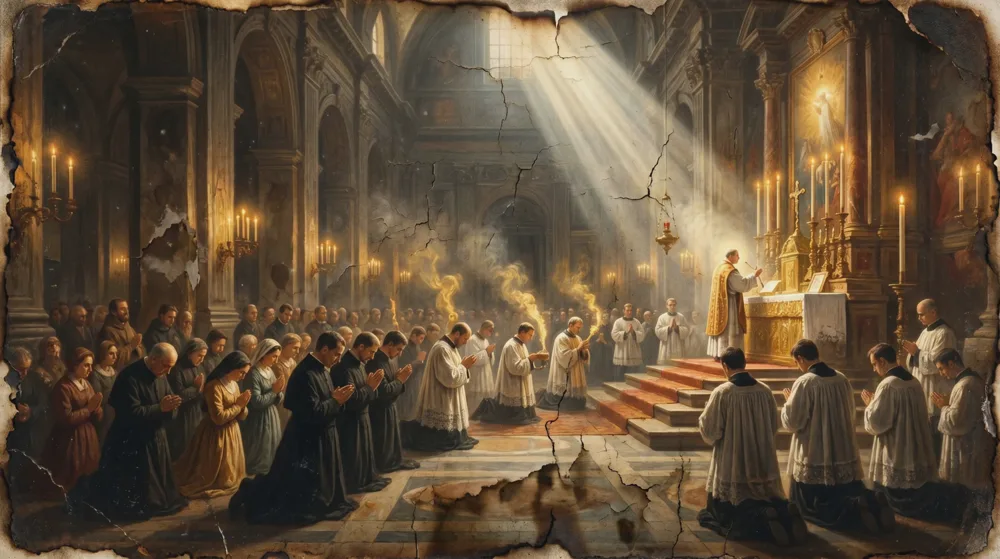
A litany is one of the oldest forms of Christian prayer: a series of short invocations, each answered by the people with a fixed response — have mercy on us, pray for us, deliver us, O Lord. The word comes from the Greek litaneia, "supplication." One voice calls; the others answer; and the prayer moves forward, title by title, petition by petition, until the whole of a mystery — the Heart of Christ, the titles of Our Lady, the communion of saints — has passed before the soul.
If you have come looking for the list of Catholic litanies and the texts to pray them, you will find them below, each linked to its own page in English and Latin. First, in two short sections, here is exactly what a litany is and how it is prayed.
What is a litany?
A litany is a call-and-response prayer. A leader pronounces an invocation; everyone answers with the response set for that litany. The form is ancient. We hear its seed in the Gospel, when the publican "struck his breast, saying: O God, be merciful to me a sinner" (Luke 18:13, Douay-Rheims) — a single cry of mercy, repeated. The Church took that one cry and multiplied it: the Kyrie eleison ("Lord, have mercy") of every Mass is the shortest litany of all, and from it the longer litanies grew.
A litany typically has three movements:
- The opening cries for mercy — Lord, have mercy. Christ, have mercy. Lord, have mercy — addressed to the Holy Trinity.
- The body of invocations — the long series of titles or petitions proper to that litany, each met by its response (pray for us, have mercy on us, deliver us, O Lord).
- The conclusion — the Agnus Dei ("Lamb of God"), a versicle and response, and a closing collect (the prayer that gathers up all the petitions).
The repetition is not idle. It gives a litany its character: the mind is carried, name by name, into a single sustained act of supplication, the way the beads of a Rosary carry the heart through the mysteries.
How to pray a litany
The pattern is always the same: invocation and response. A priest, a family head, or one member of the household says each invocation; the others answer with the response proper to that litany. You need no special book — only the text and a few minutes of quiet.
- Aloud, with others. This is the natural form. One leads, the rest answer. A family at evening prayer, a confraternity, a pilgrimage on the road — all pray litanies this way.
- Alone. You may say both parts yourself, leading and answering, exactly as you would pray a decade of the Rosary alone.
- When to pray them. Litanies are often prayed after the Rosary, during the month dedicated to a given mystery (the Sacred Heart in June, the Precious Blood in July, Our Lady in May and October), in procession, at a deathbed, or to mark a feast. The Litany of the Saints belongs to the Church's solemn liturgy and is sung at ordinations, the Easter Vigil, and the Rogation days.
For the form and discipline of public prayer more broadly, see our guide to traditional Catholic prayers and to Catholic devotions.
The list of Catholic litanies
The Roman Ritual knows five litanies for public use: of the Saints, of the Holy Name, of the Sacred Heart, of Loreto and of St Joseph; the Litany of the Precious Blood was added in 1960. The others below are litanies of private devotion, not approved for public recitation. Each has its own page, with the full text in English and Latin and audio to pray along:
- The Litany of the Blessed Virgin Mary (Litany of Loreto) — the Marian litany par excellence, approved by Sixtus V in 1587 from the usage of the holy house of Loreto; fifty titles of Our Lady, from Holy Mother of God to Queen of Peace.
- The Litany of the Sacred Heart of Jesus — approved by Leo XIII in 1899; thirty-three invocations of the Heart of Christ, prayed especially in June and on First Fridays.
- The Litany of the Holy Name of Jesus — in honour of the Name "which is above all names" (Philippians 2:9); see also the Holy Name of Jesus.
- The Litany of St Joseph — approved by St Pius X in 1909; the titles of the foster-father of Our Lord and patron of the universal Church. See our page on St Joseph.
- The Litany of the Saints — the most ancient litany of the Roman rite, calling on the angels, apostles, martyrs, and confessors by name.
- The Litany of the Holy Ghost — to the Third Person of the Blessed Trinity, the Giver of the seven gifts (private devotion).
- The Litany of Humility — the prayer for the hardest of the virtues attributed to Cardinal Merry del Val (private devotion).
- The Litany of Our Lady of Sorrows — to the Mother of Sorrows beneath the Cross (private devotion, composed under Pius VII).
- The Litany of the Immaculate Heart of Mary — the titles of the Heart of the Mother (private devotion).
- The Litany of the Poor Souls in Purgatory — for the suffering Church, prayed especially in November (private devotion).
The Litany of the Precious Blood, approved by John XXIII in 1960 for July, draws on the same well; you may also pray the Precious Blood Chaplet. And while All Saints have always been honoured in the Litany of the Saints, the feast itself is treated in our page on All Saints' Day.
A note on the Divine Mercy and other modern litanies
Not every prayer called a "litany" belongs to the tradition the Church has always held. The Litany of Divine Mercy and the Divine Mercy Chaplet arose from private revelations of the twentieth century and were promoted only in our own day; they are not among the litanies approved for public liturgical use in the period we hold to. We mention them because readers ask — but our own practice rests on the older, approved litanies listed above, which the Church gave for the prayer of all the faithful and which generations of Catholics have prayed without interruption. When in doubt, hold to the litanies the Church indulgenced and prescribed in the tradition, in their traditional form. They are sufficient, and they are sure.
Frequently Asked Questions
What is a litany in the Catholic Church?
A litany is a form of prayer made of short invocations, each followed by a fixed response said by all present — for example pray for us or have mercy on us. It is a call-and-response prayer, sustained over many titles or petitions, that draws the soul into one extended act of supplication. The word comes from the Greek litaneia, "supplication."
What are the litany prayers approved by the Church?
The principal traditional litanies approved for public use are the Litany of Loreto (of the Blessed Virgin Mary), of the Sacred Heart of Jesus, of the Holy Name of Jesus, of St Joseph, and of the Saints. There are also litanies of private devotion — of the Holy Ghost, of Our Lady of Sorrows, of the Immaculate Heart, and others — not approved for public recitation. Each has its own page on this site with the text in English and Latin.
How do you pray a litany?
One person leads, pronouncing each invocation; everyone else answers with the response set for that litany. Prayed alone, you say both parts yourself. A litany opens with the cries for mercy (Lord, have mercy), runs through its body of invocations, and ends with the Agnus Dei, a versicle, and a closing collect. Litanies are often prayed after the Rosary or during the month of a given devotion.
When are litanies prayed?
By custom, litanies are joined to the devotion of the month: the Sacred Heart in June, the Precious Blood in July, the Holy Name in January, the Poor Souls in November, and Our Lady in May and October. The Litany of the Saints is sung in the solemn liturgy — at the Easter Vigil, ordinations, and the Rogation days. The first of these processions, the Greater Litanies, falls on 25 April, the feast of St Mark the Evangelist.
Is the Litany of Divine Mercy a traditional Catholic litany?
No. The Litany and Chaplet of Divine Mercy come from private revelations of the twentieth century and were spread only recently. They are not among the litanies approved for public use in the tradition we keep. We hold instead to the older litanies — Loreto, the Sacred Heart, St Joseph, the Holy Name, the Saints — given by the Church for the prayer of all the faithful in the traditional discipline.
(Iter Fidei serves each of these litanies in full — in Latin and your own language, with audio to pray along — in the app.) Join early access here.
Sources. The litanies of the Roman Ritual (typical edition, Pustet 1925, Tit. X) and the Litany of the Precious Blood (1960); the litanies of private devotion as found in prayer-books; the Roman liturgical books; Sacred Scripture in the Douay-Rheims version.