
Apologetics
Catholicism and Judaism: The Old Covenant and the New
Catholic vs Jewish on the central question: the Catholic Church confesses Jesus as the promised Messiah, in whom the Old Covenant is fulfilled and the Church becomes the new Israel. The honest, charitable difference.
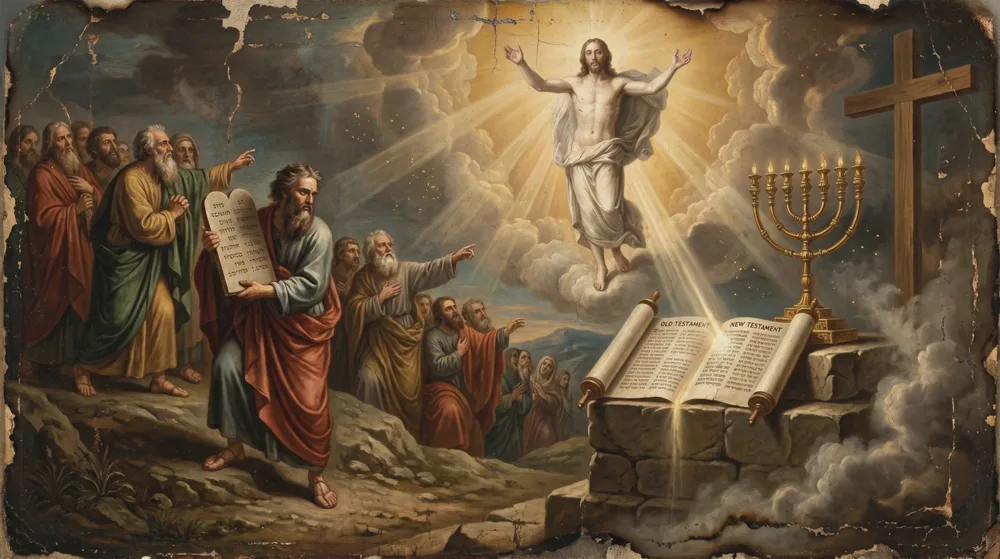
The decisive difference between Catholic and Jewish belief is Jesus of Nazareth. Catholicism confesses Him as the Messiah promised to Israel, in whom the Old Covenant is fulfilled and the New begun; Judaism still awaits a Messiah and denies that Jesus is He. On that one question — has the Promised One already come — Catholicism and Judaism divide, and from it every other difference follows.
We say this without contempt. The Jew is a creature made by God, heir of the patriarchs and prophets through whom the Promise was first given, and the Catholic owes him the truth in charity, never insult. But charity does not consent to the loss of a soul out of fear of giving offence. To pretend that catholic vs jewish is a quarrel over details — that "we all worship the God of Abraham anyway" — is not respect but a refusal of what the Church has always held.
Catholic vs Jewish: the one root, the one parting
The relation between catholicism and judaism is unlike that of any two other religions, because they are not strangers: they share the one Promise. The Catholic does not reject the Old Testament; he receives it whole, as the inspired word of God and the long preparation for Christ. The God of Abraham, Isaac, and Jacob is the God the Catholic adores at every Mass.
So the difference between catholic and jewish is not that one keeps the God of Israel and the other does not. Both confess one Creator who made a covenant with Abraham; the parting comes at a single name. The Catechism of the Council of Trent traces that Promise from its first announcement after the Fall — God's word to the serpent, "I will put enmities between thee and the woman, between thy seed and hers" — through its renewal to Abraham and to Jacob, "to preserve the memory of this promise" (Trent, I, Symbol, on Jesus Christ). The Catholic claim is simply that the Promise has been kept; the Jewish claim is that it has not yet.
Jesus Christ: the promised Messiah of Israel
The word Christ is not a surname. The Catechism of the Council of Trent states it exactly: "Unto the name of Jesus hath been added that of Christ, which signifieth anointed… in antiquity our fathers called Christs the priests and the kings" (Trent, I, Symbol, on Jesus Christ). To confess Jesus Christ is to confess Jesus the Anointed One — the Messiah for whom Israel waited.
On what ground does the Church make this claim? Not on assertion, but on the prophecies fulfilled. The Catechism of St. Pius X answers it: "We know that Jesus Christ is truly the Messias and the promised Redeemer, because in Him was accomplished all that the prophets announced and all that the figures of the Old Testament represented" (Pius X, Catechism, I, ch. 3). The prophecies had fixed in advance the tribe and family from which He would come, the place and time of His birth, the circumstances of His passion and death, and His resurrection. The patriarchs believed in this Messiah as still to come; the Apostles preached Him as already come — one faith, one Promise, divided only by the distance of time.
Here the divergence is total. For the Catholic, the Old Testament is a book that has found its term; for Judaism, it is a book still open, awaiting a Messiah who has not appeared. The whole question of catholic vs judaism rests here: whether Jesus answers what the prophets foretold.
The Old Covenant fulfilled, not abolished
The Catholic position is not that the Old Covenant was a mistake, nor that it is simply cancelled. It is fulfilled — brought to its appointed end. The Old Law was given as a tutor and a figure, pointing beyond itself; its sacrifices, its priesthood, its paschal lamb were images of the one Sacrifice to come.
The Catechism of St. Pius X names these figures of the Redeemer: "the innocent Abel, the high priest Melchisedech, the sacrifice of Isaac, Joseph sold by his brethren, the prophet Jonas, the paschal lamb, and the brazen serpent raised up by Moses in the desert" (Pius X, Catechism, I, ch. 3). A figure is fulfilled when the reality it foreshadowed arrives: the Lamb of the Passover prefigured the Lamb of God; Melchisedech, priest and king who offered bread and wine, prefigured the eternal Priest of the Mass.
When the reality came, the figure had done its work. The blood of bulls and goats could not take away sin; it announced the Blood that could. So the Council of Trent teaches that Christ "by His most holy Passion upon the wood of the Cross merited justification for us" (Trent, sess. VI, ch. 7) — the one true sacrifice the old had foretold. The mystery by which God became man to accomplish this is the heart of the Faith, treated in the Incarnation; without it the figures would point to nothing. This is why the Catholic Faith reverences the Old Covenant yet holds that it is no longer the way of salvation.
The Church as the new Israel
If the Messiah has come, then the people of God is no longer bounded by descent from Abraham according to the flesh, but gathered from all nations into His Church. The Catechism of the Council of Trent marks the change of names: the faithful under the Law of Moses were called the synagogue, "that is to say flock"; the people of Christ are called not synagogue but church, assembly or convocation, "because it despises earthly and perishable things, to attach itself only to the heavenly goods which pass not away" (Trent, I, Symbol, on the Church). The Church is therefore "the inheritance of God and the people of God" — the new Israel, founded not on blood but on faith and Baptism.
The cornerstone of this one people is Christ, "who of the two peoples made but one, and who announced Peace to those who were afar off" (Trent, I, Symbol, on the Church). The Promise made to one nation is opened to all. This is what the Church means when she calls herself Catholic — universal — and what the Faith intends by the people of God, set out more fully in what Catholics believe.
The same God? — the honest answer
The most common irenic formula runs: "You worship the God of Abraham, we worship the God of Abraham; at bottom it is the same religion." This will not hold, and the kindness that offers it is a false kindness. The God of Abraham revealed Himself fully in the Son He sent; to refuse the Son is to refuse the Father's own revelation. "He that honoureth not the Son, honoureth not the Father who hath sent him" (Jn 5, 23). A worship that stops short of the Son is not the completed worship of the same God, but the worship of the God of the Promise without the Promise kept. Judaism is not alone in this: the wider question of whether other religions believe in Jesus shows how differently each confesses or denies Him.
This is why the Church holds, with St. Cyprian, that there is no salvation outside the Church — Extra Ecclesiam nulla salus — and that all "who desire to obtain their eternal Salvation must attach themselves to her, and enter into her bosom, as formerly it was necessary to enter into the ark" (Trent, I, Symbol, on the Church). This is no verdict on any soul: God alone judges the hidden dispositions of those in invincible ignorance. But it forbids the pretence that the Old Covenant remains a parallel road to God now that the New has been opened in Christ's Blood. To erase that frontier in the name of an indistinct brotherhood is to deprive the Church of her mission, which is to proclaim the one Messiah, already come, to all nations.
Charity in the truth
The right Catholic posture is fixed by St. Paul, himself a Hebrew of the Hebrews, who wrote of his own people that "to them belong the adoption, and the covenants, and the law, and the promises; whose are the fathers, and of whom is Christ according to the flesh" (Rom 9, 4-5). He loved them and longed for them to receive their own Messiah. That is the model: love of the Jewish people as the kin of Christ after the flesh, and clarity that the Promise given to them is kept, not annulled, in Him. We love the person and refuse the error. The Jew who comes to confess Jesus as the Christ does not abandon Israel but enters its fulfilment.
Frequently Asked Questions
What is the main difference between Catholicism and Judaism?
The decisive difference is Jesus of Nazareth. Catholicism confesses Him as the Messiah promised to Israel, in whom the Old Covenant is fulfilled and the New begun; Judaism still awaits a Messiah and denies that Jesus is He. On that one question — has the Promised One already come — the two divide, and from it every other difference follows.
Do Catholics and Jews worship the same God?
Both confess one Creator who made a covenant with Abraham, and the Catholic receives the Old Testament whole as the inspired word of God. But the God of Abraham revealed Himself fully in the Son He sent, and He that honoureth not the Son, honoureth not the Father who hath sent him (Jn 5, 23). A worship that stops short of the Son is not the completed worship of the same God.
Did the Church abolish the Old Covenant?
No. The Catholic position is not that the Old Covenant was a mistake nor that it is simply cancelled, but that it is fulfilled — brought to its appointed end. The Old Law was a tutor and a figure; its sacrifices, priesthood, and paschal lamb were images of the one Sacrifice to come. When the reality came in Christ, the figure had done its work.
Why does the Church call herself the new Israel?
If the Messiah has come, the people of God is no longer bounded by descent from Abraham according to the flesh, but gathered from all nations into His Church. The Catechism of Trent marks the change: the faithful under Moses were called the synagogue; the people of Christ are called church, founded not on blood but on faith and Baptism, with Christ as cornerstone.
How should Catholics regard the Jewish people?
With the charity St Paul showed his own people, of whom he wrote that "to them belong the adoption, and the covenants, and the law, and the promises... and of whom is Christ according to the flesh" (Rom 9, 4-5). We love the Jewish people as the kin of Christ after the flesh and hold plainly that the Promise given to them is kept, not annulled, in Him.
The difference between catholicism and judaism is not a misunderstanding to be smoothed away, but the difference between confessing that the Messiah has come and awaiting one still. We state it plainly, and we leave the judgment of souls to God, who alone reads the heart.
The Iter Fidei app carries the Catholic Faith — the prayers, the catechism, and the traditional liturgy — to live it and to defend it. Get the app link by email here.
Sources. Holy Bible (Douay-Rheims): Jn 5, 23; Rom 9, 4-5. Catechism of the Council of Trent (1566), Part I, Symbol (the article on Jesus Christ; the article on the Church). Catechism of St. Pius X (1908), Part I, ch. 3 (the Messias and the figures of the Old Testament). Council of Trent, Decree on Justification (sess. VI, ch. 7). St. Cyprian of Carthage, Extra Ecclesiam nulla salus.