
Apologetics
Was Jesus Married? The Truth About Mary Magdalene
No — Jesus Christ was never married. Scripture and the whole of tradition are unanimous. He is the Bridegroom of the Church, and Mary Magdalen was His devoted disciple and the first witness of the Resurrection, not His wife.
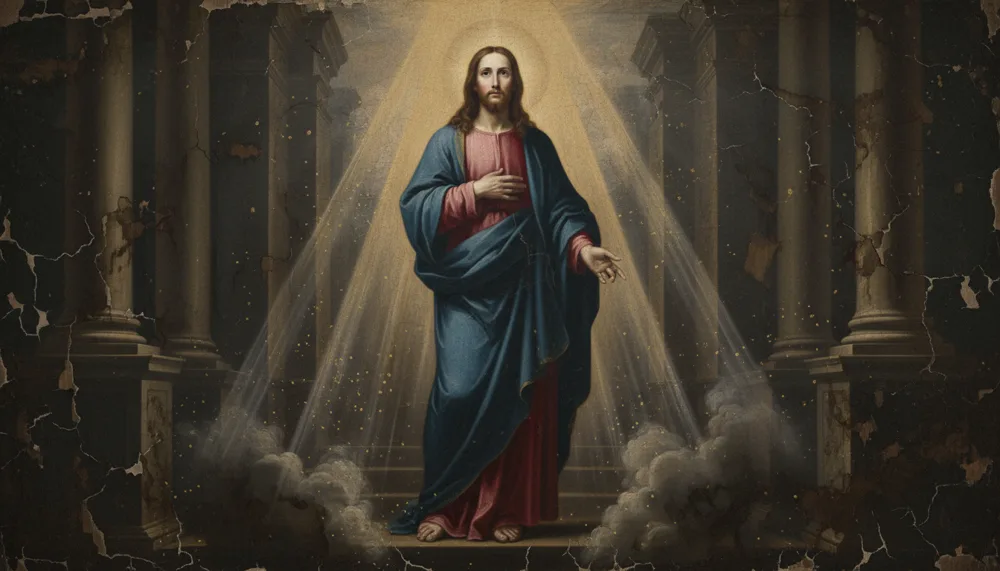
No — Jesus Christ was never married, and there is not a single line of Scripture or of the Church's tradition that says otherwise. He took no wife, and Mary Magdalen was not His spouse. The claim that He married her, or anyone, has no foundation in the four Gospels, in the Apostles, in the Fathers, or in any council of the Church. It is a modern invention, built on a novel and on a handful of late forgeries, and it collapses the moment the actual evidence is examined. Christ consecrated Himself wholly to the work the Father gave Him, and the only nuptial bond Scripture grants Him is with the whole Church, of which He is the Bridegroom.
Was Jesus married to Mary Magdalene?
He was not. The notion that Jesus was married to Mary Magdalene entered popular imagination through fiction, chiefly a best-selling novel of the modern era, and it has been repeated until it sounds like an open question. It is not. No Gospel, no epistle, no early creed, and no Father of the Church ever names a wife of Christ. The Evangelists record His mother, His foster-father, His kinsmen, His Apostles, and the holy women who followed Him — and never once a spouse. An argument built entirely on silence, against the unbroken testimony of those who knew Him, is no argument at all.
Mary Magdalen appears in the Gospels precisely, and her place is honourable beyond almost any other. Saint Luke names her among the women who followed and supported the Lord: Mary who is called Magdalen, out of whom seven devils were gone forth (Luke 8:2). She stood by the Cross when most of the Apostles had fled, and she came to the tomb in the dark of the first day. The Gospels show her as a healed sinner turned faithful disciple — not as a wife. To make her the bride of Christ is to demote her from the dignity Scripture actually gives her, which we set out in our study of Mary Magdalen.
Did Jesus have a wife?
He did not, and His celibacy was not an accident of circumstance but the form of His whole mission. To understand this we must first understand who He is. He is not merely a holy teacher but the eternal Son made flesh, as we explain in who is Jesus Christ, and the doctrine of the Incarnation tells us why He came: to redeem mankind by His Cross. From when He was born of the Virgin to His death — and we have set out how old He was when He died — His every act is ordered to that single end. A man wholly given to such a work, and knowing it would end on a cross, does not divide himself.
Christ Himself praised the celibate life freely chosen for the kingdom of heaven: there are eunuchs, who have made themselves eunuchs for the kingdom of heaven. He that can take, let him take it (Matthew 19:12). He honoured marriage — He worked His first miracle at a wedding at Cana, and He raised marriage to a sacrament — yet He embraced for Himself the higher consecration He commended to others. The same Lord whose very name means "God saves", and whose holy Name the Church adores, gave Himself undivided to the salvation of souls.
He is the Bridegroom of the Church
Scripture does speak of Christ as a bridegroom — but never of a human wife. His bride is the Church, and this is not poetry loosely applied; it is the consistent language of the New Testament. Saint John the Baptist names Him so plainly: He that hath the bride, is the bridegroom (John 3:29). Saint Paul makes the bond the very pattern of Christian marriage:
Husbands, love your wives, as Christ also loved the church, and delivered himself up for it. (Ephesians 5:25)
And the last book of Scripture shows the consummation of that union at the end of the world: the marriage of the Lamb is come, and his wife hath prepared herself (Apocalypse 19:7), the wife being the holy city, the new Jerusalem, coming down out of heaven from God, prepared as a bride adorned for her husband (Apocalypse 21:2). The Bridegroom of Scripture weds not one woman but a whole redeemed people.
The Roman Catechism teaches the same. Explaining the article on the Church, it applies to Christ the Apostle's words: I have espoused you, says the Apostle to the Corinthians, to one Husband, Jesus Christ, that I may present you as a chaste virgin to Him. It calls Christ the sole Spouse of the Church, who needs no other, and it names the Church His one dove, one and beautiful. To imagine Christ taking an earthly wife is therefore not only unscriptural; it contradicts the very mystery Scripture and the Catechism set forth — the spousal union of Christ and His Bride, the Church. What the Catholic Church is, in the deepest sense, is the Bride of the Lamb.
Where the myth comes from: novels and lost gospels
If the claim has no root in Scripture or tradition, where does it come from? From two sources, and both fail. The first is modern fiction. The "married Jesus" of the popular novel is a literary device, not a finding; the author invented a secret bloodline and dressed it as suppressed history. It is a story, and a story proves nothing about the first century.
The second source is the so-called "lost gospels" — Gnostic writings such as the Gospel of Philip and the Gospel of Mary, composed long after the Apostles, in the second century and later. These are not lost books of the Bible; they are forgeries that the Church discerned and rejected from the beginning, precisely because they teach a different Christ. The text most often cited speaks of Christ loving Mary Magdalen "more than the other disciples" and is fragmentary, with the decisive words physically missing from the manuscript. To read "wife" into a hole in a third-century Gnostic papyrus, and set it against the four Gospels written within living memory of the events, is to abandon evidence for invention. A later scrap of papyrus advertised as a "gospel of Jesus' wife" was, on examination, exposed as a modern fake.
These texts cannot bear the weight placed on them. They are late, they are sectarian, and they were never received by the Church. Set beside the Gospels of Matthew, Mark, Luke, and John — the books the Church has always held as the word of God, which we treasure among the Catholic Bible verses — they have no standing. The Church's verdict on them is not censorship but discernment: she knows her Lord, and she did not recognise Him in their pages.
Mary Magdalen: the first witness of the Resurrection
Far from being the wife of Christ, Mary Magdalen holds a glory the myth obscures: she was the first to see the risen Lord. She came to the tomb while it was yet dark, found the stone rolled away, and wept — until the Lord spoke her name. Jesus saith to her: Mary. She turning, saith to him: Rabboni (which is to say, Master) (John 20:16). He then sent her to announce His rising to the Apostles, so that the Fathers honoured her with the title "apostle to the Apostles."
This is who Mary Magdalen truly is — not a bride, but the foremost herald of the Resurrection, the first human voice to proclaim that the tomb was empty and the Lord alive. To trade that dignity for a fictional marriage is no honour to her; it is a loss. She loved Christ as His disciple, stood by His Passion, and was rewarded with the first sight of His glory. That is the truth the Gospels guard, and it is far greater than any legend.
We say all this without rancour toward those who have been misled — the novels are persuasive and the headlines loud. But charity does not mean agreement; it means telling the truth plainly. Jesus Christ was not married. He is the Bridegroom of the Church, He gave Himself undivided to our redemption, and Mary Magdalen was the faithful disciple who first beheld Him risen. The Scriptures say nothing else, and neither do we.
Frequently Asked Questions
Was Jesus Christ married?
No. Jesus Christ was never married, and there is not a single line of Scripture or of the Church's tradition that says otherwise. The Evangelists name His mother, His foster-father, His kinsmen, His Apostles, and the holy women who followed Him — but never a wife. He gave Himself wholly and undivided to the redemption of mankind by His Cross.
Was Jesus married to Mary Magdalene?
He was not. No Gospel, no epistle, no early creed, and no Father of the Church ever names Mary Magdalen, or anyone, as the wife of Christ. Saint Luke records her as one out of whom seven devils were gone forth (Luke 8:2) and as a faithful disciple — a healed sinner who followed the Lord, not His spouse.
Did Jesus have a wife?
No. His celibacy was not an accident but the very form of His mission. He praised the celibate life chosen for the kingdom of heaven (Matthew 19:12), and though He honoured marriage and raised it to a sacrament, He embraced for Himself the higher consecration He commended to others.
Who is the bride of Christ?
Scripture calls Christ a bridegroom — but His bride is the Church, not a human wife. Saint John the Baptist names Him so (John 3:29), Saint Paul makes the bond the pattern of Christian marriage (Ephesians 5:25), and the Apocalypse shows the marriage of the Lamb (Apocalypse 19:7). The Roman Catechism calls Christ the sole Spouse of the Church.
Where did the idea that Jesus was married come from?
From two sources, both without standing. The first is modern fiction — chiefly a best-selling novel that invented a secret bloodline. The second is the Gnostic "lost gospels," such as the Gospel of Philip and Gospel of Mary, composed in the second century and later, forgeries the Church rejected from the beginning.
Who was Mary Magdalene to Jesus?
She was His devoted disciple and the first witness of the Resurrection — not His wife. She stood by the Cross when the Apostles fled, came to the tomb in the dark, and was the first to see the risen Lord, who spoke her name: Mary (John 20:16). For this the Fathers honoured her as "apostle to the Apostles."
The Iter Fidei app carries the Douay-Rheims Bible, the catechism, and the prayers of the Church. Get the app link by email here.
Sources. The Holy Bible, Douay-Rheims version (Luke 8:2; Matthew 19:12; John 3:29, 20:16; Ephesians 5:25; Apocalypse 19:7, 21:2). Catechism of the Council of Trent (Roman Catechism, 1566), Part I, Chapter X — "On the Ninth Article of the Creed: I Believe in the Holy Catholic Church, the Communion of Saints," on Christ as the sole Spouse of the Church. The apocryphal Gnostic writings (the so-called Gospel of Philip and Gospel of Mary) are second-century and later compositions, never received by the Church.