
Apologetics
How Did the Apostles Die? The Martyrdom of the Twelve
Eleven of the Twelve Apostles died as martyrs rather than deny the Resurrection; only Saint John died of old age. Here is how each Apostle died, with the traditional accounts and what is firm history versus pious legend.
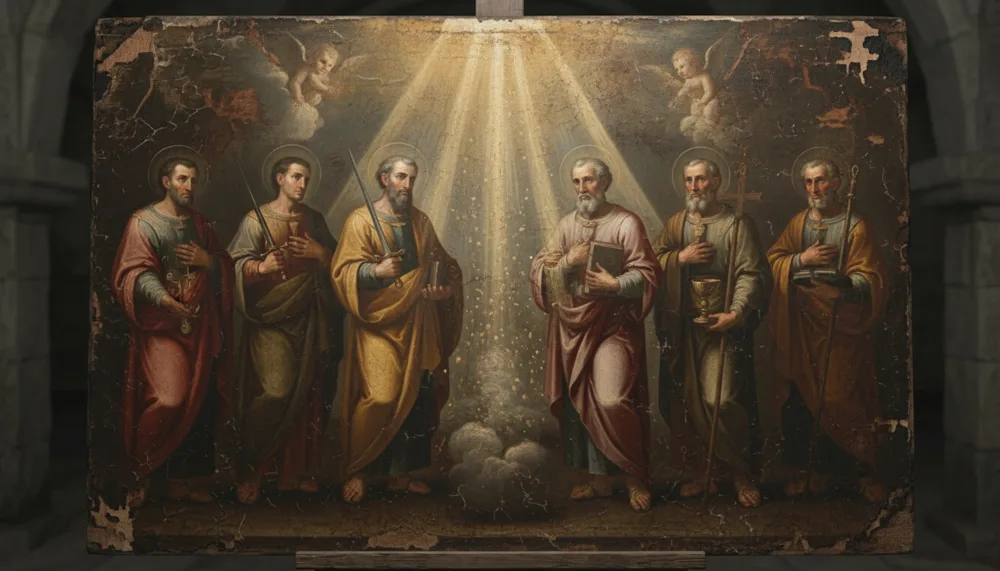
Of the Twelve Apostles, eleven died as martyrs and only one, Saint John, died a natural death in old age — and this is the heart of the oldest argument for the Resurrection: men do not die for what they know to be a lie. The Apostles had seen the risen Christ, eaten with Him, touched Him; they could not have been deceived about it, and could have saved their lives by recanting. Instead Peter was crucified, Paul beheaded, Andrew nailed to a cross, James the Greater put to the sword, and so on through the list. Below is how each Apostle died, in the accounts the Church has handed down, with a plain distinction kept between firm tradition and pious legend.
How each of the 12 Apostles died: a quick reference
For those who want the list at a glance, here is how each of the Twelve died, with Saint Paul added because the question almost always means the apostolic band as a whole. The fuller account of each follows below.
| Apostle | How he died | Place | Standing |
|---|---|---|---|
| Peter | Crucified head-downward | Rome (c. 64–67) | Firm, earliest witnesses |
| Paul | Beheaded by the sword | Rome (c. 64–67) | Firm, earliest witnesses |
| Andrew | Crucified (X-cross by later tradition) | Patras, Achaia | Firm martyrdom; cross-shape later |
| James the Greater | Beheaded by Herod Agrippa | Jerusalem (c. 44) | Bedrock — in Scripture (Acts 12:2) |
| John | Natural death in old age | Ephesus (c. AD 100) | Firm — the sole exception |
| Thomas | Run through with a spear | Mylapore, India | Strong, early eastern tradition |
| Bartholomew | Flayed alive, then beheaded | Armenia | Firm martyrdom; manner by tradition |
| Philip | Crucified or hanged | Hierapolis, Phrygia | Martyrdom held; manner varies |
| Matthew | Slain by the sword | Ethiopia or Persia | Martyrdom general; place varies |
| James the Less | Cast from the Temple, clubbed | Jerusalem (c. 62) | Well attested (Hegesippus) |
| Simon the Zealot | Sawn in two (by later legend) | Persia | Martyrdom held; manner legendary |
| Jude Thaddeus | Killed with a club or axe | Persia | Martyrdom firm; manner less certain |
| Matthias | Stoned or axed | Varies | Martyrdom held; manner varies |
So of the apostolic company, only Saint John was not put to death. The others — the eleven who remained after Judas, with Matthias chosen to fill the gap and Paul added as the Apostle to the Gentiles — all died violent deaths for their witness. The rest of this article gives each death in turn, and keeps a plain line between what is firm history and what is pious legend.
The apologetic: men do not die for a lie
The force is not that the Apostles died for a belief — many men die sincerely for beliefs that are false. The force is that these men were witnesses (that is what the Greek word martyr means) to a fact they claimed to have seen with their own eyes. They were not converts who received a doctrine on someone's word; they were the source. If the Resurrection were a story they had invented, every one of them knew it was invented, and yet not one bought his life by saying so.
Saint Paul stakes the whole faith on the bodily rising of Christ:
And if Christ be not risen again, then is our preaching vain, and your faith is also vain. (1 Corinthians 15:14, Douay-Rheims)
The Roman Catechism of the Council of Trent presses the same point: the Resurrection is the one Article which Scripture does not merely propose but labours to prove, because everything rests on it. The Apostles' deaths are the seal on that testimony, which is why their martyrdoms are evidence for what happened after Jesus rose from the dead and for the Resurrection appearances of Jesus.
How did Saint Peter die?
Saint Peter, the prince of the Apostles, was crucified in Rome under the persecution of Nero, around the year 64 to 67. The ancient and constant tradition — attested by Origen as preserved in Eusebius — is that he asked to be crucified head downward, judging himself unworthy to die in the same posture as his Master. His martyrdom in Rome is among the best-attested of all.
To Peter the Lord had said the words on which the Church is built:
Thou art Peter; and upon this rock I will build my church, and the gates of hell shall not prevail against it. (Matthew 16:18, Douay-Rheims)
The Roman Catechism teaches that this visible headship passed to "the lawful successor of Saint Peter on the see of Rome," which is why his death in that city matters for what the Catholic Church is. We treat his office more fully in Thou Art Peter and Saint Peter.
How did Saint Paul die?
Saint Paul, the Apostle to the Gentiles, was beheaded at Rome, also under Nero, in the same persecution that took Peter. As a Roman citizen he was spared crucifixion and put to the sword instead, traditionally on the road to Ostia. His martyrdom is firmly held by the earliest witnesses. We treat his conversion and labours separately in Saint Paul.
How did Saint Andrew die?
Saint Andrew, the brother of Peter, preached in Greece and was crucified at Patras in Achaia. The tradition that he died on an X-shaped cross — the crux decussata, now called the Saint Andrew's cross — is ancient and widely held, though the detail of the cross's shape comes from later accounts rather than the earliest sources. That he was crucified at Patras is the firm tradition.
How did Saint James the Greater die?
Saint James the Greater is the only Apostle whose death is recorded in Scripture. He was beheaded by Herod Agrippa in Jerusalem, about the year 44, making him the first of the Twelve to be martyred:
And he killed James, the brother of John, with the sword. (Acts 12:2, Douay-Rheims)
This is bedrock history, set down in the inspired text itself — one of the surest Catholic Bible verses on the witness of the Apostles.
How did Saint Thomas die?
Saint Thomas — the same who would not believe until he touched the wounds, and then confessed My Lord and my God — carried the Gospel east, by firm tradition as far as India. He is held to have been martyred near Mylapore, run through with a spear or lance. The Saint Thomas Christians of India have venerated him as their founder from antiquity. The eastern mission and his death rest on strong and early tradition, though the circumstances are less fully documented than the deaths at Rome.
How did Saint Bartholomew die?
Saint Bartholomew, commonly identified with Nathanael, preached in Armenia and other eastern lands. The tradition is that he was flayed alive and then beheaded — which is why Christian art shows him holding his own skin. The place and exact manner vary in the sources, so the flaying is firm tradition rather than documented fact, but his martyrdom in the East is constantly held.
How did Saint Philip die?
Saint Philip preached in Phrygia and is traditionally held to have been martyred at Hierapolis, by crucifixion or by being hung. The accounts differ, and several rest on later sources, so we report the martyrdom as the tradition gives it.
How did Saint Matthew die?
Saint Matthew, the tax-collector who wrote the first Gospel, preached after Pentecost — by tradition in Ethiopia or Persia — and is held to have died a martyr, by the sword. The early tradition that he was martyred is general; the place and manner are given variously in later accounts. Those who would honour the evangelist may make a novena to St Matthew.
How did Saint James the Less die?
Saint James the Less, called the brother of the Lord and first bishop of Jerusalem, was martyred there around the year 62. The tradition, preserved by Hegesippus through Eusebius, is that he was cast down from the pinnacle of the Temple and then beaten to death with a fuller's club. His martyrdom at Jerusalem is well attested in the early sources.
How did Saint Simon die?
Saint Simon, called the Zealot or the Canaanite, preached in the East — Persia by one tradition — and is generally held to have been martyred. The common account that he was sawn in two is widely repeated, but the place and manner are uncertain and rest on later legend more than firm record.
How did Saint Jude Thaddeus die?
Saint Jude Thaddeus, who wrote the Epistle that bears his name, is often paired with Simon and held to have been martyred with him, frequently said to have been killed with a club or an axe. Here too the martyrdom is firm tradition and the manner less certain. We give his life more fully in Saint Jude.
How did Saint Matthias die?
Saint Matthias was chosen by lot to take the place of Judas Iscariot — and the lot fell upon Matthias, and he was numbered with the eleven apostles (Acts 1:26, Douay-Rheims). The traditions of his death vary; he is generally held to have been martyred, by stoning or by the axe. Those who honour the apostle chosen to complete the Twelve may keep the novena to St Matthias the Apostle.
Saint John: the one who was not slain
Saint John, the beloved disciple, is the single exception: he died a natural death, in old age, at Ephesus, about the end of the first century. He alone of the Twelve was not put to death — yet the early Church (Tertullian among the witnesses) hands down that he too was given to martyrdom and delivered: that at Rome he was cast into a cauldron of boiling oil and came out unharmed, after which he was exiled to Patmos, where he received the Apocalypse. So even John, who outlived all the rest, was spared by a deliverance, not by a recantation.
Firm tradition and pious legend
Honesty requires the distinction. Some of these deaths are bedrock: James the Greater's beheading is in Scripture itself; the martyrdoms of Peter and Paul at Rome under Nero are attested by the earliest witnesses; James the Less at Jerusalem and John's old age at Ephesus are well grounded. Others — the X-cross of Andrew, the flaying of Bartholomew, the sawing of Simon, the precise places and instruments for several of the rest — come down in later or varying accounts, and we report them as the tradition gives them, not as documented certainties. What does not waver is the central fact: eleven of the Twelve died violent deaths for their witness, and not one recanted to save his life.
Why their deaths still matter
The Apostles' refusal to deny what they had seen belongs to a wider body of evidence: the relics of the Passion such as the True Cross, the silent witness of the Shroud of Turin and its disputed carbon dating, the Sudarium of Oviedo, and the Eucharistic miracles — from Lanciano to Buenos Aires — by which the Lord still confirms the Real Presence the Apostles first proclaimed.
The same Christ they died witnessing is the One the Church receives in the Eucharist by transubstantiation, adored on Corpus Christi and offered in the Mass handed down to us as the Tridentine Mass. They gave their bodies to be killed for the truth of the Incarnation, the Passion, and the rising of Christ: men who could not be mistaken, who would not lie, and who paid for the truth with their blood.
Frequently Asked Questions
How did the apostles die?
Eleven of the Twelve died as martyrs, and only Saint John died a natural death in old age. Peter was crucified and Paul beheaded at Rome under Nero; Andrew was crucified at Patras, James the Greater beheaded at Jerusalem, Thomas speared in India, Bartholomew flayed, and the rest put to death in the East. Not one bought his life by denying that he had seen the risen Christ.
How did all the apostles die?
Of the Twelve, only Saint John was not slain; the other eleven were killed for their witness to Christ. Their deaths varied — crucifixion, the sword, the spear, the flaying-knife, the club — but the pattern is one: each could have saved his life by recanting, and none did. Men do not give their bodies to such deaths for what they know to be a lie.
How did the 12 apostles die?
The Church hands down that eleven Apostles were martyred and Saint John alone died in old age at Ephesus, though even he was given to martyrdom and delivered from a cauldron of boiling oil. Some deaths are bedrock — James the Greater in Scripture, Peter and Paul at Rome — while others, such as Andrew's X-cross or Bartholomew's flaying, come down in later accounts that we report as tradition gives them. What never wavers is that they sealed their witness to Christ with their blood.
How did the twelve apostles die?
Peter was crucified head-downward at Rome and Paul beheaded there under Nero; Andrew crucified at Patras; James the Greater beheaded at Jerusalem; Thomas speared in India; Bartholomew flayed; James the Less cast from the Temple and clubbed; Philip, Matthew, Simon, Jude Thaddeus, and Matthias all martyred in the East by sword, saw, club, or stone as tradition records. Saint John alone died a natural death in old age at Ephesus.
How did each of the apostles die?
Each Apostle's death is given above in turn, with a plain line kept between firm tradition and pious legend. The martyrdoms of Peter and Paul at Rome, James the Greater at Jerusalem, James the Less at Jerusalem, and John's old age at Ephesus are well grounded; details such as Andrew's X-cross, Bartholomew's flaying, and Simon's being sawn in two come down in later accounts. The constant fact is that eleven died violent deaths for their witness and one was spared.
How did Jesus' apostles die according to the Bible?
Scripture records the death of only one Apostle directly: James the Greater, beheaded by Herod Agrippa — And he killed James, the brother of John, with the sword (Acts 12:2, Douay-Rheims). The deaths of the others are not written in the inspired text but handed down by the early Church through witnesses such as Eusebius, Origen, Hegesippus, and Tertullian. The Bible gives us the first martyrdom and the witness of the rest; tradition supplies the manner of their deaths.
Why did the apostles die horrible deaths?
They died because they would not deny what they had seen with their own eyes — the Resurrection of the Lord — and the world hated that witness, as Christ foretold: If the world hate you, know ye, that it hath hated me before you (John 15:18, Douay-Rheims). Their deaths were not punishments but the seal of their testimony; each could have saved his life by recanting, and none did. Men do not give their bodies to crucifixion, the sword, or the flaying-knife for what they know to be a lie.
The Iter Fidei app carries the Douay-Rheims Bible, the catechism, and the prayers of the Church. Get the app link by email here.
Sources. Holy Bible, Douay-Rheims (Matthew 16:18; Acts 1:26; 12:2; 1 Corinthians 15:14). Catechism of the Council of Trent (Roman Catechism, 1566), Article XI on the Resurrection of the body and the chapter on the Church and the see of Peter. Early witnesses to the martyrdoms as preserved in the ancient tradition (Eusebius, Ecclesiastical History, citing Origen and Hegesippus; Tertullian on Saint John).