
The Faith
What Is Sanctifying Grace?
Sanctifying grace is the supernatural life of the soul — a gift infused by God that makes us just, His adopted children, and heirs of heaven. It is received in Baptism, lost by mortal sin, and restored in Confession.
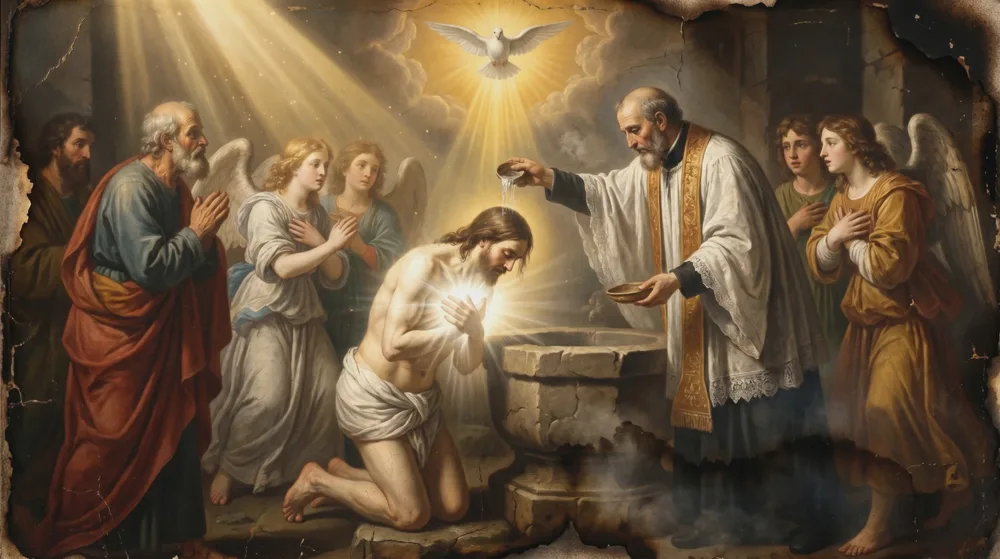
Sanctifying grace is the supernatural life of the soul: a gift that God infuses into us and that makes us just, His adopted children, and heirs of heaven. The Catechism of Saint Pius X defines it as "a supernatural gift inherent in our soul, which makes us just, adopted children of God, and heirs of heaven." It is received in Baptism, lost by mortal sin, and given back in the sacrament of Penance. This article explains what sanctifying grace is, how it is received, lost, and restored, and how it differs from actual grace.
Sanctifying grace — definition (in brief). Sanctifying grace is a permanent, supernatural gift infused by God into the soul that makes the soul just, an adopted child of God, and an heir of heaven. It is a real participation in the divine life. Its meaning is captured in one image of the Fathers: as the soul is the life of the body, so sanctifying grace is the life of the soul.
What is sanctifying grace?
Grace in general is "a supernatural interior gift, which is given to us without any merit on our part, but through the merits of Jesus Christ, in view of life everlasting." The word supernatural is exact: this gift lies wholly above what our nature, however well it acts, could reach by its own strength. The Catechism is blunt about that limit: "Without the help of the grace of God, by our own strength alone, we can do nothing for life everlasting."
Sanctifying grace is one of the two great divisions of grace, the other being actual grace. It is also called habitual grace, because it abides in the soul as a steady, permanent gift rather than a passing help. What it does is described in three words: it makes us just — right with God — His adopted children, and heirs of heaven. The theologians call this a real participation in the very life of God. As Tanquerey states it, the supernatural life is "a participation in the divine life, conferred by the Holy Spirit dwelling within us, by virtue of the merits of Jesus Christ." Sanctifying grace does not make us God by nature; it gives us, in his own words, "something of His life" — a true share in what belongs to God alone.
This is why the Church calls grace the life of the soul. Saint Augustine's image, carried in Tanquerey, fixes the order: as the soul is the life of the body, so God is the life of the soul. A soul in sanctifying grace is alive with the life of God; a soul without it is, in the strict sense, dead.
First grace and second grace
The Catechism distinguishes two kinds of sanctifying grace. First grace "is that by which man passes from the state of mortal sin to the state of justice" — the moment a soul that was dead is brought to life. Second grace "is an increase of the first grace." Grace, then, is not a fixed quantity received once and never touched again: it can grow. The sacraments of the living — Confirmation, the Eucharist, Extreme Unction, Holy Orders, and Matrimony — are given precisely to increase the grace already in the soul.
What sanctifying grace does to the soul
The meaning of sanctifying grace is best grasped by what it works in us. Scripture gives the boldest description: through these gifts we are made "partakers of the divine nature" (2 Peter 1:4). Tanquerey, following the schoolmen, sets out four effects that flow together from the one gift. It makes the soul just, blotting out sin and turning an enemy of God into His friend. It makes the soul beautiful, for grace is the splendour by which the soul becomes pleasing in God's sight.
It makes the soul a true adopted child of God, so that we may rightly call Him Father and are made co-heirs with Christ. And it makes the soul a temple of the Holy Ghost, who comes to dwell within the just as in His own house: "Know you not that you are the temple of God, and that the Spirit of God dwelleth in you?" (1 Corinthians 3:16).
With sanctifying grace, God does not stand outside the soul as a benefactor at a distance; He lives within it. This indwelling is why the life of grace is the seed and beginning of the life of glory: heaven is the same grace come to its full flower. The further gifts of the Holy Ghost are given alongside it to perfect the soul's openness to His movements, as we explain in our article on the gifts of the Holy Ghost.
How sanctifying grace is received: Baptism
Sanctifying grace enters the soul for the first time in Baptism. The Catechism teaches that "Baptism is the sacrament by which we are born again to the grace of God and become Christians," and lists its effects without hedging: it "confers the first sanctifying grace, which blots out original sin, and also actual sin if there be any," remits all punishment due for those sins, "imprints the character of Christian, makes us children of God, members of the Church, and heirs of heaven."
The Roman Catechism of the Council of Trent says the same in the language of justice and divine sonship: Baptism "fills our soul with that divine Grace which makes us just, and makes us children of God, heirs of eternal salvation." This is why the Church urges that children be brought to be baptised as soon as possible: Baptism is the ordinary gate by which the life of grace first enters a soul. We treat the sacrament more fully in our article on Catholic Baptism.
How sanctifying grace is lost: mortal sin
What Baptism gives, one sin can take away. Sanctifying grace is lost by a single mortal sin. The Catechism defines mortal sin as "a disobedience to the divine law by which one gravely fails in one's duties towards God, towards one's neighbour, and towards oneself," and explains the name itself by what it does to grace: "It is called mortal because it gives death to the soul by making it lose sanctifying grace, which is the life of the soul, as the soul is the life of the body."
The harm is total. Mortal sin "deprives the soul of grace and of the friendship of God," makes it lose heaven, strips it of the merits already acquired, and makes it a slave of the devil. For a sin to be mortal three things are required together: grave matter, full knowledge that one is sinning, and deliberate consent. Where any one of these is absent, the sin is not mortal; the distinction matters, and we set it out in our article on mortal and venial sin. But where all three are present, the life of the soul is gone, and the soul that dies in that state is lost.
The state of grace, and how it is restored: Confession
To be in the state of grace simply means to possess sanctifying grace in the soul — to be alive with the life of God and reckoned among his friends. It is the state in which a soul must be to receive the sacraments of the living worthily, and to die in the state of grace is to be saved. To receive one of those sacraments knowingly without it — for instance, to receive the Eucharist conscious of unconfessed mortal sin — is, the Catechism warns, "a grave sacrilege."
When the state of grace is lost by mortal sin, God has provided the way back. The Catechism names two sacraments that confer the first sanctifying grace and so raise a dead soul to life: Baptism and Penance. These are called the sacraments of the dead, "because they are established principally to restore to souls dead by sin the life of grace." For the baptised who fall afterward, Penance is the appointed remedy: "the sacrament instituted by Jesus Christ to remit the sins committed after Baptism."
Christ gave this power to his Apostles on the day of his Resurrection, breathing on them: "Receive ye the Holy Ghost: whose sins you shall forgive, they are forgiven them." Through the priest's absolution, the grace lost by mortal sin is given back and the soul is restored to friendship with God. We explain the practice step by step in our guide on how to go to Confession.
Sanctifying grace vs actual grace
It remains to distinguish sanctifying grace from actual grace, since the two are easily confused. The Catechism divides grace into exactly these two: "sanctifying grace, which is also called habitual, and actual grace."
The difference is one of permanence and purpose. Sanctifying grace is a state — a gift that abides in the soul, makes it just, and constitutes its supernatural life. Actual grace is a help — a passing motion. The Catechism defines it as "a supernatural gift which enlightens our mind, and moves and strengthens our will, that we may do good and avoid evil." It comes in the moment of need, and it does not destroy our freedom, for "we can resist the grace of God."
The two work together. Actual grace moves; sanctifying grace abides. A soul in mortal sin still receives actual graces — the inward promptings to turn back — but it has lost sanctifying grace until it is restored. To weigh sanctifying vs actual grace is therefore not to choose between them but to see their order: the one calls and assists, the other gives life.
How to grow in sanctifying grace and keep it
Because sanctifying grace can increase, the Christian life is, at bottom, the work of growing in it and guarding it. The ordinary means are not secret. The chief of them are the sacraments of the living, which were instituted to add grace to the soul that already lives: above all frequent and worthy reception of the Holy Eucharist and regular Confession, which both restores grace when it is lost and increases it when it is kept. Prayer draws down the actual graces by which the will is moved to good; good works done in the state of grace are meritorious and increase grace in turn. The Catechism's order is exact: grace is increased "by the worthy reception of the sacraments and by good works."
Keeping sanctifying grace is, negatively, the avoidance of mortal sin, which alone destroys it, and the resisting of venial sin, which does not destroy it but weakens our fervour and disposes us toward graver falls. The traditional counsel is the daily examination of conscience, prompt recourse to Confession, and the steady practice of the virtues. The whole of this effort is the subject of the spiritual combat — the lifelong labour of guarding the life of God in the soul.
Conclusion
Sanctifying grace is the life of the soul — God's own life shared with us. It is first given in Baptism, it is forfeited by mortal sin, and it is restored in Confession; actual grace is the help by which God moves us along that path. To live in the state of grace, and to die in it, is the whole of what the Church asks of a soul.
Frequently Asked Questions
What is sanctifying grace?
Sanctifying grace is the supernatural life of the soul: a gift God infuses into us that makes us just, His adopted children, and heirs of heaven. The Catechism of Saint Pius X defines it as "a supernatural gift inherent in our soul, which makes us just, adopted children of God, and heirs of heaven." It is a real participation in the very life of God, abiding in the soul as a steady, permanent gift.
What is the definition of sanctifying grace?
The Catechism of Saint Pius X gives the classic definition: sanctifying grace is "a supernatural gift inherent in our soul, which makes us just, adopted children of God, and heirs of heaven." In plain terms, it is a permanent, supernatural gift that God infuses into the soul, raising it to a real participation in the divine life. It is distinguished from actual grace, which is a passing help rather than an abiding state.
What is the meaning of sanctifying grace?
The meaning of sanctifying grace is found in what it works in the soul. It makes the soul just (right with God), beautiful in His sight, a true adopted child of God, and a temple of the Holy Ghost who dwells within it. Scripture says that by such gifts we are made "partakers of the divine nature" (2 Peter 1:4). The Fathers sum up its meaning in one image: as the soul is the life of the body, so sanctifying grace is the life of the soul.
What is sanctifying grace in the Catholic Church?
In Catholic teaching, sanctifying grace is one of the two great divisions of grace, the other being actual grace. It is also called habitual grace because it remains in the soul rather than passing, and the Church calls it the life of the soul: as the soul is the life of the body, so God, through this grace, is the life of the soul. A soul in sanctifying grace is alive with the life of God; a soul without it is, in the strict sense, dead.
How is sanctifying grace received?
Sanctifying grace first enters the soul in Baptism. The Catechism teaches that Baptism "confers the first sanctifying grace, which blots out original sin," makes us children of God, members of the Church, and heirs of heaven. It is afterward increased through the sacraments of the living — Confirmation, the Eucharist, Extreme Unction, Holy Orders, and Matrimony.
How is sanctifying grace lost?
Sanctifying grace is lost by a single mortal sin. The Catechism explains that sin is called mortal "because it gives death to the soul by making it lose sanctifying grace, which is the life of the soul." For a sin to be mortal, three things must be present together: grave matter, full knowledge that one is sinning, and deliberate consent.
How is sanctifying grace restored?
When sanctifying grace is lost by mortal sin, it is restored in the sacrament of Penance. Christ gave this power to His Apostles on the day of His Resurrection, saying, "Whose sins you shall forgive, they are forgiven them." Through the priest's absolution, the grace lost is given back and the soul is restored to friendship with God.
What is the difference between sanctifying grace and actual grace?
The difference is one of permanence and purpose. Sanctifying grace is a state that abides in the soul, makes it just, and constitutes its supernatural life; actual grace is a passing help that "enlightens our mind, and moves and strengthens our will, that we may do good and avoid evil." The two work together: actual grace moves and calls, while sanctifying grace gives life.
What does it mean to be in a state of grace?
To be in the state of grace simply means to possess sanctifying grace in the soul — to be alive with the life of God and reckoned among His friends. It is the state a soul must be in to receive the sacraments of the living worthily, and to die in the state of grace is to be saved.
How do you grow in sanctifying grace?
Sanctifying grace can increase, and the Catechism teaches that it is increased "by the worthy reception of the sacraments and by good works." The chief means are frequent and worthy Communion, regular Confession, prayer, and good works done in the state of grace, which are meritorious and add grace to the soul. Keeping grace means avoiding mortal sin, which alone destroys it, and resisting venial sin, which weakens our fervour.
The Iter Fidei app carries the prayers, devotions, and a guide to the spiritual life — free to take and download. Get the app link by email here.
Sources. Catechism of Saint Pius X, Part IV (The Sacraments in General — on grace, its division, sanctifying and actual grace, the sacraments of the dead and of the living; Baptism — nature and effects; Penance — its institution); Part V (Sins and Their Principal Kinds — mortal sin and its harm). Catechism of the Council of Trent (Roman Catechism), on Baptism (the grace that makes us just and children of God). A. Tanquerey, The Spiritual Life (the supernatural life as a participation in the divine life; the effects of sanctifying grace in the soul). Scripture cited per the Douay-Rheims (John 20; 2 Peter 1; 1 Corinthians 3).