
The Faith
The Seven Heavenly Virtues (Against the Capital Sins)
The seven heavenly virtues opposed to the capital sins (humility, liberality, chastity, patience, abstinence, brotherly love, diligence), the seven principal virtues (three theological, four cardinal), and how the two lists came to be confused.
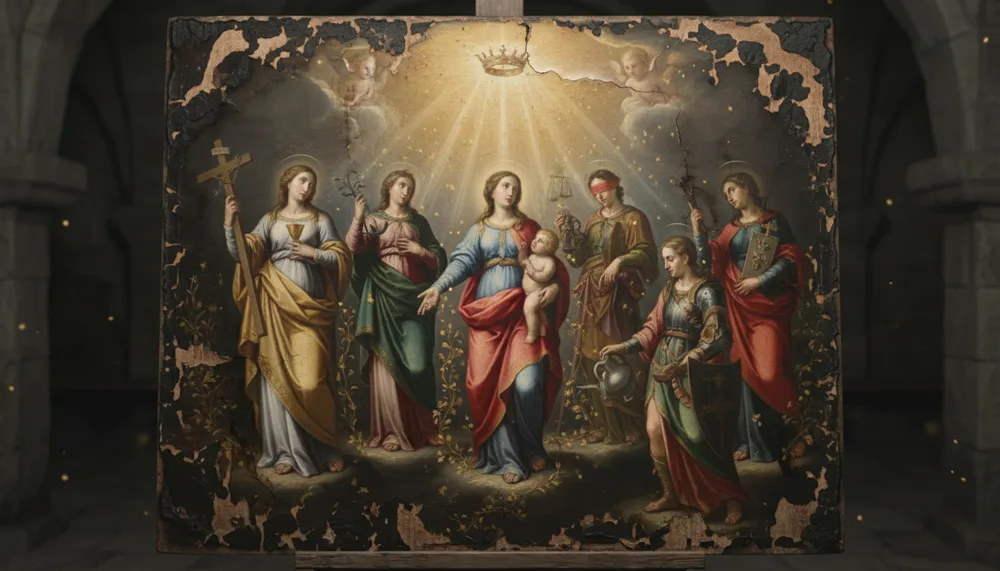
The phrase "seven heavenly virtues" is used today for two different lists. The first is the seven contrary virtues opposed to the seven capital sins: humility against pride, liberality against covetousness, chastity against lust, patience against anger, abstinence against gluttony, brotherly love against envy, and diligence against sloth. The second is the seven principal virtues of the Catechism: the three theological virtues, faith, hope, and charity, and the four cardinal virtues, prudence, justice, fortitude, and temperance. "Heavenly virtues" is not the Catechism's own term for either list, and many popular lists blend the two. This page sets out both accurately, shows where they meet, and serves as the starting point for our articles on the cardinal virtues, the theological virtues, and the seven deadly sins.
The seven heavenly virtues against the capital sins
The capital sins are called capital because they are the source and the cause of many other vices and sins. They are pride, covetousness, lust, anger, gluttony, envy, and sloth. Against each of these the Catechism of St. Pius X sets a contrary virtue, and it tells us plainly how the battle is won: "The capital vices are conquered by the exercise of the opposite virtues."
This is the practical key to the whole question of virtues and vices. A vice is a bad habit contracted by the frequent repetition of evil acts; it is uprooted by forming the contrary habit. We do not conquer pride by attacking pride, but by humbling ourselves; we do not conquer anger by force of will alone, but by practising patience. The seven heavenly virtues are simply these seven contrary virtues, each one the medicine for its sin.
Humility against pride
Pride is the disordered love of our own excellence, and it is named first because it is the root from which the others draw their life. Its remedy is humility, by which we acknowledge that all we have is from God and refuse to set ourselves above our neighbour. Where pride seeks to be preferred, humility consents to be lowered.
Liberality against covetousness
Covetousness, or avarice, is the inordinate love of possessing. Liberality is the contrary virtue, by which we hold temporal goods with an open hand — giving where there is need rather than hoarding. The liberal man uses what he has for the good of others and for the service of God, and so is not enslaved by what he owns.
Chastity against lust
Lust is the disordered desire of carnal pleasure. Chastity is the virtue that orders this appetite according to one's state of life and submits the body to the soul and the soul to God. It is the contrary virtue that frees the heart for love rightly placed.
Patience against anger
Anger is the inordinate desire of revenge or the disordered movement against what displeases us. The Catechism of St. Pius X names patience as the virtue by which we triumph over anger — the patience that bears injury and contradiction without bitterness. This is the same virtue often called meekness, by which we keep peace within and refuse to be ruled by resentment.
Abstinence against gluttony
Gluttony is the inordinate love of food and drink. Its contrary virtue is abstinence, by which we use these goods with moderation and do not make our appetite our master. Abstinence is one application of the wider cardinal virtue of temperance, which curbs the inordinate desires of sensible pleasures.
Brotherly love against envy
Envy is sadness at the good of our neighbour, as though his good were our loss. The contrary virtue is brotherly love, by which we rejoice in another's good as if it were our own. Where envy divides, charity toward our neighbour heals; it is one of the fruits of the love we owe every man for the love of God.
Diligence against sloth
Sloth is a sluggishness of soul that recoils from the labour of serving God. Against it stands diligence and fervour in the service of God — the readiness to do good promptly and without weariness. This last of the seven heavenly virtues quietly sustains all the others, for every virtue costs effort, and the slothful soul abandons the field.
The seven deadly sins and the seven heavenly virtues, side by side
It is easiest to hold the teaching when the seven deadly sins and the seven heavenly virtues are set in a single table, each sin facing the contrary virtue that overcomes it. The pairing itself is not a modern invention: it is the teaching of the Catechism of St. Pius X, which lists the capital vices and then names the virtue by which each is conquered. What is modern is the label "heavenly virtues" for this list, and its frequent confusion with the theological and cardinal virtues, as explained below.
| Capital sin (deadly sin) | Contrary heavenly virtue |
|---|---|
| Pride | Humility |
| Covetousness (avarice) | Liberality |
| Lust | Chastity |
| Anger | Patience (meekness) |
| Gluttony | Abstinence |
| Envy | Brotherly love |
| Sloth | Diligence |
Read across each row and the remedy is plain. The list of sins tells us where the soul is wounded; the list of virtues tells us the medicine.
Seven deadly sins vs seven heavenly virtues: how the two lists relate
It is common to ask how the seven deadly sins compare to the seven heavenly virtues, as though they were two rival teams. In truth they are not equals set against each other. A vice is a bad habit; the contrary virtue is a good habit that drives it out, as light drives out darkness in the same room. The deadly sins are called capital because each is the head and source of many other sins; the heavenly virtues are called contrary because each is aimed precisely at the sin it answers.
So the right way to put it is not "deadly sins versus heavenly virtues" as a contest of strength, but deadly sins healed by heavenly virtues. We do not weigh pride against humility to see which wins; we replace pride with humility. The Catechism of St. Pius X is explicit that "the capital vices are conquered by the exercise of the opposite virtues": the virtue is the cure, not merely the opponent. For the full account of the vices themselves, see our companion article on the seven deadly sins.
The seven principal supernatural virtues
Beyond these seven contrary virtues, the Church numbers seven principal supernatural virtues. A supernatural virtue, the Catechism of St. Pius X teaches, is "a quality infused by God into the soul by which the latter acquires inclination, facility, and promptness to know good and do it towards eternal life." And "the principal supernatural virtues are seven: three theological, and four cardinal virtues." They have a strong claim to be called heavenly, for God Himself pours them into the soul when He adorns it with sanctifying grace — as He does at Baptism, when the soul is enriched with these virtues together with the gifts of the Holy Ghost.
These seven are not won by our effort but received as a gift. Yet for one who has the use of reason it is not enough merely to have received them; it is necessary to make acts of them often.
The three theological virtues: faith, hope, charity
The theological virtues are faith, hope, and charity. They are called theological because they have God for their immediate and principal object, and because it is He who puts them in us.
By faith we believe in God and all that He has revealed and proposes to us through His Church, relying on the authority of God Himself, who can neither deceive nor be deceived. By hope we desire and await life everlasting, which God has promised to His servants, together with the helps necessary to obtain it. By charity we love God for His own sake above all things, and our neighbour as ourselves for the love of God.
Charity is the greatest of the three, for it loves God as the sovereign good; one loses it by every mortal sin, and recovers it by acts of the love of God, by repentance, and by confessing as one ought. Each of the three, with its definition and the traditional Acts of Faith, Hope, and Love, is treated in our article on the theological virtues.
The four cardinal virtues: prudence, justice, fortitude, temperance
The cardinal virtues are prudence, justice, fortitude, and temperance. They are called cardinal from the Latin cardo, a hinge, because they are the hinge and the foundation of all the moral virtues — the other virtues turn upon them.
Prudence directs every action toward its legitimate end and chooses the suitable means, so that what we do is done well and is pleasing to the Lord. Justice renders to each one that which is due to him. Fortitude makes us courageous to the point of fearing no danger, not even death, for the service of God. Temperance curbs the inordinate desires of sensible pleasures and uses temporal goods with moderation. Under temperance fall the abstinence and chastity by which we conquer gluttony and lust, so that the cardinal virtues and the seven contrary virtues are not two unrelated lists but one ordered life. The parts of each cardinal virtue and the vices contrary to it, according to Saint Thomas Aquinas, are set out in our guide to the four cardinal virtues.
Two lists, one confusion: where the "seven heavenly virtues" come from
The two lists have different histories, and it helps to keep them apart.
The seven principal virtues come from Scripture and the doctrine of the Church. St Paul names faith, hope, and charity together (1 Corinthians 13:13), and the Book of Wisdom names temperance, prudence, justice, and fortitude in a single verse (Wisdom 8:7). Saint Thomas Aquinas built his whole moral theology on these seven (Summa Theologiae I-II, qq. 61–62), and the Catechism of St. Pius X counts them as "the principal supernatural virtues."
The contrary virtues come from the spiritual combat against the vices. Around the year 400 the Christian poet Prudentius wrote the Psychomachia, "the battle for the soul," in which virtues fight vices in single combat: Faith against the worship of the old gods, Chastity against Lust, Patience against Wrath, Humility against Pride, Sobriety against Indulgence, Good Works against Greed, and Concord against Discord. His seven do not yet match the later list of capital sins, nor the theological and cardinal virtues. Once Saint Gregory the Great had fixed the list of capital sins, spiritual writers paired each with its remedy, and that remedial list is what the Catechism of St. Pius X teaches.
The modern conflation consists in mixing the two: popular lists take some names from the contrary virtues (chastity, patience, humility) and some from the cardinal and theological virtues (temperance, charity), and call the result "the seven heavenly virtues." Neither the Catechism nor Saint Thomas gives such a list. The accurate statement is this: there are seven principal virtues (three theological, four cardinal), and there are seven contrary virtues against the seven capital sins, most of which are parts of a cardinal virtue. Humility, chastity, and abstinence belong to temperance; liberality is annexed to justice; patience belongs to fortitude; brotherly love and the fervour that overcomes sloth belong to charity.
How virtues and vices stand against each other
The whole teaching may be held in one image: the soul is a field, and grace plants in it seven heavenly virtues, while disordered self-love plants seven capital vices. The contest between virtues and vices is decided not by feeling but by acts repeated until they become habit. This is why the saints insist on practising the contrary virtue: every act of humility weakens pride, every act of patience starves anger, every act of liberality loosens the grip of avarice.
To know which virtue answers which sin is therefore the beginning of real reform. A good examination of conscience looks not only at the capital sins we have fallen into, but at the contrary virtue we are called to put in their place. The vices tell us where we are wounded; the heavenly virtues tell us the remedy.
Frequently Asked Questions
What are the seven heavenly virtues?
They are the virtues opposed to the seven capital sins: humility against pride, liberality against covetousness, chastity against lust, patience against anger, abstinence against gluttony, brotherly love against envy, and diligence against sloth. The Church teaches that we triumph over the capital vices by the exercise of the opposite virtue.
What are the seven deadly sins and the seven heavenly virtues paired together?
Each deadly sin is answered by one contrary virtue: pride by humility, covetousness by liberality, lust by chastity, anger by patience, gluttony by abstinence, envy by brotherly love, and sloth by diligence. The seven deadly sins name the wounds; the seven heavenly virtues name the remedies.
Seven deadly sins vs seven heavenly virtues — which conquers which?
They are not rivals of equal weight but disease and cure. Humility conquers pride, liberality conquers covetousness, chastity conquers lust, patience conquers anger, abstinence conquers gluttony, brotherly love conquers envy, and diligence conquers sloth. The virtue does not merely oppose the sin; by repeated acts it forms the contrary habit and drives the vice out.
How do the heavenly virtues conquer the capital sins?
Not by attacking the sin head-on, but by forming the contrary habit. The Catechism of St. Pius X says plainly: "One triumphs over the capital vices by the exercise of the opposite virtues." We do not conquer pride by fighting pride, but by humbling ourselves; not anger by force of will, but by practising patience.
Are the seven heavenly virtues the same as the theological and cardinal virtues?
Not exactly. The phrase is used for two lists: the seven contrary virtues against the capital sins, and the seven principal virtues (faith, hope, charity, prudence, justice, fortitude, temperance). Popular lists often mix names from both. The Catechism of St. Pius X teaches both lists, but under their proper names, and keeps them distinct.
What is the difference between the contrary virtues and the theological and cardinal virtues?
The seven contrary virtues are remedies for the capital sins and grow by repeated acts. The seven principal supernatural virtues, the three theological (faith, hope, charity) and four cardinal (prudence, justice, fortitude, temperance), are infused by God into the soul with sanctifying grace, as at Baptism; the cardinal virtues can also be acquired by practice. Most contrary virtues are parts of a cardinal virtue: humility, chastity, and abstinence of temperance, liberality of justice, patience of fortitude.
Why is charity called the greatest of the virtues?
Because it loves God as the sovereign good, for His own sake above all things, and our neighbour for the love of God. It alone reaches into eternity, where faith gives way to sight and hope to possession. One loses charity by mortal sin and recovers it by acts of the love of God, repentance, and confessing as one ought.
Are the seven heavenly virtues only for saints or for every Christian?
They are the ordinary path of every Christian, not a counsel for the strong alone. Conquer each capital sin by its contrary virtue, and let the infused virtues carry the soul to life everlasting. Even the infused virtues are not enough merely to possess; it is necessary to make acts of them often.
If you wish to examine yourself and grow in virtue, the Iter Fidei app offers daily examinations and the catechism's own teaching close at hand. Join early access here.
Sources. Catechism of St. Pius X, Part Five, ch. 1, "The principal virtues" (theological and cardinal virtues; definition of supernatural virtue); Part Five, ch. 6, "Vices and the other very grave sins" (the seven capital vices and the contrary virtues by which they are overcome). Holy Scripture, Douay-Rheims (1 Corinthians 13:13; Wisdom 8:7). Saint Thomas Aquinas, Summa Theologiae I-II, qq. 61–62; II-II, qq. 35, 117, 136, 143, 161. Prudentius, Psychomachia.