
The Faith
The Resurrection of Jesus Christ: Did He Really Rise from the Dead?
Yes. Jesus Christ truly rose from the dead, in His own body, on the third day. This is the central truth of the Christian faith, attested by the empty tomb, the appearances, and the Apostles who died rather than deny it.
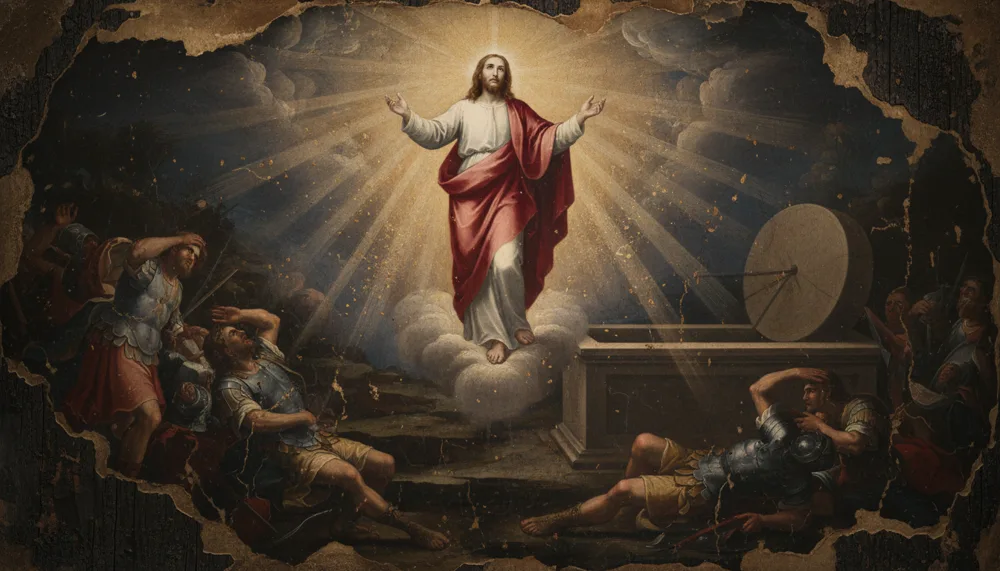
Yes — Jesus Christ truly rose from the dead, in His own true body, on the third day after His crucifixion, and He dies no more. This is not a symbol, a memory, or a pious sentiment; it is the central fact of the Christian faith, on which everything else stands or falls. The Apostle states the whole matter without softening:
If Christ be not risen again, then is our preaching vain, and your faith is also vain. (1 Corinthians 15:14)
Either Christ rose, and our faith is the response to the most important event in history, or He did not, and the faith is empty. The Church has never wavered: He is risen.
Did Jesus rise from the dead?
He did, and He said so beforehand. Our Lord spoke of His own Resurrection again and again, joining it to nearly every prophecy of His Passion. After foretelling that He would be delivered to the Gentiles, mocked, scourged, and put to death, He always added, in the words the Roman Catechism of the Council of Trent gathers, "and the third day He shall rise again." When the Jews demanded a sign, He gave them one: as Jonas was in the whale's belly three days and three nights, so shall the Son of man be in the heart of the earth (Matthew 12:40). And of His own body He declared:
Destroy this temple, and in three days I will raise it up. (John 2:19)
Saint John tells us plainly that "he spoke of the temple of his body." The Resurrection is therefore the sign Christ Himself staked His claim upon. He did not merely rise; He rose by His own power, which is the proof of His divinity. The Roman Catechism is exact on this: He rose "by His own Force, by His personal Power, which can belong to Him alone; for it is contrary to nature, and no one hath ever had this power, to pass by his own virtue from death to life.
This was reserved to God alone." The Catechism of Saint Pius X draws the same line: the Resurrection of Jesus Christ "was not like that of other men who have risen again, because Jesus Christ rose again by His own power, whereas the others were raised by the power of God."
This belongs to the bedrock of what Catholics believe, and it cannot be separated from the Incarnation: the One who took flesh of the Virgin is the One who laid that flesh down on the Cross and took it up again. I lay down my soul, that I may take it again. I have power to lay it down, and I have power to take it up again (John 10:17-18).
Is the resurrection real? The empty tomb
The reality of the Resurrection rests first on a fact no one in Jerusalem disputed: the tomb was empty. The body of Jesus had been laid by His disciples in a new sepulchre in a neighbouring garden, as the Roman Catechism recounts; on the third day, which was Sunday, "early in the morning His soul was reunited to His body," and the grave was found open and bare.
The enemies of Christ could have ended the new faith in an hour by producing the corpse. They never did, for the body was not there — a point we take up at length in has the body of Jesus been found. Instead the chief priests paid the soldiers to say the disciples had stolen it while they slept (Matthew 28:13) — an account that condemns itself, for sleeping men are no witnesses to a theft. No honest explanation of the empty tomb has ever been given except the one the Church has always held: He rose.
The many appearances
To the empty tomb Scripture joins the appearances of the risen Lord — not visions, but a true body that could be seen, touched, and that ate before its witnesses. He showed them His hands and His side. To doubting Thomas He said, Put in thy finger hither, and see my hands; and bring hither thy hand, and put it into my side; and be not faithless, but believing (John 20:27). Saint Paul records the appearances as public testimony that could be checked:
He was seen by Cephas; and after that by the eleven. Then was he seen by more than five hundred brethren at once: of whom many remain until this present, and some are fallen asleep. (1 Corinthians 15:5-6)
The point of naming the five hundred, most of them still living, was that the Corinthians could go and ask them — which is why these remain among the firmest catholic Bible verses we possess. The risen Christ was no ghost and no idea; He was the same Jesus, in the same body now glorified, the firstfruits of them that sleep (1 Corinthians 15:20).
The 12 appearances of Jesus after the Resurrection
How many times did Jesus appear after His Resurrection? The Gospels and Saint Paul together record a series of distinct, datable post-Resurrection appearances spread across the forty days between Easter and the Ascension. When the accounts are harmonised — as the Fathers and the older commentators did — they are commonly numbered as twelve. The exact tally depends on how the appearances are grouped, but the list below gathers those the Scriptures name, in the order the tradition has generally followed:
- To Saint Mary Magdalen, first of all, near the empty tomb (Mark 16:9; John 20:11-18) — Touch me not, for I am not yet ascended to my Father.
- To the holy women returning from the sepulchre, who held His feet and adored Him (Matthew 28:9-10).
- To Saint Peter alone, an appearance Scripture attests though it does not describe — The Lord is risen indeed, and hath appeared to Simon (Luke 24:34; 1 Corinthians 15:5).
- To the two disciples on the road to Emmaus, who knew Him in the breaking of bread (Luke 24:13-35).
- To the ten Apostles in the upper room, Thomas being absent, on the evening of Easter day (Luke 24:36-43; John 20:19-23).
- To the eleven, with Thomas present, eight days later — Bring hither thy hand, and put it into my side (John 20:24-29).
- To seven disciples by the Sea of Tiberias, with the miraculous draught of fish (John 21:1-23).
- To the eleven on the mountain in Galilee, where He gave the great commission — Going therefore, teach ye all nations (Matthew 28:16-20).
- To more than five hundred brethren at once (1 Corinthians 15:6), the appearance most witnesses could verify.
- To Saint James, named by Saint Paul among the witnesses (1 Corinthians 15:7).
- To the Apostles at the Ascension, on the Mount of Olives, when He was taken up before their eyes (Luke 24:50-51; Acts 1:6-9).
- To Saint Paul last of all, on the road to Damascus — as one born out of due time (1 Corinthians 15:8; Acts 9:3-6).
Who did Jesus appear to after His Resurrection? Not crowds chosen for their credulity, but His own — the women who had followed Him, the Apostles who had fled, a sceptic (Thomas), a persecutor (Paul), and once a great company together. These post-Resurrection appearances were not fleeting visions: He walked, ate broiled fish and a honeycomb before them (Luke 24:42-43), let Himself be handled, and spoke at length of the kingdom of God over forty days (Acts 1:3). We treat each one in detail in the Resurrection appearances of Jesus.
The transformed Apostles and the conversion of the world
There is a second body of evidence, and it is human. The men who had abandoned Christ in His Passion and hidden behind locked doors became, within weeks, fearless heralds who proclaimed the Resurrection in the very city where He had been killed. Cowards do not become martyrs over what they know to be a lie. The Apostles went to their deaths — by the sword, the cross, the stone — rather than deny what they had seen with their eyes and touched with their hands. Men will die for what they wrongly believe to be true; they do not die, one after another, for what they know to be false.
And the world turned. An unarmed handful, preaching a crucified Galilean risen from the dead, overcame the philosophers, the empire, and the temple, until the Roman world itself bent the knee. This is the visible fruit of an invisible cause, and it is part of why we hold that the society Christ raised up is the one Church He founded — see also thou art Peter and the four marks of the Church. Saint Augustine weighed the matter and concluded, as the Roman Catechism records: "It is little to believe that Jesus Christ died; the pagans, the Jews, the wicked believe it… but what characteriseth the faith of Christians is His Resurrection."
Why the third day, and why it matters
The Creed says He rose the third day. The Roman Catechism explains the wisdom of the interval: "To show that He was God, He willed not to defer His Resurrection until the end of the world; to prove that He was truly man, and really dead, He rose not again immediately after His death, but only on the third day." The Catechism of Saint Pius X says the same in a line: Jesus willed to wait "in order to manifest with evidence that He was truly dead." Long enough to confirm that He had really died; soon enough to show the power was His own.
The Resurrection is also the seal of our redemption. By His death our debt was paid; by His rising the victory was made manifest and our justification secured. The Roman Catechism gives the chain of fruits: the Resurrection makes "the justice of God shine forth," it strengthens "the Faith without which man cannot be justified," and it nourishes our hope — "for by the sole fact that Jesus Christ is risen again, we have the right to hope… that we also shall rise again. For the members must, of all necessity, share the lot of the head." Death itself is conquered: Christ, rising again from the dead, dieth now no more; death shall no more have dominion over him (Romans 6:9).
The pledge of our own resurrection
Christ rose not only for Himself but as the first of many. He is "the firstborn from the dead," and what happened to the Head is the promise made to the members. This is why the Resurrection bears directly on the four last things and on what happens after death: the Christian does not face the grave as an end. I am the resurrection and the life: he that believeth in me, although he be dead, shall live (John 11:25). On the last day our own bodies, the same bodies now buried, will be raised and reunited to our souls, and the just will share His incorruptible life.
The resurrection of the body
The Resurrection of Christ is the ground of an article of the Creed we profess at every Mass: the resurrection of the body. The Church does not teach merely that the soul survives death, nor that we shall rise as disembodied spirits or in some new and different frame. She teaches that on the last day the very bodies we now carry, the same bodies laid in the grave, will be raised and reunited to our souls, never to be parted again. The Roman Catechism is plain that "the identical bodies which belong to each of us during life… shall, although corrupted and reduced to dust, rise again to life." This is the literal sense of resurrection of the body: a true raising of the flesh, not a figure of speech.
The bodies of the just will rise glorified — incorruptible, immortal, free from suffering and the marks of decay, conformed to the risen Body of Christ, who will reform the body of our lowness, made like to the body of his glory (Philippians 3:21). The bodies of the lost will rise too, but to judgment. This doctrine guards two truths at once: that the body is good, made by God and destined for glory, and that man is not a soul imprisoned in flesh but a single person, body and soul, whom God will save whole.
It bears directly on the four last things and on what happens after death. What makes our hope of bodily resurrection certain is not wishful thinking but the empty tomb of Easter: for by the sole fact that Jesus Christ is risen again, the Roman Catechism teaches, we have the right to hope… that we also shall rise again.
What does the Bible say about the Resurrection?
Scripture's witness is constant from the prophets to the Apostles. Our Lord foretold His rising under the sign of Jonas (Matthew 12:40) and of the temple raised in three days (John 2:19). The four Gospels each recount the empty tomb and the appearances (Matthew 28, Mark 16, Luke 24, John 20-21). Saint Peter preaches it at Pentecost as the fulfilment of David's psalm — thou wilt not… suffer thy holy one to see corruption (Acts 2:27, 31).
And Saint Paul gives the fullest theology of it in the fifteenth chapter of First Corinthians, where he both lists the witnesses and binds our resurrection to Christ's: for as in Adam all die, so also in Christ all shall be made alive (1 Corinthians 15:22). The Bible does not present the Resurrection as one teaching among many but as the hinge on which the whole Gospel turns — if Christ be not risen again, then is our preaching vain (1 Corinthians 15:14).
For the soul still searching, the Resurrection is the one door that opens onto everything else — it is, in truth, the heart of how to find God. Stand at the empty tomb honestly, and the rest of the faith follows.
He is risen. Our preaching is not vain, and our faith is not vain. The grave is empty, the witnesses spoke under threat of death, and the world was converted by men who had touched His wounded hands. The Lord who took flesh of the Virgin laid down His life and took it up again by His own power, and He has made of His own rising the pledge of ours.
Frequently Asked Questions
Did Jesus really rise from the dead?
Yes. Jesus Christ truly rose from the dead, in His own true body, on the third day after His crucifixion, and He dies no more. This is not a symbol or a pious sentiment but the central fact of the Christian faith. The tomb was empty, the risen Lord was seen and touched by many witnesses over forty days, and the Apostles died rather than deny it. As Saint Paul says, If Christ be not risen again, then is our preaching vain (1 Corinthians 15:14).
What is the key point of the Resurrection of Jesus Christ?
The key point is that Christ rose by His own power, which He alone could do, proving His divinity. The Roman Catechism is exact: to pass by one's own virtue from death to life "was reserved to God alone." His rising is therefore the sign He staked His whole claim upon (Destroy this temple, and in three days I will raise it up), the seal of our redemption, and the pledge that we too shall rise.
How many times did Jesus appear after His Resurrection?
Scripture records distinct, datable appearances over forty days — to Mary Magdalen, the holy women, Saint Peter, the two at Emmaus, the Apostles (without Thomas and then with him), seven by the Sea of Tiberias, more than five hundred at once, Saint James, and last of all Saint Paul. Counted together these are often reckoned as twelve, though the exact tally depends on how the accounts are harmonised. We treat them one by one in the Resurrection appearances of Jesus.
Why did Jesus rise on the third day?
The Roman Catechism explains the wisdom of the interval: to prove He was truly man and really dead, He did not rise immediately but waited; to show He was God, He did not defer His Resurrection until the end of the world. The third day was long enough to confirm that He had really died, and soon enough to show that the power to rise was His own.
What evidence is there that the Resurrection is real?
Three things stand together. First, the empty tomb, which the enemies of Christ could have refuted at once by producing the body, and never did. Second, the appearances of a true body that could be seen, touched, and that ate before its witnesses — including more than five hundred at once, most of them still living when Paul wrote. Third, the transformed Apostles, who went from cowards in hiding to martyrs: men do not die, one after another, for what they know to be a lie.
Who did Jesus appear to after His Resurrection?
He appeared to His own: first to Saint Mary Magdalen, then to the holy women, to Saint Peter alone, to the two on the road to Emmaus, to the Apostles in the upper room (without Thomas, then with him), to seven by the Sea of Tiberias, to the eleven on the mountain in Galilee, to more than five hundred brethren at once, to Saint James, to all at the Ascension, and last of all to Saint Paul on the road to Damascus. These post-Resurrection appearances were not visions but encounters with a true, glorified body that walked, ate, and could be touched.
What does the Bible say about the Resurrection?
It is the hinge of the whole of Scripture. Our Lord foretold it under the signs of Jonas and the temple; the four Gospels each record the empty tomb and the appearances; Saint Peter preaches it at Pentecost as the fulfilment of David's psalm; and Saint Paul gives its fullest theology in 1 Corinthians 15, binding our own resurrection to Christ's — for as in Adam all die, so also in Christ all shall be made alive (1 Corinthians 15:22). The Bible treats it not as one doctrine among many but as the fact on which everything stands: if Christ be not risen again, then is our preaching vain (1 Corinthians 15:14).
What is the resurrection of the body?
It is an article of the Creed: the truth that on the last day the very bodies we now carry, the same bodies buried in the grave, will be raised and reunited to our souls forever. The just will rise glorified — incorruptible and immortal, conformed to the risen Body of Christ; the lost will rise to judgment. The Church does not teach a merely spiritual survival but a true raising of the flesh, made certain by the bodily Resurrection of Christ, the firstfruits of them that sleep.
The Iter Fidei app carries the Douay-Rheims Bible, the catechism, and the prayers of the Church. Join early access here.
Sources. The Holy Bible, Douay-Rheims version (1 Corinthians 15:5-8, 14, 20, 22; Romans 6:9; Philippians 3:21; John 2:19, 10:17-18, 11:25, 20:11-29, 21:1-23; Matthew 12:40, 28:9-20; Mark 16:9; Luke 24:13-51; Acts 1:3-9, 2:27-31, 9:3-6). Catechism of the Council of Trent (Roman Catechism, 1566), Part I, Chapter VI — "On the Fifth Article of the Creed: He descended into hell, and the third day rose again from the dead," and Chapter XII on the resurrection of the body. Catechism of Saint Pius X (1908), The Creed, Fifth Article. Saint Augustine, on the Resurrection as the distinctive mark of Christian faith, as cited in the Roman Catechism.