
The Faith
The Resurrection Appearances of Jesus: Who Did He Appear To?
Scripture records the risen Christ appearing to Mary Magdalen, the holy women, Peter, the two at Emmaus, the Apostles, the seven by the sea, more than five hundred at once, James, and last of all Paul.
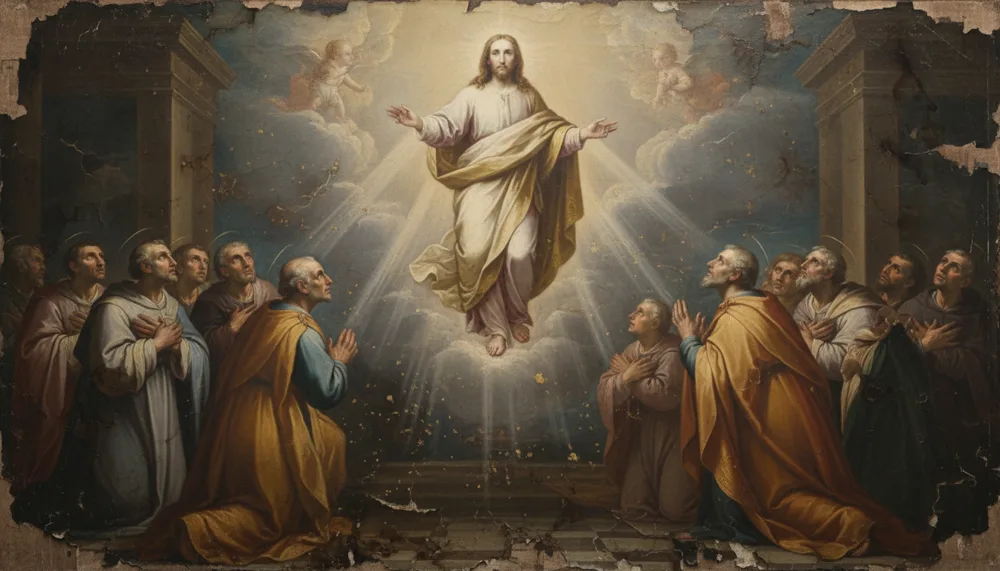
After He rose from the dead, Jesus appeared, over forty days, to Mary Magdalen, to the holy women, to Saint Peter, to the two disciples on the road to Emmaus, to the Apostles gathered without Thomas and then again with him, to seven of them by the Sea of Tiberias, to more than five hundred brethren at once, to Saint James, and last of all to Saint Paul. These are the resurrection appearances of Jesus that Scripture sets down by name. They are not visions or rumours but the testimony of men and women who saw, heard, and touched a living body, and who staked their lives on what they had witnessed.
How many times did Jesus appear after His Resurrection?
Scripture does not number the appearances as a list, but it records distinct, datable occasions. Saint Paul gives the public roll of witnesses in the order he received it:
And that he was seen by Cephas; and after that by the eleven. Then was he seen by more than five hundred brethren at once: of whom many remain until this present, and some are fallen asleep. After that, he was seen by James, then by all the apostles. And last of all, he was seen also by me, as by one born out of due time. (1 Corinthians 15:5-8)
To this list the Gospels add the appearances to Mary Magdalen, to the holy women, to the two on the road to Emmaus, and to the seven by the sea. Counted together, these named occasions are often reckoned as the twelve appearances of Jesus after His Resurrection — the exact tally depends on how one harmonises the accounts, but the witnesses are fixed and public. The point is not the round number but the weight of testimony: the risen Christ was seen across forty days, by individuals and by crowds, on the road and at the table, until ascending He was taken up out of their sight (Acts 1:9).
The 12 appearances of Jesus after His Resurrection, in order
Harmonising the Gospels with Saint Paul, the named post-resurrection appearances of Jesus may be set out in roughly this order:
- To Mary Magdalen, alone at the tomb (John 20:14-17; Mark 16:9).
- To the holy women returning from the tomb (Matthew 28:9-10).
- To Saint Peter (Cephas) alone, the same day (Luke 24:34; 1 Corinthians 15:5).
- To the two disciples on the road to Emmaus (Luke 24:13-31; Mark 16:12).
- To the Apostles, Thomas absent, that Sunday evening (Luke 24:36-43; John 20:19-23).
- To the Apostles with Thomas, eight days later (John 20:26-29).
- To seven Apostles by the Sea of Tiberias (John 21:1-14).
- To the eleven on a mountain in Galilee, where He gave the great commission (Matthew 28:16-20).
- To more than five hundred brethren at once (1 Corinthians 15:6).
- To Saint James (1 Corinthians 15:7).
- To all the Apostles at the Ascension, on Mount Olivet (Luke 24:50-51; Acts 1:6-9).
- To Saint Paul, last of all, on the Damascus road (1 Corinthians 15:8; Acts 9:3-6).
This is one common reckoning, not a closed canon; some harmonies count the Galilee mountain and the Ascension among the Apostles' appearances and arrive at ten or eleven. What is fixed is the roster of witnesses, not the arithmetic.
To Mary Magdalen, first of all
The first to see the risen Lord was Mary Magdalen, who had stood by the Cross and come to the tomb while it was yet dark. Mistaking Him for the gardener, she knew Him only when He spoke her name:
Jesus saith to her: Mary. She turning, saith to him: Rabboni (which is to say, Master). (John 20:16)
He charged her to carry word to the Apostles — go to my brethren, and say to them: I ascend to my Father and to your Father (John 20:17) — so that a woman who had been a sinner became the first herald of the Resurrection.
To the holy women and to Saint Peter
As the women returned from the empty tomb, the Lord met them on the way: And behold Jesus met them, saying: All hail. But they came up and took hold of his feet, and adored him (Matthew 28:9). That they took hold of His feet matters: this was no apparition but a body that could be grasped.
On the same day He appeared to Saint Peter alone, before the others. Scripture does not narrate the meeting, but it reports its effect twice. The eleven announce it: The Lord is risen indeed, and hath appeared to Simon (Luke 24:34); and Saint Paul places it at the head of his witnesses, he was seen by Cephas (1 Corinthians 15:5). That the Lord sought out the man who had denied Him three times, and made him the first of the Apostles to see Him, belongs to the office given when Christ said thou art Peter — a primacy we take up in the life of Saint Peter.
To the two on the road to Emmaus
That same Sunday evening two disciples walked toward Emmaus, downcast, and a stranger joined them. He opened the Scriptures to them, beginning at Moses and the prophets, and they knew Him only in the breaking of bread:
And it came to pass, whilst he was at table with them, he took bread, and blessed, and brake, and gave to them. And their eyes were opened, and they knew him: and he vanished out of their sight. (Luke 24:30-31)
They said to one another, Was not our heart burning within us, whilst he spoke in the way? (Luke 24:32). The risen Christ teaching from the Scriptures and made known in the breaking of bread has always been read by the Church as a figure of the Mass, where He is still made known to us under the same sign.
To the Apostles, without Thomas and then with him
That night He stood in the midst of the Apostles, the doors being shut, and said Peace be to you (John 20:19). He showed them His hands and His side, and ate before them, that they might know He was no spirit: a spirit hath not flesh and bones, as you see me to have (Luke 24:39). Thomas was absent and would not believe the report. Eight days later the Lord came again and turned to him directly:
Put in thy finger hither, and see my hands; and bring hither thy hand, and put it into my side; and be not faithless, but believing. (John 20:27)
Thomas answered, My Lord and my God (John 20:28) — the plainest confession of Christ's divinity in the Gospels, wrung from a doubter by the evidence of his own eyes and hand.
To seven by the Sea of Tiberias
Later He showed Himself to seven of the Apostles as they fished on the Sea of Tiberias. After a night that took nothing, they cast the net at His word and could not draw it for the multitude of fishes (John 21:6). On the shore He had prepared a fire with fish and bread, and none of them who were at meat, durst ask him: Who art thou? knowing that it was the Lord (John 21:12). There He three times asked Peter, Lovest thou me?, and three times confided to him the flock: Feed my lambs… Feed my sheep (John 21:15-17), undoing the threefold denial with a threefold charge.
To five hundred at once, to James, and last of all to Paul
The most striking witness for any honest inquirer is the crowd. Saint Paul records that the Lord was seen by more than five hundred brethren at once: of whom many remain until this present (1 Corinthians 15:6). He noted that most were still living precisely so that the Corinthians could go and question them: a private vision cannot be examined; five hundred living men can. Then He appeared to Saint James (1 Corinthians 15:7), and at last, well after the Ascension, to the persecutor Saul on the Damascus road, who became Saint Paul: last of all, he was seen also by me, as by one born out of due time (1 Corinthians 15:8).
The variety of the witnesses as evidence
The strength of the testimony lies in its variety. The witnesses are men and women, learned and simple, friends and at least one sworn enemy. They saw Him alone and in companies of two, of seven, of eleven, of five hundred — at dawn and at dusk, behind locked doors and on a shore, on a journey and at a meal. They did not merely glimpse Him: they spoke with Him, ate with Him, took hold of His feet, and put a hand into His side. Collusion among so many, so varied, over forty days is not credible; and a mistaken impression does not survive being touched.
These witnesses then proved their conviction with their blood. The men who had fled in the Passion went out and died for what they had seen — a fact we take up in how the Apostles died. Cowards do not become martyrs over what they know to be invented; men will die for what they wrongly believe, but not, one after another, for what they know to be a lie. This is the evidence the Apostle rests upon, and it is why the Resurrection stands among the firmest of the catholic Bible verses we possess.
The same body, truly risen
The appearances teach not only that He rose but how. The body that appeared was the same body that was crucified — it bore the wounds, it could be handled, it ate before them. The Roman Catechism of the Council of Trent is exact: Christ rose "by His own Force, by His personal Power, which can belong to Him alone," and the same body that had hung upon the Cross was raised, now glorious and immortal.
The Catechism of Saint Pius X likewise teaches that He rose by His own power, unlike all others who were raised by the power of God. This is the perennial doctrine handed down at the Resurrection, inseparable from the Incarnation: the flesh taken of the Virgin is the flesh laid down in the Passion and taken up again on the third day. The same Christ who showed His wounds to Thomas is the One we adore, truly present under the appearances of bread, in the Eucharist.
What the witnesses began, the forty days completed: He instructed the Apostles, confirmed Peter as shepherd, and sent them to teach all nations — the foundation of what the Catholic Church is. For all that followed, see what happened after Jesus rose from the dead.
He was seen by Mary, by the women, by Peter, by the two on the road, by the eleven and by Thomas, by the seven at the sea, by five hundred at once, by James, and last of all by Paul. The witnesses were many and varied; they touched Him, ate with Him, and died for Him. The Lord is risen indeed.
Frequently Asked Questions
How many times did Jesus appear after His Resurrection?
Scripture records distinct, datable occasions rather than a single numbered list. Saint Paul gives the public roll — Cephas (Peter), the eleven, more than five hundred at once, James, all the Apostles, and last of all himself (1 Corinthians 15:5-8) — and the Gospels add the appearances to Mary Magdalen, the holy women, the two on the road to Emmaus, and the seven by the sea. Counted together these named occasions are often reckoned as the twelve appearances of Jesus after His Resurrection, though the exact tally depends on how one harmonises the accounts.
Who did Jesus appear to first after rising?
The first to see the risen Lord was Mary Magdalen, who had stood by the Cross and came to the tomb while it was yet dark. She mistook Him for the gardener and knew Him only when He spoke her name — Jesus saith to her: Mary (John 20:16). He then charged her to carry the word to the Apostles, so that a woman who had been a sinner became the first herald of the Resurrection.
Who were the witnesses of the Resurrection?
They were many and varied: Mary Magdalen and the holy women; Saint Peter, sought out alone after his denial; the two disciples at Emmaus; the Apostles gathered without Thomas and then with him; seven of them by the Sea of Tiberias; more than five hundred brethren at once; Saint James; and at last Saint Paul on the Damascus road. They were men and women, learned and simple, friends and at least one sworn enemy.
How long did Jesus appear after His Resurrection?
Over forty days. Scripture says the risen Lord showed Himself to His witnesses across these days — at dawn and at dusk, behind locked doors and on a shore, on a journey and at a meal — instructing the Apostles and confirming Peter as shepherd, until at the Ascension he was taken up: and a cloud received him out of their sight (Acts 1:9).
What is the order of Jesus' appearances after the Resurrection?
Reading the Gospels together with Saint Paul, the usual order is: Mary Magdalen, the holy women, Saint Peter alone, the two disciples at Emmaus, the Apostles without Thomas, the Apostles with Thomas eight days later, the seven by the Sea of Tiberias, the eleven on the mountain in Galilee, more than five hundred brethren at once, Saint James, all the Apostles at the Ascension, and last of all Saint Paul on the Damascus road. The arithmetic varies with how the accounts are harmonised, but the sequence of witnesses is stable.
Did Jesus appear to His Mother after the Resurrection?
Scripture does not record a named appearance to the Blessed Virgin. Many of the Fathers and saints, however, held it most fitting that the risen Lord should first console His Mother, and a pious tradition affirms it; Pope Saint John Paul II later voiced the same conviction. It is a devout and ancient persuasion, not a defined article of faith, and the silence of the Gospels is no denial — the Evangelists set down the public witnesses on whose testimony the Church's proof of the Resurrection rests.
Why do the post-Resurrection appearances count as evidence?
Because of their variety. The witnesses saw Him alone and in companies of two, seven, eleven, and five hundred; they did not merely glimpse Him but spoke with Him, ate with Him, took hold of His feet, and put a hand into His side. A mistaken impression does not survive being touched, and collusion among so many over forty days is not credible. They then proved their conviction with their blood — a fact taken up in how the Apostles died.
The Iter Fidei app carries the Douay-Rheims Bible, the catechism, and the prayers of the Church. Join early access here.
Sources. The Holy Bible, Douay-Rheims version (1 Corinthians 15:5-8; Matthew 28:9-10, 16-20; Mark 16:9, 12; Luke 24:13-31, 34, 36-43, 50-51; John 20:14-29; John 21:1-17; Acts 1:6-9; Acts 9:3-6). Catechism of the Council of Trent (Roman Catechism, 1566), Part I, Chapter VI — "On the Fifth Article of the Creed," on the risen body and Christ rising by His own power. Catechism of Saint Pius X (1908), The Creed, Fifth Article.