
The Faith
What Happened After Jesus Rose from the Dead?
After He rose, Jesus remained on earth forty days: He appeared to Magdalen, the women, Peter, the Eleven, Thomas, and more than five hundred, ate with them, opened the Scriptures, sent the Apostles, and ascended into heaven.
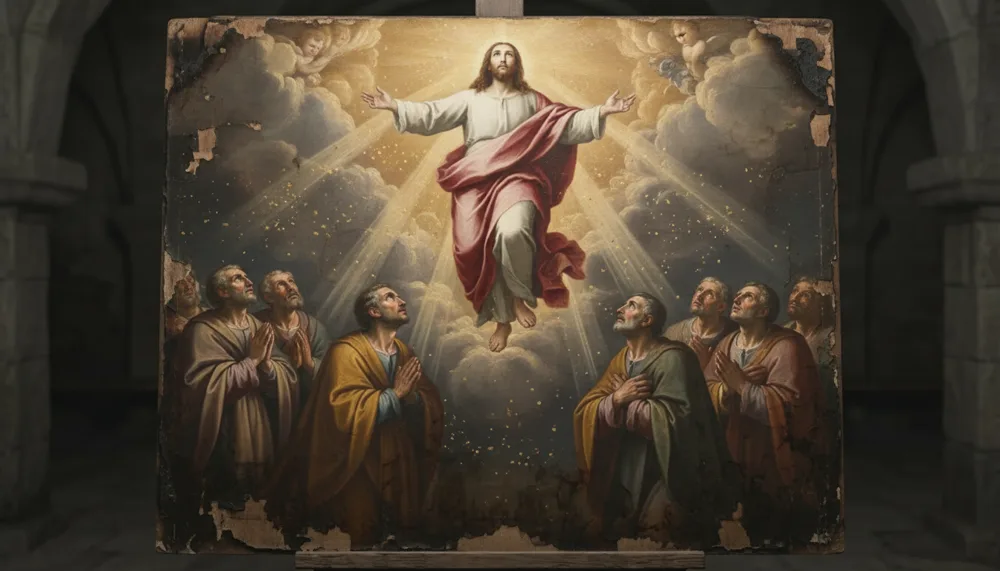
After He rose from the dead, Jesus Christ did not leave the world at once. For forty days He remained upon the earth, appearing again and again to His disciples in His own true body — to Mary Magdalen, to the holy women, to Peter, to the two on the road to Emmaus, to the Eleven, to Thomas, to seven of them by the sea of Tiberias, and to more than five hundred at once. He ate with them, He let them touch Him, He opened to them the Scriptures, He gave the Apostles the power to forgive sins and the commission to teach all nations, and then He ascended into heaven. Saint Luke states the term plainly:
To whom also he shewed himself alive after his passion by many proofs, for forty days appearing to them, and speaking of the kingdom of God. (Acts 1:3)
This is the answer to what Jesus did after the Resurrection: He proved that He was truly risen, and He built His Church on those who had seen Him.
The forty days after Easter
The interval was not idle. The risen Lord used it to do two things the young Church would need for ever: to establish beyond doubt that He had really risen in the flesh, and to hand to chosen men the authority by which He would govern His Church. The Apostles did not invent a doctrine; they reported what they had seen, heard, and handled across those forty days. We take up the bodily reality of the rising itself in the Resurrection; here we follow what came after it.
The Roman Catechism of the Council of Trent fixes the same horizon when it explains the Ascension: "as all the mysteries of our religion begin at the Incarnation, so likewise the sojourn of the Saviour among us endeth at His Ascension." Between the empty tomb and that ending lie the forty days.
To Magdalen, the women, and Peter
The first to see the risen Christ, in the order Scripture and tradition hand down, was Mary Magdalen, who had come weeping to the tomb. When she turned and supposed Him the gardener, He said but her name, Mary, and she knew Him; and He charged her not to cling to Him but to carry word to the brethren (John 20:16-17). The holy women, returning from the sepulchre, met Him on the way: And behold Jesus met them, saying: All hail. But they came up and took hold of his feet, and adored him (Matthew 28:9). They took hold of His feet — He was no phantom.
He appeared also to Peter alone, as the disciples themselves testify: The Lord is risen indeed, and hath appeared to Simon (Luke 24:34). That Christ should show Himself first to the one He had set at the head of His Church is fitting, and it bears on why we hold Peter's primacy in thou art Peter and tell his life in Saint Peter. Saint Paul, who would meet the risen Lord later on the Damascus road, places this same appearing first in his list of witnesses; his own calling we treat in Saint Paul.
The road to Emmaus: He opened the Scriptures
That same day two disciples walked to Emmaus, downcast, and a stranger joined them. He chided their slowness and then did something the Church has never forgotten: beginning at Moses and all the prophets, he expounded to them in all the scriptures the things that were concerning him (Luke 24:27). He was known to them at last in the breaking of bread (Luke 24:35), and vanished from their sight. The risen Christ teaches us to read the whole of Scripture as pointing to Himself — a key to the catholic Bible verses the Church has always carried, and the reason His Passion and rising are the centre to which they bend. What He suffered before this, we recount in the Passion.
He ate with them: proof He was no ghost
When He stood among the Eleven, they were terrified, supposing they saw a spirit. He answered the doubt with His body:
See my hands and feet, that it is I myself: handle, and see; for a spirit hath not flesh and bones, as you see me to have. (Luke 24:39)
And to silence them wholly He asked for food: And when he had eaten before them, taking the remains, he gave to them (Luke 24:43). The risen Lord ate broiled fish and a honeycomb in their sight — not to nourish a body that needed no nourishment, but to prove that the body was real and was His own. This is the constant insistence of the witnesses: a true body, the same that was crucified, now glorified and immortal, the firstfruits of them that sleep (1 Corinthians 15:20). The Church's faith in the reality of His flesh runs straight from these meals to the altar, where the same true Body is given in the Eucharist — see transubstantiation and the Real Presence, the same Lord present that the saints have honoured in eucharistic miracles.
Thomas and the five hundred
Thomas was absent at the first appearing and would not believe on report. Eight days later Christ returned and offered him the very proof he had demanded: Put in thy finger hither, and see my hands; and bring hither thy hand, and put it into my side; and be not faithless, but believing (John 20:27). Thomas answered, My Lord and my God (John 20:28).
Saint Paul gathers the appearances into a list meant to be checked:
And that he was seen by Cephas; and after that by the eleven. Then was he seen by more than five hundred brethren at once: of whom many remain until this present, and some are fallen asleep. (1 Corinthians 15:5-6)
He names them, most still living, because the reader could go and ask them. By the sea of Tiberias He appeared again to seven of them and there restored Peter with a threefold charge to feed His sheep (John 21). The men who would later die for this testimony — whose ends we recount in how the Apostles died — were eyewitnesses, not enthusiasts; cowards do not become martyrs over what they know to be false.
He gave the power to forgive sins and sent the Apostles
Within these forty days Christ entrusted to His Church the powers by which she still lives. On the evening of the Resurrection He breathed on the Apostles and said:
Receive ye the Holy Ghost. Whose sins you shall forgive, they are forgiven them; and whose sins you shall retain, they are retained. (John 20:22-23)
Here is the institution of the power of absolution, exercised to this day in confession. And before He ascended He gave the commission that defines the Church's whole task:
Going therefore, teach ye all nations; baptizing them in the name of the Father, and of the Son, and of the Holy Ghost. (Matthew 28:19)
This sending is why the society He founded is missionary and visible — the matter of what is the Catholic Church — and why the Mass and the sacraments come down to us by an unbroken handing-on, as we explain in the Mass and what is the Tridentine Mass, and honour in Corpus Christi.
The Ascension into heaven
When the forty days were fulfilled, Christ led the Apostles out toward Bethany, blessed them, and was taken up:
And when he had said these things, while they looked on, he was raised up: and a cloud received him out of their sight. (Acts 1:9)
The Roman Catechism is exact on how He went: not borne by another, as Elias was carried up in the chariot of fire, but "by His own virtue and not by a foreign force… both as man and as God." The same power by which He raised His own body raised it now to glory. The Catechism gives the reasons He ascended — that His glorified Body should reign where it belonged, and that He might draw our hearts after Him: He went "to excite in our hearts the thought and the desire of following Him thither." Ten days later, as He had promised, He sent the Holy Ghost upon the Apostles, and the Church went out to convert the nations.
The forty days, then, are the bridge between the empty tomb and the throne of God: enough time for the witnesses to be made certain, and for the Church to be given her teaching, her sacraments, and her shepherds, before her Head took His place at the right hand of the Father.
He rose, He stayed long enough to leave no honest room for doubt, He gave His Apostles the keys and the commission, and He ascended. The men who watched Him go preached His rising in the city where He had been killed and died one by one rather than deny it. What they saw across those forty days is the foundation the Church still stands upon.
Frequently Asked Questions
What happened after Jesus rose from the dead?
He did not leave the world at once. For forty days He remained upon the earth, appearing again and again to His disciples in His true body, eating with them and opening the Scriptures, until He ascended into heaven (Acts 1:3, 9). In that interval He proved beyond honest doubt that He was risen and entrusted His Church to those who had seen Him.
What happened to Jesus after He rose from the dead?
He appeared bodily to Mary Magdalen, the holy women, Peter, the two at Emmaus, the Eleven, Thomas, and more than five hundred at once (1 Corinthians 15:5-6). When the forty days were fulfilled He was raised up: and a cloud received him out of their sight (Acts 1:9), ascending by His own power to the right hand of the Father.
What did Jesus do after He rose from the dead?
For forty days He appeared to His disciples in His true body, ate with them, let them touch Him, and opened the Scriptures to them. He gave the Apostles the power to forgive sins and the commission to teach and baptise all nations, and then He ascended into heaven. In short, He proved His rising and founded His Church upon those who had seen Him.
Is Easter the day Jesus rose?
Yes. Easter is the feast of the Resurrection, the day our Lord rose from the dead, the first day of the week after His Passion (Luke 24:1-6). It is the chief of all feasts, for upon the rising it celebrates the whole of the faith depends: if Christ be not risen again, then is our preaching vain (1 Corinthians 15:14).
Where did Jesus go after He rose from the dead?
He did not leave the earth at once but remained forty days among His disciples (Acts 1:3). When that term was fulfilled He ascended bodily into heaven, raised up: and a cloud received him out of their sight (Acts 1:9), to take His place at the right hand of the Father.
How many times did Jesus appear after His Resurrection?
Scripture records a series of distinct appearances: to Mary Magdalen, to the holy women, to Peter alone, to the two on the road to Emmaus, to the Eleven, to Thomas, to seven by the sea of Tiberias, and to more than five hundred at once (1 Corinthians 15:5-6). They were not visions but bodily encounters across forty days, given so that the witnesses might be made wholly certain.
Do Catholics believe Jesus rose from the dead?
We do, bodily and truly, as an article of the Creed and the very foundation of the faith: And if Christ be not risen again, then is our preaching vain, and your faith is also vain (1 Corinthians 15:14). The same true Body that was crucified rose glorified and immortal, and the Apostles died one by one rather than deny what they had seen.
What happened to Mary after the death of Jesus?
From the Cross our Lord gave her into the care of Saint John: Behold thy mother. And from that hour the disciple took her to his own (John 19:27). She was present with the Apostles at prayer when the Holy Ghost descended (Acts 1:14), and at the end of her earthly life she was taken up body and soul into heaven, as we recount in the Assumption of Mary.
The Iter Fidei app carries the Douay-Rheims Bible, the catechism, and the prayers of the Church. Join early access here.
Sources. The Holy Bible, Douay-Rheims version (Acts 1:3, 9; Matthew 28:9, 19; Luke 24:27, 34, 35, 39, 43; John 19:27; John 20:16-17, 22-23, 27, 28; John 21; Acts 1:14; 1 Corinthians 15:5-6, 14, 20). Catechism of the Council of Trent (Roman Catechism, 1566), Part I, Chapter VII — "On the Sixth Article of the Creed: He ascended into heaven," and Chapter VI on the Resurrection.