
The Faith
What Does God Say About Marijuana?
What does God say about marijuana? Scripture names no drug, but it commands temperance and forbids surrendering the use of reason. To smoke weed for the sake of intoxication is sinful, as drunkenness is (Ephesians v. 18); genuine medicinal use under prudence is another matter.
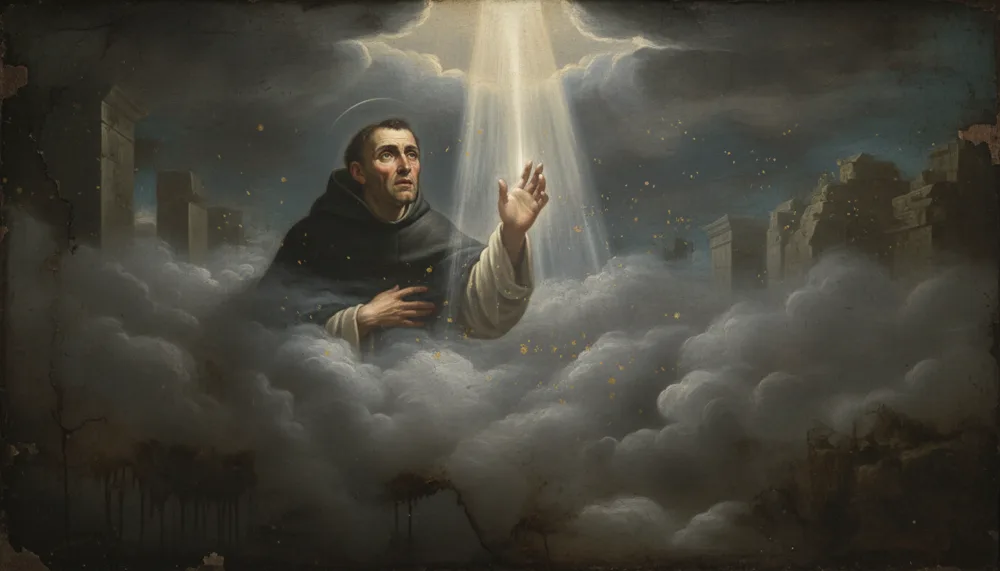
What does God say about marijuana? Scripture names no drug by name, but it lays down the rule that decides the question: the Christian must be temperate, and must not surrender the use of reason God gave him. So is smoking weed a sin? When it is done to get high — to be intoxicated, to lose or dull the use of reason for pleasure — yes, it is sinful, by the same principle that condemns drunkenness: "Be not drunk with wine, wherein is luxury" (Ephesians v. 18). Genuine medicinal use, under the guidance of prudence and a physician, is another matter entirely.
And be not drunk with wine, wherein is luxury; but be ye filled with the holy Spirit. — Ephesians v. 18 (Douay-Rheims)
What does the Bible say about weed?
The Bible does not mention marijuana, and an honest answer must begin there. No verse forbids it by name, because the substance is not the point — the disposition of the soul is. What Scripture forbids is intoxication: the deliberate flooding of the mind so that reason no longer governs. It condemns this wherever it names it.
Saint Paul ranks it among the works that shut a man out of the Kingdom: "drunkenness, revellings, and such like... they who do such things shall not obtain the kingdom of God" (Galatians v. 21). And the Old Testament had already named its fruit: "Wine is a luxurious thing, and drunkenness riotous: whosoever is delighted therewith shall not be wise" (Proverbs xx. 1).
The question of weed is therefore not whether the plant is named — it is whether the act is the deliberate pursuit of intoxication. Scripture answers that with one voice. Read whole, within the Church, this is how the Catholic Bible speaks to a question its words never spell out — a habit of reading we set out in what God says about the hard cases of the age.
The virtue of temperance
The Church gives the matter its proper name: it belongs to the virtue of temperance. The Catechism of Saint Pius X teaches that temperance is "the virtue by which we curb the inordinate desires of sensible pleasures and use temporal goods with moderation." It is one of the four cardinal virtues — "the hinge and the foundation of the moral virtues" — beside prudence, justice, and fortitude.
Temperance does not forbid pleasure; it orders it. God made the things of this world, and their moderate, grateful use is no sin. What temperance forbids is the inordinate desire — the appetite that breaks loose from reason and seeks the pleasure for its own sake, past the measure of need. The man who eats and drinks with thanksgiving keeps the virtue; the man who eats or drinks or smokes himself out of his senses breaks it. This is why the Church numbers gluttony among the seven deadly sins — the capital vice triumphed over, as the same Catechism says, "by abstinence." Intoxication for its own sake is the appetite of gluttony carried to the point of attacking the mind itself.
The same discipline of the appetites that governs food, drink, and the body runs through the whole moral life: it is the temperance that orders dating and what God says of sex before marriage, the self-mastery the Christian wages in the daily spiritual combat.
Why losing the use of reason is grave
Here is the heart of the question. Man is made in the image of God precisely in his reason; it is by reason that he knows the truth, chooses the good, and answers for his acts. To set reason aside on purpose — to drown it for the sake of a sensation — is to attack the very faculty by which a man is a man and a child of God.
Saint Thomas Aquinas, treating drunkenness, judges it by exactly this measure: the sin lies in willingly and knowingly depriving oneself of the use of reason, whereby one performs virtuous deeds and avoids sin (Summa Theologiae II-II, q. 150, a. 2). The gravity is not in the cup but in the surrender of the mind. He who voluntarily renders himself incapable of reason makes himself, for that time, incapable of virtue. What is said of wine is said of any substance taken to the same end — and recreational marijuana is taken to precisely that end.
This is also why such intoxication is rarely a solitary fall. A mind given over loses its guard against every other sin: the drunken or the stoned will more easily fall into lust, into anger and revenge, into lying — the works of the flesh Saint Paul names in the same breath as drunkenness. To put out the light of reason is to open the door to every thief.
The body is the temple of the Holy Ghost
There is a second reason, and it goes to what the body is. The Christian's body is not his own property to abuse:
Know you not, that your members are the temple of the Holy Ghost, who is in you, whom you have from God; and you are not your own? For you are bought with a great price. Glorify and bear God in your body. — 1 Corinthians vi. 19–20 (Douay-Rheims)
The Catechism of the Council of Trent, on the Fifth Commandment, presses how far this reaches: "None has power enough over his own life to give himself death when it pleases him." If a man may not destroy the body God gave him, neither may he poison it or enslave it to a habit that ruins health and reason together. To make oneself a slave of a craving — for that is what habitual intoxication becomes — is to dishonour the temple bought with the Blood of Christ. The reverence the Church teaches toward the body in life and in death, even in what God says about cremation, forbids the deliberate wrecking of it for a high.
Is smoking weed a sin? The plain answer
We answer plainly, correcting the two errors that crowd in. Against those who shrug and call it harmless because no verse names it: to smoke marijuana in order to be intoxicated, to lose or numb the use of reason for pleasure, is a sin against temperance — and when the surrender of reason is full and deliberate, a grave one, on the same ground as drunkenness. Against the scrupulous who fear that every use of any drug is mortal sin: the Church judges by the act and the will.
A genuinely medicinal use — to relieve real pain or sickness, in a true measure, under the judgment of a physician and of prudence, not as a pretext for getting high — is governed like any other medicine, and is not in itself sinful. Prudence, the first of the cardinal virtues, draws that line; and the law of the land, where it forbids the thing, binds the conscience too.
So the measure is not the leaf but the intent and the effect. Is reason being set aside for pleasure? Is the body being degraded? Is a craving being served as a master? Where the answer is yes, there is sin; where a real remedy is taken in real measure for a real ill, there is not.
A soul already entangled — habituated, ashamed, half-enslaved — should not despair but should do what Christ founded His Church to make possible. "Whose sins you shall forgive, they are forgiven them" (John xx. 23). The chains of habit are broken in grace, and grace flows through confession and the daily turning of the will back to God. No habit is stronger than the Cross.
Behind "what does God say about marijuana" lies the question the Church always returns us to: how do I keep this body and this reason He gave me, and bought back at so great a price, as His? It is answered not by a slogan of the age, nor by a single verse hunted out of context, but by temperance — guarding the use of reason, reverencing the body as the Temple of the Holy Ghost, refusing to make a master of any pleasure. That is the substance of learning to love God with the whole of oneself — mind, body, and will.
Frequently Asked Questions
Is smoking weed a sin?
To smoke marijuana in order to get high — to dull or surrender the use of reason for pleasure — is a sin against the virtue of temperance, and when the surrender of reason is full and deliberate it is a grave sin, on the same ground as drunkenness (Galatians v. 21). Scripture forbids intoxication as such, not the plant by name. A genuinely medicinal use in true measure, under a physician's judgment, is governed like any other medicine and is not in itself sinful.
Does the Bible say anything about marijuana?
The Bible never names marijuana, and an honest answer admits it. But it lays down the rule that decides the matter: "Be not drunk with wine, wherein is luxury" (Ephesians v. 18), and it ranks drunkenness among the works that shut a man out of the Kingdom (Galatians v. 21). What Scripture condemns is the deliberate flooding of the mind so that reason no longer governs — whatever substance brings it about.
Is it a mortal sin to smoke weed?
The Church judges by the act and the will, not by the leaf. St Thomas teaches that the sin of intoxication lies in willingly and knowingly depriving oneself of the use of reason (Summa II-II, q. 150, a. 2). Where a man fully and deliberately drowns his reason for pleasure, the matter is grave; lesser, less deliberate use is a lighter fault — but it remains contrary to temperance and should be confessed and forsaken.
Can a Catholic use medical marijuana?
Yes, when it is truly medicinal. A real remedy, taken in real measure for a real ill under the judgment of a physician and of prudence — not as a pretext for getting high — is governed like any other medicine and is not sinful. Prudence, the first of the cardinal virtues, draws that line, and where the civil law forbids the substance, that law binds the conscience as well.
Why does the Church treat intoxication as so serious?
Man bears the image of God precisely in his reason; by reason he knows the truth, chooses the good, and answers for his acts. To set reason aside on purpose is to attack the faculty by which a man is a man and a child of God, and a mind given over loses its guard against every other sin. This is why St Thomas measures the gravity not by the cup but by the surrender of the mind (Summa II-II, q. 150, a. 2).
What does it mean that the body is the temple of the Holy Ghost?
Saint Paul teaches: "Know you not, that your members are the temple of the Holy Ghost... and you are not your own? For you are bought with a great price" (1 Corinthians vi. 19–20). The Roman Catechism presses that no man has power enough over his own life to destroy it as he pleases. To poison the body or enslave it to a craving that ruins health and reason dishonours the temple bought with the Blood of Christ.
I'm already addicted to weed — what should I do?
Do not despair, but do what Christ founded His Church to make possible. "Whose sins you shall forgive, they are forgiven them" (John xx. 23): the chains of habit are broken in grace, and grace flows through confession and the daily turning of the will back to God. No habit is stronger than the Cross — bring it there, and begin again.
The Iter Fidei app carries the Douay-Rheims Bible, the catechism, the prayers and devotions of the Church. Join early access here.
Sources. The Holy Bible, Douay-Rheims version: Ephesians v. 18; Galatians v. 21; Romans xiii. 13–14; Proverbs xx. 1; 1 Corinthians vi. 19–20; John xx. 23. St Thomas Aquinas, Summa Theologiae II-II, q. 150, a. 2 (drunkenness as the willing deprivation of the use of reason; q. 141 on temperance). Catechism of St Pius X (1908), Part Five, on the cardinal virtues (the definition of temperance) and on the capital vices (gluttony, overcome by abstinence). Catechism of the Council of Trent (Roman Catechism, 1566), Part Three, on the Fifth Commandment (man has no power to destroy his own life or body) and on the Christian as the Temple of the Holy Ghost.