
The Sacraments
What Is Confession? The Catholic Sacrament of Penance
Confession is the Sacrament of Penance, instituted by Christ, by which sins committed after Baptism are forgiven through the priest's absolution.
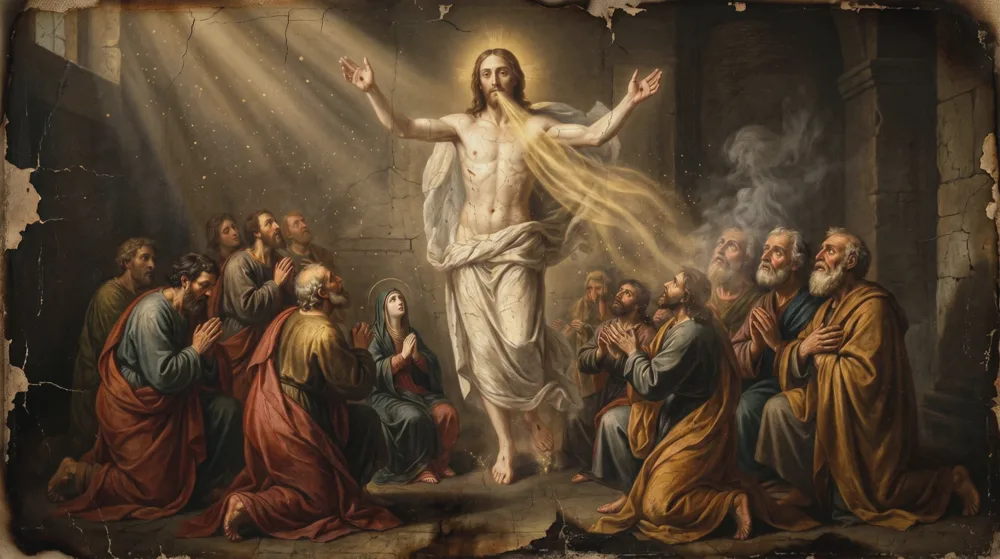
Confession is the Sacrament of Penance, instituted by Our Lord Jesus Christ, by which sins committed after Baptism are forgiven through the absolution given by a priest. The penitent accuses his sins, is truly sorry for them, resolves to amend, and receives the words of pardon spoken in the place of Christ Himself. Today it is also called Reconciliation, but its older and more exact name is the Sacrament of Penance, or simply Confession.
The Roman Catechism, drawn up by the Council of Trent (1566), calls it "a second plank" after the shipwreck of sin: Baptism is given once and cannot be repeated, whereas Penance "becometh necessary, and requireth to be renewed, every time that one falleth into sin after Baptism." This article explains, from the sources, what Confession is: one of the seven sacraments of the Church, with its institution, its names, its parts, its effects, and the absolute secrecy of the seal.
Confession meaning: what the word means
The word penance carries several senses, and the Catechism is careful to distinguish them. There is a worldly regret that "worketh death, and not salvation"; there is the mere natural sorrow a man feels for himself after a bad action. But there is a third repentance, which is "at once both a Virtue and a Sacrament" — the one that "cometh principally or solely from the fact that we have offended God."
Confession proper is defined by the Roman Catechism as "an accusation of one's sins made in order to receive the remission thereof through the virtue of the keys, in the sacrament of Penance." It is rightly called an accusation: we confess not to parade our sins but to acknowledge ourselves guilty and to obtain pardon. Saint Augustine called it "the disclosure of a hidden disease, with the hope of obtaining its cure." This is why the tribunal of Penance is unlike any human court: there, confessing earns punishment; here, the very confession of the fault wins its forgiveness.
The Sacrament of Penance
The proper name of this sacrament is the Sacrament of Penance — the name the Council of Trent and the Roman Catechism use throughout. What is the Sacrament of Penance? It is one of the seven sacraments of the Catholic Church: an outward sign instituted by Christ which truly effects the forgiveness it signifies, restoring to the baptised sinner the grace lost by sin. The sacrament unfolds in a few fixed steps: the examination of conscience, contrition, the confession of sins to the priest, the absolution, and the satisfaction, or penance performed. Each of these is treated in its place below.
Penance, Confession or Reconciliation?
The sacrament has borne several names, and many Catholics ask whether Reconciliation is the same as Confession. It is: there is one sacrament, instituted by Christ, whatever name it is given.
The Council of Trent and the Roman Catechism call it the Sacrament of Penance, after the virtue of penance that the sinner brings to it. The faithful have long called it Confession, after its most visible act. Reconciliation is an old word in the Church too: Saint Paul speaks of "the ministry of reconciliation" (2 Corinthians 5:18), and the Roman Pontifical keeps the solemn reconciliation of public penitents on Maundy Thursday. But as the ordinary name of the sacrament, Sacrament of Reconciliation spread after 1973, when the reformed Rite of Penance (Ordo Paenitentiae, promulgated on 2 December 1973) named its forms rites "for the reconciliation of penitents." That is why many parishes today speak of Catholic Reconciliation, and of a child's First Reconciliation, meaning his first confession.
We keep the traditional name, the Sacrament of Penance, because it is the name of Trent and of the catechisms, and because it says what the penitent must bring: sorrow, accusation and satisfaction. Reconciliation names the fruit, the sinner restored to God's friendship ("For Christ, we beseech you, be reconciled to God," 2 Corinthians 5:20); Penance names the way to it. In the rite of 1962 the priest absolves in the Latin form of the Roman Ritual: Ego te absolvo a peccatis tuis, in nomine Patris, et Filii, et Spiritus Sancti.
Who instituted the Sacrament of Penance?
The Sacrament of Confession was not invented by the Church. It was instituted by Our Lord Jesus Christ Himself. The Roman Catechism points to the Gospel: after the Resurrection, when the Apostles were gathered together, Christ "breathed upon them, saying: Receive ye the Holy Ghost; whose sins you shall forgive, they are forgiven them; and whose sins you shall retain, they are retained."
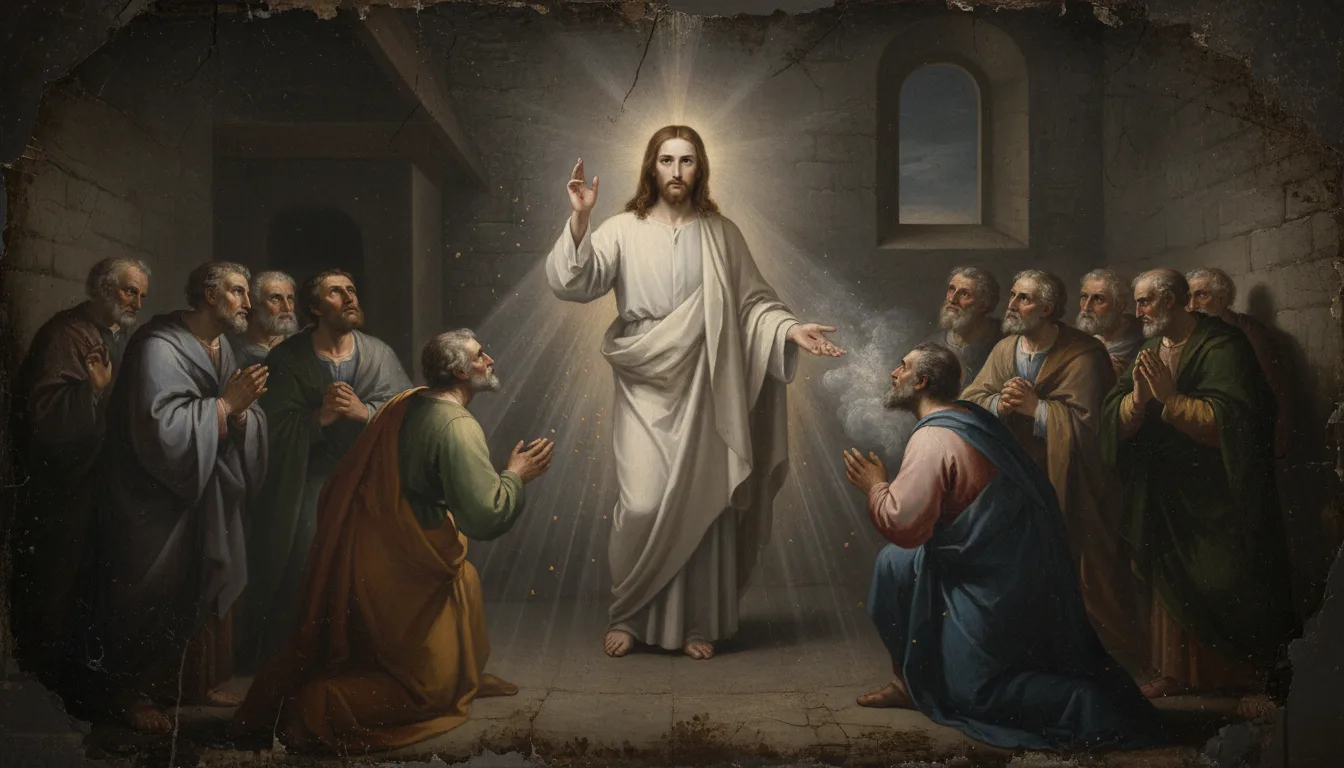
By giving the power to forgive and to retain, the Catechism reasons, Christ made the Apostles and their successors judges in this matter. The same truth is figured when He raised Lazarus and charged the bystanders to "loose him," and when He sent the ten healed lepers "to go show themselves to the priests." And a judge cannot pass sentence on a cause he has not examined — which is why "penitents are bound to reveal to the Priests, by Confession, all their sins one after another."
Christ placed this remedy among the Sacraments chiefly to remove our anxiety: no one can be sure of the judgment he passes on his own heart, so Our Lord gave us the certainty that "our sins are pardoned us by the absolution of the Priest." When the priest absolves, his words echo Christ's own to the paralytic: "Son, be of good heart; thy sins are forgiven thee." We read the founding verse closely in whose sins you shall forgive (John 20:23), and answer the common objection in why do Catholics confess to a priest.
What does the Bible say about confession?
Scripture is the ground on which the Church builds the Sacrament. The decisive text is the gift of the keys: Our Lord first promised Saint Peter, "I will give to thee the keys of the kingdom of heaven. And whatsoever thou shalt bind upon earth, it shall be bound also in heaven" (Matthew 16:19), and extended the same power to the Apostles (Matthew 18:18).
After the Resurrection He conferred it in act: "Receive ye the Holy Ghost. Whose sins you shall forgive, they are forgiven them; and whose sins you shall retain, they are retained" (John 20:22–23). A power to retain as well as to forgive is, the Roman Catechism reasons, the power of a judge — and a judge must hear the cause before he rules, which is why the sins must be told.
The duty to disclose sins by word is older still. In the Old Law God commanded, "When a man or woman shall have committed any of all the sins... they shall confess their sin" (Numbers 5:6–7). Saint James gives the apostolic practice plainly: "Confess therefore your sins one to another" (James 5:16), in the same passage where he describes the priest anointing the sick.
And Saint John promises the fruit of the act: "If we confess our sins, he is faithful and just, to forgive us our sins, and to cleanse us from all iniquity" (1 John 1:9). The figures of Lazarus called from the tomb and bidden "loose him," and the lepers sent to "show themselves to the priests," round out the scriptural witness on which Confession rests.
The matter and form of the Sacrament
Every Sacrament has a matter and a form. In Baptism the matter is water; in Confirmation, chrism. The Sacrament of Penance is different: the Council of Trent teaches that the acts of the penitent — Contrition, Confession, and Satisfaction — are "as it were the matter" of this Sacrament. They are true matter, but not taken from outside like water or oil; they rise from the penitent himself.
The form is the priest's word of absolution: "I absolve thee." As the Roman Catechism explains, "since the Sacraments signify what they produce, these words, I absolve thee, show very well that the remission of sins is wrought by the administration of this Sacrament." Sins are "like bonds which hold our souls enchained," and absolution breaks them. The priest does not merely declare the sinner pardoned, as the priest of the old Law declared a leper clean; he truly gives, as minister of the Lord, an absolution "ratified by God Himself."
The three parts of Penance
The Roman Catechism, citing Saint John Chrysostom, locates the three parts in the penitent himself: "Contrition is in his heart, Confession upon his lips, and humility, or salutary Satisfaction, in all his works." They form one whole, as the members form one body.
- Contrition — sincere sorrow for sin, with the firm resolve to sin no more. We treat the kinds of sorrow, perfect and imperfect, in contrition and attrition.
- Confession — the accusation of one's sins to the priest.
- Satisfaction — the penance accepted and performed, the priest fixing "a penalty proportioned to the greatness of his offences."
Contrition and Confession, the Catechism says, are what "justify the sinner" and are required for the Sacrament's essence; Satisfaction completes it. We offend God in thought, word, and deed, and so make amends by sorrow of heart, accusation of the lips, and works of penance.
What sins must be confessed?
The faithful are bound to make their confessions "entire and complete." This means all mortal sins must be disclosed to the priest, "one after another, even though they should be extremely secret." More than that: a penitent must declare the circumstances that change the kind or gravity of a sin, for "all these circumstances are so many sins of different kinds." To omit a mortal sin deliberately, while confessing others, ruins the whole Confession and adds a new sin — the profanation of the Sacrament — so that it must be made over again. If a sin is forgotten despite an honest examination, the Confession is valid; the sin is simply mentioned next time.
Venial sins are different. These "do not make us lose the grace of God," and the Catechism teaches that, although it is good and useful to confess them, "one can omit them without sin, and expiate them by many other means." The line between the two is set out in mortal and venial sin.
The accusation, the Catechism adds, should be "clear, simple, and sincere" — neither a self-justifying speech nor a flood of needless words, but a plain telling of "the nature and the quality of each fault." To call your sins to mind, use a traditional examination of conscience, which also gives examples of how a sin is put into words; the Iter Fidei confession app carries the same examination question by question. Behind particular sins lie their roots, the seven deadly sins and their contrary virtues, which a good examination also searches.
How a confession is made, in brief
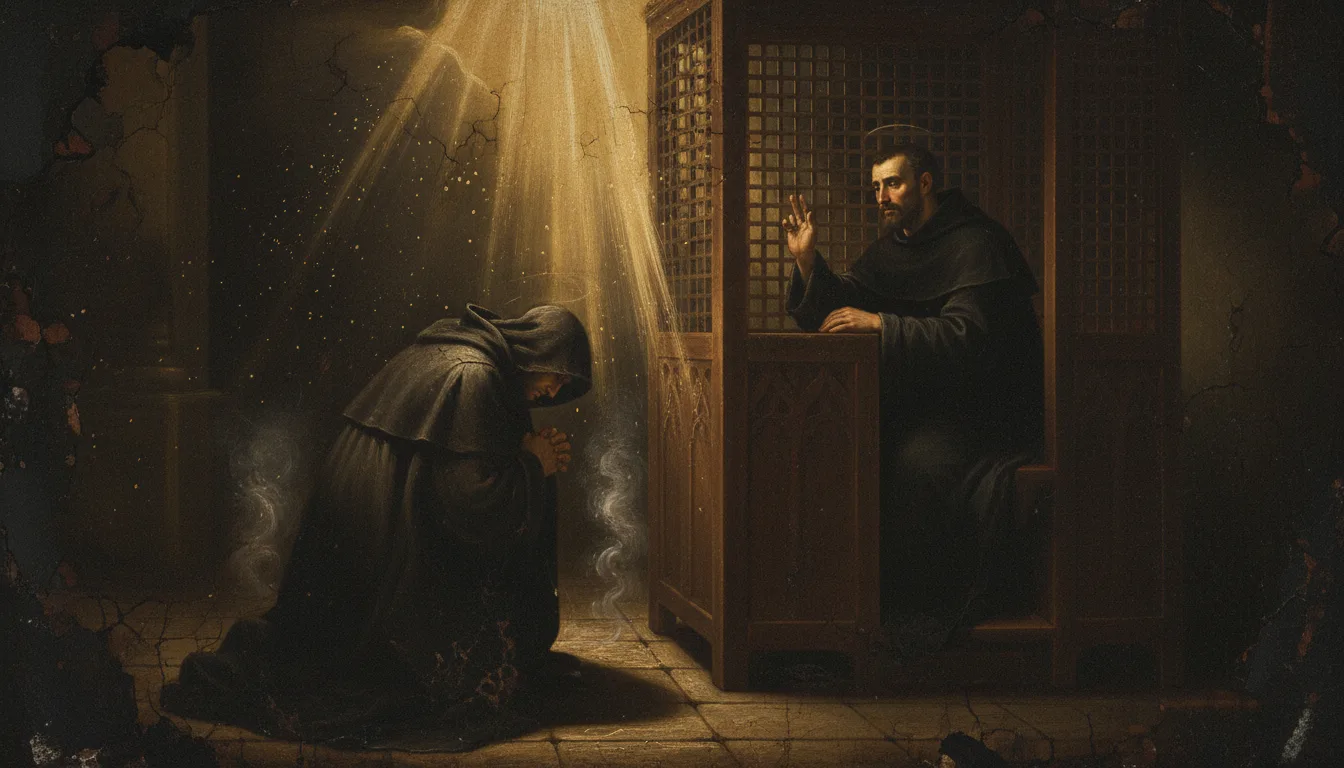
The rite itself is short. The penitent kneels in the confessional and begins: "Bless me, Father, for I have sinned. It has been [so long] since my last confession." He then accuses his sins, every mortal sin by its kind and number, and ends by saying he is sorry for these and all the sins of his life. The priest may give counsel and assigns a penance. The penitent makes an act of contrition, of which a traditional form runs:
O my God, I am heartily sorry for having offended Thee, and I detest all my sins, because I dread the loss of heaven and the pains of hell; but most of all because they offend Thee, my God, Who art all good and deserving of all my love. I firmly resolve, with the help of Thy grace, to confess my sins, to do penance, and to amend my life. Amen.
The priest then pronounces the absolution, I absolve thee from thy sins, in the name of the Father, and of the Son, and of the Holy Ghost, and the penitent performs his penance as soon as he can. If it has been many years, or this is your first confession, say so at the start: the priest will guide the rest. Each step, with the exact words, is set out in our guide to what to say in confession.
Who can hear Confession?
The minister of the Sacrament is a priest who holds "the ordinary or delegated power to absolve." Two things are required of him: the power of Order, received at ordination, and the power of jurisdiction. The Catechism notes that the power to forgive was given to the Apostles, "and the Apostles had the Priests for successors in this ministry." The priest acts at once as judge and as physician — judge, to weigh the gravity of sins; physician, to apply the remedy and guard against relapse. When there is danger of death and one's own priest cannot be reached, the Council of Trent teaches that the Church has always allowed any priest to absolve from every sin.
The seal of Confession
Nothing said in Confession may ever be revealed. The priest is "bound by the most sacred laws to the most inviolable silence." The Roman Catechism warns the faithful that they need never fear the priest disclosing what they have confessed, nor any harm befalling them in consequence; the laws of the Church "will that the most rigorous measures be taken" against any priest who breaks this trust. It cites the ancient decree: "Let the Priest tremble ever to betray the sinner by a word, by a sign, or in any other manner whatsoever." For this same reason Confession may not be made by proxy or by letter, "because the secret cannot be exactly enough kept by these two means." This is the seal — absolute, and without exception.
When and how often to confess
No one is bound to confess before the age of reason — for children, "from the moment when they distinguish good from evil." This first reception is what is meant by first Confession, which many parishes now call First Reconciliation. Since Saint Pius X's decree Quam Singulari (1910), children make it at the age of reason, about seven, before their First Communion. The Church commands every member of the faithful "to confess their sins at least once each year." But the Catechism urges far more frequent recourse: always in danger of death, and, "as soon as one has had the misfortune to fall into some mortal sin," without delay. It asks plainly whether it is not shameful that men so eager to wash their bodies should be slower "to purify the soul from the hideous defilements of sin."
The effects of Confession
The fruits of this Sacrament are great. The Roman Catechism likens Penance to "a tree whose roots are bitter, but whose fruits are full of sweetness," and lists its effects. First, it re-establishes the sinner "in the grace of God," uniting him to God in close friendship. Then it ordinarily produces in the devout "a deep peace, a perfect tranquillity of conscience, and ineffable joys of the Holy Ghost."

And there is no sin too great to be forgiven. "There is no crime so great and so horrible that it cannot be effaced by the Sacrament of Penance, not only once, but twice, but always." The Catechism grounds this in Saint John: "If we confess our sins, God is faithful and just to forgive us our sins." Those who seem in Scripture not to obtain mercy failed, it explains, not because the Sacrament was weak, but because they lacked true sorrow.
This is what Confession is: the merciful provision of Christ, by which the sinner, fallen after Baptism, finds again the friendship he had lost, and stands cleansed before God.
Frequently Asked Questions
What is confession?
Confession is the Sacrament of Penance, instituted by Our Lord Jesus Christ, by which sins committed after Baptism are forgiven through the absolution given by a priest. The Roman Catechism defines it as "an accusation of one's sins made in order to receive the remission thereof through the virtue of the keys." The penitent accuses his sins, is truly sorry, resolves to amend, and receives the words of pardon — I absolve thee — spoken in the place of Christ Himself.
How do you go to confession as a Catholic?
There are four steps. First, examine your conscience, calling to mind your sins since your last confession. Second, be truly sorry for them, with the firm resolve to sin no more. Third, enter the confessional, and after the priest's greeting say, "Bless me, Father, for I have sinned; it has been [so long] since my last confession," then accuse your sins — all mortal sins by kind and number. Fourth, listen to the priest's counsel, receive your penance, make an Act of Contrition, and receive absolution. The accusation should be "clear, simple, and sincere."
Is Reconciliation the same as Confession?
Yes. Penance, Confession and Reconciliation are three names for one sacrament instituted by Christ. Penance is the name used by the Council of Trent and the traditional catechisms; Confession names its most visible act; Reconciliation became the usual name after the reformed Rite of Penance of 1973, and names the fruit of the sacrament, the sinner reconciled to God.
What is First Reconciliation?
First Reconciliation is the name many parishes now give to a child's first confession. The sacrament is the same: at the age of reason, about seven, the child confesses his sins to the priest and receives absolution, ordinarily before his First Communion, as Saint Pius X decreed in Quam Singulari (1910).
What should you confess at confession?
You are bound to confess all mortal sins committed since your last good confession — each by its kind and number, with any circumstance that changes its gravity. Examining your conscience against the Ten Commandments is the surest way to call them to mind; our examination of conscience gives the questions and examples. Venial sins may be confessed and it is "good and useful" to do so, but you are not obliged to. A mortal sin honestly forgotten is still forgiven and is mentioned at your next confession.
What does the Bible say about confession?
Christ gave His Apostles the power to forgive and retain sins (John 20:22–23), building on the keys promised to Peter (Matthew 16:19). Because retaining sins requires judging them, the sins must be disclosed. Saint James commands, "Confess therefore your sins one to another" (James 5:16), and Saint John promises, "If we confess our sins, he is faithful and just, to forgive us our sins" (1 John 1:9). The Old Law already required the sinner to "confess their sin" (Numbers 5:7).
What are the steps of the sacrament of penance and reconciliation?
Five, in order. First, examine your conscience against the Ten Commandments and the duties of your state. Second, be contrite — truly sorry for your sins, with the firm resolve to sin no more. Third, confess your sins to the priest, every mortal sin by kind and number. Fourth, receive the absolution, the priest's I absolve thee. Fifth, perform the satisfaction, the penance assigned. Of these, the Council of Trent teaches that contrition, confession, and satisfaction — the acts of the penitent — are "as it were the matter" of the sacrament, and the absolution is its form.
What is the sacrament of penance prayer?
The prayer the penitent says in the Sacrament of Penance is the Act of Contrition, made after the priest assigns the penance and before he gives absolution. A traditional form begins, "O my God, I am heartily sorry for having offended Thee," and is given in full above. The priest's own prayer is the form of the sacrament itself — the words of absolution: I absolve thee from thy sins, in the name of the Father, and of the Son, and of the Holy Ghost.
Can non-Catholics go to confession?
The Sacrament of Penance forgives the sins of the baptised committed after Baptism, so it presupposes Baptism and, ordinarily, membership in the Church. A non-Catholic who is not yet baptised receives the forgiveness of all sins in Baptism itself, the "first plank" after the shipwreck of sin. One who sincerely desires to enter the Church is received through the proper steps, of which the confession of past sins forms a part. A non-Catholic may always speak with a priest, who will gladly guide a soul seeking God toward the sacraments.
How often must a Catholic go to confession?
The Church commands every member of the faithful "to confess their sins at least once each year." But the Catechism urges far more frequent recourse: always in danger of death, and, "as soon as one has had the misfortune to fall into some mortal sin," without delay. Frequent confession of venial sins, though not required, is "good and useful" and a great help to growth in grace.
What is the seal of confession?
The seal is the absolute and unbreakable secrecy that binds the priest never to reveal anything heard in confession. The priest is "bound by the most sacred laws to the most inviolable silence," and the Church's laws "will that the most rigorous measures be taken" against any who break it. The penitent need never fear disclosure, "by a word, by a sign, or in any other manner whatsoever." For this reason confession may not be made by proxy or by letter, since the secret could not then be kept.
The Iter Fidei confession app prepares you for the sacrament: an examination of conscience in four parts, a private notebook of the sins to confess, and a step-by-step guide in the confessional. Join early access here.
Sources. Catechism of the Council of Trent (Roman Catechism, 1566), Part II, On the Sacrament of Penance and On Confession.