
The Sacraments
Examination of Conscience: A Catholic Guide for Confession
A complete Catholic examination of conscience before confession, by the Ten Commandments, the precepts of the Church, the capital sins and the duties of one's state, with examples of sins to confess.

An examination of conscience is the careful review a Catholic makes of his thoughts, words, deeds, and omissions, to discover the sins he has committed since his last confession. It is the first work to be done before confession in the Sacrament of Penance, because we cannot confess what we have not first called to mind. The traditional way to examine the conscience is to pass the soul through four frameworks the Church has always used: the Ten Commandments of God, the precepts of the Church, the seven capital sins, and the duties of one's state in life. What follows is a complete examination of conscience for adults, drawn from the catechism, with concrete questions under each heading.
How to begin the examination
Before searching the conscience, ask God for light to know your sins and the grace to detest them. Then go back to your last good confession and consider what you have done against God, against your neighbour, and against yourself. The aim is not scrupulous fear but truth: to see the soul as God sees it.

Two things must be distinguished as you examine. A mortal sin is a grave disobedience to the divine law by which one gravely fails in one's duties towards God, towards one's neighbour, or towards oneself; besides the gravity of the matter, it requires the knowledge that one is sinning and the consent of the will. A venial sin is a slight disobedience, a failing only in some lesser duty. Mortal sin must be confessed by kind and number; it deprives the soul of grace, makes it lose heaven, and makes it deserve hell. Venial sin is not a small thing either, for it always contains an offence of God, cools charity within us, and disposes us to mortal sin. Knowing the difference between mortal and venial sin is half of a good examination of conscience for confession.
1. The Ten Commandments
The commandments of God are ten, given on Sinai and confirmed by Jesus Christ in the new law. The first three regard God directly and the duties we owe Him; the last seven regard our neighbour. It suffices to violate gravely a single one of them to merit hell. Pass each one over the conscience in order.
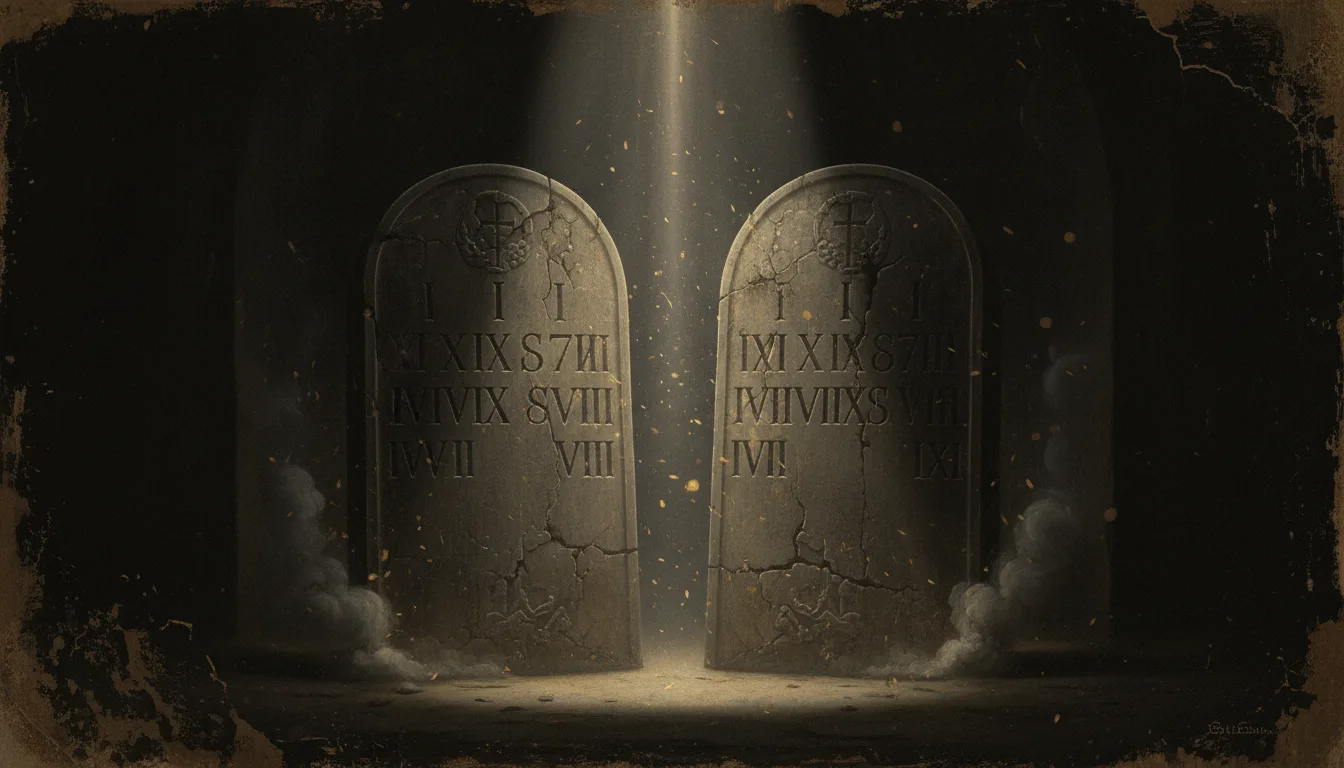
First: I am the Lord thy God; thou shalt not have other gods before Me. Have I doubted or denied the faith, or exposed it to danger by bad reading or bad company? Have I despaired of God's mercy or presumed upon it? Have I practised superstition, consulted fortune-tellers, or trusted in omens? Have I omitted prayer or neglected to learn the truths I am bound to know?
Second: Thou shalt not take the name of God in vain. Have I pronounced the name of God or of the saints irreverently, sworn falsely or rashly, cursed, or blasphemed? Have I broken a vow or a promise made to God?
Third: Remember to keep holy the feast days. Have I missed Mass through my own fault on a Sunday or feast of obligation? Have I done or commanded servile work without need? Have I behaved irreverently in church?
Fourth: Honour thy father and thy mother. Have I disobeyed, despised, or grieved my parents and lawful superiors? Have I failed in love, respect, or assistance toward them? If I have authority myself, have I neglected those in my charge?
Fifth: Thou shalt not kill. Have I harboured hatred, anger, or the desire of revenge? Have I given scandal, quarrelled, struck, or wished evil to anyone? Have I harmed my own life or health, or another's, in body or in soul?
Sixth and Ninth: Thou shalt not commit impurity; thou shalt not covet thy neighbour's wife. Have I sinned against purity in thought, desire, word, look, or deed, alone or with others? Have I read, watched, or sought what is impure, or led another into such sin?
Seventh and Tenth: Thou shalt not steal; thou shalt not covet thy neighbour's goods. Have I stolen, cheated, kept what is not mine, or damaged another's property? Have I failed to pay debts or wages, or refused to make restitution? Have I been ruled by an inordinate desire of riches?
Eighth: Thou shalt not bear false witness. Have I lied, calumniated, or revealed the hidden faults of others? Have I judged rashly, betrayed secrets, or refused to repair a reputation I injured?
2. The precepts of the Church
Besides the commandments of God, we are bound to observe the precepts of the Church, because Jesus Christ Himself commands us to obey her, and because these precepts help us keep the commandments of God. To transgress one deliberately in a grave matter is a mortal sin. In the Catechism of St Pius X they are five.
- To hear Mass on all Sundays and commanded feasts. Have I assisted at Mass with devotion, or arrived late, left early, or been wilfully distracted?
- To fast and abstain on the appointed days. Have I kept the fasts of Lent and the other commanded days, and abstained from meat when bound? Those not held to the fast are still bound to do penance, for we are all bound to do penance.
- To confess at least once a year and to communicate at Easter. Have I delayed confession beyond the year, or neglected my Easter Communion? Have I ever received the sacraments unworthily, which does not satisfy the precept but adds sacrilege?
- To pay the tithes due to the Church, according to custom. Have I contributed to the support of the Church and her ministers as I am able?
- Not to solemnise marriage at the forbidden times, that is, from the first Sunday of Advent to the Epiphany, and from the first day of Lent to the octave of Easter.
3. The seven capital sins
The Ten Commandments and the precepts show the acts to be confessed; the capital sins show the roots from which those acts spring. A capital sin is a bad disposition of the soul, and these seven are called capital because they are the source and the cause of many other vices and sins. Examining them reaches the dispositions that the commandments alone might miss. Each is overcome by the opposite virtue, and asking after that virtue sharpens the examination.
- Pride — overcome by humility. Have I been vain, presumptuous, contemptuous of others, unwilling to be corrected?
- Covetousness — overcome by liberality. Have I been greedy, attached to money, hard toward the poor?
- Lust — overcome by chastity. Have I indulged impure thoughts, desires, or deeds?
- Anger — overcome by patience. Have I given way to wrath, impatience, or the desire of revenge?
- Gluttony — overcome by abstinence. Have I been excessive in food or drink, or intemperate?
- Envy — overcome by brotherly love. Have I been saddened at another's good or glad at his misfortune?
- Sloth — overcome by diligence and fervour. Have I been lazy or negligent in the service of God and the duties of my state?
To these the catechism joins certain very grave sins worth recalling: the six sins against the Holy Ghost — despair of one's salvation, presumption, impugning the known truth, envying the graces of others, obstinacy in sin, and final impenitence — and the four sins that cry to heaven for vengeance: wilful murder, the impure sin against nature, oppression of the poor, and defrauding labourers of their wages.
4. The duties of one's state in life
The fourth framework is the one most often neglected, yet it is where many adults sin most. By the duties of state are understood the particular obligations each one has in consequence of his state, his condition, and the position he occupies. God Himself has imposed these duties, for they flow from His commandments. The fourth commandment, under the name of father and mother, comprises all superiors, and from it derive the duties of obedience and respect that inferiors owe and the duties of vigilance that superiors owe in return. From the seventh, eighth, and tenth commandments derive the duties of fidelity, sincerity, justice, and equity binding on workmen, merchants, and all who administer the goods of others, forbidding every fraud, injustice, negligence, and duplicity.
So the examination here is made by asking what one's particular calling requires:
- Parents and heads of households: Have I provided for, instructed, corrected, and given good example to those in my charge? Have I watched over their souls as over their bodies?
- Children and dependents: Have I obeyed, respected, and assisted those set over me?
- In work and business: Have I been honest, diligent, and just, paying wages and debts and giving full measure, free of fraud and negligence?
- Persons consecrated to God: Have I been faithful to the vows and promises by which, under the second commandment, I bound myself? For the duties of the consecrated derive from the commandment to fulfil what is vowed to God.
This is why the same four frameworks serve everyone while the answers differ. The examination is adapted for adults by weight of responsibility, for children by simplicity and the duties of obedience, and for each person by the duties proper to his state. The frameworks are fixed; the questions bend to the life.
Examination of conscience by state and age
The four frameworks above never change. What changes is the weight that falls on each one according to who is examining himself. Below are the points to dwell on for each condition of life. Take the general examination first; then linger where your own state requires it.
Examination of conscience for adults
For adults the examination falls most heavily on the duties of one's state — work, marriage, the rearing of children, and the management of goods that are not one's own. Have I been honest and diligent in my employment, paid wages and debts in full, and given full measure free of fraud? In marriage, have I been faithful in body and in heart, patient, and provident? Have I kept the marriage bed according to the law of God, refusing what is contrary to its purpose? Have I governed my household in the fear of God, or let bad reading, bad company, or worldly amusements enter it? Have I prayed daily, kept the Sundays and fasts, and gone to confession often rather than once a year only? The catechism adapts the examination by responsibility, not by changing the rule.
Examination of conscience for men
A man's examination should weigh his particular duties as head of a household and provider, and the sins to which his state most exposes him. Have I been the spiritual head of my family — leading prayer, seeing that the children are instructed, and going first to the sacraments myself? Have I been just and charitable in my work and dealings, neither defrauding labourers of their wages nor cheating an employer of honest labour? Have I guarded purity in look, thought, and deed, and kept far from impure images and company? Have I given way to anger, drunkenness, or harshness toward my wife and children? Have I provided for those in my charge in body and in soul?
Examination of conscience for women
A woman's examination weighs especially her duties in the home, in marriage, and toward the souls entrusted to her, with the faults to which her state most exposes her. Have I cared for my husband and children with patience and self-denial, or yielded to vanity, immodesty in dress, or excessive concern for the world's esteem? Have I kept the household in the faith — teaching the children their prayers, leading them to Mass and confession? Have I sinned against purity or chastity in thought, desire, or deed, alone or with another? Have I been the cause of detraction or gossip, judged my neighbour rashly, or sown discord? Have I, in marriage, refused what its state requires, or done what is contrary to its purpose? Have I been faithful in prayer and in the duties of my state?
Examination of conscience for young adults
For young adults the examination must reach the sins of independence: a life now ordered by oneself, away from the watch of parents. Have I kept the faith and practised it openly, or hidden or abandoned it among godless company? Have I missed Mass through laziness, late nights, or human respect? Have I sinned against purity in thought, look, word, or deed, alone or with another, or by impure reading and watching? Have I been honest and sober in friendships, drink, and amusements? Have I begun to discern my state in life — marriage, the priesthood, or the religious life — and prayed to know God's will, rather than drifting? Have I prayed daily and gone to confession regularly?
Examination of conscience for teens
For teenagers the examination should be plain and short, fitted to their duties of obedience and study and the temptations proper to their age. Ask:
- Have I prayed morning and night, and paid attention at Mass on Sundays?
- Have I obeyed and respected my parents and teachers, or answered back, lied, or disobeyed?
- Have I been lazy in my schoolwork or in my duties at home?
- Have I sinned against purity by impure thoughts, words, pictures, websites, or actions, alone or with others?
- Have I been unkind, used bad language, bullied, or gone along with the cruelty of others?
- Have I been proud, jealous, greedy, or quick to anger?
- Have I been honest, or have I stolen, cheated, or copied another's work?
Examination of conscience for kids
For children the examination is made very simply, by short questions they can understand, dwelling on obedience and the first lessons of charity. A parent may ask them:
- Did I say my morning and night prayers, and behave well at Mass?
- Did I obey my parents and teachers the first time, without arguing?
- Did I tell any lies?
- Was I kind to my brothers and sisters and to other children, or did I fight, tease, or call names?
- Did I take anything that was not mine?
- Was I greedy, selfish, or lazy when asked to help?
- Did I use bad words or take God's name in a bad way?
A child is bound to confess only after he has reached the age of reason, about seven years, when he can tell right from wrong; before that age there is no obligation, but the practice of a simple examination forms a good conscience early.
Examination of conscience for seniors
For the aged the examination weighs the duties and temptations of the later years, and the nearness of death that gives the soul cause to set everything in order. Have I borne the infirmities and losses of age with patience and resignation to God's will, or with bitterness, complaint, and despair? Have I kept up prayer and the sacraments as far as my strength allows, or grown slack under the excuse of weakness? Have I been a cause of scandal or of good example to my children and grandchildren? Have I forgiven all who have wronged me, and asked pardon of any I have injured? Have I made my peace with God by a good confession, lest death find me unprepared? Am I attached to my goods, or ready to leave them justly and charitably?
Examination of conscience for persons consecrated to God
For priests, religious, and all who have bound themselves by vow, the examination adds the duties that flow from those vows under the second commandment. Have I been faithful to the vows and promises I made to God — of poverty, chastity, and obedience, or of the clerical state? Have I kept my rule, my hours of prayer, and the duties of my office with diligence and devotion? Have I given good example, or scandal, to those committed to my care? For the duties of the consecrated derive from the commandment to fulfil what is vowed to God.
A short examination of conscience checklist
For those who want a brief, practical checklist to run over before going to the church, the four frameworks reduce to a simple list. This is a simple examination of conscience that fits the whole of the soul's duties into a few lines:
- Against God — Did I neglect prayer, doubt or hide the faith, take God's name in vain, or miss Mass on Sunday or a holy day of obligation through my own fault?
- Against my neighbour — Did I disobey or grieve those over me, harbour hatred or anger, give scandal, sin against purity, steal or defraud, lie, calumniate, or judge rashly?
- Against myself — Did I give way to pride, gluttony, drunkenness, sloth, or impurity, or harm my own soul or body?
- In my state of life — Did I neglect the duties proper to my calling as parent, child, worker, or consecrated soul?
- The precepts of the Church — Did I keep the fasts and abstinence, confess within the year, make my Easter Communion, and support the Church as I am able?
Whoever can answer these honestly has made a detailed examination of conscience in little room. The fuller questions under each commandment above are there for the days when more searching is needed.
Examples of sins to confess
Many penitents know they must confess but do not know how a sin is put into words. The examination above already contains the answer: each question, answered honestly, becomes a sentence of the accusation. Here are examples of sins to confess, drawn from the same four frameworks and phrased as a penitent would say them in the confessional. They are not a script to be recited, still less a list to be confessed whole, but models for naming your own sins plainly.
Against God
- "I missed Mass on Sunday twice through my own fault."
- "I took the name of God in vain, many times, in anger."
- "I went for months without praying."
- "I consulted a fortune-teller" or "I read my horoscope, believing in it."
- "I received Holy Communion once while conscious of a mortal sin."
Against my neighbour
- "I disobeyed my parents and answered them with contempt."
- "I gave way to anger and struck someone" or "I insulted my husband in front of the children."
- "I told lies, about ten times, two of them to harm someone."
- "I spoke about a colleague's hidden faults and damaged his reputation."
- "I stole money from my employer, and have not yet paid it back."
- "I sinned against purity with another person, three times."
Against myself and in my state
- "I sinned against purity alone, about once a week."
- "I looked at impure images on the internet, several times."
- "I got drunk twice."
- "I neglected to teach my children their prayers and to take them to Mass."
- "I was lazy in my work and cheated my employer of the time I owe him."
Three things make these examples useful. First, a mortal sin is confessed by its kind and number: "I missed Mass three times," not "I was not very religious." If you cannot recall the exact number, give your best estimate ("about once a week for six months"). Secondly, name the circumstance that changes the kind of sin (a theft from a church, a lie under oath, an impure act with a married person), but leave out the surrounding story. Thirdly, venial sins may be added, such as impatience, small lies or distraction in prayer, but they need not be. When you are unsure whether a fault is grave, confess it with your doubt ("I am not sure whether it was serious"), and the priest will guide you.
A printable PDF examination of conscience
Many ask for a printable PDF examination of conscience to carry to the confessional. We do not offer one, deliberately. The whole examination is on this page, in the order of the four frameworks, and the page may be printed as it stands if paper is what you need.
But a sheet of paper is a poor help in the one place where help is most wanted. The Iter Fidei confession app carries the same examination in four parts, built for the moment itself. You tick the questions that concern you, each one marked as grave or venial matter; the sins you tick are gathered in a private notebook, which clears once your confession is recorded; a short doctrinal helper weighs grave matter, full knowledge and full consent when you are unsure whether a sin is mortal; and a step-by-step guide stays with you in the confessional, from "Bless me, Father" to the act of contrition. Nothing has to be written down, left in a missal, or found by another. Join early access here.
Note on modern examination guides
Catholics searching online will meet several modern examination guides, such as the one published by the USCCB or the Fathers of Mercy examination. They rest on the same Ten Commandments and precepts of the Church set out here. We follow instead the traditional structure of the Catechism of St Pius X and the older catechisms, which add the two further frameworks of the seven capital sins and the duties of one's state, the second of these being the one most often neglected. Whatever guide one uses, the value of an examination lies not in the sheet of paper but in the honesty and contrition of the soul that makes it.
After the examination
The examination is not the whole of confession; it prepares it. Once the sins are known, there must follow sorrow for them and the firm purpose of amendment, expressed in the traditional Act of Contrition, and then the confession itself, which many penitents still open with the first part of the Confiteor, and whose words and order are set out step by step in how to go to confession. That sorrow need not be the highest: the Church teaches that imperfect sorrow, born of the fear of hell, suffices within the sacrament, as we explain in contrition and attrition.
If the thought of speaking your sins to a man holds you back, consider why Catholics confess to a priest at all: it is Christ's own appointment, not the Church's invention. Examine often, for it is difficult to make a good confession, and to keep far from mortal sin, if one confesses but rarely; and the old habit of a short examination each night closes a day the faithful began with the Morning Offering prayer.
Frequently Asked Questions
What is an examination of conscience?
An examination of conscience is the careful review a Catholic makes of his thoughts, words, deeds, and omissions, to discover the sins he has committed since his last confession. It is the first work of confession, since we cannot confess what we have not first called to mind. The traditional way to make it is to pass the soul through four frameworks the Church has always used: the Ten Commandments, the precepts of the Church, the seven capital sins, and the duties of one's state.
How do you make a good confession with an examination of conscience?
Begin by asking God for light to know your sins and the grace to detest them, then go back to your last good confession and review your life by the four frameworks above. A good confession also requires sorrow for sin and the firm purpose of amendment, expressed in the Act of Contrition, before you confess your sins to the priest. What the sacrament is, its parts and its effects, we set out in what is confession.
What is the difference between mortal and venial sin in the examination?
A mortal sin is a grave disobedience to the divine law, requiring grave matter, the knowledge that one is sinning, and the consent of the will; it must be confessed by kind and number, for it deprives the soul of grace and merits hell. A venial sin is a slight disobedience in some lesser duty, which does not destroy charity but cools it and disposes us to mortal sin. Distinguishing the two is half of a good examination, treated more fully in our article on mortal and venial sin.
How often should I examine my conscience and go to confession?
The Church binds every Catholic to confess at least once a year and to communicate at Easter, but this is only the minimum. The catechism of St Pius X teaches that it is difficult to make a good confession, and to keep far from mortal sin, if one confesses but rarely; frequent examination and frequent confession are therefore strongly urged. A short daily examination at night is the traditional practice of the saints.
What are the four traditional frameworks for examining the conscience?
They are the Ten Commandments of God, the five precepts of the Church, the seven capital sins, and the duties of one's state in life. The first two show the sinful acts to be confessed, the capital sins show the roots from which those acts spring, and the duties of state reach the obligations proper to each person's calling. The frameworks are fixed for everyone, while the questions under each bend to the life of adult, child, parent, or consecrated soul.
How is an examination of conscience for adults different?
The same four frameworks serve everyone, but for adults the examination falls more heavily on the duties of one's state in life, since adults carry the weight of responsibility for work, marriage, children, and the goods of others. This is the framework most often neglected, yet it is where many adults sin most, by injustice, negligence, or failure toward those in their charge. The catechism adapts the examination by responsibility, not by changing the rule.
What is a good examination of conscience for kids?
For children the examination is made by short, plain questions fitted to their age and their duty of obedience: Did I say my prayers and behave at Mass? Did I obey my parents and teachers, tell any lies, take what was not mine, or fight with other children? Did I use bad words? A child is bound to confess only after the age of reason, about seven years, when he can tell right from wrong, but the practice of a simple examination forms a good conscience early.
What sins should I confess?
Every mortal sin committed since your last good confession must be confessed, by its kind and its number, with any circumstance that changes its kind. Venial sins may be confessed and it is good to do so, but there is no obligation. The section "Examples of sins to confess" above shows how a sin is put into words: "I missed Mass on Sunday twice through my own fault," "I told lies, about ten times." Name the sin plainly, without the story around it.
Is there a simple or printable examination of conscience?
Yes. The whole examination reduces to a short checklist: what we have done against God, against our neighbour, against ourselves, in the duties of our state, and against the precepts of the Church. This page may be printed as it stands; there is no separate PDF. The Iter Fidei app carries the same examination to tick question by question, with a private notebook of the sins to confess.
How does this differ from the USCCB or other modern examinations?
Modern guides such as the USCCB and Fathers of Mercy examinations rest on the same Ten Commandments and precepts of the Church. We follow instead the fuller traditional structure of the Catechism of St Pius X, which adds two further frameworks — the seven capital sins and the duties of one's state. The matter examined is the same divine law; what differs is the completeness of the structure, the duties of state being the framework most often left out of shorter guides.
The Iter Fidei app carries this examination of conscience in four parts, with a private notebook of the sins you tick and a step-by-step guide in the confessional, the act of contrition included. Join early access here.
Sources. Catechism of St Pius X, Part III, ch. 1 (The Commandments of God in General), ch. 4 (The Precepts of the Church), ch. 5 (The Particular Duties of Each State); Part V, ch. 5 (Sins and Their Principal Kinds), ch. 6 (Vices and the Other Very Grave Sins).