
The Sacraments
Contrition and Attrition: Perfect and Imperfect Contrition
Contrition is sorrow for sin with the resolve to sin no more. Perfect contrition springs from love of God; imperfect contrition, or attrition, from fear.
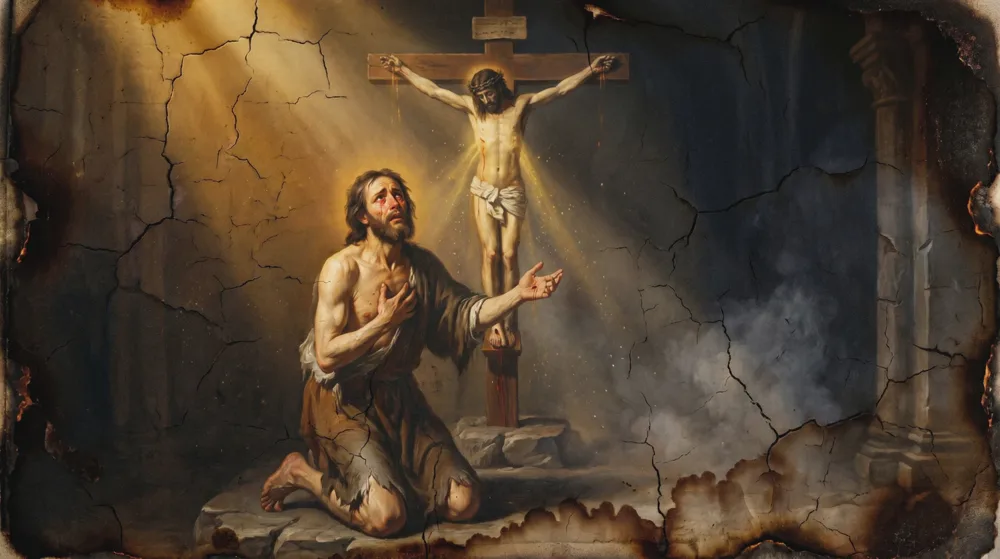
Contrition is sorrow of the soul for sin committed, joined to the firm purpose of sinning no more. The Church distinguishes two kinds. Perfect contrition is sorrow for sin because sin offends God, who is infinitely good and worthy in Himself of being loved. Imperfect contrition, also called attrition, is sorrow for sin from a lesser motive: fear of hell and of God's justice, or the very ugliness of sin. Both are true sorrow and both prepare the soul for pardon; but only attrition leaves the soul needing absolution to be restored, while perfect contrition restores the soul at once, provided it carries the will to confess.
This is the doctrine of the Council of Trent (1566) and of the Catechism of Saint Pius X (1908), and it is the heart of what a Catholic must bring to Confession.
Contrition meaning: what the word names
The word contrition means a crushing or a breaking, as when a stone is ground and reduced to powder. The Roman Catechism of the Council of Trent explains that the name was chosen to express the violence of the sorrow: our hearts, hardened by pride, are broken and ground down by the force of repentance. The Catechism of Saint Pius X gives the same image — the hardened heart of the sinner is in some way crushed by sorrow for having offended God.
The Fathers of Trent define it plainly: "Contrition is a sorrow of the soul and a detestation of the sin committed, with a firm purpose of sinning no more in the future." Two things, then, are necessary together — repentance for the sins committed, and the resolution to commit no more of them. Whoever wishes to reconcile himself with a friend he has offended must both deplore the wrong and resolve never to wound the friendship again.
One caution belongs here. When the catechism says contrition is a sorrow, it does not mean an outward and sensible grief, still less tears. Contrition is an act of the will. Saint Augustine warns that "sorrow accompanieth repentance, but it is not repentance." A man may weep at the death of his children and feel little for the loss of God's grace; that felt emotion is not the measure. The measure is the will turning from sin and back to God.
Perfect contrition: sorrow from the love of God
Perfect contrition is the displeasure of having offended God because He is infinitely good and worthy in Himself of being loved. The Catechism of Saint Pius X calls it perfect for two reasons: because it regards God's goodness alone, and not our own advantage or harm; and because it obtains for us at once the pardon of our sins.
Why does it have this power? Because perfect contrition is born of charity — of the love of God — and charity cannot dwell in the soul together with mortal sin. The moment true charity returns, mortal sin departs. The Roman Catechism teaches the same: true contrition is an act of charity, and since the charity by which we love God is the greatest love, contrition can have no other measure than charity itself. Scripture uses the same words for both — "Thou shalt love the Lord thy God with thy whole heart," and "Be converted with your whole heart."
There is one condition that must not be passed over. Perfect contrition does not remit sin independently of Confession. It always includes the will to confess. The Catechism of Saint Pius X is exact: perfect sorrow obtains pardon immediately "while yet leaving us the obligation of confessing." A Catholic in mortal sin who makes a perfect act of contrition is restored to grace — but he is still bound to confess that sin to a priest before receiving Holy Communion. Perfect contrition does not replace the Sacrament of Penance; it carries within it the resolve to seek it.
This is why the act is so urgent in danger of death, or when one has fallen into grave sin and cannot reach a priest at once.
Imperfect contrition (attrition): sorrow from holy fear
Imperfect contrition, the Church's name for which is attrition, is sorrow for having offended God as our sovereign Judge — that is, through fear of the chastisements merited in this life or the next, or because of the very ugliness of sin. It is real sorrow and a genuine grace, not a worldly regret. The Catechism of Saint Pius X numbers it among supernatural sorrow: he who repents because he has lost paradise and merited hell, or because of the intrinsic malice of sin, repents for motives of faith.
The Roman Catechism describes the same reality without despising it: "even though our contrition were not as perfect as we have just said, our repentance could nevertheless be true and efficacious." Attrition is enough to receive the Sacrament of Penance worthily and to obtain the pardon of mortal sin — but only within the sacrament, through the absolution of the priest, by the power Christ gave His Apostles in John 20:23, "whose sins you shall forgive". This is the great mercy of Confession: it does not demand that the penitent already possess the highest love; it raises imperfect sorrow, joined to absolution, into the full remission of sin.
What attrition cannot do is restore the soul outside the sacrament. Where perfect contrition justifies the moment it is conceived, attrition waits upon absolution.
Attrition vs contrition: the difference that matters
The whole of attrition vs contrition turns on the motive of the sorrow, not its intensity.
- Perfect contrition — sorrow because sin offends God, who is good in Himself and worthy of all love. Born of charity. Restores the soul to grace immediately, with the will to confess.
- Imperfect contrition (attrition) — sorrow from the fear of God's justice and punishment, or from the ugliness of sin. Born of holy fear. Sufficient to receive absolution worthily; restores the soul through the sacrament.
Both are true. Both are supernatural. Both are accepted by God. The fear that begins in attrition is not to be scorned — it is often the door by which the soul first turns back, and the same penitent who comes in fear is led by grace toward love. The Catechism of Saint Pius X teaches that we should excite sorrow in ourselves by considering both: the rigour of God's justice and the loss of His friendship, the hell we have merited and the Redeemer we have wounded. Fear and love work together to break the heart.
The act of attrition and the act of contrition
In practice a Catholic forms his sorrow in a short prayer made before or during Confession. The act of attrition and the act of contrition are, in the prayers handed down to us, very often the same prayer — the traditional Act of Contrition expresses both motives in turn, which is why one prayer suffices for either disposition. Consider its words: "I detest all my sins, because I dread the loss of heaven and the pains of hell" — that is attrition, sorrow from holy fear. "But most of all because they offend Thee, my God, who art all good and deserving of all my love" — that is perfect contrition, sorrow from love. The prayer rises from fear to love, and so forms whichever sorrow the soul can reach.
Whatever the motive, the catechisms require four qualities of any good sorrow. The Catechism of Saint Pius X lists them: sorrow must be interior (in the heart and will, not only in words), supernatural (excited by grace and conceived for motives of faith), sovereign (we must hate sin as the greatest of all evils, because it offends God the sovereign Good), and universal (extending to every mortal sin, for whoever keeps a single mortal sin unrepented remains the enemy of God). And with sorrow must come the firm purpose of amendment — the resolve never to sin again and to flee the occasions of sin — without which no contrition is true.
The full Act of Contrition, with its meaning line by line, is in our guide to the Act of Contrition.
How to use this in Confession
When you go to confess, sorrow is the most important thing of all. The Catechism of Saint Pius X warns that if sorrow is wanting, the confession is null. So before you enter the confessional, ask God from your heart to give you light to know your sins and the grace to detest them; then excite your sorrow by considering what sin is — the offence of God, the loss of grace, the wounding of the Redeemer who died for you.
You need not weep. You need not have reached the perfect love of God. Imperfect contrition, true and supernatural, joined to the firm purpose of amendment and to a sincere accusation of your sins, is enough to make a good confession and receive absolution. Strive for the higher sorrow — sorrow from love — but never stay away because you fear your sorrow is only attrition. The sacrament was given precisely for that.
For the rest of what a good confession requires, see our guides to how to go to confession and what Confession is. To prepare, make a traditional examination of conscience, weighing each fault by the difference between mortal and venial sin, since every mortal sin must be confessed; the Iter Fidei confession app goes through the same Commandments, precepts of the Church and capital sins question by question.
Frequently Asked Questions
What is the difference between contrition and attrition?
The difference turns on the motive of the sorrow, not its intensity. Perfect contrition is sorrow because sin offends God, who is good in Himself and worthy of all love — it is born of charity. Imperfect contrition, or attrition, is sorrow from the fear of God's justice and punishment, or from the ugliness of sin — it is born of holy fear. Both are true, supernatural, and accepted by God.
Does perfect contrition forgive sins without Confession?
Perfect contrition restores the soul to grace at once, but it never dispenses with Confession — it always includes the will to confess. A Catholic in mortal sin who makes a perfect act of contrition is restored to grace, yet he is still bound to confess that sin to a priest before receiving Holy Communion. This is why the act is so urgent in danger of death.
Is attrition enough for a good Confession?
Yes. Imperfect contrition, true and supernatural, joined to the firm purpose of amendment and a sincere accusation of sins, is enough to receive absolution worthily and obtain the pardon of mortal sin — but only within the sacrament, through the priest's absolution. This is the great mercy of Confession: it does not demand that the penitent already possess the highest love.
What does the word "contrition" mean?
It means a crushing or a breaking, as when a stone is ground to powder. The name was chosen to express how the heart, hardened by pride, is broken and ground down by the force of repentance. The Council of Trent defines contrition as a sorrow of the soul and a detestation of the sin committed, with a firm purpose of sinning no more.
Is contrition a feeling, or do I need to cry?
No. Contrition is an act of the will, not an outward and sensible grief, still less tears. St Augustine warns that "sorrow accompanieth repentance, but it is not repentance." The measure is the will turning from sin and back to God; the sorrow must be interior, supernatural, sovereign, and universal, joined to the firm purpose of amendment.
Conclusion
Sorrow for sin is the soul of the Sacrament of Penance. Perfect contrition, born of charity, restores grace at once and carries the will to confess. Imperfect contrition, or attrition, born of holy fear, brings the penitent to the priest, and absolution completes what fear began. God rejects neither. He never delays His pardon to the heart that turns to Him: "Thou wilt not reject, O my God, a contrite and humbled heart."
The traditional Act of Contrition and a complete guide to making a good confession are in the Iter Fidei app, ready when you need them. Join early access here.
Sources. Catechism of the Council of Trent (Roman Catechism, 1566), On the Sacrament of Penance — On Contrition; Catechism of Saint Pius X (1908), On Penance, §§ on Sorrow.