
The Faith
What Does the Bible Say About Cremation? The Catholic Answer
What does God say about cremation? Scripture and the Church bury the body as the temple of the Holy Ghost awaiting the resurrection; cremation was forbidden when chosen to deny that hope.
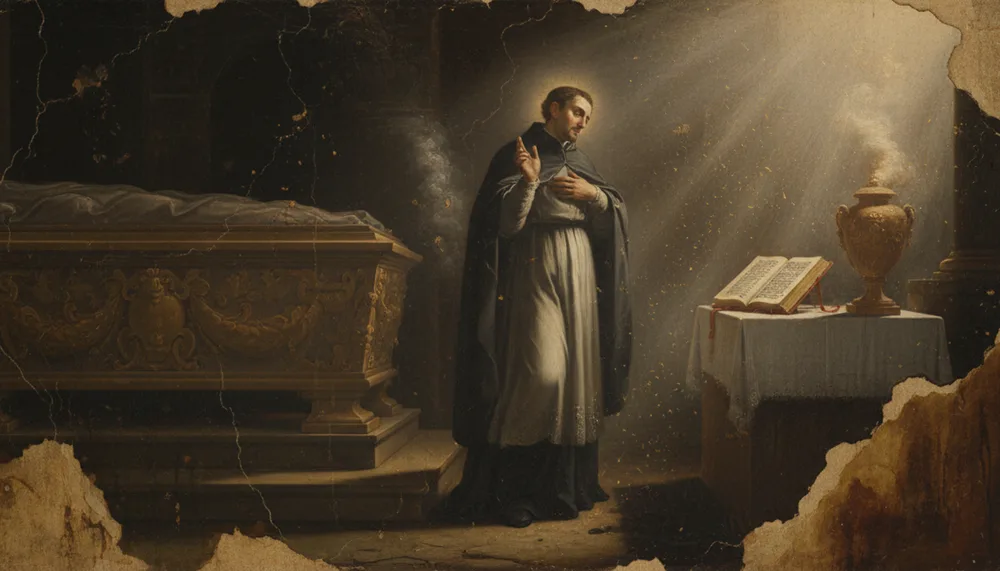
What does God say about cremation? Scripture never commands the burning of the dead and everywhere shows the faithful burying their dead in the earth, as a work of mercy and an act of faith in the resurrection of the body. The Catholic way is burial: the body is the temple of the Holy Ghost (1 Corinthians 6:19), it shall rise again, and Christ Himself was buried. Cremation is not in every case a personal sin, but the Church has gravely forbidden it whenever it is chosen as a denial of the resurrection, and her plain preference is, and has always been, the burial of the body.
What Does the Bible Say About Cremation?
The Bible does not legislate cremation as a rite of the godly; it shows burial as the constant practice of the patriarchs, the prophets, and the people of God. Abraham buries Sara in a purchased field; Jacob and Joseph are carried up out of Egypt to be laid with their fathers.
The corporal work of burying the dead is praised as righteousness: of holy Tobias it is written that "he was careful to bury the dead, and they that were slain" (Tobias 1:20), and the angel Raphael declares this the very deed that won his prayer a hearing — "when thou didst pray with tears, and didst bury the dead… I offered thy prayer to the Lord" (Tobias 12:12). To bury the dead is mercy; to burn them is nowhere held up as the act of a faithful man.
Behind the practice stands the word God spoke to Adam: "for dust thou art, and into dust thou shalt return" (Genesis 3:19). The body goes back to the earth from which it was taken, there to await its restoration — yet man is not as the beasts that perish, for he alone is made in God's image and destined to rise, a distinction we draw out in what God says about animals.
Saint Paul makes the seed of the buried body the very image of the resurrection: "It is sown in corruption: it shall rise in incorruption. It is sown in dishonour: it shall rise in glory" (1 Corinthians 15:42-43). Burial speaks this hope. The grave is a bed; the dead are laid down to rise. This is why Scripture, taken whole, is on the side of the earth and not the fire. For the broader habit of reading Scripture as the Church reads it, see our collection of Catholic Bible verses.
The Body Is the Temple of the Holy Ghost
The reason the body is treated with such reverence is doctrinal, not sentimental. "Know you not that your members are the temple of the Holy Ghost, who is in you, whom you have from God: and you are not your own? For you are bought with a great price. Glorify and bear God in your body" (1 Corinthians 6:19-20).
The body of a baptized Christian has been the dwelling of the Holy Ghost, fed with the Body of Christ in the Eucharist, signed in confirmation, and anointed at the last in the last rites. It is not refuse to be disposed of, but a temple to be laid up with honour until God reclaims it. The same reverence forbids us to defile that temple in life, whether by the sin of gluttony or by the abuse of the body God has lent us.
This is no small point of feeling. The Catechism of the Council of Trent teaches that "each of us will rise again with his own body, that is to say, with the same body that we have on earth, and which shall have been corrupted in the tomb and reduced to dust." The very flesh now living shall be the flesh then glorified. A doctrine that honours the body cannot be indifferent to what is done with it after death. To grasp why this matters, one must hold together the four last things, the resurrection of the body, and what truly happens after death.
Christ Himself Was Buried
The Christian buries his dead because his God was buried. The Creed itself confesses it: He "suffered under Pontius Pilate, was crucified, died, and was buried." The Roman Catechism dwells on this clause and will not pass it over as a mere detail, noting that the Apostles made of the burial "a special article" of the Faith, "for one of the greatest proofs of the death of a man is the very fact of his burial."
The Gospel describes the act with tender precision: "They took therefore the body of Jesus and bound it in linen cloths, with the spices, as the manner of the Jews is to bury. Now there was in the place where he was crucified a garden: and in the garden a new sepulchre, wherein no man yet had been laid. There, therefore… they laid Jesus" (John 19:40-42).
Christ was not burned; He was wound in linen, anointed, and laid in the earth, and from that tomb He rose on the third day. The Church follows her Head. To be buried with Christ is the very figure of dying and rising with Him — "May we learn thereby to suffer, to die, to be buried with this divine Saviour," says the Roman Catechism, "and rising again with Him to a new life." Burial is therefore not a custom the Church happens to keep; it is conformity to the mystery of the Incarnation, in which God took a true body, and to the burial of the Lord we honour in every Holy Week.
Is Cremation a Sin?
Here we must speak plainly and without tepidity. Cremation considered in itself, as a mere physical process, is not intrinsically evil; God can and will raise the bodies even of the martyrs who were burned, of those lost at sea, of all whose flesh has perished by no fault of their own. The Church does not teach that fire can hold a soul from the resurrection, nor that the cremated are punished for their ashes. To imagine otherwise is a misreading we must correct: God's power is not bound by the manner of our dissolution.
But the question "is cremation a sin?" is not answered by physics; it is answered by the will. The Church's discipline turns on this: she gravely forbade cremation when it arose in the modern age precisely because it was promoted as a banner of unbelief — a public denial of the resurrection of the body, urged on by the Freemasons and the enemies of the Faith as a deliberate repudiation of Christian hope.
The Holy Office decreed in 1886 that the faithful must not order their bodies to be cremated, and that ecclesiastical burial was to be refused to those who, of their own settled will, commanded it. Chosen with that intention, or to profess contempt for the Catholic doctrine of the body, cremation is a grave sin and a scandal. The malice lies in the contempt and the denial, not in the heat. On the difference between a grave fault and a lesser one, see our article on mortal and venial sin; the matter is grave, and the consent makes the act.
The Catholic Way Is Burial
The discipline of the Church is therefore neither timid nor uncertain. Her constant and earnest desire, expressed in her law and her liturgy, is that the bodies of the faithful be buried in consecrated ground, accompanied by her prayers, and committed to the earth in the hope of rising. Cremation she has tolerated only in necessity — in plague, in war, where public health left no choice — and never as the ordinary Christian act. Where it is permitted from such grave cause, it must never be chosen as a sign against the Faith; the intention must remain Catholic, and the body still entrusted to God for the resurrection.
This is why the Church surrounds the burial of her children with prayer and not mere disposal. She begs for them the eternal rest — Requiem aeternam dona eis, Domine — she offers the Holy Sacrifice for them, she keeps a novena for the dead, and she keeps their memory on All Souls' Day, praying that the souls she has laid in the earth be loosed from purgatory and brought to glory. The grave is tended because it holds a body that will live. To pray for the dead and to bury them with reverence are of one piece, and both belong to the devotions and prayers by which the living keep faith with the departed.
The choice before a Catholic family is not a matter of taste but of confession. To bury the body is to say, in act, what we say in the Creed: I believe in the resurrection of the body and the life everlasting. To answer fully what God says on the great questions of death — judgment, whether hell exists, and what is owed to God in the Commandments — is to be brought back to this same hope; and the same Scriptural mind that settles cremation also answers lesser puzzles men raise, such as what God says about dreams or about polygamy. We bury our dead because we believe they shall rise.
Cremation vs Burial in the Bible
Scripture does not weigh cremation and burial as two equal options; it shows one practice and praises it. Where the sacred text speaks of burning a body, it is almost always as a punishment or a dishonour: when Achan transgressed, he and all that was his were consumed with fire (Josue 7:25). There is one reverent burning: the valiant men of Jabes-Galaad recovered the bodies of Saul and his sons from the Philistines, "burnt them: and they took their bones and buried them" (1 Kings 31:12-13). Even there the fire is the exception forced by dishonour, and the act is completed by burial. The rule stands: God's people lay their dead in the earth, and a seed is buried, not burned (1 Corinthians 15:42-44).
What the King James Bible (KJV) Says About Cremation
The King James Version, like the Douay-Rheims, gives no command to cremate and shows the saints burying their dead; only the wording differs: "for dust thou art, and unto dust shalt thou return" (Genesis 3:19, KJV); the body "is sown in corruption; it is raised in incorruption" (1 Corinthians 15:42, KJV). The book of Tobias, Tobit in the KJV, stood in the King James of 1611 among the Apocrypha and was dropped from many later printings, so the KJV reader often lacks the clearest praise of burying the dead. The Bibles part company not over cremation but over the canon and over who has authority to interpret Scripture — the question that divides Catholic and Protestant.
Frequently Asked Questions
What does God say about cremation?
God nowhere commands the burning of the dead; Scripture everywhere shows the faithful burying their dead in the earth as a work of mercy and an act of faith in the resurrection. The body is the temple of the Holy Ghost (1 Corinthians 6:19), and to Adam God said, "for dust thou art, and into dust thou shalt return" (Genesis 3:19). The Catholic way is burial, in the hope that the body will rise again.
What does the Bible say about cremation?
The Bible does not legislate cremation as a rite of the godly but shows burial as the constant practice of the patriarchs, prophets, and people of God; Abraham buries Sara, and Jacob and Joseph are carried up out of Egypt to lie with their fathers. To bury the dead is praised as righteousness, as in holy Tobias, while burning the dead is nowhere held up as the act of a faithful man (Tobias 1:20; 12:12). Saint Paul makes the buried seed the very image of the resurrection: "It is sown in corruption: it shall rise in incorruption" (1 Corinthians 15:42).
Is cremation a sin for Catholics?
Cremation considered in itself, as a mere physical process, is not intrinsically evil, and God can raise the bodies even of the martyrs who were burned. But the Church gravely forbade cremation when it was promoted as a banner of unbelief — a public denial of the resurrection, urged by the Freemasons and enemies of the Faith. Chosen with that intention, or to profess contempt for the Catholic doctrine of the body, cremation is a grave sin and a scandal.
What is the Catholic teaching on cremation?
The Church's settled mind is the burial of the body in consecrated ground, with her prayers, in hope of the resurrection. The Holy Office decreed in 1886 that the faithful must not order their bodies cremated and that ecclesiastical burial was to be refused to those who, of their own will, commanded it. Cremation was tolerated only in grave necessity, such as plague or war.
Does cremation prevent the resurrection of the body?
No. The Church does not teach that fire can hold a soul from the resurrection, nor that the cremated are punished for their ashes. God's power is not bound by the manner of our dissolution; He will raise the bodies of all whose flesh has perished, whether burned, lost at sea, or returned to dust. The malice of sinful cremation lies in the contempt and the denial it professes, not in the heat itself.
What does the Bible say about cremation vs burial?
It shows burial as the constant act of God's people and treats the burning of a body as a punishment or dishonour, as with Achan (Josue 7:25). The one reverent burning, of Saul and his sons by the men of Jabes-Galaad, was completed by the burial of their bones (1 Kings 31:12-13).
What does the King James Bible (KJV) say about cremation?
The same as the Douay-Rheims: no command to cremate, and the buried body as the image of the resurrection — "for dust thou art, and unto dust shalt thou return" (Genesis 3:19, KJV); "it is sown in corruption; it is raised in incorruption" (1 Corinthians 15:42, KJV).
Why does the Church prefer burial?
The Church prefers burial because her God was buried: Christ was wound in linen, anointed, and laid in a new sepulchre, and from that tomb He rose on the third day. To be buried with Christ is the very figure of dying and rising with Him, and the body of a baptized Christian has been the dwelling of the Holy Ghost. Burial confesses in act what the Creed confesses in word: "I believe in the resurrection of the body and the life everlasting."
The Iter Fidei app carries the Douay-Rheims Bible, the catechism, the prayers and devotions. Join early access here.
Sources. Holy Scripture, Douay-Rheims Bible (1582/1610): Genesis 3:19; Josue 7:25; 1 Kings 31:12-13; Tobias 1:20 and 12:12; John 19:40-42; 1 Corinthians 6:19-20; 1 Corinthians 15:42-44. King James Version (1611): Genesis 3:19; 1 Corinthians 15:42. Catechism of the Council of Trent (1566), Part I, Article IV (the burial of Christ), Article V (the Resurrection of Christ), and the article on the Resurrection of the Body. Catechism of Saint Pius X (1908), on the Apostles' Creed (the burial of Christ and the resurrection of the body). Holy Office, decrees of 19 May and 15 December 1886 (against cremation). St. Thomas Aquinas, Summa Theologiae II-II, q. 71 (on the burial of the dead).