
The Faith
What Do Catholics Believe? The Catholic Faith Explained
A clear overview of the Catholic faith, following the twelve articles of the Apostles' Creed: God, the Trinity, the Incarnation, the Church, the sacraments, and the last things.
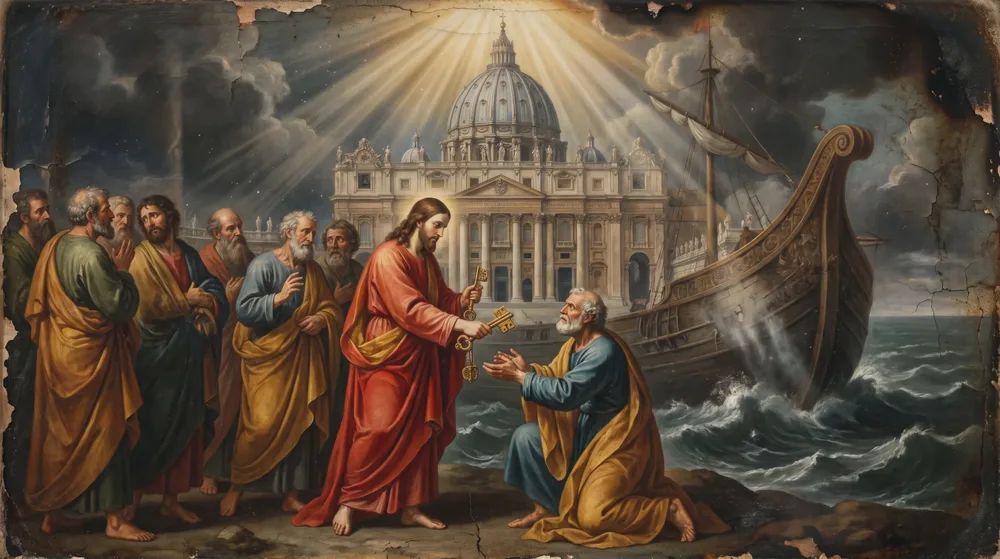
What do Catholics believe? In short: one God in three Persons, who created all things, who became man in Jesus Christ to redeem us, who founded one Church and entrusted to her the sacraments, and who will judge the living and the dead. These catholic beliefs are gathered in the Apostles' Creed, the ancient summary of the Faith taught by the Apostles, made of twelve articles (Catechism of St Pius X, Part I, ch. 1). To set out the catholic faith basics plainly, we follow that Creed. This article is the doctrinal companion to why Catholics do what they do: here is what we hold, there why we practise it.
What faith is
Before listing the truths Catholics hold, it helps to say what faith itself is. By faith we mean the virtue whereby we give a full and entire assent to the truths revealed by God. It is not opinion, imagination, or feeling, but a firm and unshakeable assent of the understanding to what God has revealed (Roman Catechism, Part I, ch. 1). We hold these truths as certain not because we have measured them, but because God, who is Truth itself, has revealed them and proposes them to us through His Church. "Without faith it is impossible to please God" (Hebrews 11:6, cited in the Roman Catechism).
God, the Father almighty
The first article of the Creed confesses "God the Father almighty, Creator of heaven and earth." We believe in one God, the first Person of the Most Holy Trinity, who by His almighty power created out of nothing the heaven and the earth and all that they contain, and who, having created all things, preserves and governs them (Roman Catechism, Part I, ch. 2). To believe in God is not only to hold Him with the mind, but to tend toward Him with the whole strength of the soul, as toward the sovereign and perfect Good.
The Holy Trinity
Catholics believe in one God in three divine Persons: the Father, the Son, and the Holy Ghost. The Father proceeds from no other Person and is the principle of the Son and of the Holy Ghost; the three Persons are equally eternal, equally powerful, wise, and good (Catechism of St Pius X, Part I, ch. 2). This is the central mystery of the catholic faith, and it cannot be reasoned out from below: it is known only because God revealed it. We treat it more fully in the Holy Trinity, and the same confession is expanded in the Nicene Creed sung at Mass.
The Incarnation: Jesus Christ, true God and true man
We believe that the only-begotten Son of God, remaining God as He was from all eternity, became man, which He was not before. He "was conceived by the Holy Ghost, born of the Virgin Mary" — not after the manner of other men, but by a supernatural operation, by the power of the Holy Ghost alone (Roman Catechism, Part I, ch. 4). So the same Person is at once true God and true man. This is the very foundation of our salvation, and we set it out in the Incarnation.
Suffered, died, rose, ascended
The Creed continues: He suffered under Pontius Pilate, was crucified, died, and was buried; He descended into hell; the third day He rose again from the dead; He ascended into heaven and sits at the right hand of the Father (Catechism of St Pius X, Part I, ch. 1). Christ truly died and truly rose — the Resurrection is not a figure but a fact, the ground of our hope. From thence He will come to judge the living and the dead.
The Holy Catholic Church and the communion of saints
We believe in "the Holy Catholic Church, the communion of saints." The Church is one, and the prophets spoke of her at greater length than of Christ Himself, foreseeing how many errors would arise against her (Roman Catechism, Part I, ch. 10). She is known by the four marks of the Church — one, holy, catholic, and apostolic — and we set out her nature and authority in what is the Catholic Church. One is not a heretic merely by sinning against the Faith, but by despising the authority of the Church and clinging obstinately to error. The communion of saints is the sharing of spiritual goods among all the members of this one Body — those on earth, those being purified, and those in glory.
The seven sacraments
To this Church Christ entrusted the sacraments. A sacrament is a sensible and efficacious sign of grace: by means of sensible things it signifies, and truly produces, the divine grace it gives in the soul (Catechism of St Pius X, Part IV, ch. 1). There are seven: Baptism, Confirmation, the Eucharist, Penance, Extreme Unction, Holy Orders, and Matrimony (same source). They are not mere symbols; they confer what they signify, as water cleanses the body while Baptism cleanses the soul, restoring the soul to a state of sanctifying grace and washing away original sin. We treat them together in the seven sacraments, and singly in the Eucharist and the sacrament of Confession — never "Reconciliation." On why this last is made to a priest and not to God alone, see why Catholics confess to a priest.
The remission of sins and the law of God
The Creed confesses "the forgiveness of sins": that within the Church, chiefly through Baptism and Penance, sins are truly remitted. The Faith is not held in the mind alone but lived in obedience to God's law, summed up in the Ten Commandments. Faith without works is a dead faith (James 2:17, cited in the Roman Catechism, Part I, ch. 1); the Catholic believes in order to obey, and obeys because he believes.
The last things
The final articles confess "the resurrection of the body and life everlasting." Catholic doctrine names four last things that will come to man: Death, Judgment, Hell, and Heaven (Catechism of St Pius X, Part V, ch. 7). Death is the last thing in this world; the Judgment of God is the last of the judgments we undergo; Hell is the extreme evil for the wicked; Heaven is the sovereign good for the good. We are made to know, love, and serve God in this life, and to be happy with Him in the next. What this means is set out in what happens after death.
What Catholics believe about the pope
The first article on the Church carries with it belief about her visible head. Catholics believe that Christ founded His Church upon Peter — "Thou art Peter, and upon this rock I will build my Church" (Matthew 16:18) — and that the Roman Pontiff, the successor of Peter as Bishop of Rome, is the visible head of the whole Church on earth and the Vicar of Christ. To him belongs the supreme authority of teaching and governing the faithful.
We hold further that when the pope defines a doctrine of faith or morals to be held by the whole Church, speaking ex cathedra — from the chair of Peter — he is preserved from error, a gift called papal infallibility (defined by the First Vatican Council, 1870). This does not mean the pope is sinless, nor that his every word or opinion is infallible, but only that the deposit of faith is guarded in its solemn definitions. We treat the office and its limits in what is the Catholic Church.
What Catholics believe about the Eucharist and Holy Communion
Among the seven sacraments, the Eucharist holds the first place, for it contains not merely grace but the very Author of grace. Catholics believe that at the words of consecration the whole substance of the bread is changed into the Body of Christ, and the whole substance of the wine into His Blood, the appearances of bread and wine alone remaining — a change the Church calls transubstantiation (Catechism of St Pius X, Part IV, ch. 3).
Holy Communion is the receiving of this same Body and Blood, whole and entire under either kind. It is not a symbol or a remembrance only: "This is my body" (Matthew 26:26) and "my flesh is meat indeed" (John 6:56). For this reason we receive it fasting and in a state of grace, for "he that eateth and drinketh unworthily, eateth and drinketh judgment to himself" (1 Corinthians 11:29). The doctrine is set out at length in the Eucharist.
What Catholics believe about baptism
Baptism is the first of the sacraments and the gate of the spiritual life, for none can receive the others without it. Catholics believe that Baptism washes away original sin and all actual sins committed before it, remits all punishment due to them, infuses sanctifying grace, and makes the baptized a child of God and a member of the Church (Catechism of St Pius X, Part IV, ch. 2).
It is conferred by pouring water and saying, "I baptize thee in the name of the Father, and of the Son, and of the Holy Ghost" (Matthew 28:19). Because it is necessary for salvation — "unless a man be born again of water and the Holy Ghost, he cannot enter into the kingdom of God" (John 3:5) — the Church baptizes infants and does not delay it without cause.
What Catholics believe happens after death
Catholics believe that at death the soul is separated from the body and at once undergoes the particular judgment, in which God determines its eternal lot (Catechism of St Pius X, Part V, ch. 7). Three states follow: the souls of the just who are perfectly purified enter Heaven and behold God face to face; the souls who die in grace but with lesser faults or debts of temporal punishment are purified in Purgatory before entering glory; the souls who die in mortal sin, unrepentant, are lost in Hell forever.
The body returns to the earth and awaits the resurrection of the body at the end of the world, when soul and body are reunited and stand at the general judgment. There is no reincarnation and no second chance after death — "it is appointed unto men once to die, and after this the judgment" (Hebrews 9:27). This is the Catholic answer on life after death and the afterlife; we set it out fully in what happens after death.
What Catholics believe that other Christians don't
Catholics share with Protestants the great creeds — the Trinity, the divinity of Christ, His death and resurrection. What sets the Catholic faith apart are chiefly these: the authority of the pope and the bishops in union with him; the seven sacraments rather than two; the Real Presence of Christ in the Eucharist by transubstantiation; the Sacrifice of the Mass; sacramental Confession to a priest; Purgatory and prayer for the dead; the veneration of Mary and the saints and the asking of their prayers; and the rule that Scripture is read within Sacred Tradition and the living teaching authority of the Church, not by private interpretation alone.
We also hold the full canon of Scripture, including the deuterocanonical books that Protestant Bibles omit. These are not additions to the Gospel but the Gospel handed down whole. We compare the two in greater depth across why Catholics do what they do.
Mary and the saints
Following from the Incarnation, Catholics honor the Blessed Virgin Mary as Mother of God, preserved free from original sin in the Immaculate Conception (defined 1854) and taken body and soul into glory in the Assumption (defined 1950). We do not adore the saints; we venerate them and ask their prayers, as members of the one communion of saints. On the distinction between worship and veneration, see why Catholics pray to Mary and why Catholics pray to the saints.
What it all amounts to
To believe as a Catholic is to give firm assent to all that God has revealed and the Church proposes — the one God in three Persons, the Word made flesh, the Church and her sacraments, and the four last things. The Apostles' Creed is the whole of it in twelve lines, and a whole life is the working out of those lines.
To go deeper into each article of the Faith:
- The Apostles' Creed and the Nicene Creed — the two summaries of belief
- The Holy Trinity and the Incarnation — the central mysteries
- The Resurrection and the resurrection of the body
- What is the Catholic Church and the four marks of the Church
- The seven sacraments, the Eucharist, and confession
- Original sin and sanctifying grace
- The Ten Commandments and the four last things
- Why Catholics do what they do — the practices that flow from these beliefs
All our articles on the faith, by theme
God, creation and the unseen world
- The Holy Trinity
- Guardian angels
- The nine choirs of angels
- What God says about the soul
- What God says about free will
- What God says about animals
- What God says about evolution
- What God says about dinosaurs
- Aliens and extraterrestrial life
- What God says about dreams
- What God says about atheism
- What God says about superstition
- What God says about witchcraft
Jesus Christ
- Who is Jesus Christ?
- The Incarnation
- What "Jesus Christ" means
- When was Jesus born?
- Was Jesus a Jew?
- What language did Jesus speak?
- What did Jesus look like?
- How tall was Jesus?
- The Gospel of Jesus Christ
- The Passion of Jesus Christ
- Who crucified Jesus?
- How old was Jesus when He died?
- The crucifix
- The Resurrection
- The Resurrection appearances
- After Jesus rose from the dead
Sin, grace and the virtues
- Original sin
- Sanctifying grace
- What God says about grace
- What God says about faith
- What God says about salvation
- The theological virtues
- The cardinal virtues
- The seven heavenly virtues
- The gifts of the Holy Ghost
- The Beatitudes
- The works of mercy
- Plenary indulgence
The Church
- What is the Catholic Church?
- The Communion of Saints
- The Eastern Catholic Churches
- Can women be priests?
- Catholic symbols
- What God says about going to church
- What God says about fasting
- What the Bible says about tithing
What God says about marriage and the family
What God says about chastity and the body
- Sex before marriage
- Lust
- Pornography
- Masturbation
- Homosexuality
- Transgenderism
- Modesty
- Tattoos
- Piercings
What God says about vices and the tongue
- Pride
- Greed
- Jealousy
- Gluttony
- Laziness
- Stealing
- Lying
- Cursing and swearing
- Swearing: the Church's teaching
- Alcohol
- Alcoholism
- Drugs
- Marijuana
- Gambling
What God says about life, death and society
Frequently Asked Questions
Do Catholics believe in Jesus?
Yes, wholly. We believe that the only-begotten Son of God, remaining God from all eternity, became man, true God and true man in one Person, conceived by the Holy Ghost and born of the Virgin Mary, who suffered, died, rose, and ascended for our salvation. See the Incarnation.
Do Catholics believe Jesus is God?
Yes, without reserve. Jesus Christ is the eternal Son of God, the second Person of the Most Holy Trinity, who took flesh of the Virgin Mary; He is at once true God and true man in one Person (Roman Catechism, Part I, ch. 4). To deny His divinity is to deny the Faith itself, for "the Word was God" (John 1:1), and our whole salvation rests on it.
Do Catholics believe in the rapture?
No. The "rapture" as a secret snatching-away of believers before a tribulation is a modern Protestant invention unknown to the Faith. We confess only what the Creed holds: that Christ "will come to judge the living and the dead" in one general judgment at the end of the world, when the bodies of all shall rise.
Do Catholics believe in cremation?
The Church has always honored Christian burial, by which the body that was a temple of the Holy Ghost awaits the resurrection in the earth, after the example of Our Lord's own burial. Cremation was long forbidden because it was promoted in contempt of that hope; it is gravely to be discouraged. The almighty power of God is in no way hindered by it, but burial of the body remains the proper and reverent practice of the Faith.
Why do Catholics believe in purgatory?
Because nothing defiled can enter Heaven (Apocalypse 21:27), yet many die in God's grace with lesser faults or debts of temporal punishment not yet satisfied. Purgatory is the state in which such souls are purified before entering glory. Scripture commends prayer for the dead — "It is therefore a holy and wholesome thought to pray for the dead, that they may be loosed from sins" (2 Machabees 12:46) — which would be vain if the dead were already in Heaven or Hell. (On why this verse stands in the Catholic Bible and not the Protestant one, see the deuterocanonical books and what Bible Catholics use.)
Why do Catholics believe in saints?
The saints are the members of the Church now in glory, and we believe they live in God and behold His face. We do not adore them, for adoration belongs to God alone; we venerate them as God's friends and ask their prayers, for "the continual prayer of a just man availeth much" (James 5:16). Their intercession does not detract from Christ, the one Mediator, but flows from Him, as the warmth of a fire is shared by what it touches.
Do Catholics believe in evolution?
The Faith holds with certainty that God created all things, and that the soul of each man is created immediately by God, not produced by any material process. The body's origin is not defined by the Creed, and a Catholic may weigh natural theories provided they leave God as Creator and exclude pure chance and the denial of the spiritual soul. What is rejected is any account that makes man the fruit of blind matter alone, for "God created man to his own image" (Genesis 1:27).
Do Catholics believe in the Holy Trinity?
Yes; it is the central mystery of the Faith. We believe in one God in three divine Persons, the Father, the Son, and the Holy Ghost, equally eternal, equally powerful, wise, and good (Catechism of St Pius X, Part I, ch. 2). This cannot be reasoned out from below but is known only because God revealed it. See the Holy Trinity.
What do Catholics believe about salvation?
We are saved by the grace of God merited by Christ, received through faith, Baptism, and the sacraments, and worked out in obedience to God's law. Faith alone does not suffice, for "faith without works is dead" (James 2:17); the Catholic believes in order to obey, and obeys because he believes, persevering in charity to the end.
What do Catholics believe about Mary?
Catholics honor the Blessed Virgin Mary as the Mother of God, true Mother of Jesus who is true God. We believe she was preserved free from original sin from the first instant of her conception (the Immaculate Conception, defined 1854), remained ever a virgin, and was taken body and soul into Heaven (the Assumption, defined 1950). We do not adore her — adoration is for God alone — but venerate her above all the saints and ask her prayers. See why Catholics pray to Mary.
What do Catholics believe about the pope?
Catholics believe the pope is the successor of St Peter, the visible head of the Church on earth, and the Vicar of Christ, holding supreme authority to teach and govern. When he defines a doctrine of faith or morals ex cathedra for the whole Church, he is preserved from error (papal infallibility, defined 1870). This does not make him sinless or his every opinion infallible; it guards only the deposit of faith in its solemn definitions.
What do Catholics believe about Holy Communion?
We believe that in Holy Communion we receive the true Body and Blood, soul and divinity of Jesus Christ, present under the appearances of bread and wine by transubstantiation. It is not bread that signifies Christ but Christ Himself: "This is my body" (Matthew 26:26). We receive fasting and in a state of grace, lest we receive unworthily (1 Corinthians 11:29).
What do Catholics believe about baptism?
Baptism washes away original sin and any actual sins committed before it, infuses sanctifying grace, makes us children of God and members of the Church, and is necessary for salvation (John 3:5). The Church baptizes infants and does not delay it without cause, since it is the gate to all the other sacraments.
What do Catholics believe happens after death?
At death the soul is judged at once (the particular judgment). The perfectly purified just go to Heaven; those in grace with lesser faults are purified in Purgatory; those who die unrepentant in mortal sin are lost in Hell. The body awaits the resurrection at the end of the world. There is no reincarnation and no second chance — "it is appointed unto men once to die, and after this the judgment" (Hebrews 9:27).
What do Catholics believe that other Christians don't?
Chiefly: the authority of the pope, the seven sacraments, the Real Presence by transubstantiation, the Sacrifice of the Mass, Confession to a priest, Purgatory and prayer for the dead, the veneration of Mary and the saints, the full canon of Scripture, and the reading of Scripture within Sacred Tradition and the Church's teaching authority rather than by private interpretation alone.
The Iter Fidei app carries the prayers, the catechism, and a guide to the Faith — free to taste, no wall to cross. Join early access here.
Sources. Catechism of the Council of Trent (Roman Catechism), Part I, ch. 1 (On Faith and the Creed), ch. 2 (First Article — God the Father), ch. 4 (Third Article — the Incarnation), ch. 10 (Ninth Article — the Holy Catholic Church and the Communion of Saints), Part II, ch. 14 (the Sacraments in general). Catechism of St Pius X, Part I, ch. 1 (the Creed in general), ch. 2 (First Article); Part IV, ch. 1 (the Sacraments in general); Part V, ch. 7 (the Last Things). Scripture: Hebrews 11:6; James 2:17 (Douay-Rheims).