
The Faith
What Does God Say About War?
What does God say about war? War is an evil, yet under strict conditions a defensive war can be just. The Church teaches the just-war doctrine of St Augustine and St Thomas, and that peace is the work of justice.
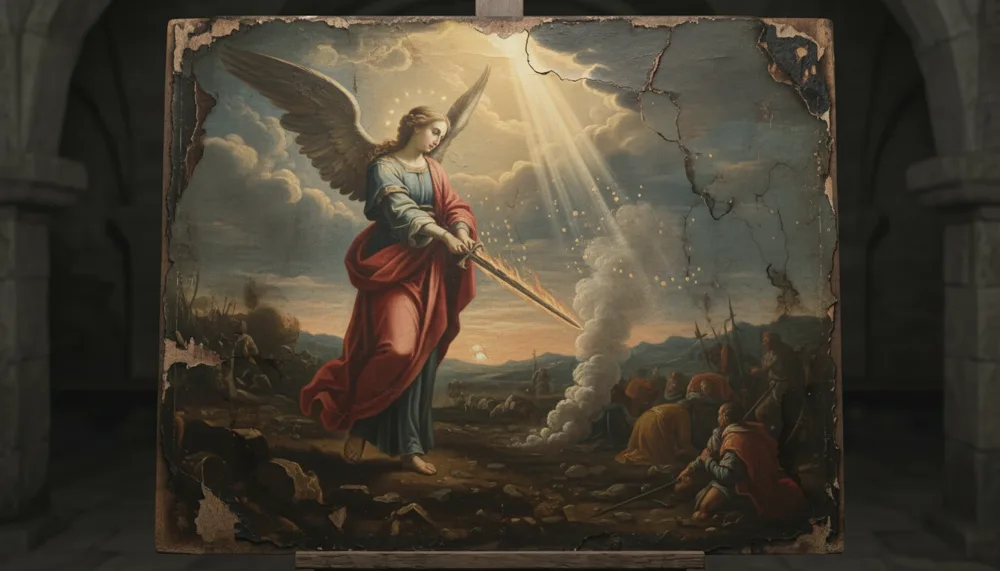
War is an evil, and God hates the violence that springs from greed and pride; yet the Bible does not condemn every taking up of the sword. Scripture and the Church teach together that a defensive war can be just when waged by lawful authority, for a just cause, and with a right intention — but that peace, not conquest, is its only honest aim.
So war is not always a sin: it is a grave evil permitted only to repel a graver one, and the soldier who fights a just war "to take the life of his enemies" for "the public good" is not guilty of murder (Catechism of the Council of Trent, on the Fifth Commandment). This is one of the questions we answer in our series on what God says about the hardest matters men face.
What does the Bible say about war
Scripture gives a sober double word. There is "a time of war, and a time of peace" (Eccles. iii. 8), and God Himself commanded armed defence of His people; David sang, "Blessed be the Lord my God, who teacheth my hands to fight, and my fingers to war" (Ps. cxliii. 1). Yet the same Scripture promises a day when nations "shall turn their swords into ploughshares" (Isaias ii. 4).
The two are not in conflict. The same God who said "Thou shalt not kill" (Exod. xx. 13) also armed Israel against its destroyers. The Fifth Commandment forbids murder — the unjust shedding of innocent blood — not every taking of life. The Roman Catechism is exact: "Thou shalt not kill" does not condemn the magistrate who executes a just sentence, nor the man who defends his own life, nor "those who, in a just war, take the life of their enemies," provided they "obey not cupidity and cruelty, but seek only the public good" (Catechism of the Council of Trent, on the Fifth Commandment). What Scripture forbids is the war of the aggressor; what it permits is the defence of the innocent against him.
Is war a sin
War can be a sin, and most wars in history have been. To wage war from greed, from ambition, from hatred, or to attack the innocent, is grave sin — the sin of Cain, who "rose up against Abel his brother, and slew him" (Gen. iv. 8), the first violence in the world. But war as such is not always a sin. The question is not whether weapons are drawn but whether they are drawn justly.
This is the same distinction the Church draws about the passions that lead to bloodshed. As righteous indignation differs from sinful anger, and as just punishment differs from private revenge, so a just war differs from murder on a national scale. A man may not take up the sword for himself out of hatred; but the lawful ruler may take it up to protect those entrusted to him, for "he beareth not the sword in vain" (Rom. xiii. 4). To call every war a sin is to mistake the Gospel; to call every war just is to flatter the powerful. The truth is narrower than both, and it has a name: the just-war doctrine.
The just-war doctrine: St Augustine and St Thomas
The Church received from Saint Augustine, and Saint Thomas Aquinas set in order, the conditions under which a war is lawful. Saint Thomas asks plainly whether it is always a sin to wage war, and answers that for a war to be just, three things are required (Summa Theologiae, II-II, q. 40, a. 1).
First, legitimate authority. War may be declared only by the lawful sovereign power that has charge of the common good, never by a private man. "It is not the business of a private individual to declare war," Saint Thomas writes, "because he can seek for redress of his rights from the tribunal of his superior." Just as the magistrate, and not the citizen, bears the sword of justice within the city, so only the public authority may wield it against an enemy without. The soldier who obeys a lawful order in a just war does no wrong; the man who makes war on his own account is a murderer.
Second, a just cause. "Those who are attacked," Saint Thomas teaches, "should be attacked because they deserve it on account of some fault." War is lawful only to repel injustice — to defend the innocent, to recover what was wrongly seized, to punish a grave wrong that will not be righted otherwise. A war of conquest, of vengeance, of mere advantage, has no just cause and is sin.
Third, a right intention. Even a lawful authority with a just cause must intend rightly — "that they intend the advancement of good, or the avoidance of evil." Saint Augustine, whom Saint Thomas quotes, condemns "the passion for inflicting harm, the cruel thirst for vengeance, an unpacific and relentless spirit, the fever of revolt, the lust of power, and such like." A war begun for a just cause but waged from cruelty becomes itself a sin. The soldier must seek peace through justice, not the destruction of his enemy.
These three — legitimate authority, just cause, right intention — are the whole of the doctrine. Where any one is absent, the war is unjust, and the blood shed in it is murder.
War is an evil, permitted only to repel a graver one
Even a just war is never a good in itself. It is an evil tolerated to prevent a worse evil — the triumph of injustice and the slaughter of the innocent. The Roman Catechism opens its teaching on the Fifth Commandment with the beatitude of the peacemakers, "since they shall be called the children of God," and tells pastors there is "no means more efficacious" for the good of men than to bring them to peace (Catechism of the Council of Trent, on the Fifth Commandment). The Church arms the just defender reluctantly, as a surgeon cuts: to save the body, never for love of the knife.
This is why the conditions are strict. The soldier in a just war sins if he turns lawful defence into pillage, the killing of the innocent, or revenge. War unleashes the very passions the Christian is bound to subdue — pride, wrath, the lust of domination — and so it is, of all permitted things, the most dangerous to the soul. The man who fights must fight as a penitent, not as a beast; the spiritual combat against his own disordered heart does not pause because he has taken up arms.
Peace is the work of justice
Scripture never sets peace against justice; it makes peace the fruit of justice. "And the work of justice shall be peace," says Isaias, "and the service of justice quietness, and security for ever" (Isaias xxxii. 17). There is no true peace where injustice rules — only the silence of the conquered.
Our Lord blessed the peacemakers: "Blessed are the peacemakers: for they shall be called the children of God" (Matt. v. 9). He did not bless those who call peace what is only cowardice or compromise with wickedness. The peace He gives is "not as the world giveth" (John xiv. 27). The same Christ told His own to "love your enemies, do good to them that hate you" (Matt. v. 44) — and this command binds the just soldier too, who may take a life in lawful defence yet may never hate the man whose life he takes. To wage war without hatred, to seek the peace of justice and not the ruin of the foe, is the narrow road the Church marks out.
Frequently Asked Questions
What does God say about war?
God hates war waged from greed, pride, or cruelty, and most wars in history have been sin. Yet He permits the lawful authority to draw the sword in defence of the innocent, and the soldier who, "in a just war, take[s] the life of his enemies" for the public good is not guilty of murder (Catechism of the Council of Trent, Fifth Commandment). War is an evil borne only to repel a graver one, and its only honest aim is the peace that is the work of justice (Isaias xxxii. 17).
What does the Bible say about World War 3?
Scripture does not name a "World War 3," and the Church forbids us to fix dates or read the headlines as prophecy; "of that day and hour no one knoweth" (Matt. xxiv. 36). The Bible does foretell that until the end there will be "wars and rumours of wars" (Matt. xxiv. 6), for war springs from the disordered passions of fallen men (James iv. 1). The Christian answer is not to calculate the last battle but to be ready in grace, since peace is built only on justice and on the law of God.
Is war a sin?
War can be a sin, and most wars are — when waged from greed, ambition, hatred, or to attack the innocent, it is the sin of Cain raised to a national scale. But war as such is not always a sin. The question is not whether the sword is drawn but whether it is drawn justly, under the conditions Saint Augustine and Saint Thomas hand down.
What are the conditions for a just war?
Saint Thomas Aquinas requires three things for a war to be just (Summa Theologiae, II-II, q. 40, a. 1): legitimate authority, that is, the lawful sovereign and never a private man; a just cause, to repel injustice and defend the innocent, never for conquest or vengeance; and a right intention, to advance good and avoid evil rather than to indulge "the cruel thirst for vengeance" or "the lust of power." Where any one is absent, the war is unjust and the blood shed in it is murder.
Does the Fifth Commandment forbid all killing in war?
No. "Thou shalt not kill" (Exod. xx. 13) forbids murder — the unjust shedding of innocent blood — not every taking of life. The Roman Catechism teaches that the commandment does not condemn the magistrate who executes a just sentence, the man who defends his own life, nor "those who, in a just war, take the life of their enemies," provided they "seek only the public good" (Catechism of the Council of Trent, Fifth Commandment).
Does God command us to love our enemies even in war?
Yes. Our Lord's command to "love your enemies, do good to them that hate you" (Matt. v. 44) binds the just soldier too. He may take a life in lawful defence, yet he may never hate the man whose life he takes; to wage war without hatred, seeking the peace of justice and not the ruin of the foe, is the narrow road the Church marks out.
What does the Bible say about peace?
Scripture never sets peace against justice but makes peace its fruit: "the work of justice shall be peace" (Isaias xxxii. 17). Our Lord blessed the peacemakers, "for they shall be called the children of God" (Matt. v. 9), but He did not bless those who call peace what is only cowardice or compromise with wickedness. The peace He gives is "not as the world giveth" (John xiv. 27) — there is no true peace where injustice rules, only the silence of the conquered.
Conclusion
God hates war as men wage it — from greed, pride, and cruelty — and most wars are sin. Yet He permits the lawful authority to draw the sword in defence of the innocent, under the three conditions Saint Augustine and Saint Thomas hand down: legitimate authority, just cause, right intention. War is an evil borne only to repel a graver one, and its single honest end is the peace that is the work of justice. The Christian who studies what God says about himself and his own violent heart, and about racism and every contempt for the neighbour, learns the lesson war teaches with blood: that peace is built on justice, and justice on the law of God. These truths stand among the catholic Bible verses every soul should know.
The Iter Fidei app carries the Douay-Rheims Bible, the catechism, and the prayers of the Church. Join early access here.
Sources. Douay-Rheims Bible: Ecclesiastes iii. 8; Psalm cxliii. 1; Isaias ii. 4; Isaias xxxii. 17; Exodus xx. 13; Genesis iv. 8; Romans xiii. 4; Matthew v. 9; Matthew v. 44; John xiv. 27. Saint Thomas Aquinas, Summa Theologiae, II-II, q. 40, a. 1 (legitimate authority, just cause, right intention), citing Saint Augustine. Catechism of the Council of Trent (1566), on the Fifth Commandment.