
The Faith
What Does God Say About Modesty?
God commands modesty: the virtue that guards purity and orders our outward appearance — dress, makeup, jewellery, hair — to dignity rather than vanity or seduction. We give what the Douay-Rheims, St Thomas, and the catechism teach, firmly and charitably.
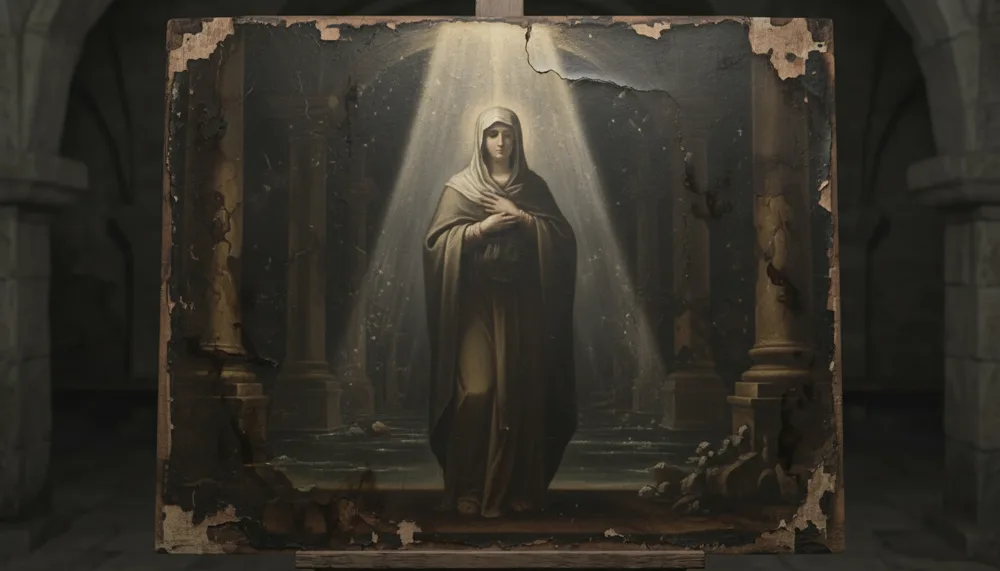
God says that we are to clothe ourselves, and to carry ourselves, with modesty and sobriety — not with vanity, not with display, and not in a manner that draws others to sin. Scripture states it directly: women are to adorn themselves "in decent apparel: adorning themselves with modesty and sobriety, not with plaited hair, or gold, or pearls, or costly attire" (1 Tim. 2:9). And it places the true adornment not on the body but within: "the hidden man of the heart in the incorruptibility of a quiet and a meek spirit, which is rich in the sight of God" (1 Pet. 3:4).
So what does the Bible say about modesty? It says that the body is not ours to flaunt, that purity must be guarded outwardly as well as inwardly, and that the Christian's real glory is interior. We set out below what Scripture commands, what St Thomas means by the virtue, what the catechism requires, and how popular readings — Protestant, new-age, and fundamentalist — get it wrong. This belongs to our wider series, What Does God Say About….
What does the Bible say about modesty?
The modesty Bible texts are few, plain, and binding. St Paul, instructing how Christians are to present themselves in the assembly, commands women to adorn themselves "with modesty and sobriety," and warns against turning dress into a parade of "gold, or pearls, or costly attire" (1 Tim. 2:9). The point is not that gold is evil but that vanity and display are: the heart that must be ornamented first is the inner one. St Peter says the same — the woman's adorning is "not the outward plaiting of the hair, or the wearing of gold," but "the hidden man of the heart" (1 Pet. 3:3-4).
Modesty in Scripture is never a mere matter of cloth. It is the outward face of chastity and humility together. Our Lord traces impurity to the look and the heart: "whosoever shall look on a woman to lust after her, hath already committed adultery with her in his heart" (Matt. 5:28). St Paul makes the body itself sacred: "Know you not, that your members are the temple of the Holy Ghost… Glorify and bear God in your body" (1 Cor. 6:19-20). To dress or carry that temple as bait is to profane it. These verses sit within the whole counsel of Catholic Bible verses on purity, and they are read in the Church, not lifted out of it.
Modesty as a virtue: what St Thomas teaches
Modesty is not a list of hemlines. It is a virtue — a settled habit ordering our outward appearance and conduct to reason and to our dignity. St Thomas treats it under temperance, as the part of that virtue which governs the moderate use of outward things, including bodily ornament and dress (Summa Theologiae II-II, q. 168 and q. 169). He teaches that there is no sin in adornment as such; the sin is in the inordinate love of it and in the intention. A woman may rightly adorn herself to please her own husband, or to suit her station; she sins when she dresses to provoke disordered desire in others, or out of vanity and pride (II-II, q. 169, a. 2).
This is the firm and charitable distinction the Church has always drawn. Modesty is not measured first by the inch but by the purpose: appearance ordered to dignity and duty is good; appearance ordered to seduction or to vainglory is sin. That is why modesty governs not only dress but makeup, jewellery, and hair — every part of how we present the body — and why the same garment can be modest on one occasion and immodest on another. The virtue judges the whole, by its end. It is part of the wider spiritual combat for purity, and it leans on sanctifying grace, which is given and restored through the seven sacraments.
What does God say about how to dress?
To the searcher asking what does God say about how to dress, the answer is the same virtue applied to the wardrobe. Dress is to be decent ("in decent apparel," 1 Tim. 2:9), ordered to the dignity of a temple of the Holy Ghost, and free of two opposite faults: the vanity that turns clothing into a display of wealth or self, and the immodesty that turns it into an occasion of lust for others. Both are condemned in the same breath of St Paul.
The Church hands down no measuring tape, because the virtue rightly held governs the particulars itself. What she hands down is the principle: clothe and carry the body so that it leads neither yourself nor your neighbour toward sin. To dress as bait is to cooperate in the sin of lust and, worse, to give scandal — which the Catechism of St Pius X defines as "any word, any deed, or any omission which is for others an occasion of committing sin," and calls "a grievous sin," because it works to undo the Redemption by the loss of a soul (Catechism of St Pius X, Third Part, ch. III). Immodest dress is a standing occasion of sin offered to others; that is its gravity, beyond the wearer's own vanity.
What the catechism commands
The catechism places modesty squarely under the Sixth Commandment. The Sixth Commandment "forbids us every act, every look, every word contrary to chastity," and positively "commands us to be chaste and modest in our acts, our looks, our deportment, and our words" (Catechism of St Pius X, Third Part, ch. III, §3). Modesty, then, is not optional refinement; it is a precept of the Ten Commandments, binding on all.
The same catechism gives the means by which modesty and purity are kept. To guard chastity we are "to flee idleness, evil company, intemperance, to avoid indecent images, licentious shows, dangerous conversations, and all other occasions of sin"; and to "pray to God often," to be "devout to the Virgin Mary, Mother of purity," to remember that God sees us, to guard our senses, and "to frequent the sacraments with the proper dispositions." Modesty is sustained by mental prayer, by the Rosary, and by confession, where what was lost is restored. It is not white-knuckle willpower; it is grace guarded by prudence.
Correcting the popular misreadings
Three common readings distort what God says about modesty, and we correct each charitably.
The Protestant proof-text reading treats 1 Timothy 2:9 as a private rule about hair and pearls, severed from the Church and from the virtue beneath it — sometimes loosening it into "God looks at the heart, so the body does not matter." But Scripture binds both: the heart first (1 Pet. 3:4), and the body also, as a temple to be glorified (1 Cor. 6:20). The interior does not cancel the exterior; it commands it.
The new-age reading inverts the verses entirely — "modesty is shame, the body is to be displayed, self-expression is the law." This is the very vanity and provocation Scripture condemns. The body is good precisely because it is sacred, and what is sacred is veiled, not paraded.
The fundamentalist reading makes modesty into a tyranny of inches and a weapon of suspicion — a legalism that measures cloth and forgets the heart. St Thomas dismantles this: the sin is not in adornment as such but in the inordinate intention behind it (Summa II-II, q. 169, a. 2). Modesty is a virtue of the soul that shows in the body, not a rulebook against it. We hold the precept firmly and judge persons charitably.
Conclusion
God says: clothe and carry the temple of His Spirit "with modesty and sobriety" (1 Tim. 2:9), ornament the hidden heart first (1 Pet. 3:4), and offer no one an occasion of sin. This is the Sixth Commandment in our dress, our makeup, our hair, our whole bearing — firm in its demand, charitable toward the person, and kept by grace and the sacraments. The body is not ours to flaunt; it is God's, to be glorified.
Frequently Asked Questions
What does the Bible say about modesty?
Scripture commands that we adorn ourselves "with modesty and sobriety, not with plaited hair, or gold, or pearls, or costly attire" (1 Tim. 2:9), and that the true ornament is "the hidden man of the heart" (1 Pet. 3:4). It teaches that the body is a "temple of the Holy Ghost" (1 Cor. 6:19) and must not be made an occasion of lust, for "whosoever shall look on a woman to lust after her, hath already committed adultery with her in his heart" (Matt. 5:28). Modesty is the outward face of chastity and humility together.
Is modesty a sin to ignore, or just a suggestion?
Modesty is not optional refinement; it is a precept binding under the Sixth Commandment, which "commands us to be chaste and modest in our acts, our looks, our deportment, and our words" (Catechism of St Pius X, Third Part, ch. III). To dress as bait is to give scandal, defined by the same catechism as "any word, any deed, or any omission which is for others an occasion of committing sin," and called "a grievous sin." Wilful immodesty that leads others toward lust is therefore objectively grave matter, not a private preference.
Does the Bible have a dress code for women?
God hands down no measuring tape, but He hands down the principle: dress is to be "decent apparel" (1 Tim. 2:9), free both of the vanity that parades wealth and self, and of the immodesty that provokes lust in others. St Thomas teaches there is no sin in adornment as such; the sin lies in the inordinate love of it and in the intention behind it (Summa II-II, q. 169, a. 2). A woman may rightly adorn herself for her husband and her station, but never to provoke disordered desire or out of vanity.
Is wearing makeup or jewellery against modesty?
Not in themselves. St Thomas is explicit that adornment is not sinful as such; what condemns it is inordinate attachment and a corrupt intention (Summa II-II, q. 169, a. 2). Makeup, jewellery, and hair fall under the same virtue as dress: ordered to dignity and duty, they are lawful; ordered to seduction or vainglory, they are sin. The virtue judges the whole by its end, which is why the same item can be modest on one occasion and immodest on another.
Does God look only at the heart, so the body does not matter?
This is a common Protestant softening, and it is half-true and therefore false. Scripture binds both: the heart first (1 Pet. 3:4) and the body also, as a temple to be glorified (1 Cor. 6:20). The interior does not cancel the exterior; it commands it. A genuinely pure heart will order the body to purity, not excuse its display.
Is modesty just shame about the body?
No. The body is good precisely because it is sacred, the temple of the Holy Ghost (1 Cor. 6:19). What is sacred is veiled in reverence, not paraded — modesty honours the body rather than despising it. The new-age claim that modesty is mere shame inverts Scripture, which condemns vanity and provocation, not the body itself.
How do I grow in modesty and purity?
The catechism gives the means: flee idleness, evil company, and intemperance; avoid indecent images, licentious shows, and dangerous conversations; pray often; be devout to the Virgin Mary, Mother of purity; remember that God sees us; guard the senses; and "frequent the sacraments with the proper dispositions" (Catechism of St Pius X, Third Part, ch. III). Modesty is sustained by mental prayer, the Rosary, and confession, where what was lost is restored. It is not white-knuckle willpower but grace guarded by prudence.
The Iter Fidei app carries the Douay-Rheims Bible, the catechism, and the prayers. Download it here.
Sources. Douay-Rheims Bible: 1 Timothy 2:9; 1 Peter 3:3-4; Matthew 5:28; 1 Corinthians 6:19-20. St Thomas Aquinas, Summa Theologiae II-II, q. 168; q. 169, a. 2. Catechism of St Pius X, Third Part, ch. III (Scandal; the Sixth and Ninth Commandments).