
The Spiritual Life
What Does God Say About Me?
What does God say about me? That you are made in His image, known and loved before you were formed, a sinner redeemed by the Blood of Christ, and called to be a saint. Your worth is not self-assertion but the truth that you are God's — created, loved, redeemed, and called to conversion.
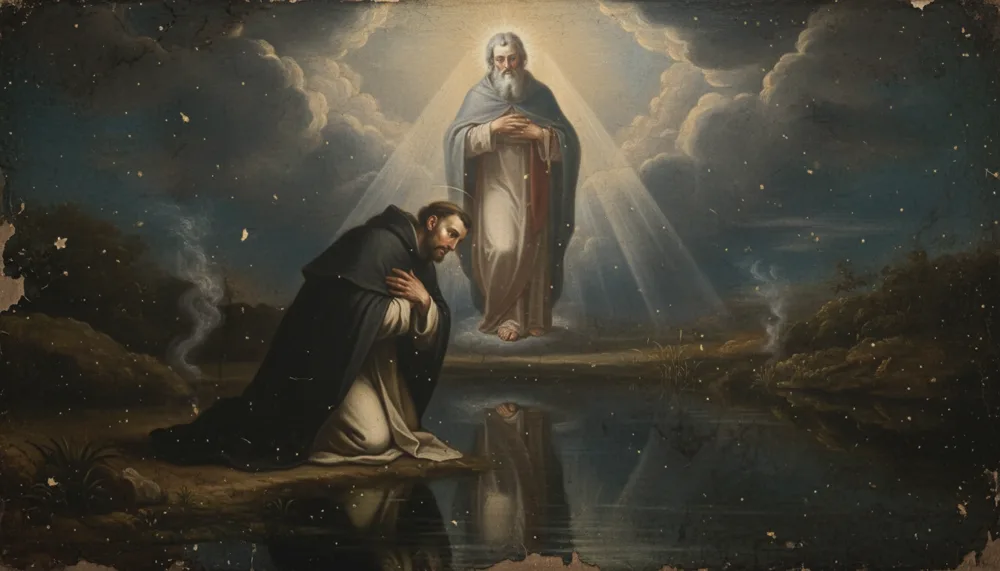
What does God say about you? That you were made in His own image and likeness (Genesis 1:27); that He knew and loved you before you were formed in the womb (Jeremias 1:5); that you are a sinner, yet one redeemed at the price of the Blood of His Son; and that He calls you to be a saint, a child of God by grace. Your identity in God is not something you assert about yourself — it is the truth that you are His: created by Him, loved by Him, redeemed by Him, and called by Him to conversion. This is what God says about me, and about you, and it is firmer and far higher than anything the world means by self-worth.
This page belongs to our larger study of what God says on the questions people actually carry — from women and war to laziness and drink. Here we answer the deepest of them: who does God say I am.
Who does God say I am? Made in His image
The first word God speaks about you is in the first book of Scripture: "And God created man to his own image: to the image of God he created him: male and female he created them" (Genesis 1:27). This is the ground of all human dignity, and it is not earned. The Catechism of the Council of Trent teaches that God made man's body from the slime of the earth, and as for the soul, "He made it to His own image and likeness, endowed it with free will," joining to it the gift of original justice (Catechism of the Council of Trent, on God the Father and Creator).
To be made in God's image is to bear, in your very soul, a likeness to your Maker — in your reason, your free will, your capacity to know and love Him. This is why every human person has a worth that does not rise and fall with usefulness, success, or feeling. The infant, the dying, the forgotten — all bear the image. It is also the root of why God forbids the contempt and hatred we treat elsewhere, whether the sin of racism against men who share that same image, or the disordered use of the creatures and animals placed under man's care. Your dignity is not a thing you generate. It is stamped on you.
Known and loved before the womb
God does not love you in the abstract. He knew you, by name, before you existed. To the prophet He said: "Before I formed thee in the bowels of thy mother, I knew thee: and before thou camest forth out of the womb, I sanctified thee" (Jeremias 1:5). And the Psalmist, contemplating that he was fashioned by God's own hand, answers: "I will praise thee, for thou art fearfully magnified: wonderful are thy works, and my soul knoweth right well" (Psalm 138:14).
This is the true answer to the modern search for worth. You are not loved because you have proven yourself loveable; you were loved first, before you had done anything at all, before you could. The love is prior to the person's merit, and it does not depend on it. That is a deeper foundation than any self-esteem the world can offer, because it cannot be lost by failure and was never won by success. You may find more of these in our gathering of Catholic Bible verses on God's knowledge of the soul.
A sinner — but redeemed at a great price
Here the Catholic answer parts company with the comfortable creed of the age. Scripture does not say you are flawless as you are. It says you are a sinner. "By nature, we are born of Adam, and we are born children of wrath," teaches the Roman Catechism — heirs of a fallen race, our reason no longer the easy master of our desires (Catechism of the Council of Trent, on Baptism). The honest man knows this from within: the pull of the seven deadly sins, the daily breaking of the Ten Commandments in thought and deed. To deny it is not humility but blindness.
And yet this is not despair, because the same God who made you would not leave you in the ruin. "Behold what manner of charity the Father hath bestowed upon us, that we should be called and should be the sons of God" (1 John 3:1) — not by nature now, but by a costlier title: you were bought back. You were redeemed, and the ransom was the Blood of Christ, God made man for your sake. On that great descent of God to man, see The Incarnation. The Cross is the measure of what God says you are worth: He paid for you with Himself.
A child of God by grace — and called to be a saint
What does that redemption make you? In Baptism, the Roman Catechism teaches, "we are born again in Jesus Christ, as children of mercy," for God "hath given the power to become the sons of God to all men who believe in His name" (Catechism of the Council of Trent, on Baptism). This is no metaphor. By sanctifying grace, poured into the soul through the seven sacraments, you are made a true child of God by adoption — "and if we are children, we are heirs of God, and co-heirs of Jesus Christ" (cf. Romans 8:17, quoted in the same Catechism). This is your identity in God: not orphan, not stranger, but son or daughter, with a claim on the Father's house.
And a child of God is called to be a saint. That is the vocation written under every other — whether you are called to Catholic marriage, to Holy Orders (and not, we should say plainly, to those things the Church does not give, for the question of whether women can be priests is settled), or to a hidden life. The state differs; the call to holiness does not. God says you are made for Himself, and restless until you rest in Him.
"You are enough as you are" — the gentle correction
The modern answer to who am I says: you are enough as you are; affirm yourself; your worth is within you, waiting to be claimed. There is a true thing buried in it — that you are loved, that you have inestimable worth. But it is half a truth, and a half-truth here is dangerous, because it stops exactly where the Gospel begins.
You are loved — and you are called to conversion. Both are true at once, and the love is what makes the call bearable. God does not love you because you are enough; He loves you while you are not, and loves you too much to leave you there. The self-worth gospel flatters; the real Gospel saves. To say "you are enough as you are" to a sinner is to lock the door of mercy and call it kindness. The Church says something harder and infinitely better: you are God's, you are loved, and you must change — turn, repent, take up the spiritual combat against the self you were, and be remade. The door back, when we fall, is Confession, where the Father runs to meet the son who returns.
Your worth, then, is not in self-assertion. It is in being God's. Made in His image, known before the womb, a sinner He would not abandon, redeemed by Blood, adopted by grace, and summoned to glory — that is who God says you are. To live as though it were true is the whole of the spiritual life.
What does God say about me when I feel worthless or unloved?
The sense of being worthless is among the heaviest the soul can carry, and the world's medicine for it — believe in yourself — leaves the wound exactly where it found it, because it sends a man back to the very self he has lost confidence in. The Catholic answer points outward and upward instead. Your worth was never lodged in your achievements or your feelings; it was placed in you by God at your making and re-purchased by Him at the Cross. "Are not two sparrows sold for a farthing? and not one of them shall fall on the ground without your Father. ... Fear not therefore: better are you than many sparrows" (Matthew 10:29-31). The God who attends to a falling sparrow has not overlooked you.
When the feeling of worthlessness becomes the crushing despair that whispers there is no point and no way back, that is no longer a true verdict but a temptation, and it must be resisted as one. Bring it into the light: name it in prayer, tell a trustworthy soul, and if there is any danger to your life seek help today without delay. The deeper treatment of this darkness, and of the lie that one is beyond loving, we give in what God says about depression, about loneliness, and about suicide.
What does God say about me — and about doing nothing?
A man can know all of this and still sit still. Among the searches people carry is a quieter one — what does God say about not taking action, about passivity, about letting the days pass without doing the good one knows to do. Scripture does not flatter this. Faith that never moves the hands is dead faith: "For even as the body without the spirit is dead; so also faith without works is dead" (James 2:26).
Our Lord's sharpest parable on the point is the servant who buried his one talent in the ground and did nothing with it; he was called not merely cautious but "wicked and slothful" (Matthew 25:26). To be made in God's image, known and called, is to be called to something — to the works of mercy, to your duty of state, to the daily labour of becoming a saint.
This is why the answer to who am I can never stop at consolation. You are loved, and you are sent. The remedy for spiritual idleness is not anxious activity but ordered action begun in grace — small fidelities, the duties in front of you, the spiritual combat taken up again each morning. On the particular vice of doing nothing, see what God says about laziness; on the works to which every Christian is called, what God says about work.
"Who does God say I am?" — and who I am not
Part of learning who God says you are is unlearning the false names. You are not the sum of your sins, however many — "where sin abounded, grace did more abound" (Romans 5:20). You are not your past, for in Baptism the old man was buried and a new one raised (cf. Romans 6:4).
You are not the world's labels, nor the shifting feelings of an afternoon, nor the verdict of those who do not love you. "To him that overcometh ... I will give him a white counter, and in the counter, a new name written, which no man knoweth, but he that receiveth it" (Apocalypse 2:17). The name God has for you is the truest thing about you, and it is spoken not in self-talk but in the silence of grace, learned at the foot of the altar and in Confession, where the prodigal hears himself called son again.
Frequently Asked Questions
What does God say about me when I feel worthless?
He says you are made in His image (Genesis 1:27) and were known and loved before you were formed (Jeremias 1:5) — a worth that no failure can erase, because you never earned it in the first place. The feeling of worthlessness is not the truth of you; the Cross is, where God paid for you with His own Blood. When the world's verdict crushes, the Psalmist's word stands: "wonderful are thy works, and my soul knoweth right well" (Psalm 138:14).
What does God say about me when I am suicidal or in despair?
That He loves you and wills your life, not your death: "I will not the death of the wicked, but that the wicked turn from his way, and live" (Ezechiel 33:11). Despair tells you that you are beyond loving and that there is no way back; both are lies the enemy whispers. The same God who redeemed you stands at the door, and the way back is always open through His mercy. If you are in danger, tell someone you trust at once and seek help today; then bring the whole weight of it to God in prayer, for He is "nigh unto them that are of a contrite heart" (Psalm 33:19).
Do not be anxious about anything — what does God say about my fears?
Our Lord commands it plainly: "Be not solicitous therefore, saying, What shall we eat... for your Father knoweth that you have need of all these things" (Matthew 6:31-32). St Paul gives the remedy: "Be nothing solicitous; but in every thing, by prayer and supplication, with thanksgiving, let your petitions be made known to God" (Philippians 4:6). The God who counts the hairs of your head has not forgotten you. We treat this at length in what God says about anxiety.
What does God say about loving me?
That He loved you first, before you could love Him: "In this is charity: not as though we had loved God, but because he hath first loved us" (1 John 4:10). His love is not a reward for the good you do but the cause of any good in you at all. "Behold what manner of charity the Father hath bestowed upon us, that we should be called and should be the sons of God" (1 John 3:1) — bought back at the price of His Son's Blood.
What does the Bible say about who I am?
It says you are made in God's image (Genesis 1:27), a sinner by inheritance from Adam, and yet — through Baptism and grace — a true child of God by adoption and "co-heir of Jesus Christ" (Romans 8:17). Your identity is not self-chosen but God-given: created, fallen, redeemed, adopted, and called to be a saint. To deny the sin is blindness; to deny the redemption is despair; the Catholic answer holds both.
What does God say about me feeling worthless or like a failure?
That your worth was never measured by success and so cannot be cancelled by failure. He attends to the falling sparrow and tells you plainly, "better are you than many sparrows" (Matthew 10:31). The feeling is real, but it is not the truth of you; the truth is that you are made in His image, known before the womb, and bought back with His own Blood. Where you see only ruin, "where sin abounded, grace did more abound" (Romans 5:20).
What does God say about not taking action or doing nothing?
That faith without works is dead (James 2:26), and that the servant who buried his talent and did nothing was called "wicked and slothful" (Matthew 25:26). To be loved and called by God is to be sent — to the duties in front of you and the works of mercy. The cure for passivity is not frantic busyness but ordered action begun in grace. See what God says about laziness.
Does God still love me when I keep sinning?
Yes — His love is the cause of your repentance, not its reward. "When as yet we were sinners according to the time, Christ died for us" (Romans 5:8-9). He does not love you because you are already good; He loves you to make you good, and waits at the door of Confession every time you return. The love that endures your sin is not indifference to it: He loves you too much to leave you in it.
How do I know what God says about me personally?
Not chiefly through feelings, which shift, but through what He has revealed and what He gives. He tells you in Scripture that you are His image, His child by grace, His redeemed; He gives you that sonship really in Baptism and restores it in Confession; and He confirms it quietly in prayer and at the altar. Measure the inner voices against this revealed word: what accuses and crushes without leading to repentance is not from Him; what humbles yet draws you toward His mercy is.
The Iter Fidei app carries the Douay-Rheims Bible, the catechism, and the prayers. Join early access here.
Sources. Holy Bible, Douay-Rheims (Challoner) — Genesis 1:27; Jeremias 1:5; Psalm 33:19; Psalm 138:14; Ezechiel 33:11; Matthew 6:31-32; Matthew 10:29-31; Matthew 25:26; Romans 5:8; Romans 5:20; Romans 6:4; Romans 8:17; Philippians 4:6; James 2:26; 1 John 3:1; 1 John 4:10; John 1:12; Apocalypse 2:17. Catechism of the Council of Trent (Roman Catechism, 1566) — on God the Father and Creator; on the Sacrament of Baptism. St Thomas Aquinas, Summa Theologiae I, q. 93 (on man made to the image of God).