
The Spiritual Life
What Does God Say About Loneliness?
God's answer to loneliness in the Douay-Rheims: 'I will not leave you orphans' (John xiv. 18) and 'I am with you all days' (Matt xxviii. 20). The Bible verses for loneliness, why feeling alone is real, and the remedies the Church gives — prayer, the Real Presence, the communion of saints.
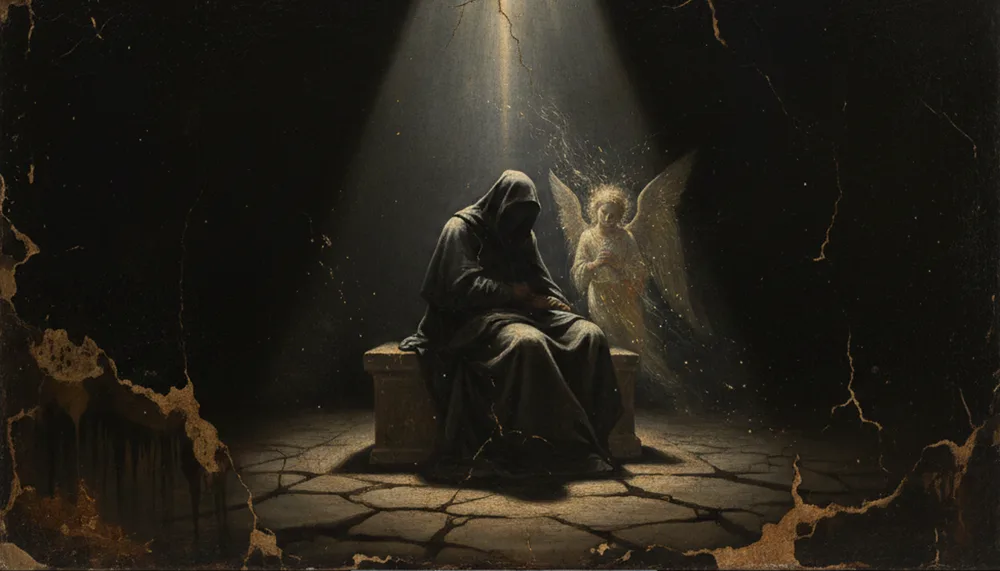
God says that you are never alone, because He is nearer to you than you are to yourself. To the loneliness of every heart Christ speaks two words: I will not leave you orphans (John xiv. 18), and behold I am with you all days, even to the consummation of the world (Matthew xxviii. 20). That is what God says about loneliness — not that the ache is unreal, but that it is answered.
What does the Bible say about loneliness?
Scripture does not deny that man is made for company and suffers without it. At the very beginning, before sin, God Himself pronounced the first verdict on solitude: It is not good for man to be alone (Genesis ii. 18). The longing not to be alone is no weakness to be ashamed of; it is written into our nature by the One who made us for communion — with God first, and with one another in Him.
But the Bible says something harder and more consoling. The deepest loneliness — the sense of being forsaken even by God — is met by God's own promise of presence. For my father and my mother have left me: but the Lord hath taken me up (Psalm xxvi. 10). And in the valley where the soul feels most abandoned: Though I should walk in the midst of the shadow of death, I will fear no evils, for thou art with me (Psalm xxii. 4). The Bible never promises that you will always feel God near. It promises that He is near, whether felt or not.
God is nearer to us than we are to ourselves
This is the heart of the Catholic answer, and it is doctrine, not poetry. God is everywhere not only by His gaze and His power but by His very substance — in Him we have life, movement, and being (Acts xvii. 28). More than this: by grace the three divine Persons dwell within the soul itself. Tanquerey teaches that the practice of the presence of God rests on this — that "the three divine persons dwell in us and that our heart is a living tabernacle," so that to find God "it is enough for us to re-enter into ourselves, into the interior cell" (The Spiritual Life, nos. 446–447). The Lord is nigh unto all them that call upon him (Psalm cxliv. 18).
So the man who feels alone in an empty room is mistaken about the room. The God who holds him in being is closer to him than the walls. This is why the saints could be solitary without being lonely: the hermit in the desert was never by himself. To learn this is the beginning of the spiritual life and the daily work of prayer.
Christ Himself knew loneliness
We do not worship a God who is a stranger to being alone. In the garden of Gethsemane, Our Lord asked three companions only to watch with Him, and found them sleeping — Could you not watch one hour with me? (Matthew xxvi. 40). On the Cross He cried out in the words of the psalm, My God, my God, why hast thou forsaken me? (Matthew xxvii. 46). The Sinless One entered the very darkness of abandonment, so that no man could say his loneliness was beneath the notice of God.
The suffering you feel when alone, He sanctified by feeling it first. This is why God permits the soul, at times, to lose all sensible consolation — the dryness the masters call desolation. It is not absence but a sharing in Gethsemane, a school of faith that teaches us to lean on God Himself and not on the comfort we feel. The cure is never to abandon prayer because it has gone dry; the cure is to keep watch one hour.
Bible verses for loneliness
In the words the Church received, carry these:
- I will not leave you orphans, I will come to you. (John xiv. 18)
- Behold I am with you all days, even to the consummation of the world. (Matthew xxviii. 20)
- The Lord is nigh unto a contrite heart: and he will save the humble of spirit. (Psalm xxxiii. 19)
- Come to me, all you that labour, and are burdened, and I will refresh you. (Matthew xi. 28)
- Let not your heart be troubled. You believe in God, believe also in me. (John xiv. 1)
These are not charms to be muttered against the dark. They are promises of a Person. For more of them gathered together, see our Catholic Bible verses and the consolation of ask, and it shall be given.
What the world gets wrong about loneliness
Two errors must be cut away, charitably but firmly. The first is the prosperity gospel and its cousins, which whisper that if you only had enough faith you would never feel alone — that the ache itself is a sign of failure. This is false and cruel. Christ in Gethsemane was perfect in faith and was desolate. The promise is His presence, not the abolition of the heart's wounds. To tell a grieving person that his loneliness proves a defect of faith is to add the world's lie to a soul Christ is carrying.
The second error is the fundamentalist reading that hands a man a Bible verse and leaves him alone with it. But God did not leave us orphans with a book; He left us a Church, a Body, sacraments, a household. I will not leave you orphans is fulfilled not in a verse memorised in isolation but in the whole order of grace He established. The answer to loneliness is not more solitude with Scripture; it is incorporation into the family of God, which is what Catholics believe the Church to be.
He waits for you in the tabernacle
The Catholic has a remedy for loneliness no other has: the Real Presence. Christ is not only with us "in spirit" and not only enthroned in a distant heaven. He is here, Body and Blood, soul and divinity, in every tabernacle of the world, the God of the tabernacles before whom His ministers keep watch (The Spiritual Life, no. 707). The church down the road is never empty. He is in it, and He waits.
This changes what it means to be alone. The lonely soul has somewhere to go and Someone there when it arrives. In Holy Communion — approached with a clean conscience, the burden of sin first laid down — the soul receives the very Heart that called it. To kneel before the tabernacle when you have no one else is not a last resort; it is the highest company a man can keep on earth. How to come to Him is gathered in our Catholic prayers, and the whole of worship culminates in the Mass, where He gives Himself.
You are surrounded: the communion of saints
The Catholic is never a solitary unit. By Baptism he is made a member of Christ's mystical body, and on this incorporation rests the communion of Saints — "the just here below, the souls in Purgatory, and the Saints in heaven all form part of the mystical body of Jesus, all share in His life... and must love and help one another as the members of one body" (The Spiritual Life, no. 147). St Paul's word is the law of this Body: if one member suffer any thing, all the members suffer with it (1 Corinthians xii. 26).
So the man who prays in an empty room is in fact surrounded — by the angels, by Our Lady, by the saints who pray for him, by the souls in purgatory bound to him, by every Christian on earth who shares one life with him in Christ. When we say in the Creed I believe in the communion of saints, we confess the cure for loneliness. You belong to a family larger than the visible world.
The duties of charity that draw us out of ourselves
There is a loneliness that feeds on itself, turning the soul inward until it can see nothing but its own ache. Against this the Church prescribes the oldest medicine: charity. Bear ye one another's burdens; and so you shall fulfil the law of Christ (Galatians vi. 2). The surest way out of the prison of self is to step toward another's need.
This is why the duties God lays upon us are also gifts: the bonds of friendship, the vocation of marriage, the discipline of going to church where we stand shoulder to shoulder with the Body of Christ. To love and serve someone in front of you is to discover that you were never as alone as you felt. The man who pours himself out finds his emptiness filled, not by feeling but by the law of Christ at work in him. This is the whole movement of the spiritual combat: to refuse the inward turn and to give.
A firm word in hope
Loneliness is real, and Christ does not mock it. But it does not have the last word, because He does not leave the lonely alone. He is nearer to you than you are to yourself; He waits for you in the tabernacle; He has given you the saints and the household of His Church and the duties of love that lead you out of the dark. I will not leave you orphans. He has not, and He will not. Whatever questions you carry to Scripture, gather them with us under what does God say about, and bring this one to its rest at the foot of the tabernacle.
Frequently Asked Questions
What does God say about loneliness?
God says you are never truly alone, because He is nearer to you than you are to yourself. To every lonely heart Christ promises I will not leave you orphans (John xiv. 18) and behold I am with you all days (Matthew xxviii. 20). He does not deny that the ache is real — at the beginning He Himself said it is not good for man to be alone (Genesis ii. 18) — but He answers it with His own abiding presence.
What does the Bible say about loneliness?
Scripture admits that man is made for company and suffers without it, yet it promises that God Himself meets the soul in its solitude. Even when human comfort fails, for my father and my mother have left me: but the Lord hath taken me up (Psalm xxvi. 10). The Bible never promises you will always feel God near; it promises that He is near, whether felt or not.
What are some Bible verses for loneliness?
The Church places these promises on our lips: I will not leave you orphans, I will come to you (John xiv. 18); behold I am with you all days (Matthew xxviii. 20); the Lord is nigh unto a contrite heart (Psalm xxxiii. 19); come to me, all you that labour, and are burdened, and I will refresh you (Matthew xi. 28). They are not charms against the dark but the promises of a Person.
Did Jesus ever feel lonely?
Yes. In Gethsemane Our Lord asked His three companions to watch with Him and found them asleep — Could you not watch one hour with me? (Matthew xxvi. 40). On the Cross He cried My God, my God, why hast thou forsaken me? (Matthew xxvii. 46). The Sinless One entered the darkness of abandonment so that no man's loneliness could be beneath the notice of God.
How does the Catholic Church help with loneliness?
The Church gives remedies no philosophy can: the Real Presence in the tabernacle, where Christ truly waits Body and Blood, soul and divinity; Holy Communion, approached with a clean conscience; the communion of saints; and the duties of charity that draw the soul out of itself. The lonely Catholic has somewhere to go and Someone there when he arrives.
What is the communion of saints?
It is the bond uniting all the members of Christ's mystical body — the faithful on earth, the souls in Purgatory, and the saints in heaven — who "all share in His life... and must love and help one another as the members of one body" (The Spiritual Life, no. 147). When we confess I believe in the communion of saints in the Creed, we confess that no Christian is ever a solitary unit.
Why do I still feel alone even when I pray?
God sometimes withdraws sensible consolation, leaving the soul in the dryness the masters call desolation. This is not His absence but a sharing in Gethsemane, a school of faith that teaches us to lean on God Himself rather than on the comfort we feel. The cure is never to abandon prayer because it has gone dry, but to keep watch one hour.
Is feeling lonely a sin or a lack of faith?
No. The longing for company is written into our nature by God, who declared it is not good for man to be alone (Genesis ii. 18). The prosperity-gospel lie that the ache itself proves a defect of faith is false and cruel — Christ in Gethsemane was perfect in faith and yet desolate. God promises His presence, not the abolition of the heart's wounds.
The Iter Fidei app carries the Douay-Rheims Bible, the catechism, and the prayers, in Latin and your own language. Join early access here.
Sources. Holy Scripture, Douay-Rheims version: Genesis ii. 18; Psalm xxii. 4; Psalm xxvi. 10; Psalm xxxiii. 19; Psalm cxliv. 18; Matthew xi. 28; Matthew xxvi. 40; Matthew xxvii. 46; Matthew xxviii. 20; John xiv. 1, 18; Acts xvii. 28; 1 Corinthians xii. 26; Galatians vi. 2. Adolphe Tanquerey, The Spiritual Life: A Treatise on Ascetical and Mystical Theology — on the exercise of the presence of God and the soul as "a living tabernacle" (nos. 446–447); on the communion of saints as the consequence of incorporation into Christ's mystical body (no. 147); on the God of the tabernacles (no. 707). The Apostles' Creed, the communion of saints.