
The Spiritual Life
How to Meditate with God: Christian Meditation
How to meditate with God according to the Catholic tradition: the method of St Francis de Sales and St Ignatius — preparation, consideration, affections, resolution — what to meditate on, how long, and how Christian meditation differs from mindfulness.
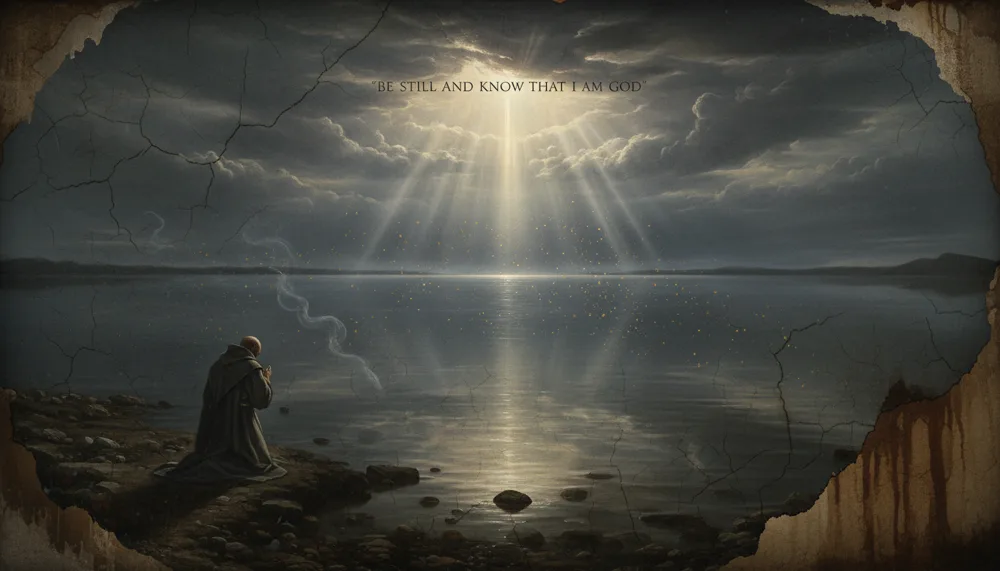
To meditate with God is to practice what the Catholic tradition calls mental prayer: you place yourself in His presence, consider a truth of the faith — a Gospel scene, the Passion, the last things — let the heart speak to Him about it, and end with one concrete resolution. Christian meditation is therefore a conversation with a living Person, not a technique for emptying the mind. Scripture commends it from the first psalm: the blessed man is he whose "will is in the law of the Lord, and on his law he shall meditate day and night" (Psalm 1:2, Douay-Rheims). What follows is the traditional method, step by step.
What is Christian meditation?
Christian meditation is the ordinary beginner's form of mental prayer: prayer made with the mind and heart rather than with set words. The Catechism of Saint Pius X distinguishes mental prayer, made with the mind alone, from vocal prayer, made with words. In meditation the mind supplies the matter — a truth, a scene, a sentence of Scripture — and the heart supplies the prayer.
St Teresa of Avila describes what the whole exercise is for: mental prayer is nothing else, in her judgment, than a frequent solitary converse with Him who we know loves us (Life, ch. 8). Meditation with God is therefore directed to Someone; it has content, because He has revealed Himself; and it ends in love and amendment of life, because He commands both. Our Lady is its model: "Mary kept all these words, pondering them in her heart" (Luke 2:19).
How to meditate with God: the traditional method
The classic method comes from St Ignatius of Loyola's Spiritual Exercises (1548) and was put within reach of every layman by St Francis de Sales in the Introduction to the Devout Life (1609), Part II. It has four movements; fifteen minutes suffice for all four.
1. Preparation: place yourself in the presence of God
Kneel or sit, still the body, and remember Who is here. St Francis de Sales insists on this first point above all: consider that God is present everywhere, that He beholds you. Make the Sign of the Cross, ask pardon for your sins, and beg the Holy Ghost for light. St Ignatius adds the "composition of place": if you are meditating on a Gospel scene, see it — the stable, the road to Calvary, the tomb — so that the imagination serves the soul instead of wandering from it.
2. Consideration: turn the truth over before Him
Take your subject — one scene, one verse, one truth, never many — and think about it slowly in God's sight. Who is acting here, what does it cost Him, what does it say to me? This is not study but the kindling of a fire. De Sales says the soul here gathers honey like the bee, resting on one flower as long as it yields.
3. Affections: let the heart speak
Consideration must break into prayer, or it is only thought. Speak to God plainly: acts of love, of contrition, of thanksgiving, of confidence — in the spirit of the psalmist, who tells the Lord how he has loved His law, "it is my meditation all the day" (Psalm 118:97). The affections are the heart of Christian meditation; the thinking exists for their sake. When the heart is speaking, let the plan go.
4. Resolution: leave with something concrete
End with one small, particular resolution for this day — to hold my tongue at the provocation I know is coming, to bear this cross without complaint. De Sales warns that meditation without resolution heats the soul and changes nothing. Close by thanking God and gathering what he calls a spiritual nosegay: one thought carried out of the garden to smell during the day. Reviewing the resolution at night is the natural companion of the examination of conscience.
Things you can meditate on to spend time with God
The matter of meditation is the whole deposit of faith, but the tradition points beginners to a short list.
- The life and Passion of Our Lord. The Gospels, read slowly in the Douay-Rheims, are the first book of meditation; the Passion above all, for all sanctity is learned at the foot of the Cross.
- The mysteries of the Rosary. Each decade sets one mystery before the mind; learning to pray the Rosary well is learning to meditate.
- The last things. Death, judgment, heaven, hell: "in all thy works remember thy last end, and thou shalt never sin" (Ecclesiasticus 7:40).
- The benefits of God. Creation, redemption, your own baptism, the Blessed Sacrament — matter for gratitude and love.
- A single verse of Scripture. One sentence, repeated and weighed, can feed a whole meditation; on praying Scripture, see what God says about meditation.
Morning meditation, and how long it should last
The masters agree on the morning. De Sales tells Philothea to make her meditation before the business of the day. For a beginner, fifteen minutes daily is a serious and sufficient start; a quarter of an hour kept every day outdoes an hour kept once a week. The subject can be prepared the night before, so that the mind wakes with its matter ready.
Meditation before sleep has its own traditional form: not a technique for falling asleep, but a brief review of the day, an act of contrition, and a thought of eternity carried into the dark — the Church's own night prayers frame it perfectly. As for anxiety, the remedy the tradition offers is not relaxation but confidence: to meditate on Providence and on "Be nothing solicitous" (Philippians 4:6) until trust displaces fear.
Distractions and dryness
Every soul that meditates meets distractions, and the saints are unanimous: they are not failure. When the mind wanders, bring it back gently, as often as it strays — the patient return is itself a prayer. When dryness comes and no affection stirs, remain faithfully at your post, make acts of the will without feeling, and offer the dryness itself. Perseverance under this trial is one of the chief battles of the interior life, treated at length in Scupoli's Spiritual Combat (1589), the manual St Francis de Sales himself carried; we summarize its doctrine in our article on spiritual combat.
Christian meditation vs mindfulness and Eastern meditation
The difference is not of style but of essence. Mindfulness, transcendental meditation, and the Eastern methods from which they derive aim at emptying the mind or dissolving the sense of self; their goal is a state, and they require no God at all. Christian meditation aims at the opposite: it fills the mind with revealed truth in order to inflame the will with love of a personal God, and it ends in resolution and obedience. A mantra repeated to still the mind is a technique; the Holy Name repeated with love is a prayer to Someone. What natural good such exercises touch — calm, attention, silence — the tradition of mental prayer already possesses, ordered to its true end.
Guided meditation and Christian meditation books
Before recordings existed, guided Christian meditation meant a book of points: the author sets the scene and proposes the considerations, and the soul prays through them. The classics remain the surest guides — the Spiritual Exercises, the Introduction to the Devout Life, the Imitation of Christ, the Spiritual Combat — any of them, read a page at a time on the knees, is a complete school of meditation. Music is no part of the traditional method; the silence in which God speaks is.
Frequently Asked Questions
What is Christian meditation?
Christian meditation is mental prayer: a deliberate, loving consideration of a truth of the faith in the presence of God, ending in affections of the heart and a practical resolution. It is a conversation with God, not a relaxation technique; its classical method was taught by St Ignatius of Loyola and St Francis de Sales.
How do I meditate as a Christian?
Follow the four traditional steps: place yourself in the presence of God and ask His light; consider slowly one truth or Gospel scene; speak to God from the heart in acts of love, contrition, and thanksgiving; end with one concrete resolution for the day. Fifteen minutes each morning is a solid beginning.
Can a Christian meditate?
Yes — meditation is native to the Church, not borrowed. Scripture commands it (Psalm 1:2; Josue 1:8), Our Lady practiced it (Luke 2:19), and the saints built the interior life upon it. What a Christian avoids is not meditation but methods whose premises deny the faith.
Is meditation against the Christian religion?
Meditation as the Church understands it — prayerful reflection on God's truth — is commended and commanded. Eastern techniques that seek to empty the mind or dissolve the self rest on premises foreign to the faith, and the Christian does not adopt them. The test is simple: Christian meditation is addressed to God and ends in love and obedience.
Should a Christian meditate?
The tradition answers firmly yes. The masters of the spiritual life regard daily mental prayer as morally necessary for serious progress in virtue, since without reflection the truths of faith remain unexamined and the will unmoved. Even a quarter of an hour a day, kept faithfully, transforms a soul.
The Iter Fidei app puts the Douay-Rheims Scriptures, the traditional prayers, and the classics of the interior life in your pocket for daily meditation. Download it here.
Sources. Psalm 1:2; Psalm 118:97; Ecclesiasticus 7:40; Luke 2:19; Philippians 4:6, Douay-Rheims Bible; St Ignatius of Loyola, Spiritual Exercises (1548); St Francis de Sales, Introduction to the Devout Life (1609), Part II; St Teresa of Avila, Life, ch. 8; Catechism of Saint Pius X (1908), on prayer; Lorenzo Scupoli, Spiritual Combat (1589); Thomas à Kempis, The Imitation of Christ.