
The Spiritual Life
The Daily Examen: The Examen Prayer of St Ignatius
The examen prayer of St Ignatius of Loyola in five points — thanksgiving, petition for light, review of the day, contrition, resolution — prayed at noon and at night. General and particular examen, and how it differs from the examination of conscience before Confession.
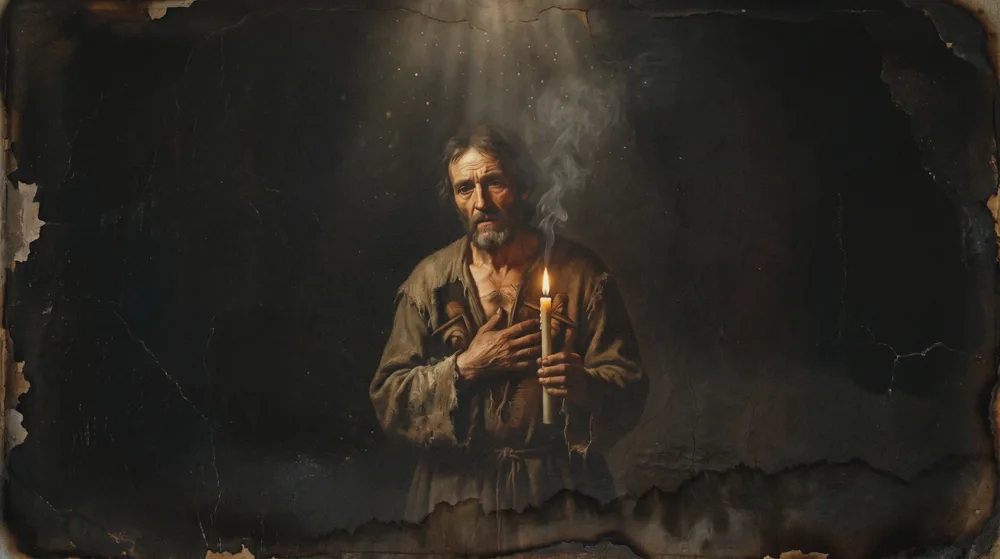
The examen prayer is the daily review of the soul taught by St Ignatius of Loyola in his Spiritual Exercises: five points — thanksgiving, petition for light, review of the day, contrition, and resolution — made briefly at midday and again at night. It is a prayer, not an exam; the reader looking for a prayer to say before a test will find the traditional texts in A Prayer Before an Exam. Here we treat the examen itself: its five points, the general and the particular examen, when to make it, and how it differs from the examination of conscience that prepares for Confession.
What Is the Examen Prayer?
The word examen is simply the Latin for examination, and the practice is older than the name. Scripture commands it: "Let us search our ways, and seek, and return to the Lord" (Lamentations 3:40); "I have thought on my ways: and turned my feet unto thy testimonies" (Psalm 118:59); "Try your own selves if you be in the faith; prove ye yourselves" (2 Corinthians 13:5).
What St Ignatius of Loyola did was give this ancient duty a fixed, workable form. In the Spiritual Exercises — approved by Pope Paul III in 1548 — the examen stands at the threshold of the First Week, before the great meditations, and Ignatius bound his sons to it twice daily whatever else their occupations allowed. The examen is short — a quarter of an hour suffices — but exact: the soul appears before God each day as a steward rendering his account, so that no fault has time to harden into habit.
The Five Points of the Ignatian Examen
St Ignatius sets out the general examen in five points (Spiritual Exercises, n. 43). They are simple enough to be learned in one reading and deep enough to occupy a lifetime.
1. Thanksgiving. First, "to give thanks to God our Lord for the benefits received." The examen does not begin with the sins but with the Giver: everything in the day just lived came from God.
2. Petition for light. Second, to ask grace to know our sins and to cast them out. Self-knowledge is a grace, not a feat of introspection; left to itself the heart excuses itself. We ask the Holy Ghost to show the day as He saw it.
3. Review of the day. Third, to demand an account of the soul "from the hour that we rose up to the present examen, hour by hour, or period by period: and first as to thoughts, and then as to words, and then as to acts." This is the body of the prayer — a calm walk through the hours, neither scrupulous nor hasty.
4. Contrition. Fourth, to ask pardon of God our Lord for the faults found — the Act of Contrition serves perfectly here.
5. Resolution. Fifth, to purpose amendment with His grace, fixing on something definite for the hours ahead. Ignatius closes the examen with the Our Father.
The power of the five points lies in their order — gratitude before self-scrutiny, light asked before judgment made, sorrow completed by resolve — and in their daily repetition.
The General and the Particular Examen
Ignatius distinguishes two examens, and the distinction is practical, not academic.
The general examen is the five points above, ranging over the whole day: thoughts, words, and deeds, whatever they were.
The particular examen (Spiritual Exercises, nn. 24-31) trains all its fire on a single point — the one fault the soul has resolved to root out, or the one virtue it has resolved to acquire. Ignatius prescribes its rhythm exactly: on rising, the resolution to guard against that fault; after the midday meal, a first examen, counting and marking down the morning's failures; after supper, a second examen over the afternoon, marked likewise. He even directs the soul to compare line with line — today with yesterday, this week with the last — to see whether it is truly gaining ground.
The masters after Ignatius — Alphonsus Rodriguez in the Practice of Perfection and Christian Virtues, Tanquerey in The Spiritual Life — insist on the particular examen as the ordinary instrument against a dominant fault. A general goodwill against "all my sins" corrects none of them; a daily, counted war against one of them corrects it, and the others weaken with it.
When to Pray the Daily Examen: Noon and Night
The Ignatian rhythm is twofold. The midday examen, made after the principal meal, catches the morning while it is fresh and re-arms the resolution for the afternoon. The nightly examen, made after supper or before sleep, closes the day: the whole day passes in review, pardon is asked, and the morrow's resolve fixed. For those who can manage only one, the night examen is the one to keep; it fits naturally among the Church's night prayers, with which the faithful have always ended the day.
Ten to fifteen minutes is enough. The examen is not a meditation: it does not dwell on a mystery or reason out a truth, as mental prayer does; it inspects a day. The two feed each other, but they are distinct exercises, and the examen must stay brief or it will not stay daily.
The Examen and the Examination of Conscience Before Confession
The daily examen and the examination of conscience before Confession are cousins, not twins. The examination before Confession is ordered to the sacrament: it searches out sins in kind and number since the last worthy Confession, commonly with the Ten Commandments as its frame, so that the penitent can make an entire accusation to the priest. The daily examen is ordered to daily amendment: it reviews one day, weighs venial faults and imperfections as carefully as grave ones, and ends not in accusation but in resolution.
The two serve each other. A soul that makes the examen every night arrives at Confession already knowing itself; its preparation is short, exact, and calm. We have set out the sacramental examination fully, with the traditional questions under each commandment, in The Examination of Conscience. The examen sanctifies the day; the examination prepares the tribunal of Penance.
Frequently Asked Questions
What is the examen prayer?
The examen prayer is the daily review of the soul taught by St Ignatius of Loyola in the Spiritual Exercises (n. 43). It consists of five points — thanksgiving for benefits received, petition for light to know one's sins, review of the day hour by hour in thoughts, words, and deeds, contrition, and resolution of amendment — and closes with the Our Father.
How do you pray the examen?
Take ten to fifteen minutes in the presence of God and go through the five points in order: thank Him for the day's benefits; ask light to see your faults; review the day from rising until now — thoughts, words, deeds; ask pardon; resolve, with His grace, on one definite amendment. End with the Our Father.
What is the difference between the general and the particular examen?
The general examen surveys the whole day and all its faults. The particular examen concentrates on one fault to be uprooted or one virtue to be gained: a morning resolution, a counted review at noon and at night, and a comparison of day with day to measure progress (Spiritual Exercises, nn. 24-31).
Is the examen the same as the examination of conscience before Confession?
No. The examination before Confession is ordered to the sacrament of Penance: it seeks out sins in kind and number so the penitent can confess them entirely. The daily examen is ordered to amendment: it reviews one day and ends in resolution. The daily practice of the one makes the other short and sure.
When should the daily examen be made?
St Ignatius appoints two times: after the midday meal and after supper — noon and night. Where only one is possible, the nightly examen is the one to retain, made before sleep as the close of the day's prayer.
The examen is a small prayer with a long reach. Fifteen minutes a night, held to for a year, does more to reform a life than many resolutions made once and forgotten; the soul that renders its account daily will not fear to render it at the last.
The Iter Fidei app places the traditional prayers, the examination of conscience, and the Church's night prayers at hand each evening, in Latin and English. Join early access here.
Sources. St Ignatius of Loyola, Spiritual Exercises (approved 1548), nn. 24-31 and 43; Douay-Rheims Bible (Lamentations 3:40; Psalm 118:59; 2 Corinthians 13:5); Alphonsus Rodriguez, Practice of Perfection and Christian Virtues (1609); Adolphe Tanquerey, The Spiritual Life.