
The Spiritual Life
What Does the Church Teach About Anger?
What does the Bible say about anger? Is anger a sin? The Church distinguishes righteous anger from the capital sin of wrath. 'Be angry and sin not' — the remedy is meekness.
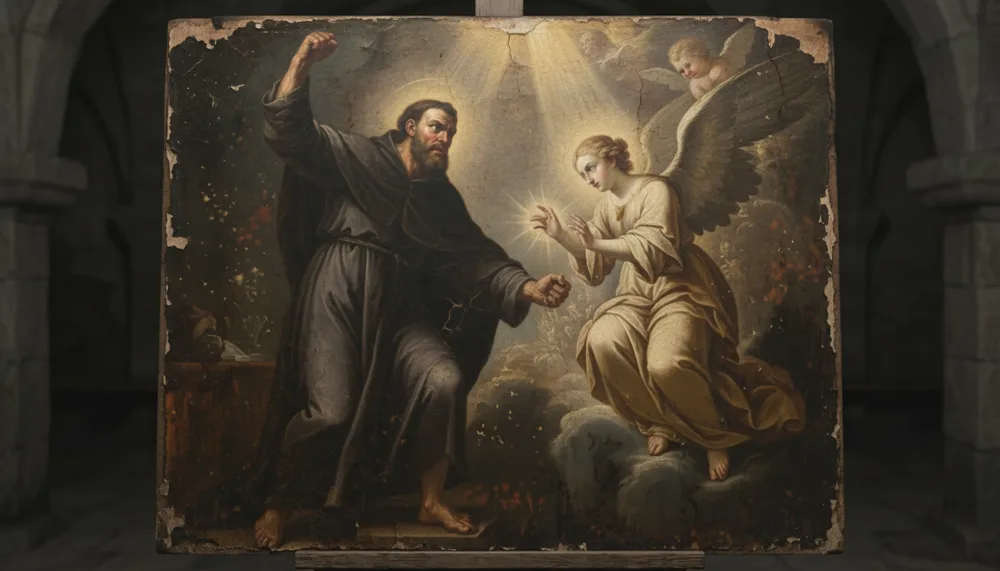
Is anger a sin? Not always. The Bible does not forbid every movement of anger — it forbids the wrath that masters reason and charity. Saint Paul gives the whole teaching in one line: "Be angry, and sin not: let not the sun go down upon your anger" (Eph. iv. 26). The Church distinguishes a holy indignation that hates evil from the capital sin of wrath that hates the brother and seeks his hurt. The feeling itself is not the sin; the sin is to consent to it, to nurse it, to carry it into revenge. The remedy for sinful anger is the virtue set against it: meekness and patience. That, read with the Church and not as scattered verses, is the Catholic teaching on anger.
Is anger a sin? The short answer
The short answer is that anger becomes sin when it is no longer governed by reason and charity. Scripture treats the passion soberly — it neither pretends men do not feel anger nor excuses them when it rules. Our Lord raises the precept above the letter of the old Law:
But I say to you, that whosoever is angry with his brother, shall be in danger of the judgment. And whosoever shall say to his brother, Raca, shall be in danger of the council. And whosoever shall say, Thou fool, shall be in danger of hell fire. (Matt. v. 22)
The Roman Catechism draws the line plainly. He who is angry with his brother, "even if he keep his anger shut up in his heart, ceases not to be guilty"; and his sin is graver still when he lets it burst out in harsh words and insults (Catechism of the Council of Trent, on the Fifth Commandment). So the question "is anger a sin?" has a precise answer: the first stirring of anger, before the will consents, is not yet sin; anger that the will embraces, especially for revenge, is. This is one of several questions we treat alongside what God says about anger directly from Scripture.
What does the Bible say about anger
Saint Paul gives the rule the Church has always taught: "Be angry, and sin not: let not the sun go down upon your anger" (Eph. iv. 26). The movement of anger is not the sin; the sin is to let it rule, to nurse it, to carry it into the night. Saint James shows where unbridled anger ends: "Let every man be swift to hear, but slow to speak, and slow to anger. For the anger of man worketh not the justice of God" (James i. 19-20).
The Psalmist had already given the same test: "Be ye angry, and sin not: the things you say in your hearts, be sorry for them upon your beds" (Ps. iv. 5). And the wise man warns against the temper that flares without measure: "Anger resteth in the bosom of a fool" (Eccles. vii. 10). What the Bible says about anger is never that we should feel nothing, but that the passion must be held under reason and turned away from revenge.
Anger as the capital sin of wrath
When anger is consented to and nourished, it becomes wrath — one of the seven capital sins: pride, covetousness, lust, anger, gluttony, envy, and sloth. The Catechism of Saint Pius X explains why these are called capital: "because they are the source and the cause of many other vices and sins" (Catechism of Saint Pius X, On the Capital Sins). Wrath is capital not because it is the worst of the seven, but because it breeds a whole brood of further sins.
The Roman Catechism shows the chain: from anger long nourished come "rash and unjust judgments, angers, jealousies, detractions and other like sins," so that "a single sin engenders many others" (Catechism of the Council of Trent, on the Fifth Commandment). The man who will not let go of his wrath, it warns, "thirsts in some sort for the blood of his enemy." This is why hardened anger — hatred — is so grave: "He that hateth his brother, is in darkness, and walketh in darkness" (1 John ii. 11). Wrath is the seedbed of grudges, of detraction, and of the refusal to forgive — which is why it belongs among the sins we name plainly in an examination of conscience.
Righteous anger versus sinful wrath
The Church has never taught that all anger is sin. There is a wrath that is disordered, and an anger that is according to God. The Roman Catechism distinguishes them exactly: sinful anger is conceived "without reason," from "the senses" and "the emotions of passion"; but "there is a legitimate anger and one according to God," the anger that reproves fault in those placed under our charge, an anger that "proceeds not from the senses, nor from the emotions of passion" but "comes from the Holy Ghost" (Catechism of the Council of Trent, on the Fifth Commandment).
Scripture shows this holy zeal. Our Lord drove the buyers and sellers from the Temple, and His disciples remembered the word, "The zeal of thy house hath eaten me up" (John ii. 17). The difference between righteous anger and sinful wrath is not in the feeling but in its source and its object. Righteous indignation hates the sin and seeks the good of the sinner; sinful wrath hates the brother and seeks his hurt. The first is the servant of justice and charity; the second is their enemy.
Here we must be honest with ourselves. Fallen nature flatters itself, and what we call holy zeal is often only wounded self-love wearing a borrowed robe. We must be slow to claim our anger is the righteous kind. The safer rule is to suspect our wrath, to examine its motive, and to test it by charity: does this anger seek the good of the one who provoked it, or only my own vindication?
The remedy: meekness and patience
Against the capital sin of wrath the Church sets the contrary virtues. The Catechism of Saint Pius X gives the rule of spiritual combat: "One triumphs over the capital vices by the exercise of the opposite virtues" — and over anger, "by patience" (Catechism of Saint Pius X, On the Capital Sins). This is the way of the heavenly virtues: patience bears the wrong, and meekness keeps the soul calm under provocation.
Scripture gives the practical means. The first is the soft word: "A mild answer breaketh wrath: but a harsh word stirreth up fury" (Prov. xv. 1). The second is self-mastery prized above conquest: "The patient man is better than the valiant: and he that ruleth his spirit than he that taketh cities" (Prov. xvi. 32). The third is to give time to anger before it acts: "If the spirit of him that hath power, ascend upon thee, leave not thy place" (Eccles. x. 4). Above all stands the example of Our Lord, who calls us to learn meekness from Himself: "Learn of me, because I am meek, and humble of heart: and you shall find rest to your souls" (Matt. xi. 29). The old practice of lectio divina — the slow, prayed reading of Scripture — steeps the soul in such words until meekness becomes its habit.
This is the daily work of the spiritual life: not to feel no anger, but to refuse it consent, to break it with a mild answer, and to forgive before nightfall. Anger that festers is best brought to confession, where the priest, by the power Christ gave him — "whose sins you shall forgive, they are forgiven" (John xx. 23) — looses the soul from its grudge. Bound to this is the duty to forgive, for the man who will not pardon cannot ask to be pardoned: "Forgive us our trespasses, as we forgive them that trespass against us."
Anger and the peace of the heart
Take heart: no temper is beyond grace. The opposite of mastered anger is the peace Our Lord promised the meek. The man ruled by wrath has no rest; the man who governs it keeps his soul his own. Where anger feeds disturbance, meekness restores order — in the home especially, where Saint Paul commands, "Fathers, provoke not your children to indignation" (Col. iii. 21). For the household weighed down by strife, the steady work of patience, confession, and a prayer for peace does more than any sharp word ever could. The whole of the Church's teaching on anger gathers into one counsel: hold the passion under reason, return good for evil, and "let not the sun go down upon your anger" (Eph. iv. 26).
Frequently Asked Questions
Is anger a sin?
Not always. The first movement of anger, before the will consents, is not yet sin. Anger becomes sin when reason and charity no longer govern it — when we nurse it, embrace it, or turn it toward revenge. Saint Paul gives the rule: "Be angry, and sin not: let not the sun go down upon your anger" (Eph. iv. 26). The Roman Catechism adds that even anger kept "shut up in the heart" makes a man guilty, and the sin is graver when it breaks out in harsh words.
What does the Bible say about anger?
Scripture treats anger soberly. It permits a holy indignation against evil but condemns the wrath that springs from wounded pride: "Whosoever is angry with his brother, shall be in danger of the judgment" (Matt. v. 22). Saint James warns that "the anger of man worketh not the justice of God" (James i. 19-20). Read with the Church, the Bible's teaching on anger is one: the passion must be governed by reason and charity, and its remedy is meekness and patience.
What is the difference between righteous anger and the sin of wrath?
Righteous indignation hates the sin and seeks the good of the sinner; the sin of wrath hates the brother and seeks his hurt. The Roman Catechism says holy anger "comes from the Holy Ghost" and "proceeds not from the senses, nor from the emotions of passion," while sinful anger is conceived "without reason." The difference lies not in the feeling but in its source and object — and we should be slow to claim our anger is the righteous kind.
Why is wrath one of the seven capital sins?
Anger is one of the seven capital sins because, as the Catechism of Saint Pius X teaches, the capital sins are "the source and the cause of many other vices and sins." Wrath long nourished breeds rash judgments, jealousies, detractions, grudges, and the refusal to forgive, so that "a single sin engenders many others" (Catechism of the Council of Trent). It is capital not because it is the worst, but because it is a seedbed of further sin.
How does the Church say to overcome anger?
The Church overcomes the capital vices "by the exercise of the opposite virtues," and over anger "by patience" (Catechism of Saint Pius X). Scripture gives the means: the soft word that "breaketh wrath" (Prov. xv. 1), self-mastery prized above conquest (Prov. xvi. 32), and the example of Our Lord, "meek, and humble of heart" (Matt. xi. 29). Anger that festers should be brought to confession and undone by forgiveness.
Iter Fidei serves the prayers, psalms and devotions, in Latin and English with audio. Download it here.
Sources. Douay-Rheims Bible: Ephesians iv. 26; James i. 19-20; Matthew v. 22; Matthew xi. 29; 1 John ii. 11; John ii. 17; John xx. 23; Psalm iv. 5; Proverbs xv. 1; Proverbs xvi. 32; Ecclesiastes vii. 10; Ecclesiastes x. 4; Colossians iii. 21. Catechism of the Council of Trent (1566), on the Fifth Commandment. Catechism of Saint Pius X (1908), On the Capital Sins.