
The Faith
What Does God Say About Going to Church?
What does God say about going to church? The Third Commandment binds us to keep holy the Lord's Day by assisting at Holy Mass. Is it a sin to miss Sunday Mass? Yes — without grave cause it is a mortal sin. Grounded in the Douay-Rheims, the Roman Catechism, and St Pius X.
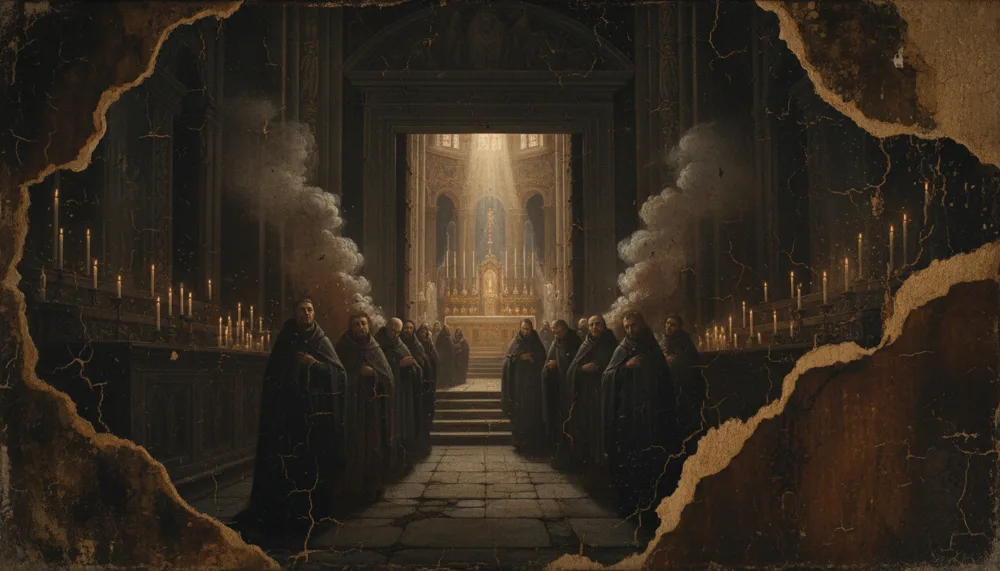
God commands us to keep holy the Lord's Day, and the Church has always taught that we keep it by assisting at Holy Mass: "Remember that thou keep holy the sabbath day" (Exodus xx. 8, Douay-Rheims), and "not forsaking our assembly, as some are accustomed" (Hebrews x. 25). So yes, you do have to go to church on Sundays and holy days of obligation, and to miss Mass deliberately, without grave cause, is a mortal sin. This is not optional piety. The Mass is the worship God is owed.
What does God say about going to church?
God does not leave our worship to private taste. He commanded it. The Third Commandment of the Decalogue — given by His own finger on the tables of stone — reads: "Remember that thou keep holy the sabbath day" (Exodus xx. 8). The Roman Catechism explains that this Commandment "has for its object the outward worship which we owe to God," a worship that flows necessarily from the First Commandment (Roman Catechism, III, ch. 31). We are body and soul; God is Lord of both, and He is owed the homage of both.
Under the new law the day changed but the duty did not. As St Pius X teaches, "Sunday, which signifies the day of the Lord, has been substituted for Saturday, because it was on that day that Jesus Christ Our Lord rose again" (Catechism of St Pius X, III, §3). And the worship commanded on that day is precise: "We are commanded to assist devoutly at the Holy Sacrifice of the Mass" (St Pius X, III, §3). To "go to church," then, means concretely to be present at Mass — the one sacrifice of Calvary renewed upon the altar. This is the heart of what God asks of us in worship, and it stands at the centre of the whole moral law set down in the Ten Commandments.
Do I have to go to church? The Sunday obligation
The plain answer is yes. The duty is twofold, and the two strands reinforce each other. First, the divine commandment of the Decalogue. Second, the precept of the Church that specifies how it binds us. The first of the five Commandments of the Church is "To hear Mass on all Sundays and other commanded feasts" (St Pius X, III, ch. 4, §1). And we are bound to obey the Church here "because Jesus Christ Himself commands it," for He said to His apostles, "He that heareth you, heareth me" (St Luke x. 16).
The Roman Catechism lists the very acts the faithful are bound to perform on feast days: "to go to the Church, to assist at the most holy Sacrifice of the Mass with a sincere piety and a sustained attention" (Roman Catechism, III, ch. 31). Note the two demands in that line: bodily presence and interior attention. It is not enough to stand in the building while the mind wanders the week's accounts; the worship must be offered with the soul.
To plan our week so that nothing crowds out the Lord's Day is itself part of the precept, for the word Remember warns us that "we shall not lack occasions to forget this precept" (Roman Catechism, III, ch. 31). The duty of worship runs alongside our other duties to God, among them the daily discipline of prayer and the tithe owed to the Church, which is itself a precept of the Church.
Is going to church a sin to miss?
To miss Sunday Mass through your own fault is a grave sin. The Catechism of St Pius X is unambiguous: "Deliberately to transgress a precept of the Church in a grave matter is a mortal sin" (III, ch. 4, §1). The first precept — to hear Mass on Sundays and holy days — is grave matter. Therefore the man who, with knowledge and full consent, stays away from Mass on a day of obligation without a serious reason commits mortal sin, and dies in that state to his own ruin if he does not repent.
We say this firmly because it is true, and because charity does not flatter. We do not say it to crush the man who has fallen away; we say it to call him back, for the road back is open. The man who has missed Mass through his own fault is bound to confess it: this is precisely the sin the Sacrament of Penance was given to heal — the matter of a good confession, worked through the priest's power to forgive sins by Christ's own commission. To stay away is to put one's soul among the deadly sins; to return is the work of a single hour. No one honestly seeking God is too far gone.
What counts as a grave cause to be excused
The obligation binds, but it is not without mercy. A grave cause genuinely excuses from Sunday Mass — and the Church names it. St Pius X teaches that "on feast days are permitted the labours necessary to life or to the service of God, and those which are done for a grave cause" (III, §3). Serious illness, the care of the sick who cannot be left, a great distance with no priest within reach, the duties of a mother with a newborn, work that cannot be set aside without grave loss — these excuse, because God commands nothing impossible.
What does not excuse is mere weariness, a late night, the weather, a sporting fixture, or the slow theft of the morning by a hundred small comforts. The test is honest: would I miss work, or a wedding, or a flight, for this reason? If not, it is no reason to miss the Mass. This same firm-yet-charitable measure governs the Church's other observances of the Lord's seasons — the fasting and abstinence of Lent and the practice of fasting itself.
Why the Mass, and not merely "church"?
Many reduce worship to private feeling — "I pray at home," "I find God in nature." Holy Scripture does say, "God is a spirit; and they that adore him, must adore him in spirit and in truth" (St John iv. 24); but Our Lord said this to establish true worship, not to abolish public worship. He commanded, at the Last Supper, "Do this for a commemoration of me" (St Luke xxii. 19). The Mass is that doing. It is not one Christian activity among others but the single, perfect act of worship — the offering of the Body and Blood of Christ to the Father. No private devotion, however fervent, replaces it, because none of them is the Sacrifice.
This is why we must correct two errors gently but plainly. The first is the prosperity gospel, which treats church as a means to earthly success. But we do not assist at Mass to be paid; we assist because God is owed adoration, and the man who comes only for what he can get has not yet begun to worship. The second is the fundamentalist reading that, holding only "the Bible alone," denies the visible Church any authority to bind.
Yet the same Bible records the apostles binding the faithful (Acts xv. 28), and warns, "not forsaking our assembly" (Hebrews x. 25). To worship as a Christian is, by Christ's own design, to worship together, in the assembly He founded. The Mass at its fullest is the ancient rite, and it is worth knowing what the Tridentine Mass is and which days carry the obligation among the holy days of obligation. Belonging to this worship is inseparable from what Catholics believe.
The fruit of the Lord's Day
The Psalmist sings, "I rejoiced at the things that were said to me: We shall go into the house of the Lord" (Psalm cxxi. 1). The Sunday duty is not a burden laid on us to diminish our week; it is the day on which the soul is fed, the sins of the week are confessed, and the will is bent back toward God.
The Roman Catechism notes that whoever keeps this Commandment well "will render easy and ready the practice of all the others" (III, ch. 31) — for the man who worships God rightly on Sunday is armed for the spiritual combat of the other six days, strengthened to live the spiritual life and to honour God in his work, his marriage, and his friendships. Keep the Lord's Day, and the whole of life is ordered to God.
So go to Mass. Not because the building is beautiful or the company pleasant, though it may be both, but because God commands it, the Church specifies it, and your soul needs it. Begin again this Sunday.
Frequently Asked Questions
What does God say about going to church?
God commanded it. The Third Commandment, written by His own finger, reads, "Remember that thou keep holy the sabbath day" (Exodus xx. 8), and Holy Scripture warns us against "forsaking our assembly" (Hebrews x. 25). Under the new law the day became Sunday, and the worship commanded on it is precise: "We are commanded to assist devoutly at the Holy Sacrifice of the Mass" (St Pius X, III, §3).
What does God say about the church?
Scripture shows the Church not as a private affair but as the visible assembly Christ founded and gave authority to bind. The apostles bound the faithful in His name — "it hath seemed good to the Holy Ghost and to us" (Acts xv. 28) — and Our Lord told them, "He that heareth you, heareth me" (St Luke x. 16). To worship as a Christian is, by Christ's own design, to worship together in that assembly, chiefly through the Holy Sacrifice of the Mass.
What did Jesus say about church?
At the Last Supper Our Lord instituted the Mass and commanded, "Do this for a commemoration of me" (St Luke xxii. 19) — the very act repeated on every altar. He told the woman at the well that true worshippers "must adore him in spirit and in truth" (St John iv. 24), establishing true worship rather than abolishing public worship. And He gave His Church His own authority: "He that heareth you, heareth me" (St Luke x. 16).
Do I have to go to church?
Yes. The duty is twofold: the divine commandment of the Decalogue to keep holy the Lord's Day, and the precept of the Church that specifies it — the first Commandment of the Church being "To hear Mass on all Sundays and other commanded feasts" (St Pius X, III, ch. 4, §1). We are bound to obey "because Jesus Christ Himself commands it," for He said, "He that heareth you, heareth me" (St Luke x. 16).
Is it a sin to miss Sunday Mass?
To miss Sunday Mass through your own fault is a mortal sin. The Catechism of St Pius X is unambiguous: "Deliberately to transgress a precept of the Church in a grave matter is a mortal sin" (III, ch. 4, §1), and hearing Mass on Sundays and holy days is grave matter. The man who, with knowledge and full consent, stays away without a serious reason must confess it before receiving Communion.
What counts as a grave cause to miss Mass?
A grave cause genuinely excuses, for God commands nothing impossible. Serious illness, caring for the sick who cannot be left, a great distance with no priest within reach, the duties of a mother with a newborn, or work that cannot be set aside without grave loss all excuse. Mere weariness, a late night, the weather, or a sporting fixture do not — the honest test is whether you would miss work or a flight for the same reason.
Why go to Mass and not just pray at home?
Because the Mass is not one Christian activity among others but the single, perfect act of worship — the offering of the Body and Blood of Christ to the Father, the one Sacrifice of Calvary renewed upon the altar. No private devotion, however fervent, replaces it, because none of them is the Sacrifice. Praying at home is good and commanded, but it does not satisfy the duty to "assist devoutly at the Holy Sacrifice of the Mass" (St Pius X, III, §3).
Who is God in the Catholic Church?
God is the one Lord whom the Church adores in three Persons — Father, Son, and Holy Ghost — the Creator to whom all worship is owed. The Third Commandment exists precisely because He is "a spirit; and they that adore him, must adore him in spirit and in truth" (St John iv. 24), Lord of both body and soul, who is rightly worshipped in the public Sacrifice of the Mass.
The Iter Fidei app carries the Douay-Rheims Bible, the catechism, and the prayers. Join early access here.
Sources. Douay-Rheims Bible (Exodus xx. 8; Hebrews x. 25; St John iv. 24; St Luke x. 16; St Luke xxii. 19; Psalm cxxi. 1; Acts xv. 28). Catechism of the Council of Trent (Roman Catechism), Part III, ch. 31 — On the Third Commandment. Catechism of St Pius X, Part III, ch. 2, §3 — The Third Commandment; Part III, ch. 4, §1 — The Precepts of the Church and the First Precept.