
The Faith
What Does the Bible Say About Tithing? The Catholic Answer
What does God say about tithing? We give the Douay-Rheims text — the tithe of the Old Law, the widow's mite, the cheerful giver — and the Catholic teaching: the faithful must provide for the Church and give alms, but tithing is not a bargain for prosperity.
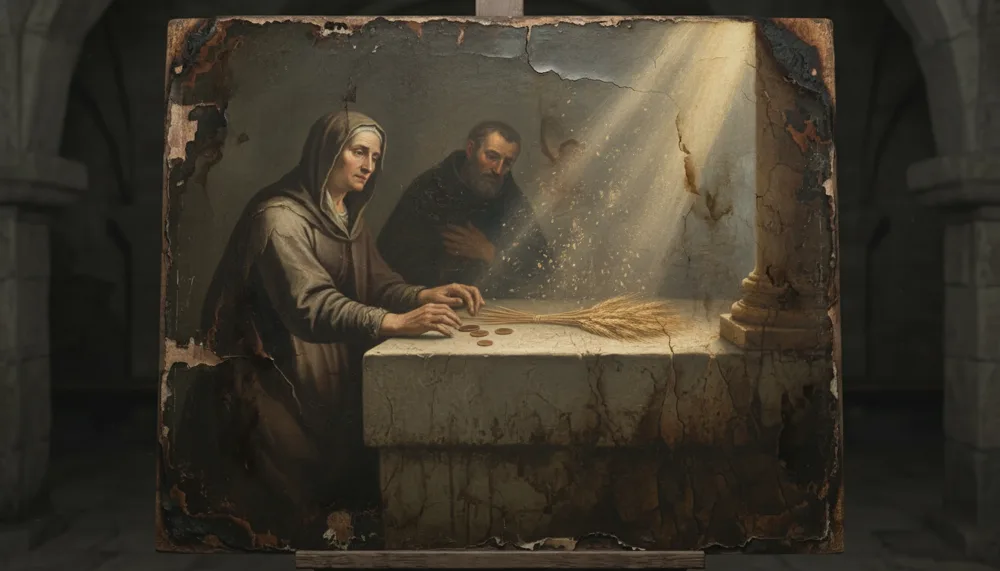
What does God say about tithing? He commands that His house be provided for and that the poor be fed — Bring all the tithes into the storehouse, that there may be meat in my house (Malachias iii. 10) — and He measures the gift not by its size but by the love behind it, for God loveth a cheerful giver (2 Cor. ix. 7). The Catholic answer is plain: the faithful are bound to support the Church and to give alms, but tithing is a duty of charity and justice, never a transaction by which a man buys earthly wealth from God.
Bring all the tithes into the storehouse, that there may be meat in my house, and try me in this, saith the Lord: if I open not unto you the flood-gates of heaven, and pour you out a blessing even to abundance. — Malachias iii. 10 (Douay-Rheims)
We set this out from Scripture and the catechism because the word "tithing" is now heard most often in a foreign key — the promise that a tenth handed over will return tenfold in cash. That is not what God says. He asks for the support of His altar and the relief of His poor, and He asks it of a willing heart. (For the wider question of money and the soul, see what does God say about money and what does God say about greed; this article belongs to our hub, what does God say about.)
What does the Bible say about tithing?
The tithe — a tenth part offered to God — runs through the Old Law, and is older than Moses. Abram gave Melchisedech, priest of the Most High God, the tithes of all (Genesis xiv. 20), an act the Epistle to the Hebrews reads as a figure of Christ's eternal priesthood (Hebrews vii); Jacob vowed, of all things that thou shalt give to me, I will offer tithes to thee (Genesis xxviii. 22).
The Law then fixed it: All tithes of the land, whether of corn, or of the fruits of trees, are the Lord's, and are sanctified to him (Leviticus xxvii. 30), and it served also the relief of the stranger, the fatherless, and the widow (Deuteronomy xiv. 28–29). Under Moses it was commanded for the upkeep of the Levites who served the sanctuary, since they had no inheritance of land in the Israel of the covenant, a setting we take up in what God says about Israel.
Our Lord Himself, born under that Law and faithful to it, as we show in was Jesus a Jew, kept its tithe even as He revealed its true heart. The storehouse of Malachias is exactly this: the place where offerings were gathered so that there may be meat in my house — so that the worship of God would not fail and His ministers would not starve. The prophet rebukes a people who had robbed God by withholding what was His due, and calls them back not to enrich themselves but to restore His honour. The tithe was no generous extra but a debt of religion, the recognition that all a man has comes from God and the first-fruits belong to Him.
Our Lord did not abolish this. He rebuked the Pharisees not for tithing but for tithing the mint and the cummin while neglecting the weightier things of the law, judgment, and mercy, and faith — these things you ought to have done, and not to leave those undone (Matt. xxiii. 23). The duty stands; it must not crowd out the greater duties of justice and charity.
And the New Testament keeps the principle that those who serve the altar live by the altar: The labourer is worthy of his hire (1 Tim. v. 18); So also the Lord ordained that they who preach the gospel, should live by the gospel (1 Cor. ix. 14). The Church on earth has a body as well as a soul — priests, churches, the bread and wine of the Sacrifice, the care of the poor — and the faithful are the ones who provide it. (On the worship this support exists to serve, see what is the Tridentine Mass and what does God say about going to church.)
The widow's mite: God weighs the heart, not the sum
The clearest word Our Lord speaks on giving is the widow's mite. He sat over against the treasury and watched the crowd cast in their money, and the rich gave much; and there came a certain poor widow, and she cast in two mites, which make a farthing (Mark xii. 42). Then He called His disciples and gave the verdict that overturns every human accounting: this poor widow hath cast in more than all they who have cast into the treasury. For all they did cast in of their abundance; but she of her want cast in all she had, even her whole living (Mark xii. 43–44).
God does not count the coins; He weighs the heart and what the gift cost it. This is the death of the prosperity calculation. If giving were an investment that returned a profit, the widow made the worst trade in the Gospel — she gave her whole living and walked out poorer. Our Lord praises her precisely because she expected no return: she gave to God because He is God. That is the spirit the Church asks of the giver, and it is why St Paul insists the gift be free: Every one as he hath determined in his heart, not with sadness, or of necessity: for God loveth a cheerful giver (2 Cor. ix. 7).
Is tithing required? The precepts of the Church
Is tithing required of a Catholic? The duty to support the Church is required; the rigid Old-Law tenth, as a binding civil tax, is not the form it now takes. The Catechism of St Pius X lists among the precepts of the Church a fourth commandment: To pay the tithes due to the Church. It explains that this precept is observed by paying the offerings or contributions which have been established to acknowledge the sovereign dominion of God over all things, and to provide for the honest subsistence of His ministers, and that the tithes ought to be paid upon such things and in such manner as the custom of the place requires.
Read it carefully, and the teaching is exact. There is a real obligation — it is one of the precepts of the Church, and deliberately to transgress a precept of the Church in a grave matter is a mortal sin, as the same catechism teaches. But the obligation has two ends that have nothing to do with personal gain: to acknowledge the sovereign dominion of God over all things, and to provide for the honest subsistence of His ministers.
And the measure is the custom of the place — the Church does not bind every Catholic to a literal tenth, but to provide, according to his means and the practice of his parish, for divine worship and those who serve it. (On the other duties that bind every Catholic, see what Catholics believe and holy days of obligation; on the wider law of God, the Ten Commandments. The same care to read which precepts of the Old Law still bind us governs other modern questions, such as what God says about piercings and what God says about transgenderism.)
So the honest answer to "is tithing required" is: yes, the support of the Church is required of every Catholic who is able; no, you are not under the Mosaic tenth as a literal tax. You owe what justice and the custom of your place ask, given freely. (The other duties of this kind are set out in The Precepts of the Church.)
Almsgiving: a duty of charity, not an option
Tithing for the support of the altar is one half; almsgiving — giving to the poor — is the other, and it is no less commanded. The Catechism of St Pius X teaches that the good works of which a particular account will be demanded of us on the day of judgment are the works of mercy, and that a work of mercy is one by which we succour the spiritual or corporal needs of our neighbour. To feed the hungry, clothe the naked, harbour the harbourless, and to lift up those whom poverty or vice has cast down — among them the ones enslaved by the evils we treat in what God says about drugs — are not counsels for the generous few but works God will require of us all.
Scripture binds this on the conscience without softening. Faith without works is dead (James ii. 26) — and the works St James has in view begin with the brother naked and in want of daily food whom we send away with warm words and an empty hand (James ii. 15–16). Charity that gives nothing is not charity. Scripture exalts the gift to the poor without reserve: alms delivereth from death, and the same is that which purgeth away sins, and maketh to find mercy and life everlasting (Tobias xii. 9); and Our Lord makes it the very measure of the Last Judgment: as long as you did it to one of these my least brethren, you did it to me (Matt. xxv. 40).
With prayer and fasting, almsgiving is one of the three great works of penance, which is why the Church pairs it with Lenten fasting and abstinence. Almsgiving is part of the same self-giving that tithing serves, and the soul that withholds it has understood neither. (See faith without works is dead and the spiritual life; on the disordered love of money that almsgiving heals, the seven deadly sins.)
Not a prosperity bargain
We must name the error directly, charitably toward the persons who hold it. The prosperity preaching teaches that giving is a seed sown for a financial harvest — that a tenth handed over obliges God to return riches. This reads Malachias as a stock tip and ignores the widow entirely. Scripture does promise blessing to the giver, but the blessing God names is to abundance of His grace and His own self, not a swelling of the bank account; the giver He commends is the widow who got nothing back.
To give in order to get is to give with sadness, or of necessity — the very disposition St Paul excludes. Our Lord asks for the opposite: when thou dost alms, let not thy left hand know what thy right hand doth, and the Father who seeth in secret will repay (Matt. vi. 3–4) — in the treasure of heaven, not a dividend on earth. The same Sermon forbids giving to be seen of men (Matt. vi. 1).
Bargaining makes God a debtor and the soul a merchant. The Catholic gives because God is owed, because the Church must live, and because the poor are Christ. The reward is real, but it is the reward of charity — God Himself — laid up in heaven, not paid out in cash. (On the false comfort of a faith that costs nothing, see what does God say about faith; on giving from a heart already converted, what does God say about prayer.)
Where this leaves us
What does God say about tithing? He says: provide for My house, do not rob My altar, feed My poor, and give it cheerfully and free. The Catholic is bound — by the precepts of the Church and by the law of charity — to support the worship of God and the works of mercy according to his means and the custom of his place. He is not bound to a prosperity bargain, for there is none; the widow gave her whole living and was praised, and God loveth a cheerful giver (2 Cor. ix. 7). Give, then, as the Church asks and as charity asks, looking for no return but the One who said that what is done to the least is done to Him.
Frequently Asked Questions
What does God say about tithing?
God commands that His house be provided for and His poor be fed — Bring all the tithes into the storehouse, that there may be meat in my house (Malachias iii. 10) — and He weighs the gift by the love behind it, for God loveth a cheerful giver (2 Cor. ix. 7). He asks the support of His altar and the relief of the poor, given freely. He never promises riches in exchange; the widow who cast in her whole living was praised, not repaid.
What does the Bible say about tithing?
The tithe — a tenth offered to God — runs through the Old Law for the upkeep of the Levites who served the sanctuary. Our Lord did not abolish it; He rebuked the Pharisees for tithing the mint while neglecting judgment, and mercy, and faith, adding these things you ought to have done, and not to leave those undone (Matt. xxiii. 23). The New Testament keeps the principle that those who serve the altar live by it: The labourer is worthy of his hire (1 Tim. v. 18).
Is tithing required for Catholics?
The support of the Church is required; the rigid Old-Law tenth as a binding tax is not the form it now takes. The Catechism of St Pius X lists among the precepts of the Church To pay the tithes due to the Church, observed by the offerings established to acknowledge the sovereign dominion of God and to provide for the honest subsistence of His ministers, upon such things as the custom of the place requires. So the support is owed by every Catholic who is able, according to his means and the practice of his parish, given freely.
Is tithing a sin?
No. To give a tenth of one's income to the Church and the poor is a generous and praiseworthy act, in full harmony with Scripture: Honour the Lord with thy substance, and give him of the first of all thy fruits (Proverbs iii. 9). The disorders to avoid are giving to be seen of men (Matt. vi. 1) and giving as a bargain for wealth.
Is it a sin not to give to the Church?
To give nothing when one has the means is a failure in a real duty, since the support of the Church is one of her precepts. A poor man who truly cannot give is not at fault; God measures by the heart, as He showed in praising the widow's mite.
How much should a Catholic give to the Church?
There is no universal literal tenth binding under the New Law, though many faithful keep the tithe as a generous personal rule, which is praiseworthy; the measure is the custom of the place and a man's means. The duty is real — it is a precept of the Church, and deliberately to transgress a precept of the Church in a grave matter is a mortal sin — but its ends are to honour God and to maintain divine worship and His ministers, not personal gain. Give what justice and the custom of your place ask, and give it from a willing heart.
Is tithing the same as almsgiving?
No. Tithing supports the altar and the Church's worship; almsgiving relieves the poor — and both are commanded. The Catechism of St Pius X teaches that the works of which a particular account will be demanded of us on the day of judgment are the works of mercy. Faith without works is dead (James ii. 26), and the works St James names begin with the brother naked and in want of daily food (James ii. 15–16).
Does God promise to bless those who tithe?
Scripture does promise blessing to the giver, but the blessing God names is to abundance of His grace and His own self — not a swelling of the bank account. The prosperity teaching that reads Malachias as a stock tip ignores the widow entirely, who gave her whole living and walked out poorer, yet was praised above all. To give in order to get is to give with sadness, or of necessity, the very disposition St Paul excludes (2 Cor. ix. 7).
What is the meaning of the widow's mite?
Our Lord watched the rich cast much into the treasury, then a poor widow cast in two mites, which make a farthing (Mark xii. 42), and declared this poor widow hath cast in more than all they — for she of her want cast in all she had, even her whole living (Mark xii. 44). God does not count the coins; He weighs the heart and what the gift cost it. It is the death of the prosperity calculation: she expected no return and gave to God because He is God.
The Iter Fidei app carries the Douay-Rheims Bible, the catechism, and the prayers. Join early access here.
Sources. Holy Scripture (Douay-Rheims): Genesis xiv. 20; Genesis xxviii. 22; Leviticus xxvii. 30; Deuteronomy xiv. 28–29; Proverbs iii. 9; Tobias xii. 9; Malachias iii. 10; St Matthew vi. 1–4; St Matthew xxv. 40; 1 Corinthians ix. 14; Hebrews vii; St Mark xii. 41–44; 2 Corinthians ix. 6–7; 1 Timothy v. 18; St Matthew xxiii. 23; St James ii. 15–16, 26. Catechism of St Pius X (1908): Part III, Chapter 4 — The Precepts of the Church (§ 1, the obligation of the precepts and the grave matter; § 5, the Fourth Precept, "To pay the tithes due to the Church," and how the tithes ought to be paid); Part V, Chapter 4 — The Works of Mercy (the corporal and spiritual works of mercy required of us at the judgment).