
The Faith
What Does God Say About Money?
What God says about money in the Bible: riches are a good to be used well, not served. The danger is avarice — 'the desire of money is the root of all evils.'
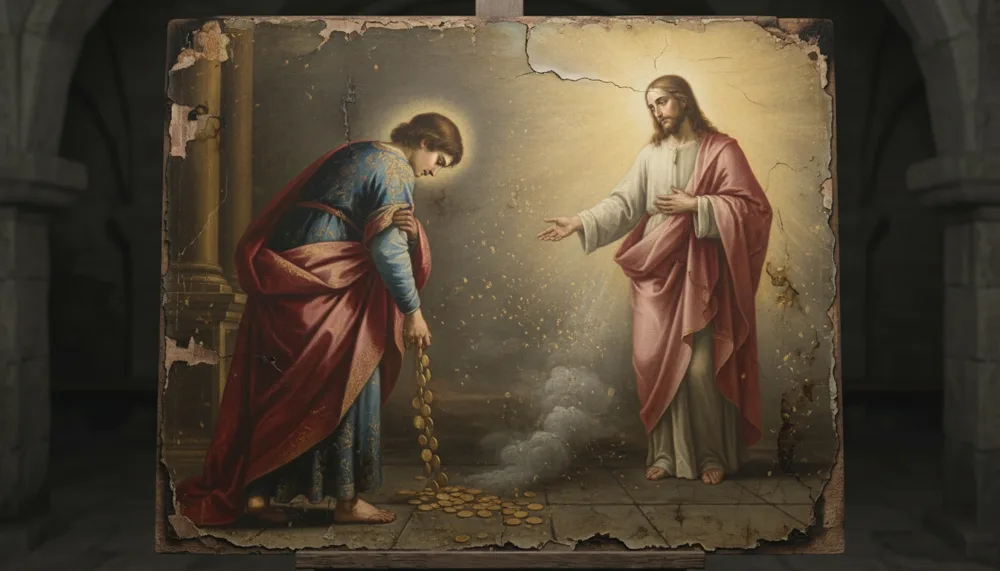
God does not condemn money; He condemns the man who serves it. Scripture nowhere calls riches evil in themselves — they are a good entrusted to us — yet it warns, again and again, that the love of money strangles the soul and that no man can serve two masters: "You cannot serve God and mammon" (Matt. vi. 24). This is what the Bible says about money: wealth is to be used, not worshipped; possessed, not obeyed. The sin is not in having but in clinging, in setting the heart where Christ forbids it to rest.
What the Bible says about money
The danger is named with unusual sharpness. Saint Paul writes to Timothy: "the desire of money is the root of all evils" (1 Tim. vi. 10). We should read the verse exactly: it is not money that is the root, but the desire of it — covetousness, the disordered love of having. From that desire spring theft, fraud, hatred, the betrayal of friends, and the slow forgetting of God. The same Apostle warns: "They that will become rich fall into temptation, and into the snare of the devil" (1 Tim. vi. 9).
Our Lord teaches the same with a single image, the most severe He gives on this subject: "It is easier for a camel to pass through the eye of a needle, than for a rich man to enter into the kingdom of heaven" (Matt. xix. 24). He does not say it is impossible — when the disciples are astonished, He answers that "with men this is impossible: but with God all things are possible" (Matt. xix. 26). The peril is real, but grace is greater than the peril. Riches make heaven hard to reach because they tempt a man to need nothing and therefore to ask for nothing.
God and wealth: a good rightly used
Read with the Church, these verses do not make poverty a virtue by itself nor wealth a sin by itself. The Catechism of the Council of Trent, expounding the seventh commandment, Thou shalt not steal, teaches that the right of property is to be held inviolable, "so that each one may possess in peace what belongs to him by right." God wills that we own, work, and provide. What He forbids is the inner posture — the covetous heart. The same Catechism warns, with the Apostle, that "neither thieves, nor the covetous, nor drunkards, nor railers, nor the ravishers of the goods of another shall possess the Kingdom of God."
So the question "what does God say about money?" cannot be answered by a string of isolated verses pulled in opposite directions. It must be read whole, with the Church: money is a stewardship. We are not owners but trustees, and we will give an account. The Lord puts it plainly: "Lay not up to yourselves treasures on earth: where the rust and moth consume, and where thieves break through and steal. But lay up to yourselves treasures in heaven" (Matt. vi. 19–20).
And the reason follows at once: "For where thy treasure is, there is thy heart also" (Matt. vi. 21). This is the whole doctrine in one line — money goes where it is sent, but the heart follows the money. Direct your treasure, and you direct your soul. The same God who tells us what He says about anxiety over food and clothing tells us, in the same Sermon, not to bind our hearts to gold.
Covetousness: a capital sin
This disordered love of having is what the Church calls avarice, or covetousness, and she numbers it among the capital sins — the roots from which other sins grow. The Catechism of Saint Pius X lists the seven: pride, covetousness, lust, anger, gluttony, envy, and sloth; and it teaches that each is conquered "by the exercise of the opposite virtue" — covetousness by liberality, the open hand. We have set out the whole list in our study of the seven deadly sins; avarice is the second of them, and it is called capital precisely because it breeds others. From the love of money come the lies of gossip and detraction over inheritance, the anger of quarrels and lawsuits, and the hardness that refuses mercy.
The Catechism of Trent does not soften this. It teaches that theft includes far more than the open robbery of the highway: fraud in business, withholding the wage of the laborer, false weights, usurious gain, the neglect of a paid charge — "all come from avarice, so ingenious in discovering the means of getting money." And it adds the harder word: there is no forgiveness for the sin of theft without restitution.
Quoting Saint Augustine, "there is no remission of sin without the restitution of the thing taken away." A man cannot keep what he has stolen and confess himself clean. This is why confession of such sins binds us to repair the harm, not merely to regret it — a point we treat with the rest of the sacrament under the power to forgive sins.
Almsgiving: the cure for avarice
If covetousness clutches, charity opens the hand. The remedy God prescribes for the danger of wealth is almsgiving — the giving of one's goods to the poor for love of Him. The Catechism of Trent calls the faithful to "come generously to the aid of the unfortunate," and grounds the command in the Lord's own promise: "Give, and it shall be given to you" (Luke vi. 38).
Christ teaches us to turn our money into a treasure that does not perish: "Make unto yourselves friends of the mammon of iniquity; that when you shall fail, they may receive you into everlasting dwellings" (Luke xvi. 9). The very riches that could damn a man become, by alms, the price of heaven. The Church holds up laymen who lived this: St Homobonus of Cremona, a cloth-merchant who poured his honest gains into the laps of the poor, is the patron of merchants and businessmen and is honoured in the novena to St Homobonus.
Here is the full Catholic answer on God and wealth. The rich young man is told to sell what he has and give to the poor (Matt. xix. 21) — not because money is filth, but because his money held his heart. The cure is not to despise the gift but to release it: to lend "hoping for nothing thereby" (Luke vi. 35), to feed the hungry, to give in secret. A man who gives is a man who has understood that he owns nothing he cannot lose. This is why the saints, far from hating the world's goods, used them with such freedom — they had already given their hearts elsewhere, which is the heart of how to love God and the whole of the spiritual life.
What God says about money, in one sentence
Money is a good, a tool, and a test. God does not ask us to throw it away; He asks us not to be ruled by it. Hold it loosely, earn it honestly, restore what is not yours, give to the poor, and keep your treasure where rust cannot reach it. Serve God, and let mammon serve you — never the reverse. This is the answer the whole of Scripture gives, read not as scattered proof-texts but with the mind of the Church. For the wider map of these questions — what God says about money, marriage, anger, forgiveness, and the rest — see our hub: what does God say about.
Frequently Asked Questions
What does God say about money?
God does not condemn money; He condemns the man who serves it. Scripture treats riches as a good entrusted to us, to be used and not worshipped, while warning that "you cannot serve God and mammon" (Matt. vi. 24). The sin is not in having but in clinging: "the desire of money is the root of all evils" (1 Tim. vi. 10). Hold it loosely, earn it honestly, and keep your treasure where rust cannot reach it.
What does God say about money in the Bible?
The Bible's teaching is consistent when read whole: wealth is a stewardship, not an end. Our Lord warns that "it is easier for a camel to pass through the eye of a needle, than for a rich man to enter into the kingdom of heaven" (Matt. xix. 24), yet adds that "with God all things are possible" (Matt. xix. 26). And He gives the rule in one line: "where thy treasure is, there is thy heart also" (Matt. vi. 21).
What does God say about saving money?
Saving is not condemned; prudence and providing for one's household are duties, and the Catechism of Trent upholds the right to "possess in peace what belongs to him by right." What Christ forbids is hoarding that binds the heart: "Lay not up to yourselves treasures on earth... but lay up to yourselves treasures in heaven" (Matt. vi. 19-20). Save with an open hand, ready to give, never letting security in gold replace trust in God.
What does God say about borrowing money?
Scripture counsels against needless debt and warns the borrower not to presume, while binding the lender to charity rather than gain. Our Lord commands us to lend "hoping for nothing thereby" (Luke vi. 35), and the Catechism of Trent numbers usurious gain among the fruits of avarice that violate the seventh commandment. Borrow honestly and repay what you owe, for unpaid debts are among the things requiring restitution.
What does God say about money management?
Money is a trust, and we will give an account of how we manage it: "Make unto yourselves friends of the mammon of iniquity" (Luke xvi. 9). Good management means earning honestly, providing for one's own, restoring what is not yours, and giving generously to the poor. The Catechism of Trent warns that fraud in business, false weights, and withholding the laborer's wage "all come from avarice" and must be repaired, not merely regretted.
Is it a sin to be rich?
No. Wealth itself is not a sin, and Scripture nowhere calls riches evil in themselves; it is the desire of money, not money, that Saint Paul calls a root of evils (1 Tim. vi. 10). The danger is that riches tempt a man to need nothing and so to ask nothing of God. The saints used the world's goods with freedom precisely because they had given their hearts elsewhere.
What is the cure for the love of money?
The remedy God prescribes is almsgiving — giving one's goods to the poor for love of Him. The Catechism of Saint Pius X teaches that covetousness is conquered "by the exercise of the opposite virtue," that is, by liberality, the open hand. As the Lord promises, "Give, and it shall be given to you" (Luke vi. 38); the very riches that could damn a man become, by alms, the price of heaven.
The Iter Fidei app carries the Douay-Rheims Bible, the catechism, and the prayers of the Church. Join early access here.
Sources. Holy Scripture, Douay-Rheims version (Matt. vi. 19–24; Matt. xix. 21–26; Luke vi. 35, 38; Luke xvi. 9; 1 Tim. vi. 9–10). Catechism of the Council of Trent (1566), On the Seventh Commandment — Thou shalt not steal (theft, avarice, restitution, almsgiving). Catechism of Saint Pius X (1908), On the Capital Vices and the Opposing Virtues.