
The Faith
What Does God Say About the Soul?
What does God say about the soul? He made it spiritual and immortal — "God breathed into his face the breath of life" (Gen ii. 7). We give the Catholic answer: what the soul is, that every man has one, and what the Bible says it is worth.
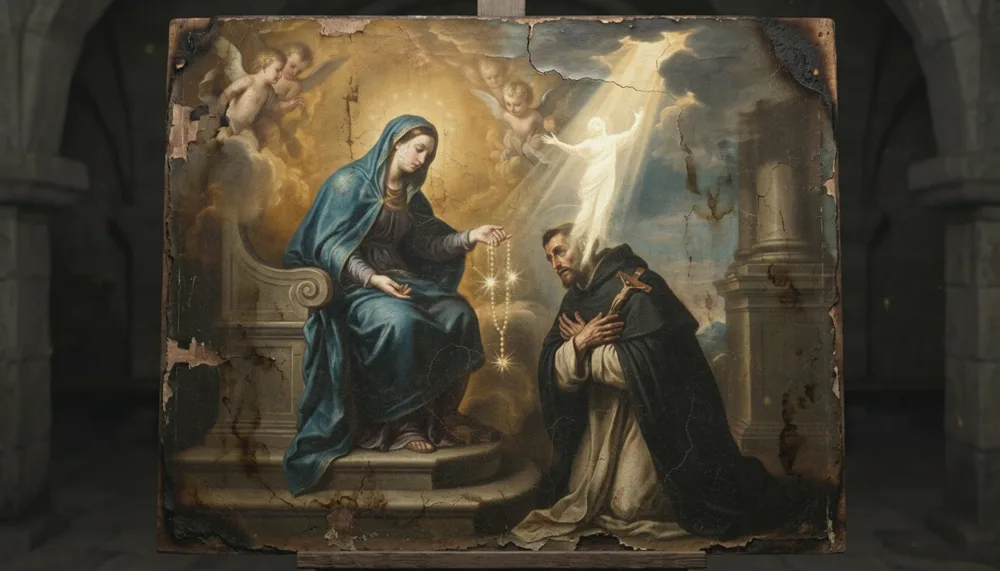
The human soul is a spiritual and immortal substance, created directly by God, endowed with intellect and will, and made to know and possess Him forever. Scripture marks its origin at the making of man — God formed man of the slime of the earth: and breathed into his face the breath of life, and man became a living soul (Gen. ii. 7, Douay-Rheims). That breath is not the body; it is the soul, and it does not die when the body does.
And fear ye not them that kill the body, and are not able to kill the soul: but rather fear him that can destroy both soul and body in hell. — Matt. x. 28 (Douay-Rheims)
This is the Catholic answer, and the plain teaching of the Bible read whole: man is not merely a body, nor merely a mind, but a soul joined to a body — and the soul outlasts the grave. We set it out from the Douay text, the catechisms of Trent and St Pius X, and St Thomas, because the soul is misread today from several directions — by the materialist who denies it exists, by the new-age teacher who makes it a fragment of God or a wanderer between bodies, and by the strain of Protestant fundamentalism that has it sleep or perish until the resurrection. None of these is the faith. (For more verses in their true sense, see our hub Catholic Bible verses and the wider series What does God say about....)
What is the soul?
The soul is the noblest part of man. The Catechism of St Pius X asks and answers it directly: Man is a reasonable creature composed of a soul and a body. And then: What is the soul? The soul is the noblest part of man, because it is a spiritual substance, endowed with intellect and will, capable of knowing God and of possessing Him eternally. It is not a feeling, not a metaphor for the personality, not the breath in the lungs. It is a real spiritual substance — the principle that makes a man a knowing, willing, living person.
Because it is a spirit, it cannot be seen or weighed. The same Catechism notes the obvious objection and answers it: Can the human soul be seen and touched? We can neither see our soul nor touch it, because it is a spirit. The materialist takes this invisibility as proof the soul is nothing. The Church takes it as proof the soul is higher than the things we can touch — for the very mind that asks the question is itself the work of the soul.
St Thomas teaches that the soul is the form of the body: not a ghost trapped in flesh, nor the body alone, but the living principle that animates and shapes it, so that body and soul together are one man. The soul is the seat of free will — free-will is a power of will and reason — which is why only a creature with a spiritual soul can sin, merit, or be held to the Ten Commandments. A stone is not commanded; a beast is not judged. Man is, because man has a soul.
Where does the soul come from?
God makes it. Each soul is created immediately by God — not bred from the parents as the body is, not split off from a world-soul, not pre-existent and “sent down” into a body. Genesis sets the pattern at the first man: and breathed into his face the breath of life (Gen. ii. 7). The Catechism of the Council of Trent draws the line plainly — the body God formed... out of the slime of the earth, but as for the soul, He made it to His own image and likeness, endowed it with free will. The body is no mere shell but God's own handiwork, owed reverence in how we treat and adorn it, a question we take up in what God says about piercings and in what the Church teaches about tattoos.
That is the meaning of being made to the image of God. The Catechism of St Pius X explains it without inflation: the human soul is spiritual and reasonable, free in its acts, capable of knowing and loving God and of enjoying Him eternally; and these perfections are in us a reflection of the infinite greatness of the Lord. We image God not in the body but in the soul — in mind, will, and the capacity for Him. This is why no soul is an accident and none is interchangeable: each is a direct work of the Creator, who made each man as male or female in an inseparable unity of soul and body, the ground of all the Church teaches in what God says about transgenderism.
Does everyone have a soul?
Yes. Every human being, from conception, has a rational soul — for the soul is precisely what makes a creature human. There are not two classes of men, the ensouled and the soulless; to be a man is to be a reasonable creature composed of a soul and a body (Catechism of St Pius X). The dignity of every person rests here, and not on what he can do or produce. The infant, the dying, the unborn, the man stripped of every earthly power — each has a spiritual, immortal soul made directly by God and made for God. (This is the ground of what God says about the family, of the order God set for marriage that bars polygamy, and of every duty of justice and mercy toward the weak: what God says about justice.)
This must be said against two errors at once. The new-age teaching that an “old soul” passes from body to body — reincarnation — is false: each soul is created at the beginning of one life and faces one judgment, for it is appointed unto men once to die, and after this the judgment (Heb. ix. 27). The same sober caution governs every claim that the soul travels or receives hidden revelations in sleep, which we weigh in what God says about dreams.
And the materialist claim that man is only an animal, a clever arrangement of matter, denies the very thing Scripture affirms in its first chapters. On where man came from and where he did not, see what God says about evolution; and on the false comfort of a godless account of man, what God says about atheism.
What does the Bible say about the soul — is it immortal?
The Bible teaches that the soul does not die with the body. Our Lord draws the sharpest possible line between the two: fear ye not them that kill the body, and are not able to kill the soul (Matt. x. 28). Men can kill the body; they cannot touch the soul. The Catechism of St Pius X states it as both faith and reason: Does the human soul die with the body? The human soul never dies: faith and reason itself prove that it is immortal.
Scripture shows the soul living on past death. The repentant thief is told, this day thou shalt be with me in paradise (Luke xxiii. 43) — that very day, not at some far-off waking. The souls of the martyrs are seen alive and crying out under the altar (Apoc. vi. 9). At the moment of death the soul is judged and goes to its place; the body waits in the ground for the resurrection. This is why the Church prays for the dead and why we keep All Souls' Day and offer the novena for the dead — because the soul is there to be helped.
So the fundamentalist notion that the soul “sleeps” unconscious, or is annihilated until the last day, cannot be reconciled with these texts. The soul is awake, and answerable, the instant the body falls.
What is the soul worth?
More than the whole world. Our Lord weighs it for us in one question that admits no haggling: For what shall it profit a man, if he gain the whole world, and suffer the loss of his soul? (Mark viii. 36). A man may win everything the earth can give — wealth, power, pleasure, fame — and if he loses his soul he has made the worst bargain a creature can make, for he has traded the one thing that lasts for the things that do not.
This is why the soul is the proper object of all our care. The same appetites that destroy the body — gluttony, laziness, the grasping that drives a man to steal or to chase the false promise of the gambler's wager — are deadly above all because they wound the soul, the root of the seven deadly sins. The soul wounded by sin is restored through Confession and raised to the life of God by sanctifying grace, which He pours into it through the seven sacraments. To guard the soul is the whole of spiritual combat; to feed it is the purpose of mental prayer and the Rosary.
The soul and the four last things
Because the soul is immortal, it has a destiny — and that destiny is the whole point of having one. The four last things — death, judgment, heaven, and hell — are simply the soul's road after it leaves the body. At death the soul is judged at once; it goes to its reward or its loss, and at the end of the world it is reunited to the risen body. The soul made to possess God forever can also lose Him forever, which is why Our Lord names the one real danger as Him that can destroy both soul and body in hell (Matt. x. 28). On that loss, see Does hell exist?; and on the great deceiver who will labour at the end to drag souls to that ruin, what God says about the Antichrist.
This is the dignity and the gravity of being a soul. We were not made for this world; we were made to know and love and possess God, and the soul is the part of us that can do it. (On how a soul is saved, see what God says about salvation; on the false promise that any human bond is our final good, what God says about soulmates.)
Where this leaves us
God says the soul is spiritual, immortal, made by His own hand to His own image, and worth more than the world. Every man has one, and every man will keep it forever — in God or away from Him. Fear him that can destroy both soul and body in hell (Matt. x. 28). That fear is not despair; it is the beginning of taking the soul as seriously as God does.
We hold this firmly because everything else in the faith depends on it. If man were only a body, there would be no judgment, no heaven, no need of grace, no point to the Cross. But man is a living soul, and the soul does not die — so the question of where it goes is the only question that finally matters.
Frequently Asked Questions
What does God say about the soul?
God says the soul is a spiritual, immortal substance He made by His own hand: God formed man of the slime of the earth: and breathed into his face the breath of life, and man became a living soul (Gen. ii. 7, Douay-Rheims). It bears His image in intellect and will, it does not die with the body, and it is worth more than the whole world (Mark viii. 36). The soul is the part of man made to know, love, and possess God forever.
What is the soul?
The soul is the noblest part of man — a spiritual substance, endowed with intellect and will, capable of knowing God and of possessing Him eternally (Catechism of St Pius X). It is not a feeling, a metaphor, or the breath in the lungs, but the living principle that makes a man a knowing, willing person. St Thomas teaches it is the form of the body, so that body and soul together are one man.
Does everyone have a soul?
Yes. Every human being, from conception, has a rational soul, for the soul is precisely what makes a creature human — a reasonable creature composed of a soul and a body (Catechism of St Pius X). There are not two classes of men, the ensouled and the soulless. The infant, the unborn, the dying, and the powerless each possess a spiritual, immortal soul made directly by God.
What does the Bible say about the soul?
The Bible teaches that man is a living soul joined to a body, and that the soul outlasts the grave: fear ye not them that kill the body, and are not able to kill the soul (Matt. x. 28). Scripture shows souls living on after death — the good thief in paradise that very day (Luke xxiii. 43), the martyrs crying out under the altar (Apoc. vi. 9). Read whole, the Bible affirms the soul is real, immortal, and answerable to God at once.
Is the soul immortal?
Yes. The human soul never dies: faith and reason itself prove that it is immortal (Catechism of St Pius X). At death the soul is judged and goes to its place, while the body waits in the ground for the resurrection. This is why the fundamentalist notion of "soul sleep" or annihilation cannot stand against Scripture — the soul is awake and answerable the instant the body falls.
Where does the soul come from?
Each soul is created immediately by God — not bred from the parents as the body is, not split off from a world-soul, not pre-existent and sent down into a body. As for the soul, He made it to His own image and likeness, endowed it with free will (Catechism of the Council of Trent). This is why no soul is an accident and none is interchangeable.
What is the soul worth?
More than the whole world. Our Lord weighs it in a question that admits no haggling: For what shall it profit a man, if he gain the whole world, and suffer the loss of his soul? (Mark viii. 36). A man may win wealth, power, and fame, but if he loses his soul he has traded the one thing that lasts for the things that do not.
The Iter Fidei app carries the Douay-Rheims Bible, the catechism, and the prayers. Join early access here.
Sources. Holy Scripture (Douay-Rheims): Genesis ii. 7 ("breathed into his face the breath of life... man became a living soul"); Matthew x. 28 ("fear him that can destroy both soul and body in hell"); Mark viii. 36 ("what shall it profit a man, if he gain the whole world, and suffer the loss of his soul"); Luke xxiii. 43; Hebrews ix. 27; Apocalypse (Revelation) vi. 9. St Thomas Aquinas, Summa Theologiae I, q. 75 (the soul as the spiritual, subsistent form of the body) and q. 83, a. 4 (free-will a power of will and reason). Catechism of St Pius X (1908): Part I, Chapter 2 — First Article of the Creed (man composed of soul and body; "the soul is the noblest part of man... a spiritual substance, endowed with intellect and will, capable of knowing God and of possessing Him eternally"; the soul cannot be seen or touched because it is a spirit; "the human soul never dies: faith and reason itself prove that it is immortal"; man made to the image of God in his spiritual, reasonable, free soul). Catechism of the Council of Trent (1566): Part I, on God the Father and Creation (the body formed from the slime of the earth; "as for the soul, He made it to His own image and likeness, endowed it with free will").