
The Spiritual Life
What Does God Say About Fear?
What does God say about fear? "Fear not" — His most repeated command: "Fear not, for I am with thee" (Isaias xli). We give the traditional Catholic reading from the Douay-Rheims: the worldly fear charity casts out, and the holy fear of the Lord that is the beginning of wisdom.
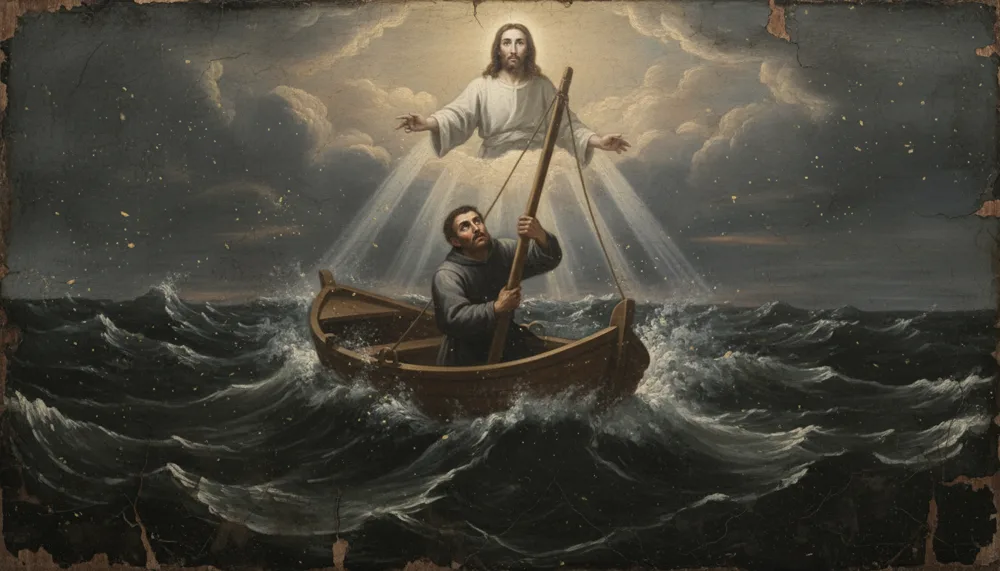
What does God say about fear? He says, more than any other thing He commands, "Fear not." It is the most repeated command in Scripture, and in the Douay-Rheims — the traditional English Bible drawn from the Latin Vulgate — God speaks it through Isaias: "Fear not, for I am with thee: turn not aside, for I am thy God" (Isaias xli. 10). Yet the same Scripture calls a certain fear "the beginning of wisdom" (Psalm cx. 10). This is no contradiction. There are two fears, and the whole Catholic answer turns on telling them apart.
Fear not, for I am with thee: turn not aside, for I am thy God: I have strengthened thee, and have helped thee, and the right hand of my just one hath upheld thee. — Isaias xli. 10 (Douay-Rheims)
What does the Bible say about fear? "Fear not" is God's most repeated word
The command sounds from one end of Scripture to the other — to Abram, to Moses, to Josue, to the prophets; the angel says it to Zachary and to Mary; the Risen Lord says it to the women at the tomb. It is the first word a creature hears when the living God draws near: "Fear not, little flock, for it hath pleased your Father to give you a kingdom" (St Luke xii. 32). And it is never a slogan for calm.
When God says fear not, He never leaves the command bare; He gives the reason in the same breath, and it is always Himself: for I am with thee. The cure for the fear God forbids is not a stronger nerve but God present. Take it away and you have only an order to feel brave; keep it, and the child who has taken his Father's hand is no longer afraid of the dark. These are the Bible verses about fear the Church reads together, and they say one thing: God is near, therefore do not be afraid.
The two fears: worldly fear, and the fear of the Lord
If God commands fear not, why does Scripture praise the fear of the Lord? Because the word covers two opposite things, and the Church has always distinguished them.
The first is servile, worldly fear — the fear of men, of poverty, of suffering, of death, of tomorrow; the gnawing dread that acts as though there were no God ruling over our affairs. This is the fear God forbids. Of it St John writes: "Fear is not in charity: but perfect charity casteth out fear, because fear hath sin" (1 St John iv. 18). Charity, the love of God poured into the soul, drives this fear out as light drives out the dark.
The second is the holy fear of the Lord — far from being cast out, it is praised and given as a gift: "The fear of the Lord is the beginning of wisdom" (Psalm cx. 10; Proverbs i. 7; Ecclesiasticus i. 16). This is not the slave's terror of the lash but the son's reverence, the dread of offending a Father infinitely loved.
Fear is not in charity: but perfect charity casteth out fear, because fear hath sin. And he that feareth is not perfected in charity. — 1 St John iv. 18 (Douay-Rheims)
The two move in opposite directions. Worldly fear looks at the creature and trembles; holy fear looks at the Creator and reveres. God does not contradict Himself: He forbids the fear that turns us from Him and commands the fear that keeps us with Him.
What is the fear of the Lord, the beginning of wisdom?
The fear of the Lord is the seventh of the Gifts of the Holy Ghost, and the Catechism of St Pius X defines it in one stroke: it is "a gift which makes us respect God and fear to offend His divine Majesty, and which turns us away from evil by leading us to good." It is not terror but reverence — not the dread of punishment first, but the dread of wounding the One we love. This is why Scripture calls it the beginning of wisdom: the soul that fears to offend God has already turned from its idols toward Him, and that turning is where wisdom starts.
There is a lower form of this fear and a higher. The lower shrinks from sin chiefly because it dreads hell — even this is a true gift of God, the first hold He takes on a hardened heart; the contrition and attrition the Church accepts in the confessional begins here. The higher is filial fear, the fear of a son who would not grieve his Father for all the world, who dreads sin because it offends Love. As charity grows, the soul passes from the one to the other. This fear ripens as the love of the Sacred Heart of Jesus takes hold, and it is cultivated, like every gift, in mental prayer and in the whole work of the spiritual life. The fear God forbids enslaves; the fear God gives sets free.
The remedy for worldly fear: trust in God
Against servile, worldly fear the Church gives one remedy, the same God gives in Isaias: trust. Fear not, for I am with thee. The cure is not to feel braver but to lean harder — to cast the trembling self upon the Providence of a Father who has numbered the very hairs of our head. Our Lord teaches it plainly: "Be not afraid of them who kill the body, and after that have no more that they can do" (St Luke xii. 4). What can the world finally take? Only the body; the soul is safe in God's keeping.
The Psalmist had learned this long before: "The Lord is my light and my salvation, whom shall I fear?" (Psalm xxvi. 1); and through the valley of death he can still say, "I will fear no evils, for thou art with me" (Psalm xxii. 4). St Paul names the spirit the Christian has received, and it is not a spirit of fear: "For God hath not given us the spirit of fear: but of power, and of love, and of sobriety" (2 Timothy i. 7). The Christian is not God's slave but His son, and the son does not cower. He trusts — never by self-soothing but by trust in the Lord with all thy heart, the confidence that is the heart of the spiritual combat: distrust of self, and trust in God.
What does Jesus say about fear?
Our Lord's bequest to His Apostles, the night before He died, was peace against fear: "Peace I leave with you, my peace I give unto you: not as the world giveth, do I give unto you. Let not your heart be troubled, nor let it be afraid" (St John xiv. 27) — a peace we dwell on in let not your heart be troubled.
And He orders the one fear worth keeping: "Fear ye not them that kill the body... but rather fear him that can destroy both soul and body in hell" (St Matthew x. 28). There is exactly one fear a Christian should cultivate — the fear of losing God, the fear of sin and the four last things. Order your fears by this verse and they fall into place: fear nothing the world can do to the body; fear only to offend the God who holds the soul.
What about the fear that does not lift?
We must say a sober word, because dread is rarely felt as theology. Worldly fear can settle into the soul as a heaviness no act of the will seems to shift, bordering on the sadness we treat in what does God say about depression. The Church does not pretend the command fear not is a switch the suffering soul can throw. It is not a feeling we manufacture but a virtue we practise — in prayer, in the sacraments, in the daily handing-over of our care to God.
And the remedy is never solitary: we lean on the whole Communion of Saints, on Our Lady, comfort of the afflicted, whose Immaculate Heart of Mary is the refuge of the frightened, and whom the Church invokes in her litanies. The soul that is afraid is not told to be strong. It is told to be a child, and to take the Father's hand.
Conclusion
What does God say about fear? Fear not — and I am with thee. He forbids the worldly fear that trembles before what can only touch the body, and cures it not with a stronger self but with trust in His Providence. He gives the holy fear of the Lord, the beginning of wisdom, the reverence of a son who dreads to offend the Father he loves. Cast out the one by charity; cultivate the other as a gift. The whole of it stands in a single line of Isaias, the line God repeats more than any other: Fear not, for I am with thee.
Frequently Asked Questions
What does God say about fear?
God's most repeated command in Scripture is "Fear not." In the Douay-Rheims He says through Isaias, "Fear not, for I am with thee: turn not aside, for I am thy God" (Isaias xli. 10). He forbids the worldly fear that trembles before what can only touch the body, and cures it not with a stronger self but with trust in His Providence.
What does God say about fear in the Bible?
From one end of Scripture to the other God says "Fear not" — to Abram, Moses, Josue, the prophets, to Zachary and Mary, and to the women at the empty tomb. He never leaves the command bare but gives the reason in the same breath, and it is always Himself: "Fear not, little flock, for it hath pleased your Father to give you a kingdom" (St Luke xii. 32). The Bible's answer to fear is not a stronger nerve but God present.
What is the fear of the Lord?
The fear of the Lord is the seventh of the Gifts of the Holy Ghost. The Catechism of St Pius X defines it as "a gift which makes us respect God and fear to offend His divine Majesty, and which turns us away from evil by leading us to good." It is not the slave's terror but the reverence of a son who dreads to grieve a Father he loves, and Scripture calls it "the beginning of wisdom" (Psalm cx. 10).
Why does God say "fear not" but also command the fear of the Lord?
Because the word covers two opposite things the Church has always distinguished. Servile, worldly fear — of men, poverty, suffering, death, tomorrow — is the fear God forbids, the fear "perfect charity casteth out" (1 St John iv. 18). Holy fear of the Lord is the reverence God praises and gives as a gift; the one turns us from God, the other keeps us with Him.
What does Jesus say about fear?
Our Lord left His Apostles peace against fear: "Peace I leave with you... Let not your heart be troubled, nor let it be afraid" (St John xiv. 27). And He orders the one fear worth keeping: "Fear ye not them that kill the body... but rather fear him that can destroy both soul and body in hell" (St Matthew x. 28). Fear nothing the world can do to the body; fear only to offend the God who holds the soul.
What is the remedy for fear according to the Bible?
Against worldly fear the Church gives one remedy, the same God gives in Isaias: trust. The cure is not to feel braver but to lean harder on the Providence of a Father who has numbered the very hairs of our head. As St Paul writes, "God hath not given us the spirit of fear: but of power, and of love, and of sobriety" (2 Timothy i. 7).
What if my fear or anxiety does not lift?
The command "fear not" is not a switch the suffering soul can throw. It is not a feeling we manufacture but a virtue we practise — in prayer, the sacraments, and the daily handing-over of our care to God. The frightened soul is not told to be strong but to be a child, and to take the Father's hand, leaning on Our Lady, comfort of the afflicted, and the whole Communion of Saints.
See also our overview: what does God say about...?
The Iter Fidei app carries the Douay-Rheims Bible, the prayers and the litanies, in Latin and in your own language. Join early access here.
Sources. The Holy Bible, Douay-Rheims version: Isaias xli. 10; Psalm cx. 10; Proverbs i. 7; Ecclesiasticus i. 16; 1 St John iv. 18; St Luke xii. 4, 32; St Matthew x. 28; Psalm xxvi. 1; Psalm xxii. 4; 2 Timothy i. 7; St John xiv. 27. Catechism of St Pius X (1908), Part Five, on the Gifts of the Holy Ghost — the definition of the Fear of God. Catechism of the Council of Trent (Roman Catechism, 1566), on contrition and attrition and the place of the fear of God in true sorrow for sin.