Apologetics
Why Do Catholics Do That? Common Questions Answered
Short, clear answers to the questions people ask about Catholic practices — statues, praying to saints, calling priests Father, holy water, the sign of the cross — each grounded in the Faith and linked to a fuller explanation.
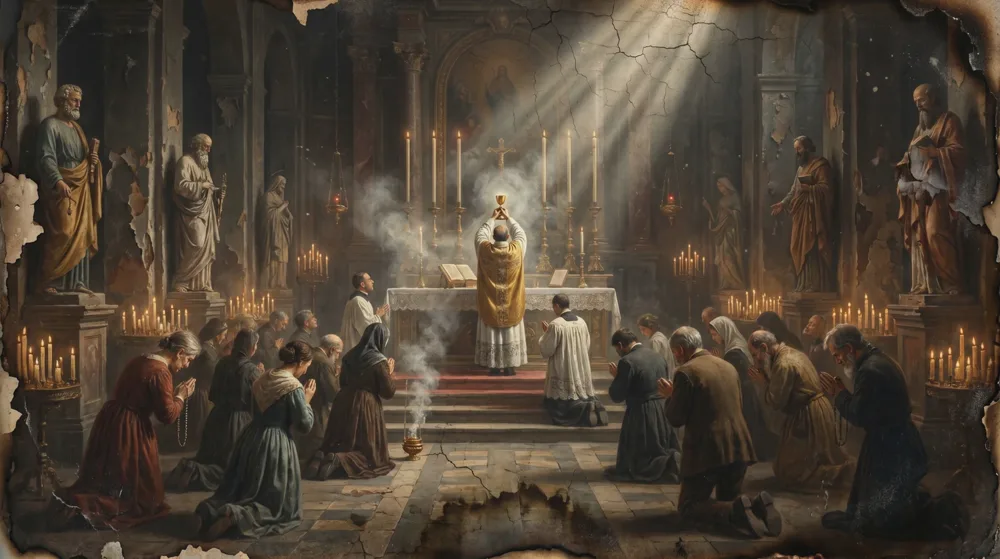
Why do Catholics do that? Most of these questions have short, clear answers, and the answers are not what the objections assume: Catholics keep statues the way a man keeps photographs of his family, they ask the saints to pray for them the way you ask a friend, and they call a priest Father because he is a spiritual father. None of it is idolatry, and none of it is invented. Below we answer the common questions one by one, each with a brief reply and a link to a fuller treatment, so that Catholic practices can be explained honestly and seen for what they are.
A word first on how we write. We hold what the Church has always held: the Catholic Church is the one Church that Christ founded, and outside her communion men are, on these points, in error. We say this without contempt for any person. The men who raise these objections are made in the image of God and are often sincere, and we owe them the truth stated plainly, not a false peace that pretends the differences do not matter. The Roman Catechism is blunt about why this article of faith is so contested: the prophets foresaw "that there would be far more errors, voluntary and involuntary, upon this point than upon the mystery of the Incarnation" (Roman Catechism, on the Ninth Article of the Creed). We aim, then, to be charitable to persons and clear on doctrine.
Why do Catholics have statues?
Because an image is not an idol. A statue of Our Lady or a crucifix is to a Catholic what a photograph of a dead mother is to her son: a likeness that turns the mind and heart toward the person it represents. The honour passes to the person, not to the plaster.
This is exactly the distinction the Roman Catechism draws on the First Commandment. It denies outright that God forbids "painting, sculpture, and engraving," and reminds us that God Himself commanded the Hebrews to make images — "the Cherubim and the brazen serpent." What is forbidden is to "adore idols and images as God Himself is adored, to believe that there is in them a kind of divinity."
The images of Christ, of His Mother, and of the saints are not only permitted but profitable, because "this worship relates to the very person of the saints" — they exist "in order that we may honour those whom they represent, and that, admonished by their example, we may be able to form upon them our life and our morals" (Roman Catechism, First Commandment, §V–VII). A Catholic who prayed to the statue itself would indeed sin; that is precisely what the Church condemns.
Why do Catholics pray to saints?
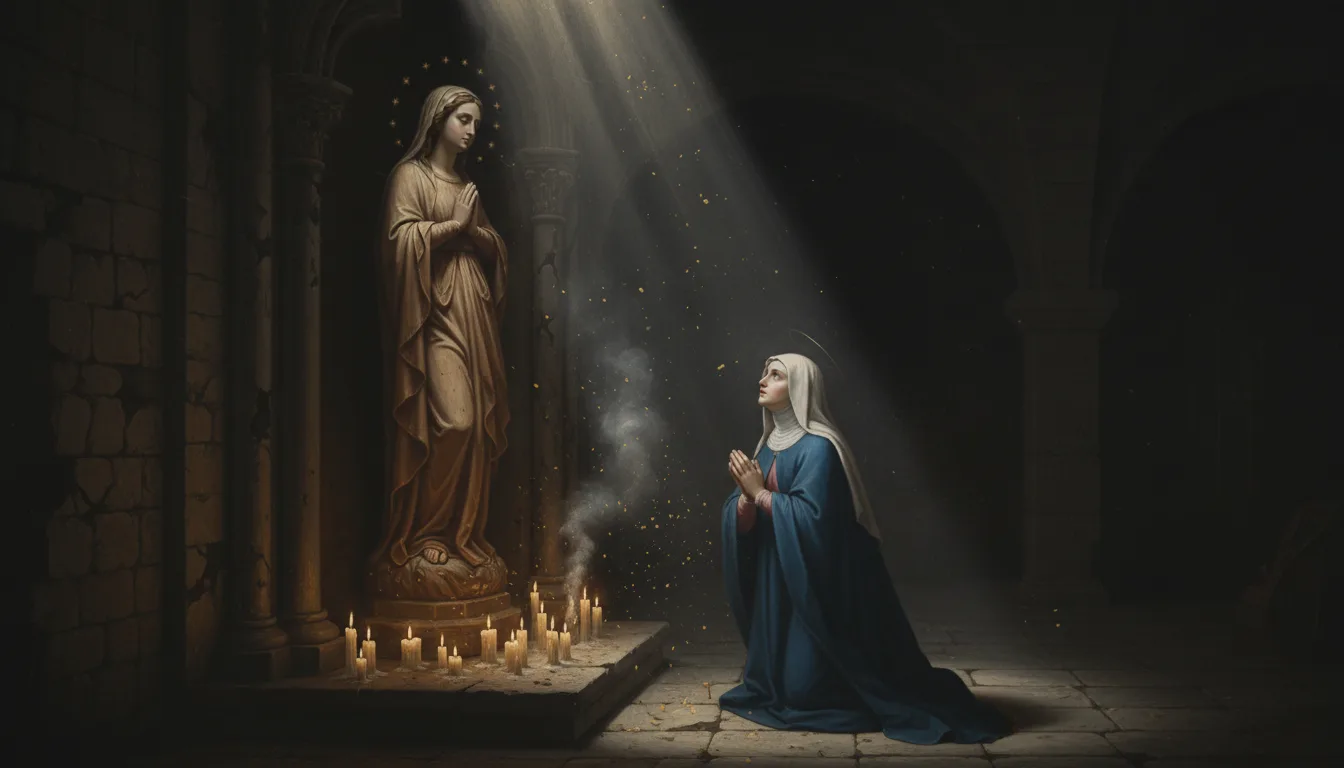
Because to pray to a saint is to ask him to pray for you. It is intercession, not adoration. When a Catholic says "Saint Joseph, pray for us," he is doing what every Christian does when he asks a friend on earth to pray for him — except that the saint is now perfectly united to God and his prayer is more powerful, not less. We answer this objection at length in why Catholics pray to saints.
The Catechism of St. Pius X states the difference cleanly. We pray to God "that, as the author of graces, He may give us good things"; we pray to the saints "that they may intercede for us as our advocates with God." And when we say a saint has granted a grace, we mean only "that this Saint has obtained it from God" (Catechism of St. Pius X, Part II, ch. 4). The saints give nothing of their own; they ask, and God gives. This is the heart of the communion of saints — the living and the blessed dead bound together in one Body, helping one another by prayer. The same answer governs the most common objection of all, which we treat separately: why Catholics pray to Mary.
Why do Catholics call priests Father?
Because a priest is a spiritual father. He begets souls to the life of grace through baptism, feeds them with the sacraments, and governs them as a father governs his household. Scripture itself uses the title for this spiritual fatherhood: St. Paul writes to the Corinthians, "for in Christ Jesus, by the gospel, I have begotten you" (1 Corinthians 4:15, Douay-Rheims).
The objection cites Our Lord's words, "call none your father upon earth; for one is your father, who is in heaven" (Matthew 23:9, Douay-Rheims). But this cannot mean what the objection wants, or no man could call the man who raised him "father" either — which Scripture commands him to honour. Our Lord forbids giving to any man the fatherhood that belongs to God alone, as if a creature were the source of life and authority.
He does not abolish the derived fatherhood that comes from God: the fatherhood of the man who gives natural life, and of the priest who gives supernatural life. The Roman Catechism teaches that the faithful owe the ministers of religion great reverence precisely because of the sacrament that sets them apart (Roman Catechism, on Holy Orders, §I). The title names a real relation, established by Holy Orders.
Why do Catholics use holy water?
Because it is a sacramental — water blessed by the Church to ask God's protection and grace, and to recall our baptism. It works no magic of its own; it obtains spiritual effects through the prayer of the Church that blessed it. We sign ourselves with it on entering a church to renew, in a single gesture, the water by which we were first made children of God. To understand how blessed objects work, see holy water and the wider category of sacramentals.
Why do Catholics make the sign of the cross?
Because it is the shortest profession of the whole Faith. Tracing the cross while naming the Father, the Son, and the Holy Ghost confesses the central mystery of Christianity — the Holy Trinity — and the Redemption won on the Cross, in one motion. It marks the body of the Christian with the sign of the One who saved him, and the Church has used it from the earliest centuries. We treat the gesture in full in the sign of the cross, and the image it traces in the crucifix.
Why do Catholics confess sins to a priest?
Because Christ gave His apostles the power to forgive sins: "Whose sins you shall forgive, they are forgiven them" (John 20:23, Douay-Rheims). A power to forgive implies the authority to judge which sins to remit, and a judge must hear the case. The priest does not forgive by his own power; he is the instrument through whom God forgives. We treat this fully in why Catholics confess to a priest, explain the sacrament itself in what is confession, and the words of Christ that institute it in whose sins you forgive.
Why do Catholics honour Mary so highly?
Because she is the Mother of God. The honour is real, and it is not the worship owed to God; it is the highest honour due to a creature, given to her because of her unique place in the Incarnation. To deny her that honour is, in the end, to diminish her Son. See why Catholics pray to Mary.
Why do Catholics believe Mary was sinless?
Because the Mother of God was preserved free from sin from the first instant of her existence — the doctrine of the Immaculate Conception. This is not the claim that Mary saved herself or needed no Redeemer. On the contrary: she was redeemed more perfectly than anyone, by being kept out of sin rather than rescued from it. As the dogmatic definition puts it, she was "preserved free from all stain of original sin" by "a singular grace and privilege of Almighty God, in view of the merits of Jesus Christ" (Pius IX, Ineffabilis Deus, 1854).
The angel's greeting, "Hail, full of grace" (Luke 1:28, Douay-Rheims), names a soul in which sin never had a place. It was fitting that the vessel who would carry God in her flesh be spotless, as the Ark of the old covenant was overlaid with pure gold. We treat this in the Immaculate Conception and Mother of God.
Why don't Catholics eat meat on Fridays?
Because Friday is the day Christ died, and the Church asks her children to mark it with a small penance — abstaining from the flesh of warm-blooded animals. It is an act of self-denial offered in memory of the Passion, not a belief that meat is unclean. Fish has long been allowed because it is humbler fare and was not counted among the festive meats; this is why Catholics are known for eating fish on Friday rather than because fish is holy. The practice rests on the Church's God-given authority to "bind and loose" (Matthew 16:19, Douay-Rheims) — to set days and forms of penance for the good of souls.
Two clarifications resolve most of the confusion. First, abstinence from meat is required of Catholics on the Fridays of Lent and, in the older and fuller discipline, throughout the year; outside Lent the form of Friday penance may now vary by region, but the day itself remains penitential. Second, this is a discipline of the Church, not a doctrine of faith — which is exactly why the Church can adjust its form, as she has, without contradicting herself. The principle is unchanging; the application can bend. We explain the season this serves in why Catholics observe Lent.
Why do Catholics believe in Purgatory?
Because some souls die in God's friendship yet still carry the marks of forgiven sin — attachments and debts not yet paid. Purgatory is the state in which they are purified before entering the perfect joy of heaven, "for there shall not enter into it any thing defiled" (Apocalypse 21:27, Douay-Rheims). It is not a second chance and not a place of the damned; everyone in Purgatory is already saved and will certainly reach heaven.
Scripture shows the practice that the doctrine presumes: Judas Maccabeus "sent twelve thousand drachms of silver to Jerusalem for sacrifice to be offered for the sins of the dead... It is therefore a holy and wholesome thought to pray for the dead, that they may be loosed from sins" (2 Maccabees 12:43–46, Douay-Rheims). One does not pray for the souls in heaven, who need nothing, nor for the souls in hell, who are beyond help — but for souls who can still be aided. This is why Catholics offer Masses and prayers for the dead, and it is part of the communion of saints. See what is Purgatory.
Why do Catholics baptize infants?
Because Baptism is the new birth that washes away original sin and makes a child a member of Christ — and no one should be left in spiritual death waiting until he can ask for life. Our Lord said, "unless a man be born again of water and the Holy Ghost, he cannot enter into the kingdom of God" (John 3:5, Douay-Rheims), and "suffer the little children to come unto me" (Mark 10:14, Douay-Rheims). The apostles baptized whole households (Acts 16:15, 16:33), which in the ancient world included the children.
The objection — that an infant cannot make an act of faith — misreads what Baptism does. It is a gift, not a reward for understanding; just as a child receives natural life before he can choose it, he receives supernatural life as a pure grace. The faith is supplied by the Church and the parents, who undertake to raise him in it. The early Church baptized infants from the beginning, and to withhold the sacrament would be to withhold the very thing Christ commanded be given to all nations. See what is Baptism.
Why do Catholics pray the Rosary?
Because the Rosary is a way of meditating on the life of Christ through the eyes of His Mother, while the lips repeat the prayers He and the angel gave us. The repeated Hail Marys are not vain repetition; they are the quiet rhythm under which the mind dwells on the mysteries of the Redemption — the Annunciation, the Nativity, the Passion, the Resurrection. The voice steadies the soul so that the heart can pray. Far from replacing Christ with Mary, every mystery is a scene from the Gospel, and every Hail Mary ends by asking her to pray for us "now and at the hour of our death." We set out the prayers and the mysteries in how to pray the Rosary.
Why do Catholics have a Pope?
Because Christ founded His Church on one man and gave him the keys: "Thou art Peter, and upon this rock I will build my church... And I will give to thee the keys of the kingdom of heaven" (Matthew 16:18–19, Douay-Rheims). The Pope is the successor of St. Peter, the bishop of Rome where Peter died, and the visible head of the Church on earth, the principle of her unity.
He is not a fourth person of the Trinity and not an object of worship; he is a steward, charged with feeding Christ's sheep (John 21:17) and guarding the deposit of faith. A kingdom needs a visible head, or it dissolves into a thousand competing claims to be the true Church — which is precisely what happened wherever that head was rejected. See the Pope and the papacy and the four marks of the Church.
Why do Catholics celebrate Ash Wednesday and put ashes on their foreheads?
Because Ash Wednesday opens Lent, the forty days of penance before Easter, and the ashes are an ancient sign of sorrow for sin and of our mortality. As the priest marks the forehead he says, "Remember, man, that thou art dust, and unto dust thou shalt return" (cf. Genesis 3:19) — a plain reminder that we are creatures who will die and must be ready. Sackcloth and ashes are the Bible's own language of repentance (Jonah 3:6; Job 42:6). The cross of ash is not a boast but a confession: the wearer admits he is a sinner beginning a season of penance. The ashes themselves are made by burning the blessed palms of the previous Palm Sunday. We explain the whole season in what is Lent.
Why do Catholics light candles?
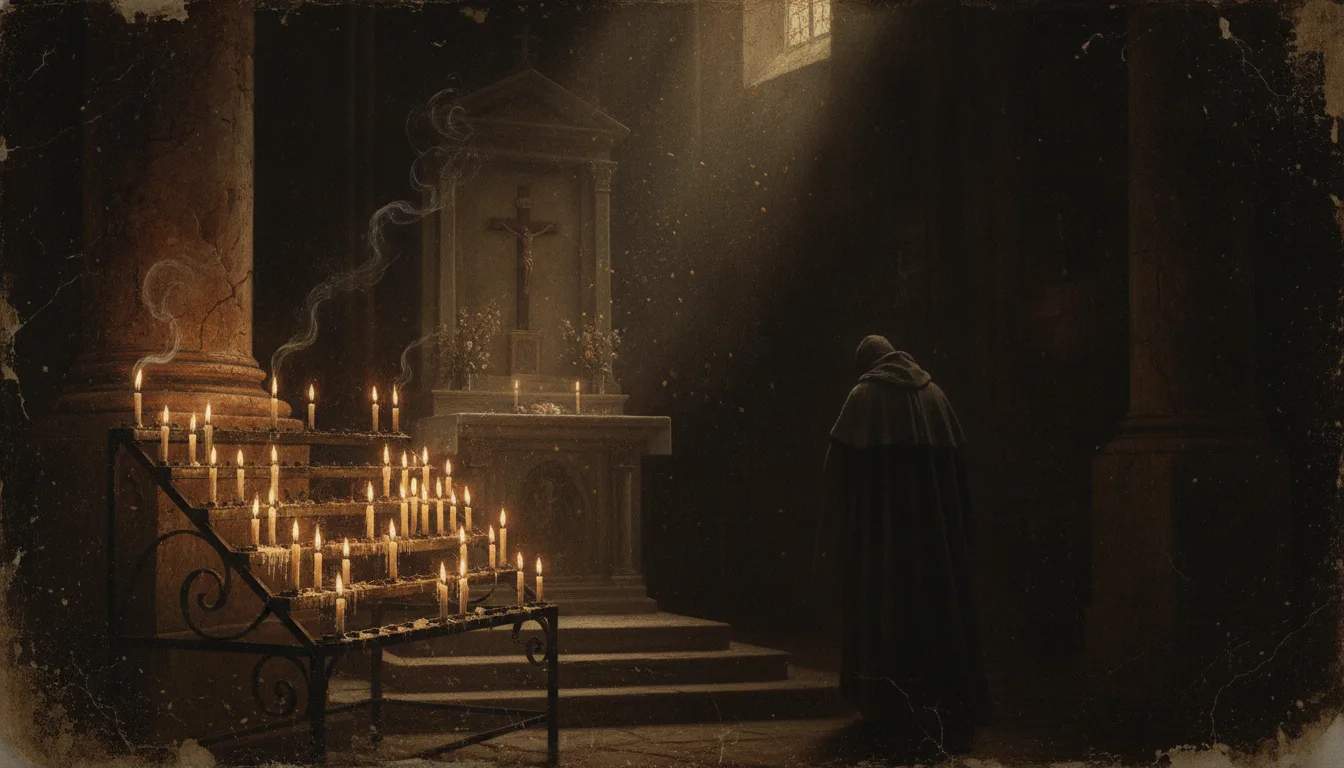
Because a lit candle is a prayer that goes on burning after the one who lit it has walked away. The flame represents the prayer offered and the faith of the one who offers it, and the light recalls Christ, "the light of the world" (John 8:12, Douay-Rheims), and the lamps the wise virgins kept burning for the bridegroom (Matthew 25:1–13). Candles are not magic and the wax obtains nothing of itself; lighting one before an image of Our Lord, Our Lady, or a saint is simply a way of saying, "I have come to pray, and I leave this light to keep watch in my place." It is the same instinct that keeps a sanctuary lamp burning before the Blessed Sacrament.
Why do Catholics use incense?
Because rising smoke has marked the worship of God since the Old Testament, and the Church keeps it as a sign of prayer ascending to heaven and of reverence for what is holy. "Let my prayer be directed as incense in thy sight" (Psalm 140:2, Douay-Rheims). God Himself commanded an altar of incense in the Temple (Exodus 30:1), and the Apocalypse shows incense offered before the throne of God as "the prayers of the saints" (Apocalypse 8:3–4, Douay-Rheims). At Mass the priest incenses the altar, the Gospel book, the offerings, and the people — honouring the things and persons set apart for God. The fragrance engages the body in worship, as the whole liturgy does.
Why do Catholics kneel and genuflect?
Because the body prays with the soul, and kneeling is the oldest posture of adoration and humility before God. To genuflect — to touch the right knee to the floor — on entering a church or passing the tabernacle is an act of worship directed to Christ truly present in the Blessed Sacrament. Scripture is full of it: "let us adore and fall down... before the Lord that made us" (Psalm 94:6, Douay-Rheims), and "at the name of Jesus every knee should bow" (Philippians 2:10, Douay-Rheims). We kneel because we are creatures and He is God; the lowered body confesses what the heart believes. This is distinct from the sign of the cross, though the two often go together on entering a church.
Why do Catholic women wear veils?
Because the veil is an ancient sign of reverence in the presence of God and of a woman's particular dignity, kept in the traditional liturgy. St. Paul writes that "a woman ought to have a power over her head, because of the angels" (1 Corinthians 11:10, Douay-Rheims), and the custom of covering the head in church follows directly from that passage. The veil is not a mark of inferiority; it is worn before the Blessed Sacrament as a gesture of humility and modesty, the way one dresses with care for what is sacred. In the traditional Roman Rite the practice has never lapsed, and many women have returned to it.
The pattern behind the questions
Run through the list and the same distinction keeps returning: between the worship due to God alone (adoration) and the honour rightly paid to what belongs to Him — His saints, His ministers, His sacred signs. The objector hears "idolatry" because he collapses these into one thing. The Church has never collapsed them. She adores God alone; she honours the saints, venerates their images, and reverences the things set apart for His service. Once that distinction is seen, most of the questions answer themselves.
This is why we do not pretend that the differences are small or that every road leads to the same place. The Catholic Church teaches these practices as true and salutary because they flow from the Faith Christ entrusted to her. Those who reject them reject something He gave. We say so plainly, and we say it to men we hope to see in heaven. If the prior question is whether Catholics are Christians at all, we answer it directly in are Catholics Christian; if it is which Church Christ founded, see what is the Catholic Church and the four marks of the Church.
More questions, answered one by one
Each practice above has a fuller treatment of its own. If a particular objection still presses, follow it to the source:
- Why do Catholics pray to Mary?
- Why do Catholics pray to saints?
- Why do Catholics confess to a priest?
- What is confession? — and the words of Christ that gave the power to forgive
- Holy Orders — why a priest is rightly called Father
- Holy water and sacramentals — how blessed things work
- The sign of the cross and the crucifix
- The Holy Trinity — the mystery the sign confesses
- The communion of saints and Mother of God — the ground of Catholic devotion
- What is Purgatory? — why Catholics pray for the dead
- What is Baptism? — why the Church baptizes infants
- How to pray the Rosary — the prayers and the mysteries
- What is Lent? — Ash Wednesday, the ashes, and Friday abstinence
- The Immaculate Conception — why Mary was preserved sinless
- The Pope and the papacy — why the Church has a visible head
- The Blessed Sacrament — what we kneel and light candles before
- Are Catholics Christian?, what is the Catholic Church, and the four marks of the Church
Frequently Asked Questions
Are Catholics Christian?
Yes — Catholics are Christians in the fullest and most ancient sense. The Catholic Church is the very Church that Christ founded on St. Peter, from which the name Christian first arose. Those who suggest otherwise usually mistake later additions for the original faith; in truth, Catholicism is the original Christianity. We answer the charge in full in are Catholics Christian.
What do Catholics believe?
Catholics believe what the Apostles believed: the Holy Trinity — one God in three Persons; the Incarnation, death, and Resurrection of Jesus Christ, true God and true man; the Church He founded with her seven sacraments; the forgiveness of sins; and the resurrection of the body and life everlasting. The whole of it is summed up in the Creed and set out in what do Catholics believe.
Do Catholics believe in Jesus?
Yes, and at the very centre of the faith. Catholics confess Jesus Christ as the eternal Son of God, the second Person of the Holy Trinity, who became man, was crucified for our sins, rose from the dead, and founded the Church. Far from believing in Him less than other Christians, the Church guards His full divinity and humanity against every error. See who is Jesus Christ.
What Bible do Catholics use?
The Catholic Bible contains seventy-three books — the same Old Testament the early Church received (including the seven books later dropped by the Reformers) and the twenty-seven books of the New Testament. The traditional English Catholic Bible is the Douay-Rheims, translated from St. Jerome's Latin Vulgate. We explain it in the Catholic Bible.
Do Catholics believe in the Rapture?
Not in the sense imagined by some modern Protestant groups — a secret "snatching away" of believers before a seven-year tribulation. That idea is a nineteenth-century invention with no place in the ancient faith. Catholics believe in one visible, glorious Second Coming of Christ, the general resurrection of the dead, and the Last Judgment, as the Creed professes.
Why do Catholics pray to Mary?
Not to worship her, but to ask her to pray for them — as one asks a friend — because she is the Mother of God and our most powerful advocate with her Son. The honour paid to Mary is real but is never the adoration owed to God alone. We answer this in full in why do Catholics pray to Mary.
Do Catholics worship Mary?
No. Catholics adore God alone; the honour paid to Mary, however high, is veneration, not adoration. The distinction is ancient and exact: latria is the worship owed to God, dulia the honour due to the saints, and hyperdulia the special honour due to Mary as Mother of God — but never the worship reserved to God. Anyone who worshipped Mary as God would be committing the very idolatry the Church condemns. See why do Catholics pray to Mary.
Why do Catholics eat fish on Friday instead of meat?
Because Friday is kept as a day of penance in memory of Christ's death, and abstaining from the flesh of warm-blooded animals is the traditional form of that penance. Fish is permitted because it was reckoned humbler, everyday food rather than festive meat — not because fish is sacred. The point is the small sacrifice, offered in union with the Cross. Abstinence binds on the Fridays of Lent, and in the older discipline throughout the year.
Why can't Catholics eat meat on Fridays during Lent?
Because Lent is the Church's chief penitential season, and Friday — the day of the Crucifixion — is its weekly focus. Abstaining from meat on the Fridays of Lent is required of Catholics from the age of fourteen, a shared act of penance preparing the soul for Easter. It is a discipline of the Church, given on Christ's authority to "bind and loose," not a claim that meat is impure.
Why do Catholics believe in Purgatory?
Because some souls die forgiven yet not fully purified, and Scripture calls it "a holy and wholesome thought to pray for the dead, that they may be loosed from sins" (2 Maccabees 12:46, Douay-Rheims). Purgatory is the final purification of souls already saved, before they enter heaven, of which Scripture says: "There shall not enter into it any thing defiled" (Apocalypse 21:27). It is not a second chance and not hell. See what is Purgatory.
Why do Catholics baptize babies?
Because Baptism washes away original sin and gives the new life of grace, and Christ said the little children should come to Him (Mark 10:14). The apostles baptized whole households. The faith is supplied by the Church and the parents until the child can make it his own. See what is Baptism.
Why do some people hate Catholics?
Often because they have been told what the Church teaches by her opponents rather than by the Church herself — that Catholics worship Mary, adore statues, or earn salvation by works, none of which the Church teaches. Real differences of doctrine remain and should not be papered over, but most hostility rests on misunderstanding. Our Lord warned His followers they would be hated for His name's sake (John 15:18–20). The remedy is to state plainly what the Church actually holds, which is the purpose of this page.
To go deeper, see what Catholics believe.
The Iter Fidei app carries the Catholic Faith — the prayers, the catechism, and the traditional liturgy — so that you may live it and defend it. Join early access here.
Sources. Catechism of the Council of Trent (Roman Catechism, 1566), on the First Commandment (§V–VII, the worship of images), on the Ninth Article of the Creed (the Church and the Communion of Saints), and on the Sacrament of Holy Orders (§I). Catechism of St. Pius X (1908), Part II, ch. 4, "The Invocation of the Saints." Pius IX, Ineffabilis Deus (1854), defining the Immaculate Conception. Scripture cited from the Douay-Rheims: Genesis 3:19; Job 42:6; Psalm 94:6; Psalm 140:2; Jonah 3:6; 2 Maccabees 12:43–46; Matthew 16:18–19; Matthew 23:9; Matthew 25:1–13; Mark 10:14; Luke 1:28; John 3:5; John 8:12; John 15:18–20; John 20:23; John 21:17; Acts 16:15, 16:33; 1 Corinthians 4:15; 1 Corinthians 11:10; Philippians 2:10; Apocalypse 8:3–4; 21:27.