
Novenas
Novena to the Most Precious Blood of Jesus
The novena to the Most Precious Blood of Jesus — nine days of prayer to the price of our redemption, kept in July before the feast of the Precious Blood, with the daily novena prayer, the Chaplet, and how to pray it.
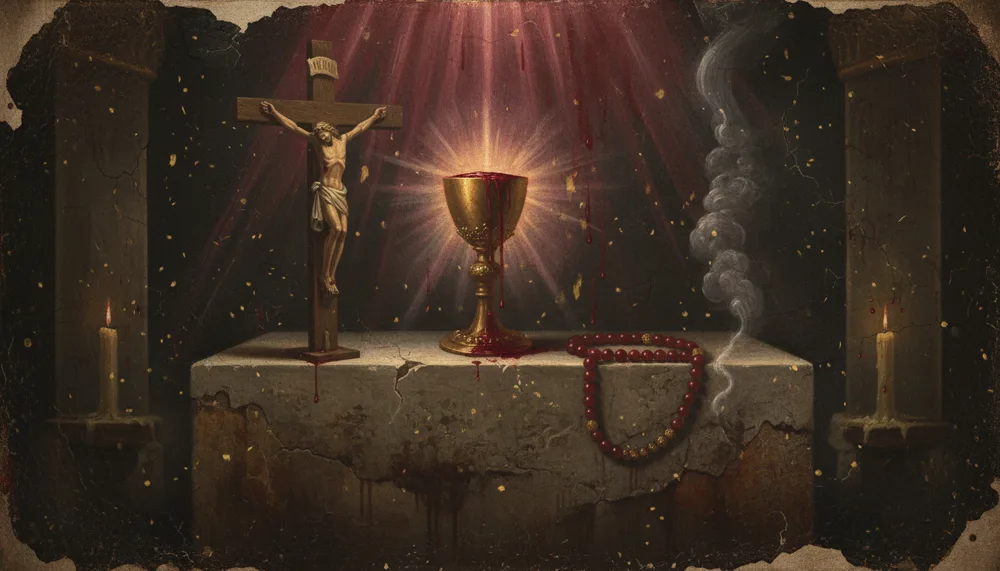
The novena to the Most Precious Blood of Jesus is nine consecutive days of prayer to the Blood our Lord poured out for us — the very price of our redemption, shed to the last drop from the Circumcision to the wound of the lance. It is prayed above all in July, the month the Church dedicates to the Precious Blood, in the nine days leading up to the feast of the Most Precious Blood kept on 1 July in the 1962 calendar. Below we give the spirit of this devotion and its full text — the daily novena prayer and the Chaplet — so that the reader may pray it. If you are new to this form, our note on what a novena is sets out the nine-day pattern to which this devotion belongs.
What this novena honours
The object of the novena is the Blood of Christ — true human blood, shed by the Word made flesh, and therefore of infinite worth. The Roman Catechism of the Council of Trent teaches that we were redeemed not "with corruptible gold or silver" but "with the precious Blood of the Lamb, holy and unspotted," and that the price He paid "not only equalleth our obligation, but is infinitely superior to it." This is the truth the novena rests upon: every drop of that Blood was enough to ransom a thousand worlds. When we keep these nine days we do not measure a debt but adore a price already paid in superabundance, and ask that it be applied to us and to all the world.
The devotion stands very close to the devotion to the Sacred Heart of Jesus — so close that the two are almost one, for the first chalice in which the divine Blood was consecrated was the Heart of the incarnate Word, and from that pierced Heart, after His death, flowed Blood and water. For this reason many who keep the novena to the Sacred Heart in June turn to the Precious Blood in July, honouring under two names the one redeeming love.
How to pray this novena
The structure is simple and may be kept by anyone. Pray it for nine consecutive days, at a fixed time, for one clearly named intention.
- Choose one intention. Name it plainly and keep it the same across all nine days.
- Pray the daily novena prayer once each day — the text given below.
- Add, if you wish, the Chaplet of the Most Precious Blood or the Litany of the Most Precious Blood; neither is required, but each deepens the nine days.
- Keep it in July if you can. The most fitting time is the nine days before the feast on 1 July, though the novena may be prayed at any season and in any need.
- Persevere even when nothing is felt. The virtue of the nine days is constancy, not consolation. A petition renewed in dryness is worth more than one prayed in sweetness and then abandoned.
This novena is one prayer repeated for nine days, not nine different daily prayers: the same daily novena prayer is said on each of the nine consecutive days, for the same named intention, in the manner the faithful have long kept it. Some like to give each day a particular shade of intention — reparation one day, the dying the next, the Church, the Holy Souls, a personal need — but this does not change the one prayer that carries the novena.
The daily novena prayer
The following is prayed once on each of the nine days, the intention named where indicated. It is a devotional composition, with no liturgical text and no approval of its own that we can cite; the Church's prayer is the collect of the feast of 1 July.
In the Name of the Father, and of the Son, and of the Holy Spirit.
Amen.
By the Voice of Thy Blood, O Jesus, I seek Thee, ask Thee and beg Thee, to help me at this time of my need.
O Jesus, I kneel at Thy bleeding feet pleading that you will hear me.
Many graces and many mercies have come from Thy Blood.
My hope lives in you, until the end of my time.
O Jesus, by Thy Precious Blood which you shed for our souls, by each drop that you shed for our redemption and by the tears of Thy Immaculate Mother, I beseech Thee and earnestly ask You to listen to my prayer:
(mention request here…)
O Jesus, who during all the days of Thy mortal life, You consoled so many sufferers, You healed so many infirmities, You raised so often a sinking courage; have pity on my soul who cries to Thee from the depths of my anguish.
O Jesus, from the wounds of Thy heart, may a wave of Thy merciful blood flow and grant to me the grace that I so ardently desire.
O Jesus, hasten the moment when You will change my tears to joy and my sighs to thanksgivings.
Holy Mary, I ask you to join with me in seeking help.
God our Father in Heaven: May Thy will be done. Amen.
Our Father
Hail Mary
Glory beJesus, Crucified, have mercy on me.
In the Name of the Father, and of the Son, and of the Holy Spirit.
Amen.
After the daily prayer, those who wish may add the Chaplet, the Litany, or both.
The Chaplet of the Most Precious Blood
The Chaplet of the Most Precious Blood honours the seven sheddings of the Blood of Christ — the Circumcision, the Agony in the Garden, the Scourging, the Crowning with thorns, the carrying of the Cross, the Crucifixion, and the piercing of His side — told on thirty-three Our Fathers, one for each year of our Lord's earthly life, with the Glory be said seven times to close. It is treated at length in the Chaplet of the Precious Blood; here is its text, to be joined to the novena where desired.
The Chaplet of the Most Precious Blood — seven groups of prayers honouring the seven sheddings of Our Lord's Blood — is a distinct devotion often joined to this novena; we treat it in its own guide.
The closing prayer of the novena
At the end of each day, the novena is sealed with the following.
Say this prayer on each of the nine days, holding your intention before the Sacred Heart from which the Precious Blood was poured out. Close on the ninth day with thanksgiving, and, through the month of July especially, keep the devotion as the Church has always kept it — the price of our Redemption never far from mind.
The history and meaning of the devotion
The worship of the Precious Blood is as old as the Church, for it is the worship of our redemption itself; but its flowering as a distinct devotion belongs to the nineteenth century. Its great Roman apostle was St Gaspar del Bufalo (1786–1837), founder of the Missionaries of the Precious Blood, whose missions across the Papal States carried the devotion to the faithful in town after town. He was canonized by Pope Pius XII in 1954. Around his sons and the confraternities they raised, the offering of the Blood of Christ in reparation became one of the marks of Catholic piety in the age.
The feast has a history bound to the misfortunes of the papacy. Pope Pius IX, driven from Rome by revolution in 1848 and restored the following year, instituted the feast of the Most Precious Blood from Gaeta on 10 August 1849 in thanksgiving for his deliverance, fixing it first to the first Sunday of July. Pope St Pius X later moved it to a fixed date, and in the 1962 calendar the feast of the Most Precious Blood is kept on 1 July, at the head of the month the whole Church dedicates to the Blood of the Redeemer. To pray this novena in the nine days before the first of July, then, is to keep the Church's own feast with the Church's own mind.
The meaning of the devotion is the meaning of Calvary. The Blood is the price — pretium — of the world's ransom, and the novena is nothing but the offering of that price back to the eternal Father: not to extinguish a debt that love has already overpaid, but to stand within the price of our redemption and ask that its fruit be applied to living and dead alike.
Variants of the devotion
The novena is the frame; several forms may be prayed within it or alongside it, according to the intention of the one who prays.
The Chaplet of the Most Precious Blood
The chaplet, given above, is the bead form of the whole devotion — the seven sheddings of the Blood told on thirty-three Our Fathers. It is short, and because its prayers are the ones every Catholic knows by heart it is well suited to be prayed aloud by a family or a confraternity. Many pray it once each day of the novena. Its full treatment is in the Chaplet of the Precious Blood.
The Litany of the Most Precious Blood
The Litany of the Most Precious Blood (Litaniae Pretiosissimi Sanguinis Domini Nostri Iesu Christi) invokes the Blood of Christ under its many titles — the Blood of the New and Eternal Testament, the Blood poured out on the Cross, the Blood of the Eucharist, the price of our salvation. It was approved for the universal Church by Pope St John XXIII in 1960 and belongs to this devotion as the Litany of the Sacred Heart belongs to that. It may be added to any day of the novena; its full text, in Latin and English, is given in our page on the Litany of the Precious Blood.
For the dying and the Holy Souls
The offering of the Precious Blood is a cherished prayer for a good death and for the souls in purgatory, since it is by that Blood that both the dying and the dead are cleansed. Many keep a day of the novena, or the whole of it, for a person near death or for the Holy Souls, presenting the Blood of Christ to the Father on their behalf. This is the same spirit of reparation and confidence that animates the prayer for a happy death and the offering made in the Chaplet.
Frequently Asked Questions
What is the novena to the Most Precious Blood of Jesus?
It is nine consecutive days of prayer honouring the Blood our Lord shed for our redemption and offering it to the eternal Father for a named intention. The Blood of Christ is adored as the price of our salvation — shed from the Circumcision to the wound of the lance — and the novena presents that price back to God for the living and the dead. The daily novena prayer, the Chaplet, and the closing prayer are given above.
How do you pray the Precious Blood novena?
Pray it on nine consecutive days, at a fixed time, for one clearly named intention. Each day, say the daily novena prayer given above, offering the Precious Blood of Christ for your intention, and close with the closing prayer. You may add the Chaplet of the Most Precious Blood or the Litany. Persevere even when nothing is felt, for the strength of the nine days is constancy, not consolation.
When should the novena be prayed?
The most fitting time is July, the month dedicated to the Precious Blood — above all the nine days leading up to the feast of the Most Precious Blood, kept on 1 July in the 1962 calendar. It may, however, be prayed at any season and for any worthy intention, since the Blood of Christ is offered for every need.
When is the feast of the Most Precious Blood?
Pope Pius IX instituted the feast in 1849, fixing it first to the first Sunday of July; Pope St Pius X later moved it to a fixed date, and in the 1962 calendar it is kept on 1 July. The whole of July has long been dedicated to the Precious Blood.
Is there a different prayer for each of the nine days?
No. The same daily novena prayer is said on each of the nine consecutive days, for the same named intention. Some give each day a particular shade — reparation, the dying, the Holy Souls, the Church, a personal need — but this is optional and does not change the one prayer that carries the novena.
Who spread this devotion?
Its great apostle was St Gaspar del Bufalo (1786–1837), founder of the Missionaries of the Precious Blood, whose missions across the Papal States carried it to the faithful; he was canonized in 1954. Pope Pius IX gave the whole Church the feast of the Most Precious Blood in 1849, and Popes since have enriched the devotion with indulgences.
What is the Chaplet of the Most Precious Blood?
It is the bead form of the devotion: the seven sheddings of the Blood of Christ told on thirty-three Our Fathers, one for each year of our Lord's earthly life, with the Glory be said seven times to close. Its full text is given above, and its structure is treated in the Chaplet of the Precious Blood. Many pray it once each day of the novena.
Where can I find the novena to print or pray along with?
The full text on this page — the daily novena prayer, the Chaplet, and the closing prayer — may be freely copied and written by hand on a card kept in your missal, the oldest way the faithful carried their novenas. To pray it aloud day by day, the Iter Fidei app carries this novena with audio, in Latin and in your own language, so the prayer can be both read and prayed aloud without searching for it again.
The Iter Fidei app carries the novenas, chaplets, litanies and prayers in Latin and your own language, with audio. Join early access here.
Related. See also the Chaplet of the Precious Blood, the Litany of the Sacred Heart, and the novena to the Sacred Heart.
Sources. Holy Scripture (1 St Peter 1:18–19, on redemption by the precious Blood of the Lamb; Hebrews 9, on the Blood of the New Testament); the devotional text of the novena (a composition with no liturgical text) and the Chaplet of the Most Precious Blood; the Raccolta, on the indulgences of the devotion to the Precious Blood; Catechism of the Council of Trent (1566), on our redemption by the precious Blood; the act of Pope Pius IX instituting the feast of the Most Precious Blood (1849), and its place on 1 July in the 1962 calendar; the Litany of the Most Precious Blood approved by Pope St John XXIII (1960).