Devotions
The Chaplet of the Precious Blood
The Chaplet of the Most Precious Blood — the seven sheddings of the Blood of Christ told on thirty-three Our Fathers, the devotion spread by St Gaspar del Bufalo and indulgenced by Pius IX, and how to pray it.
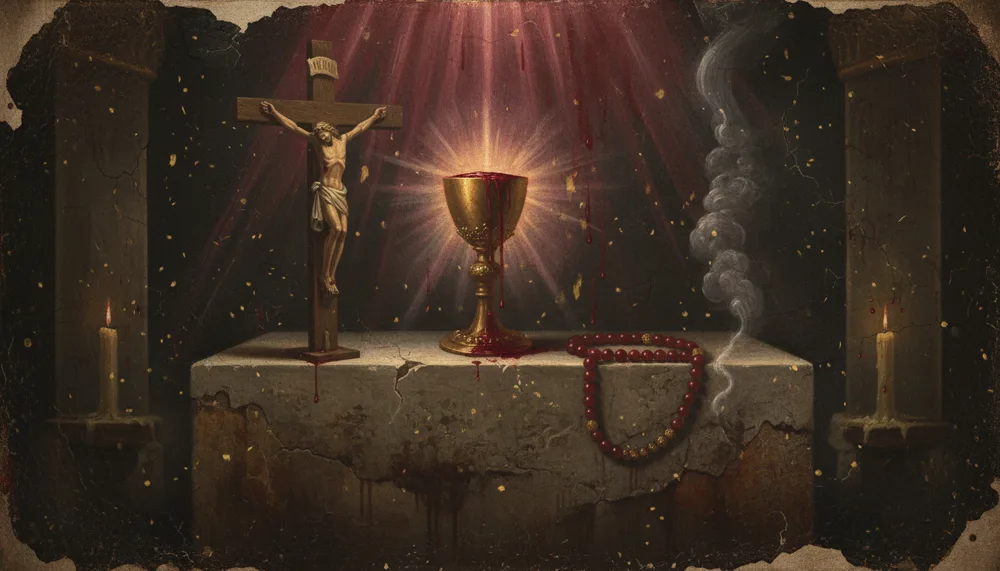
The Chaplet of the Precious Blood is a string of beads on which we honour the seven sheddings of the Blood of our Lord Jesus Christ — from the Circumcision to the wound of the lance — counting thirty-three Our Fathers, one for each year of His earthly life, with the Glory be said seven times to close. It is the bead form of the wider devotion to the Precious Blood: the worship of the Blood as the very price of our redemption, poured out to the last drop.
The devotion was carried through the Italian missions chiefly by St Gaspar del Bufalo, and Pope Pius IX enriched it with indulgences and gave the whole Church the feast of the Most Precious Blood. If you are new to this form of prayer, our note on what a chaplet is sets out the structure, and the chaplet sits among the wider body of Catholic devotions approved by the Church.
What the chaplet honours
The object of the chaplet is the Blood of Christ — true human blood, shed by the Word made flesh, and therefore of infinite worth. The Roman Catechism of the Council of Trent teaches that we were not redeemed "with corruptible gold or silver" but "with the precious Blood of the Lamb, holy and unspotted," and that the price He paid "not only equalleth our obligation, but is infinitely superior to it." This is the dogma the chaplet rests upon: every drop of that Blood was enough to ransom a thousand worlds. When we tell these beads we are not measuring a debt but adoring a price already paid in superabundance.
The devotion stands very close to the devotion to the Sacred Heart of Jesus. Cardinal Schuster notes that "the Precious Blood is the price of universal redemption, which Love would not have to be anything less than itself," and that there is a near identity between the Heart and the Blood — "not only because after the death of Jesus blood and water flowed from His wounded Heart, but because the first chalice in which that divine Blood was consecrated was precisely the Heart of the incarnate Word." For this reason the Chaplet of the Precious Blood and the Chaplet of the Sacred Heart are sister devotions, two beads on the same redeeming love.
The seven sheddings of the Blood of Christ
The chaplet is built on the seven occasions on which Scripture and tradition recall that our Lord shed His Blood. They are the seven mysteries of the chaplet:
- The Circumcision, when the Infant first shed His Blood for us.
- The Agony in the Garden, when He sweat Blood under the weight of our sins.
- The Scourging at the pillar.
- The Crowning with thorns.
- The carrying of the Cross.
- The Crucifixion, the nailing and the death.
- The piercing of His side, whence flowed Blood and water.
The last of these the Fathers read as the birth of the Church. The Roman Catechism counts the brazen serpent and the paschal lamb among the figures that foreshadowed the Cross; here those figures are fulfilled in the open side of the new Adam. Dom Guéranger writes that in this mystery "the Church rejoices in her birthday, for the stream of blood and water from the Lord's pierced side is mystically her beginning." The same blood and water are continued for us upon the altar, which is why this devotion is never far from the Holy Eucharist, where the Blood of the Testament is daily set before us.
The Chaplet of the Precious Blood and the Chaplet of the Most Precious Blood
These are two names for one devotion. The chaplet is found in older manuals as the "Chaplet of the Precious Blood," and in many missals and prayer books as the Chaplet of the Most Precious Blood of Jesus — "most" being simply the superlative the Church gives to the title of the feast and of the litany alike (Pretiosissimi Sanguinis).
There is no difference of structure, beads, or text between the two: whether you find it listed as the chaplet of the precious blood, the chaplet of the most precious blood, or the chaplet of the Precious Blood of Jesus Christ, the seven sheddings and the thirty-three Our Fathers are the same. The fuller title is the more proper, because it matches the wording of the feast Pius IX instituted and the litany of the Sacred Heart with which it keeps close company in July.
Is the Chaplet of the Precious Blood a rosary?
It is not the Rosary of the Blessed Virgin, but it belongs to the same family of bead-prayers, and is sometimes called the "Precious Blood rosary" because it is told on a cord or chaplet of beads in the same way. The difference is in the count and the object. The Dominican Rosary has fifteen decades of Hail Marys grouped under the joyful, sorrowful and glorious mysteries; the Chaplet of the Precious Blood has seven divisions and thirty-three Our Fathers, and its object is not the mysteries of Mary's life but the seven occasions on which her Son shed His Blood.
Many keep both: the Rosary as the daily prayer, and the Precious Blood chaplet for the month of July or for an intention of reparation. If you are choosing a string of beads, any chaplet of the right count will serve; what matters is the offering said on them, not the make of the beads. Our note on what a chaplet is explains how chaplets differ from the Rosary in general.
How to pray the Chaplet of the Precious Blood
The chaplet has seven divisions of five beads — thirty-five small beads in the common arrangement, of which thirty-three carry an Our Father — separated by seven larger beads on which the Glory be is said. Take it slowly. The form below is the traditional one; adjust the meditation to each mystery as you pass to it.
Begin with the sign of the Cross and an act of intention.
O Lord Jesus Christ, who didst pour out Thy Blood for the redemption of the world, I adore that Most Precious Blood, and I offer it to the eternal Father, in reparation for my sins and for the salvation of all mankind.
For each of the seven mysteries, announce the shedding of Blood it recalls, then on its beads pray the Our Father — five times for each of the first six mysteries and three times for the seventh, so that thirty-three Our Fathers are said in all:
Our Father, who art in heaven... (recalling this shedding of the Precious Blood)
On the large bead that closes each mystery, say:
Glory be to the Father, and to the Son, and to the Holy Ghost; as it was in the beginning, is now, and ever shall be, world without end. Amen.
We beseech Thee, therefore, help Thy servants, whom Thou hast redeemed with Thy Precious Blood.
When the seven mysteries are told — thirty-three Our Fathers and seven Glory be's — close with the ancient versicle the Church sings on the feast:
V. Thou hast redeemed us, O Lord, in Thy Blood.
R. And hast made us, to our God, a kingdom.
The whole is the work of a few minutes. Its strength is in the offering, not the counting: each Our Father presents the Blood once more to the Father as the price already accepted.
Why thirty-three Our Fathers
The chaplet counts thirty-three Our Fathers for the thirty-three years our Lord lived upon the earth, every year of His mortal life gathered up and offered back to Him in His own Blood. The Pater is chosen deliberately: the prayer the Lord Himself taught becomes the bead, so that we plead for our daily bread and our deliverance from evil while holding before the Father the very Blood that purchased both. This is the same logic of love and reparation that governs the litany of the Sacred Heart and the practice of the First Fridays: we return love for love, and offer satisfaction for the coldness of men.
A devotion approved and indulgenced
This is not a private novelty but a devotion the Church received and blessed. A feast "of the Blood of Christ" was granted to Valencia in Spain as early as 1582, and another to Sarzana in Tuscany in 1747.
The Roman apostle of the devotion was St Gaspar del Bufalo, founder of the Missionaries of the Precious Blood, whose missions across the Papal States spread it among the faithful. Pope Pius IX, driven from Rome by revolution in 1848 and restored the following year, instituted the feast of the Most Precious Blood from Gaeta on 10 August 1849 in thanksgiving, fixing it first to the first Sunday of July; Pope Pius X later moved it to the first day of the month, and the whole of July has long been dedicated to the Precious Blood. To pray this chaplet in July, then, is to keep the Church's own month with the Church's own mind.
Those who wish to keep the month more fully may pair the chaplet with a novena, praying it for the nine days before the feast on the first of July, after the manner of our other approved devotions such as the novena of the Precious Blood or the novena to the Sacred Heart.
The Chaplet of the Precious Blood is a small instrument and an immense object. Take the beads, recall the seven wounds from which that Blood flowed, and offer it to the Father as Christ Himself offered it — not to extinguish a debt that love has already overpaid, but to stand within the price of our redemption and to ask that it be applied to us and to all the world.
A printable text of the chaplet
Many look for the chaplet "as a PDF" so as to carry a fixed text to the prayer-stool or to lead it aloud for a family or a group. You have the full text above — the opening offering, the Our Father said on the small beads, the Glory be and "We beseech Thee, therefore, help Thy servants" on the large beads, and the closing versicle "Thou hast redeemed us, O Lord, in Thy Blood."
To make your own printable, set the seven mysteries as headings, write the count beside each (five Our Fathers for the first six, three for the seventh), and end with the versicle; that page is all the chaplet requires. The Iter Fidei app carries the same text laid out for prayer, in Latin and in your own language, so that you can follow it on the beads without a loose sheet.
Praying the chaplet aloud and along
Because the chaplet is short and the prayers are the ones every Catholic knows by heart — the Our Father, the Glory be — it is well suited to be prayed aloud, whether alone, in a family, or by a confraternity. When it is led, one voice announces each shedding of the Blood and begins the Our Father, and the rest answer; the same is done with the Glory be and the closing versicle.
This is the manner in which the Missionaries of the Precious Blood spread it in their missions. If you wish to pray along with a recording, choose one that keeps the traditional form set out here — the seven sheddings, the thirty-three Our Fathers, and the versicle — rather than a shortened or altered modern version; the app provides an audio that follows the approved text bead by bead.
Frequently Asked Questions
What is the Chaplet of the Precious Blood?
The Chaplet of the Precious Blood is a string of beads on which we honour the seven sheddings of the Blood of Our Lord Jesus Christ — from the Circumcision to the wound of the lance — counting thirty-three Our Fathers, one for each year of His earthly life, with the Glory be said seven times to close. It is the bead form of the devotion to the Precious Blood, the worship of the Blood as the very price of our redemption.
How do you pray the Chaplet of the Precious Blood?
Begin with the sign of the Cross and an act of offering. Then for each of the seven mysteries, announce the shedding of Blood it recalls and pray the Our Father on its beads — five times for each of the first six mysteries and three times for the seventh, so thirty-three Our Fathers are said in all — closing each mystery with a Glory be on the large bead. End with the versicle: "Thou hast redeemed us, O Lord, in Thy Blood. And hast made us, to our God, a kingdom."
What are the seven sheddings of the Blood of Christ?
They are the Circumcision; the Agony in the Garden, when He sweat Blood; the Scourging at the pillar; the Crowning with thorns; the carrying of the Cross; the Crucifixion; and the piercing of His side, whence flowed Blood and water. These seven occasions are the seven mysteries meditated on the chaplet.
Why are there thirty-three Our Fathers?
The chaplet counts thirty-three Our Fathers for the thirty-three years Our Lord lived upon the earth, every year of His mortal life gathered up and offered back to Him in His own Blood. The Pater is chosen deliberately, so that the prayer the Lord Himself taught becomes the bead.
When is the feast of the Most Precious Blood?
Pope Pius IX instituted the feast of the Most Precious Blood in 1849, fixing it first to the first Sunday of July; Pope Pius X later moved it to the first day of the month, and the whole of July has long been dedicated to the Precious Blood. To pray this chaplet in July is to keep the Church's own month with the Church's own mind.
Is the Chaplet of the Most Precious Blood the same as the Chaplet of the Precious Blood?
Yes. They are two names for the same devotion. The fuller title, the Chaplet of the Most Precious Blood of Jesus, matches the wording of the feast and litany; the shorter title is found in older manuals. There is no difference of structure, beads, or text between them — the seven sheddings and thirty-three Our Fathers are the same either way.
Is the Chaplet of the Precious Blood a rosary?
It is not the Rosary of the Blessed Virgin, but it is told on a string of beads in the same manner, which is why it is sometimes called the Precious Blood rosary. The Rosary has fifteen decades of Hail Marys under the mysteries of Christ and His Mother; this chaplet has seven divisions and thirty-three Our Fathers, and its object is the seven sheddings of Christ's Blood. Many keep both.
Where can I find the text or a PDF of the chaplet?
The full text is given in this article: the opening offering, the Our Father on the small beads, the Glory be and "We beseech Thee, therefore, help Thy servants" on the large beads, and the closing versicle. You can copy it to make your own printable sheet, or follow it in the Iter Fidei app, which carries the chaplet laid out for prayer in Latin and in your own language, with audio.
The Iter Fidei app carries the novenas, chaplets, litanies and prayers in Latin and your own language, with audio. Join early access here.
Sources. Catechism of the Council of Trent (1566), On the Fourth Article of the Creed (the Passion), on our redemption by the precious Blood; Butler's Lives of the Saints, on the Precious Blood and St Gaspar del Bufalo; Dom Guéranger, The Liturgical Year, and Bl. Cardinal Schuster, The Sacramentary (Liber Sacramentorum), on the feast of the Most Precious Blood and its kinship with the Sacred Heart; the indulgences and feast of the Most Precious Blood under Pope Pius IX (1849) and Pope Pius X.