
Scripture
The Catholic Bible: All 73 Books and How It Differs
The Catholic Bible has 73 books: 46 in the Old Testament and 27 in the New. The complete list, the traditional names, who fixed the canon, and how it differs from the Protestant Bible.
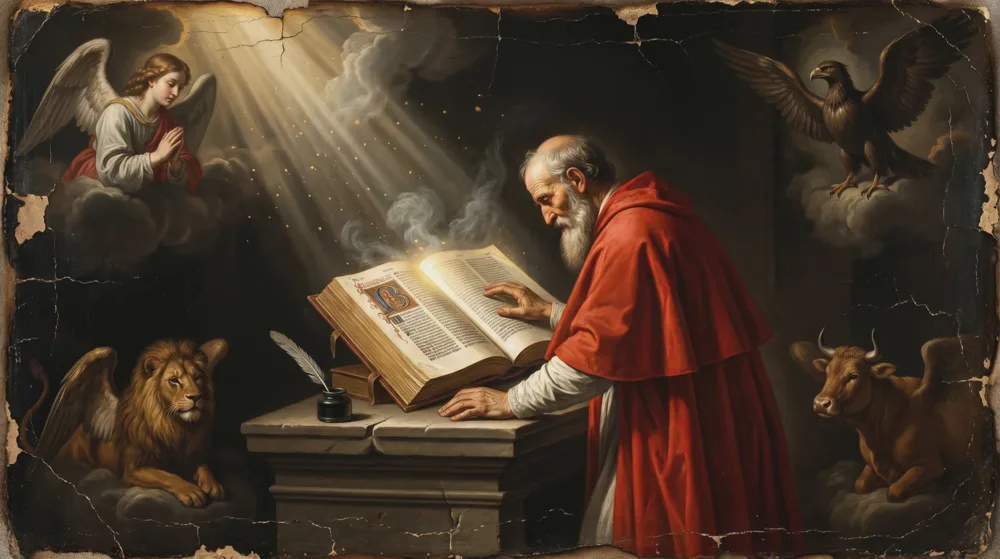
The Catholic Bible has 73 books: 46 in the Old Testament and 27 in the New. It differs from Protestant Bibles, which have 66, by seven Old Testament books — Tobias, Judith, Wisdom, Ecclesiasticus, Baruch, and 1 and 2 Machabees — and by passages of Esther and Daniel. The Church defined this canon at the Council of Trent in 1546, confirming the lists of Hippo and Carthage at the end of the fourth century and of the Council of Florence in 1442. In English, the traditional Catholic version is the Douay-Rheims.
Below: the complete list of the 73 books with their traditional names, who fixed the canon, what really separates the Catholic and Protestant Bibles, and how a Catholic reads Scripture.
What is the Catholic Bible?
The Bible is a collection of books written over more than a thousand years by men inspired by the Holy Ghost. The Church teaches that these books have God for their author, and that the Church, which existed and preached before a word of the New Testament was written, is their guardian and interpreter. The Council of Trent sets Scripture and the apostolic Traditions side by side, to be received "with an equal affection of piety and reverence" (Session IV, 1546).
"The Catholic Bible" is therefore not a separate book with its own title. It is Holy Scripture in its full canon — the list of books the Church receives as inspired — in an edition approved by the Church, normally with explanatory notes. Its Latin form is St Jerome's Latin Vulgate; its traditional English form is the Douay-Rheims. Which English translation to choose today is a separate question, answered in What Bible Do Catholics Use?
How many books are in the Catholic Bible?
Seventy-three. The New Testament has the same 27 books in every Christian Bible. The difference is entirely in the Old Testament: 46 books in the Catholic canon against 39 in the Protestant one.
The books of the Catholic Bible in order
The traditional English names come from the Vulgate through the Douay-Rheims. Where they differ from the names in modern Bibles, the modern name is given in brackets; the seven deuterocanonical books are in bold.
Old Testament (46 books)
- The Law: Genesis, Exodus, Leviticus, Numbers, Deuteronomy.
- The historical books: Josue (Joshua), Judges, Ruth, 1 and 2 Kings (1 and 2 Samuel), 3 and 4 Kings (1 and 2 Kings), 1 and 2 Paralipomenon (1 and 2 Chronicles), 1 Esdras (Ezra), 2 Esdras (Nehemiah), Tobias (Tobit), Judith, Esther (with its deuterocanonical chapters), Job.
- The wisdom books: Psalms, Proverbs, Ecclesiastes, Canticle of Canticles (Song of Songs), Wisdom, Ecclesiasticus (Sirach).
- The prophets: Isaias, Jeremias, Lamentations, Baruch, Ezechiel, Daniel (with its deuterocanonical chapters), Osee (Hosea), Joel, Amos, Abdias (Obadiah), Jonas, Micheas (Micah), Nahum, Habacuc, Sophonias (Zephaniah), Aggeus (Haggai), Zacharias, Malachias.
- The Machabees: 1 Machabees, 2 Machabees.
New Testament (27 books)
- The four Gospels: Matthew, Mark, Luke, John.
- The Acts of the Apostles.
- The fourteen Epistles of St Paul: Romans, 1 and 2 Corinthians, Galatians, Ephesians, Philippians, Colossians, 1 and 2 Thessalonians, 1 and 2 Timothy, Titus, Philemon, Hebrews.
- The seven Catholic Epistles: James, 1 and 2 Peter, 1, 2 and 3 John, Jude.
- The Apocalypse (Revelation).
The deuterocanonical passages of Esther are the additions gathered at the end of the book in the Vulgate (10:4 to 16:24); those of Daniel are the prayer of Azarias and the canticle of the three young men (3:24-90), the history of Susanna (chapter 13) and the history of Bel and the dragon (chapter 14). The Psalms are numbered after the Greek and Latin reckoning, so that most psalms carry a number one lower than in Protestant Bibles: the Twenty-Third Psalm of the King James Version is Psalm 22 in a Catholic Bible of the Douay tradition. On reading references across these numberings, see Catholic Bible Verses.
Who fixed the canon of the Catholic Bible?
The Church received these books from the beginning and declared the list whenever it was questioned. The African councils of Hippo (393) and Carthage (397) set out the full canon, the deuterocanonical books included; the Council of Florence repeated it in 1442 in its decree for the Jacobites (bull Cantate Domino); and the Council of Trent defined it in its fourth session on 8 April 1546, naming the books one by one and declaring anathema anyone who "receive not, as sacred and canonical, the said books entire with all their parts, as they have been used to be read in the Catholic Church, and as they are contained in the old Latin vulgate edition."
The history of the seven books — their place in the Greek Septuagint used by the Apostles, the doubts of some Fathers, and the arguments of the Reformers — is set out in The Deuterocanonical Books.
Catholic Bible vs Protestant Bible
Three differences matter.
The canon. Protestant Bibles follow the shorter Hebrew canon for the Old Testament. Luther's complete German Bible of 1534 gathered the deuterocanonical books between the Testaments as "Apocrypha," books "not held equal to Holy Scripture, but useful and good to read"; the King James Version of 1611 also printed them in a separate Apocrypha section, and most Protestant editions since the nineteenth century leave them out. The difference is not academic: the clearest Old Testament witness to prayer for the dead is in 2 Machabees — "It is therefore a holy and wholesome thought to pray for the dead, that they may be loosed from sins" (2 Machabees 12:46), a verse long cited in support of the Church's teaching on Purgatory.
Approval and notes. A Catholic edition is approved by the Church. The 1917 Code of Canon Law (canon 1391) forbade printing vernacular Bibles unless approved by the Holy See or published under the bishops' supervision with notes drawn from the Fathers and Catholic scholars; that is why Catholic Bibles carry an imprimatur and footnotes.
The rule of interpretation. For a Catholic, Scripture is read within the Church that received it and with the Tradition that accompanies it, not as the sole rule of faith. Our comparison Catholic vs Baptist shows how far that principle reaches in practice.
The Catholic Bible vs King James Bible question follows from these three points: the KJV is a Protestant translation, made from the Hebrew and Greek for the Church of England, and it is not a Catholic edition even when printed with its Apocrypha section.
The Douay-Rheims: the traditional English Catholic Bible
The Douay-Rheims was translated from the Vulgate by English Catholic exiles: the New Testament at Rheims in 1582, the Old Testament at Douay in 1609-1610. Bishop Richard Challoner revised it in 1749-1752, and the Challoner text, with its notes, is the Douay-Rheims Bible most Catholics have read since. It carries the full canon, the Vulgate names and numbering, and a grave English shaped for prayer. It is the Bible we quote on this site. Modern Catholic translations exist and are compared in What Bible Do Catholics Use?
How a Catholic reads the Bible
The Church wants the faithful to read Scripture. The Catechism of St Pius X answers the question of vernacular Bibles plainly: "We can read those translations of the Bible in the vernacular which have been acknowledged as faithful by the Catholic Church and which have explanations also approved by the Church." Three habits follow:
- Read an approved edition with its notes, so that difficult passages are read as the Church reads them.
- Read with the liturgy. The Epistle and Gospel of each Sunday's Mass and the psalms of the Divine Office are the Church's own daily course of Scripture.
- Read the whole canon over time, Old Testament included; the deuterocanonical books (Tobias, Wisdom, Ecclesiasticus) are among the most practical books of the Bible for daily life.
For daily reading on a phone, the Iter Fidei Catholic Bible app carries the Douay-Rheims beside the Latin Vulgate.
Frequently Asked Questions
How many books are in the Catholic Bible?
Seventy-three: 46 in the Old Testament and 27 in the New. Protestant Bibles have 66, because they omit seven Old Testament books — Tobias, Judith, Wisdom, Ecclesiasticus, Baruch, and 1 and 2 Machabees — and the deuterocanonical passages of Esther and Daniel.
Why does the Catholic Bible have more books?
Because it keeps the books the Church had read as Scripture since the Apostles, which were in the Greek Septuagint and in the canon of Hippo, Carthage, Florence and Trent. The Reformers of the sixteenth century set them apart as "Apocrypha"; the Church did not add them.
What is the Catholic Bible called?
It has no special title: it is the Holy Bible in its full canon. Its traditional Latin form is the Vulgate, and its traditional English form the Douay-Rheims; modern approved editions include the New American Bible and the Catholic editions of the RSV and ESV.
Is the King James Bible a Catholic Bible?
No. The King James Version (1611) is a Protestant translation; it originally printed the deuterocanonical books in a separate Apocrypha section, and most editions now omit them. It has never been a Catholic approved edition.
What are the extra books in the Catholic Bible?
They are not extra but kept: Tobias (Tobit), Judith, Wisdom, Ecclesiasticus (Sirach), Baruch, 1 Machabees and 2 Machabees, plus Esther 10:4-16:24 and Daniel 3:24-90, 13 and 14.
Do Catholics read the Bible?
Yes. The Church reads Scripture every day in the Mass and in the Divine Office, and she encourages the faithful to read approved editions with their notes. What she forbids is not reading but private interpretation against her teaching, the danger St Peter names when he warns that "the unlearned and unstable wrest" the Scriptures "to their own destruction" (2 Peter 3:16).
Why are the names of the books different in older Catholic Bibles?
The Douay-Rheims takes its names from the Latin Vulgate: 1-4 Kings for 1-2 Samuel and 1-2 Kings, Paralipomenon for Chronicles, Isaias for Isaiah, the Apocalypse for Revelation. The books are the same; only the names and the numbering of the Psalms follow the Latin tradition.
The Iter Fidei app carries the Douay-Rheims Bible beside the Latin Vulgate, with the traditional prayers and calendar. Join early access here.
Sources. Council of Trent, Session IV (8 April 1546), Decree concerning the Canonical Scriptures; Council of Florence, bull Cantate Domino (1442); Councils of Hippo (393) and Carthage (397); 1917 Code of Canon Law, canon 1391; Catechism of St Pius X, on Holy Scripture; Holy Scripture, Douay-Rheims, Challoner revision (2 Machabees 12:46; 2 Peter 3:16).