
Scripture
The Latin Vulgate Bible: St Jerome's Text Explained
The Vulgate is the Latin Bible of the Western Church, largely St Jerome's work (c. 382-405), declared authentic by the Council of Trent and printed as the Clementine Vulgate of 1592.
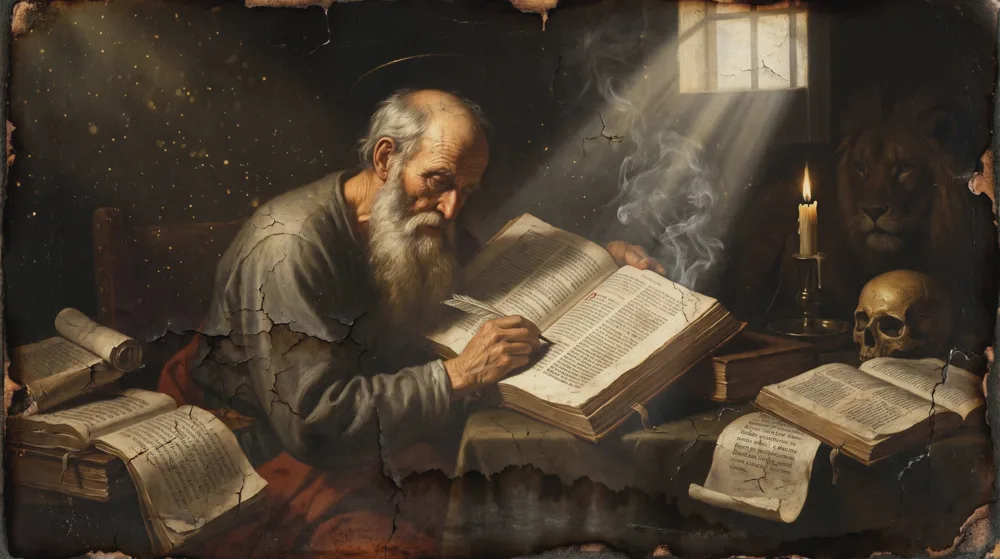
The Latin Vulgate Bible is the Latin Bible of the Western Church: the text the Fathers, the councils and the liturgy of the Roman rite have used for some fourteen centuries. Most of it is the work of St Jerome, made between about 382 and 405. The Council of Trent declared it "authentic" in 1546, and its official printed form, the Sixto-Clementine Vulgate of 1592, remained the Church's standard Latin text until the Nova Vulgata of 1979.
Below: what the Vulgate is, how St Jerome made it, what Trent meant by "authentic," which edition is meant by "the Vulgate," and how to read it in English.
What is the Vulgate? The meaning of the name
Vulgata means "common" or "in general use" — the edition in common use in the Latin Church. Before Jerome, Latin Christians read the Vetus Latina ("Old Latin"), a set of translations made in the second and third centuries from the Greek, which circulated in many divergent copies. St Augustine complained that anyone who got hold of a Greek manuscript and thought he knew some Latin set about translating it.
The Vulgate replaced those versions slowly, from the fifth century to the ninth, until it was simply the Bible of the West. The Roman Missal and the Breviary take their Scripture from it: the Epistles and Gospels of the Traditional Latin Mass, the lessons of Matins and the chapters of every hour are read from it.
St Jerome and the making of the Vulgate
St Jerome (c. 347-420), secretary to Pope St Damasus I, was asked by him in 382 to revise the Latin Gospels against the Greek. He completed that revision about 384. He then left Rome and, from 386, lived in Bethlehem, where he learned Hebrew and undertook what no Latin writer had attempted: a new translation of the Old Testament from the Hebrew (c. 390-405), which he called a return to the Hebraica veritas, "the Hebrew truth."
The Vulgate as the Church received it is therefore a composite:
- The Gospels: Jerome's revision of the Old Latin.
- The rest of the New Testament: a revision of the Old Latin generally attributed today to another reviser of the same period.
- Most of the Old Testament: Jerome's translation from the Hebrew.
- Tobias and Judith: Jerome's rapid translation from an Aramaic text.
- Wisdom, Ecclesiasticus, Baruch and the Machabees: the Old Latin, which Jerome did not retranslate.
- The Psalms: not his Hebrew Psalter but his earlier revision from the Greek, called the Gallican Psalter because it was first adopted in Gaul. It is the Psalter of the Roman Breviary — the psalms sung at Vespers and Compline to this day.
From manuscripts to the Clementine Vulgate
A text copied by hand for a thousand years gathers variants. Alcuin of York prepared a corrected text for Charlemagne around 800; the University of Paris spread a standard text in the thirteenth century, the "Paris Bible," with the chapter divisions still used today. The Gutenberg Bible (c. 1455), the first major book printed in Europe, was a Vulgate.
After Trent asked for the most correct possible edition, Sixtus V published one in 1590; it was withdrawn after his death for its errors. In 1592 Clement VIII issued the corrected edition that became official, reprinted with further corrections in 1593 and 1598. This Sixto-Clementine Vulgate, usually called the Clementine Vulgate, is what "the Vulgate" means in traditional usage. Its Genesis 3:15 reads ipsa conteret caput tuum, "she shall crush thy head," which the Douay-Rheims renders word for word.
Two later texts should not be confused with it:
- Critical editions such as the Stuttgart Vulgate (Weber-Gryson) try to reconstruct what Jerome wrote from the oldest manuscripts. They are tools for scholars, not the Church's liturgical text.
- The Nova Vulgata (promulgated by John Paul II in 1979) is a post-conciliar revision of the Latin made to agree with modern critical texts of the Hebrew and Greek. In Genesis 3:15 it reads ipsum conteret, making the woman's offspring, not the woman, the one who crushes the serpent's head. It is the reference text of the modern liturgical books; it is not the Vulgate of Trent and of the 1962 Missal and Breviary.
Why Trent declared the Vulgate "authentic"
On 8 April 1546, in its fourth session, the Council of Trent decreed:
"The said old and vulgate edition, which, by the lengthened usage of so many years, has been approved of in the Church, be, in public lectures, disputations, sermons and expositions, held as authentic; and that no one is to dare, or presume to reject it under any pretext whatever."
"Authentic" here is a legal term. Pius XII explained it in Divino afflante Spiritu (1943): the Council affirmed the Vulgate's authority not chiefly for critical reasons but because of its long use in the Church, a use which shows it to be "free from any error whatsoever in matters of faith and morals," so that it "may be quoted safely and without fear of error" — an authority "not critical but juridical." It does not forbid study of the Hebrew and Greek, nor claim that the Vulgate is flawless in every word.
The same session fixed the canon by reference to this edition, anathematising whoever does not receive the books "entire with all their parts, as they have been used to be read in the Catholic Church, and as they are contained in the old Latin vulgate edition." The list of those books is in The Catholic Bible; the history of the seven disputed ones in The Deuterocanonical Books.
The Latin Vulgate in English: the Douay-Rheims
There is no "English Vulgate," since the Vulgate is a Latin text; but the Vulgate has an English translation made line by line from it: the Douay-Rheims Bible (New Testament 1582, Old Testament 1609-1610, revised by Bishop Challoner in 1749-1752). It carries the Vulgate's conventions into English:
- the Psalm numbering of the Greek and Latin (Psalm 50 Miserere, Hebrew 51);
- the Latin forms of names (Isaias, Sion, Noe, Henoch) and of books (Paralipomenon, Apocalypse);
- the readings behind the traditional liturgy, such as "she shall crush thy head" in Genesis 3:15.
Other translations from the Vulgate exist, notably Mgr Ronald Knox's (1945-1949); see What Bible Do Catholics Use? for how they compare with modern versions.
Reading the Vulgate today: online, in print, or as a PDF
The Clementine text is in the public domain and printed in Latin-English editions with the Douay-Rheims on the facing page. Many look for a Latin Vulgate PDF; we do not offer one, since the app below carries the whole Clementine text with the Douay-Rheims beside it, easier to read on a phone than a scanned book.
When choosing an edition or a file, check that it is the Clementine text: Genesis 3:15 ipsa conteret and the Vulgate verse divisions are quick signs; ipsum conteret means the Nova Vulgata. Reading Latin and English side by side is the easiest way in — the same way the liturgy is followed in a hand missal. The Iter Fidei Catholic Bible app sets the Clementine Vulgate beside the Douay-Rheims, book by book. Rather than print a PDF, Join early access here. and keep both texts on your phone.
Frequently Asked Questions
What is the Vulgate? The meaning of the name
The Vulgate is the Latin Bible of the Western Church, largely translated or revised by St Jerome between about 382 and 405. Its name means "the common edition." The Council of Trent declared it authentic in 1546, and its official printed edition is the Clementine Vulgate of 1592.
Who wrote the Latin Vulgate?
Mostly St Jerome: he revised the Gospels at the request of Pope Damasus (382-384) and translated most of the Old Testament from the Hebrew at Bethlehem. Some books, such as Wisdom, Ecclesiasticus and the Machabees, keep the older Latin, and the rest of the New Testament is thought to be the work of another reviser of the same period.
Why is it called the Vulgate?
From the Latin vulgata editio, "the common edition": it was the version in general use in the Latin Church, and the Council of Trent calls it "the old and vulgate edition."
What is the Clementine Vulgate?
The edition issued under Pope Clement VIII in 1592, after the withdrawn edition of Sixtus V (1590). Called the Sixto-Clementine or Clementine Vulgate, it was the Church's official Latin Bible until 1979 and remains the text of the traditional liturgy.
Is the Nova Vulgata the same as the Vulgate?
No. The Nova Vulgata (1979) is a modern revision aligned with critical Hebrew and Greek texts, and it differs in many places, for example ipsum conteret (the offspring shall crush) instead of ipsa conteret (she shall crush) in Genesis 3:15. The traditional Vulgate is the Clementine edition.
Is there an English translation of the Vulgate?
Yes: the Douay-Rheims, translated from the Vulgate (1582-1610) and revised by Bishop Challoner (1749-1752). The Knox Bible (1945-1949) is a later translation from the Vulgate in modern English.
Is the Vulgate still used by the Church?
The Clementine Vulgate is the Scripture of the 1962 Roman Missal and Breviary, in use wherever the traditional rite is celebrated. The modern Roman rite uses the Nova Vulgata as its Latin reference.
The Iter Fidei app carries the Latin Vulgate and the Douay-Rheims side by side, with the traditional Divine Office and prayers. Join early access here.
Sources. Council of Trent, Session IV (8 April 1546), Decree concerning the Canonical Scriptures and Decree concerning the Edition and Use of the Sacred Books; Pius XII, encyclical Divino afflante Spiritu (1943); St Jerome, prefaces to the Vulgate; Biblia Sacra Vulgatae Editionis, Sixto-Clementine edition (1592); Holy Scripture, Douay-Rheims, Challoner revision (Genesis 3:15).