The Faith
The Deuterocanonical Books: Why the Catholic Bible Has More
The Catholic Bible has seven Old Testament books the Protestant Bible lacks — Tobias, Judith, Wisdom, Ecclesiasticus, Baruch, and 1 and 2 Machabees, with parts of Esther and Daniel. We explain what the deuterocanonical books are, why the Reformers removed them, and why the Church holds them canonical.
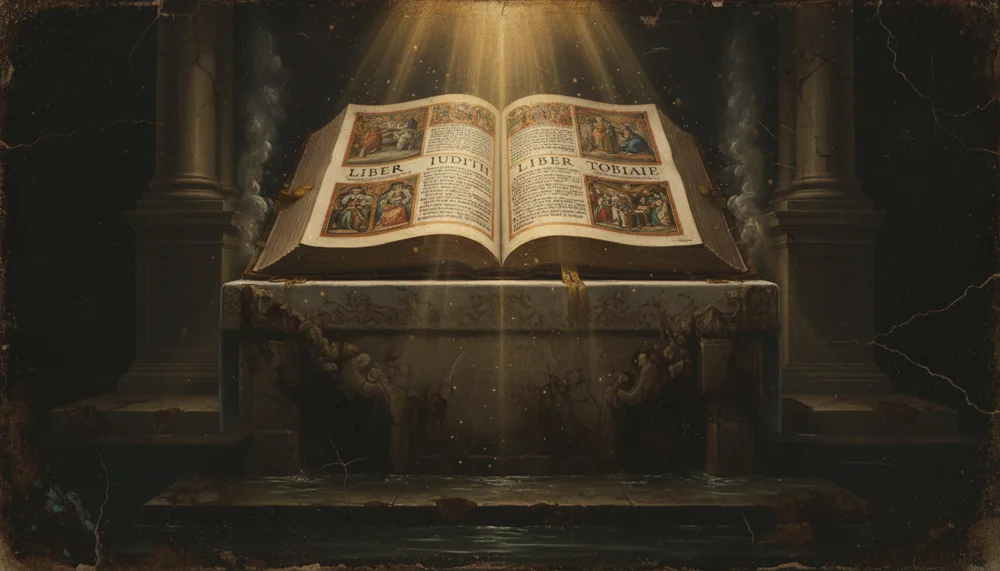
The Catholic Bible has more books than the Protestant Bible because it keeps seven Old Testament books the Reformers cut out in the sixteenth century: Tobias, Judith, Wisdom, Ecclesiasticus (also called Sirach), Baruch, and the First and Second Books of the Machabees — together with parts of Esther and Daniel. These are the deuterocanonical books. They were part of the Christian Bible from the beginning, in the Greek Old Testament the Apostles used; the Catholic Church has always held them as the inspired word of God; and the Reformers, rejecting them, renamed them "the apocrypha."
This is the plain answer to why does the Catholic Bible have more books. We set out below what these seven books are, where they came from, why the Church holds them canonical, and what really happened when seven books were removed from the Bible.
What are the deuterocanonical books
"Deuterocanonical" means of the second canon — not second in dignity, but second in the order the Church came to settle the list. The first-canon (protocanonical) books were never disputed; the deuterocanonical books were received more slowly in some quarters, then fixed by the Church as fully canonical. They are not a lesser Scripture. They are Scripture.
The seven whole books are:
- Tobias (Tobit)
- Judith
- Wisdom
- Ecclesiasticus (Sirach)
- Baruch
- The First Book of Machabees
- The Second Book of Machabees
To these are added the deuterocanonical portions of two protocanonical books: parts of Esther, and parts of Daniel — the prayer of Azarias and the canticle of the three young men, the history of Susanna, and the history of Bel and the dragon. We recount the story of Queen Esther in the Bible in its own place, with the very chapters — her prayer and Mardochai's among them — that Protestant editions omit. With these books the Catholic Old Testament holds forty-six books; without them, the Protestant Old Testament holds thirty-nine.
Part of the Bible from the beginning
The deuterocanonical books were not added later by the Catholic Church. They were already in the Bible the early Church inherited. When the Apostles preached the Gospel through the Greek-speaking world, the Old Testament in common use was the Septuagint, the Greek translation made by Jewish scholars before Christ — and the Septuagint contained these books. The writers of the New Testament quote the Old Testament most often in this Greek form.
So the books the Reformers later called "the apocrypha" were read as Scripture in the Christian Church from the first generation. They were copied in the great Bibles of antiquity, read at the altar, and cited by the Fathers as the word of God. To remove them was not to return to an older Bible; it was to cut down the Bible the Church had always used.
The councils that fixed the canon: Hippo, Carthage, Trent
The Church did not receive the canon of Scripture as a list dropped from heaven. She discerned it, under the guidance of the Holy Ghost, and then declared it through her councils. By the close of the fourth century the African councils had set out the full canon, the deuterocanonical books included: the Council of Hippo in 393 and the councils of Carthage that followed, whose list of the sacred books names Tobias, Judith, Wisdom, Ecclesiasticus, the two books of the Machabees, and the rest. This is the same canon Pope Damasus and the See of Rome upheld in the same age, the canon St Jerome translated into the Latin Vulgate that became the Bible of the West.
When the Reformers in the sixteenth century rejected these books, the Church answered at the Council of Trent (1546). Trent did not invent the canon; it solemnly reaffirmed what Hippo and Carthage had already declared more than eleven centuries before, defining the list of the sacred books — the deuterocanonical among them — and binding every Catholic to receive them as holy and canonical. The continuity is the whole point: Trent kept; it did not add. The Church holds the same Bible at Trent that she held at Carthage.
This is why the canon is not a matter of private opinion. A man does not assemble his own Bible by his own judgement; the Church, the pillar and ground of the truth (1 Timothy 3:15), hands him the Scriptures she herself discerned. On which Bible that is, and the traditional English version of it, see The Catholic Bible and What Bible Do Catholics Use?
"The apocrypha": why the Reformers removed seven books from the Bible
The charge of "seven books removed from the Bible" is sometimes turned against the Catholic Church, as though Rome had added seven books. The history is the reverse. For fifteen centuries the whole Church, East and West, read these books as Scripture. It was the Protestant Reformers of the sixteenth century who removed them, and who gave them the name "the apocrypha" — a word meaning hidden or doubtful, used to set them below the rest of Scripture.
Why did they remove them? Chiefly because certain of these books witness to doctrines the Reformers had already decided to reject. The clearest case is the Second Book of the Machabees, which records Judas Machabeus making "a gathering... and sent twelve thousand drachms of silver to Jerusalem for sacrifice to be offered for the sins of the dead," and adds: "It is therefore a holy and wholesome thought to pray for the dead, that they may be loosed from sins" (2 Machabees 12:43, 46). That single passage is a plain Scriptural witness to prayer for the dead and to the state of purgation the Church calls Purgatory. Having denied the doctrine, the Reformers were left with a book that contradicted them — and the book was put out.
We say this without rancour. We have written elsewhere, plainly and without contempt, on the real differences that separate us; see Catholic vs Protestant: The Key Differences. But on the question of the canon, the record is what it is. The fuller Bible is the older one.
Scripture, not invention: how the Church uses these books
These are not books the Church keeps on a shelf out of antiquarian habit. She prays and teaches from them. The Roman Catechism, drawn up by the command of the Council of Trent, calls Tobias among "our holy Books" and draws from it the example of the Angel Raphael instructing the young Tobias — citing the deuterocanonical text exactly as it cites Genesis or the Gospels. The Church reads Wisdom and Ecclesiasticus at her altars; she draws the doctrine of prayer for the souls in purgatory from the Machabees; she honours Judith and Tobias among the holy histories of the Old Covenant.
That the Church Christ founded has the authority to discern and to guard the Scriptures is not a Catholic novelty either; it follows from what the Church is. On that, see What Is the Catholic Church? and Thou Art Peter, on the rock on which Our Lord built her.
A fuller Bible, not an altered one
The Catholic Bible has more books than the Protestant Bible because the Catholic Bible is the Bible the Church has read from the beginning — the one fixed at Hippo and Carthage, translated by St Jerome, and reaffirmed at Trent. The seven deuterocanonical books are not the apocrypha and not an addition. They are the inheritance the Reformers set aside. We keep what the Church has always kept.
Frequently Asked Questions
What are the deuterocanonical books?
"Deuterocanonical" means of the second canon — not second in dignity, but second in the order the Church came to settle the list. They are the seven Old Testament books and the additional portions that the Catholic Bible keeps and the Protestant Bible lacks. They were received more slowly in some quarters and then fixed by the Church as fully canonical. They are not a lesser Scripture; they are Scripture.
Which seven books did the Reformers remove from the Bible?
The seven whole books are Tobias (Tobit), Judith, Wisdom, Ecclesiasticus (Sirach), Baruch, and the First and Second Books of the Machabees, together with deuterocanonical portions of Esther and of Daniel (the prayer of Azarias, Susanna, and Bel and the dragon). With them the Catholic Old Testament holds forty-six books; without them, the Protestant Old Testament holds thirty-nine.
Why does the Catholic Bible have more books than the Protestant Bible?
Because the Catholic Bible is the Bible the Church has read from the beginning. The Apostles used the Greek Septuagint, which contained these books; they were read at the altar and cited by the Fathers as the word of God. The Protestant Reformers of the sixteenth century removed them — so the fuller Bible is the older one, not an addition.
Why did the Reformers reject the deuterocanonical books?
Chiefly because certain of these books witness to doctrines the Reformers had already decided to reject. The clearest case is 2 Machabees, which says "it is therefore a holy and wholesome thought to pray for the dead, that they may be loosed from sins" (2 Machabees 12:46) — a plain Scriptural witness to prayer for the dead and to Purgatory. Having denied the doctrine, they were left with a book that contradicted them.
What is the difference between deuterocanonical and apocrypha?
Catholics call these books deuterocanonical and hold them as inspired Scripture, fixed by the councils of Hippo (393), Carthage, and reaffirmed at Trent (1546). The Reformers renamed them "the apocrypha" — a word meaning hidden or doubtful — to set them below the rest of Scripture. The name carries the very judgement Catholics reject; the Church receives them as holy and canonical.
The Iter Fidei app carries the Douay-Rheims Bible, the catechism, and the prayers of the Church. Download it here.
Sources. Holy Bible, Douay-Rheims Version (2 Machabees 12:43, 46; 1 Timothy 3:15; Tobias). The Catechism of the Council of Trent (Roman Catechism, 1566), on Holy Matrimony (citing Tobias among "our holy Books") and on the canon of Scripture. Council of Trent, Session IV (1546), decree on the Sacred Books. Councils of Hippo (393) and Carthage (397, 419), on the canon of Scripture.