
The Divine Office
iBreviary: What It Offers, and a 1962 Breviary App
iBreviary is a free app for the Breviary, the Missal and the Lectionary of the current Roman rite, with a Latin Vetus Ordo section. What it offers, how its hours differ from the 1962 Office, and a traditional alternative.
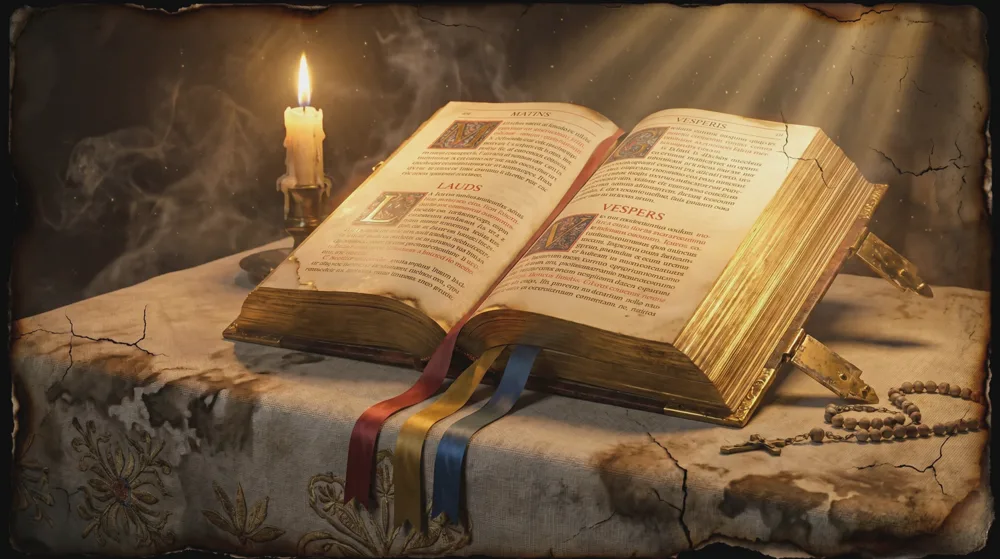
iBreviary is a free Catholic app that carries the Breviary, the Missal and the Lectionary of the current Roman rite — the day's Liturgy of the Hours and the Mass texts — on a phone, in several languages. It was created by Fr. Paolo Padrini, an Italian priest, and has been used by clergy and laity for well over a decade. Its main content follows the reformed liturgy; its Latin settings also contain a Vetus Ordo section with parts of the 1962 Office. Here is what the app offers, how its hours compare with the traditional Roman Breviary, and what to use if you pray the 1962 books.
What iBreviary is
iBreviary began as one priest's project to put "a breviary and a mass-book" on the first smartphones, and grew into one of the most widely used Catholic apps. Its makers associate it with the Pro Terra Sancta initiative of the Custody of the Holy Land. It contains:
- The Breviary — the hours of the Liturgy of the Hours: Office of Readings, Morning Prayer, Daytime Prayer, Evening Prayer and Night Prayer, resolved for the date;
- The Missal and Lectionary — the prayers and readings of the day's Mass, with a tool to gather all the texts of a Mass on one page;
- Prayers and rites — the common prayers of the Church and texts for the celebration of the sacraments;
- Several languages, Latin among them, with the texts downloadable in advance for use offline.
It is free, on iOS and Android. As a tool for the reformed liturgy it is serious and text-first: no meditation branding, simply the books.
Does iBreviary have the Latin Mass and the 1962 Office?
In part. Alongside the modern texts in Latin, iBreviary's Latin settings include a Vetus Ordo section — the term commonly used for the older form of the Roman rite — with hours of the 1962 Breviary, Prime among them, and some texts of the 1962 Missale Romanum. Its developers have described this section as still being expanded, and it is offered in Latin rather than in a bilingual layout.
So a Latinist who prays the old Office can find something there. A Catholic who wants the 1962 Office and Mass as his daily book, in Latin and his own language, on the traditional calendar, will find that this is not what the app is built around: its calendar, its vernacular texts and its daily structure follow the reformed books.
iBreviary morning prayer today (Lauds)
Most people open the app first for Morning Prayer. In iBreviary, today's Morning Prayer is Lauds of the modern Liturgy of the Hours: a hymn, a morning psalm, an Old Testament canticle and a psalm of praise, a short reading and responsory, the Benedictus, intercessions, the Our Father and the collect.
Lauds in the traditional Roman Breviary is the same hour of praise at daybreak in its older shape: five psalms and canticles under their antiphons, the chapter, the hymn, the versicle, the Benedictus with its proper antiphon, and the collect of the day. Since St. Pius X's reform of the psalter in 1911, the whole Psalter is spread across the week, so that the one who prays the Breviary passes through all hundred and fifty psalms every week.
iBreviary evening prayer today (Vespers)
Evening Prayer in iBreviary is Vespers of the reformed Office: a hymn, two psalms and a New Testament canticle, a short reading, the Magnificat, intercessions, the Our Father and the collect.
Traditional Vespers keeps five psalms under their antiphons, then the chapter, the hymn and the versicle, and the Magnificat sung with the antiphon proper to the feast or season, closing with the collect. Sung Vespers on Sundays and feasts was for centuries the great public evening prayer of the parish. Its summit is Our Lady's canticle:
Magnificat anima mea Dominum: et exsultavit spiritus meus in Deo salutari meo.
My soul doth magnify the Lord. And my spirit hath rejoiced in God my Saviour. (Luke 1:46–47)
iBreviary night prayer (Compline)
Night Prayer in iBreviary follows the reformed order: an examination of conscience, a hymn, a psalm or two, a short reading, the Nunc dimittis, the prayer, the blessing and an antiphon to Our Lady.
Traditional Compline opens with the blessing Noctem quietam et finem perfectum concedat nobis Dominus omnipotens and the short reading Fratres: Sobrii estote (1 Peter 5:8), followed by the Confiteor. Its psalms change with the day of the week — on Sunday Psalms 4, 90 and 133 — and the rest is fixed: the hymn Te lucis ante terminum, the responsory In manus tuas, the Nunc dimittis with the antiphon Salva nos, the collect Visita, quaesumus, and the seasonal antiphon of Our Lady — Alma Redemptoris Mater, Ave Regina caelorum, Regina caeli or Salve Regina. Because so much of it is fixed, it is the easiest hour of the old Office to learn by heart.
Nunc dimittis servum tuum, Domine, secundum verbum tuum in pace.
Now thou dost dismiss thy servant, O Lord, according to thy word in peace. (Luke 2:29)
iBreviary today and the Liturgy of the Hours
Searches for "iBreviary today" mean one thing: the proper prayer for this date. The app resolves the date and shows the right hour and Mass on the reformed calendar. That is where the two forms of the liturgy part most visibly. The 1962 calendar keeps Septuagesima, the Ember days, the vigils and the octaves of Christmas, Easter and Pentecost, and ranks its feasts differently, so on many days the traditional Office and Mass are not those of the modern books. Our traditional Latin Mass calendar sets out how it works.
The name matters too. "Liturgy of the Hours" is the name of the Office as reformed after the Council and published in 1971; the traditional book is the Roman Breviary, and its prayer is called the Divine Office. The old Breviary keeps the night Office of Matins and seven day hours — Lauds, Prime, Terce, Sext, None, Vespers and Compline — after the psalmist's "Seven times a day I have given praise to thee" (Psalm 118:164). The reform suppressed Prime and reordered the rest. Our article on the Liturgy of the Hours explains the difference in detail, and What is the Divine Office? presents the traditional hours one by one.
A 1962 breviary app: Iter Fidei
Iter Fidei takes up the same convenience — the day's Office and Mass in the pocket — for the traditional books:
- The 1962 Roman Breviary — Matins, Lauds, Prime, the little hours, Vespers and Compline, resolved on the traditional calendar. See our Divine Office app page.
- The Mass of the day according to the 1962 Missal, with its proper texts — the propers of the Tridentine Mass that change from day to day.
- Latin and English side by side, laid out to be prayed rather than decoded.
- Audio to pray along.
- The handed-down prayers — the Rosary, the litanies, chaplets and novenas.
It is coming soon to iOS and Android, with free early access open now.
| iBreviary | Iter Fidei | |
|---|---|---|
| Main rite | Reformed (Liturgy of the Hours, modern Missal) | Traditional 1962 (Roman Breviary, Missal) |
| 1962 content | Latin Vetus Ordo section, partial | The whole app |
| Calendar | Reformed | Traditional 1962 |
| Languages | Several, Latin included | Latin and English side by side |
| Price | Free | Free early access |
Which should you use?
If you pray the reformed Liturgy of the Hours or follow the current Missal, iBreviary is a free and well-made tool, and many priests rely on it. If your daily prayer is the 1962 Office and the Tridentine Mass, and you want them in Latin and English on the traditional calendar, choose an app built on those books from the start; our comparison of the best Divine Office apps shows which breviary apps carry which Office. For the wider field — Universalis, Laudate, Hallow and others — see our comparison of the best Catholic apps.
Frequently Asked Questions
What is iBreviary?
iBreviary is a free Catholic app, created by Fr. Paolo Padrini, that carries the Breviary, the Missal and the Lectionary of the current Roman rite in several languages. It shows the Liturgy of the Hours and the Mass texts for any date and can be used offline once the texts are downloaded.
Is iBreviary free?
Yes. iBreviary is free to download on iOS and Android.
Does iBreviary have the traditional Latin Mass?
Partly. Its Latin settings include a Vetus Ordo section with hours of the 1962 Breviary and some texts of the 1962 Missal, described by its developers as still being expanded. Its main content, calendar and vernacular texts follow the reformed liturgy.
How do I find iBreviary's morning prayer for today?
Open the Breviary section and choose Morning Prayer (Lauds); the app shows the text for the current date on the reformed calendar. The traditional Lauds for the day follows the 1962 Breviary and calendar, and may belong to a different feast.
What is night prayer in iBreviary?
Night Prayer is Compline, the last hour before sleep. In iBreviary it follows the reformed order, with an examination of conscience, a psalm, the Nunc dimittis and an antiphon to Our Lady. Traditional Compline is largely fixed, with psalms that change with the day of the week.
Is iBreviary the same as the Liturgy of the Hours?
iBreviary is an app; the Liturgy of the Hours is the reformed Office it carries. The traditional Office is the Roman Breviary, whose last typical edition is that of 1962.
What is a good iBreviary alternative for the 1962 Office?
On the web, the Divinum Officium site sets out the traditional Office for any date; we explain it in what is Divinum Officium? As a phone app, Iter Fidei carries the 1962 Office and Mass in Latin and English, with audio.
Iter Fidei carries the 1962 Divine Office, the traditional Mass of the day and the prayers of the Church, in Latin and English with audio. It is coming soon to iOS and Android. Join early access here.
Sources. Holy Scripture, Douay-Rheims: Psalm 118:164; Luke 1:46–47; Luke 2:29; 1 Peter 5:8. Breviarium Romanum, editio typica 1962; Missale Romanum, editio typica 1962; St. Pius X, apostolic constitution Divino afflatu (1911).