
Prayer
Irish Blessings: The Traditional Prayers of Catholic Ireland
The traditional Irish blessings and what they mean: may the road rise up to meet you, St Patrick's Breastplate in full, and old Irish blessings for weddings, funerals, new homes and birthdays.
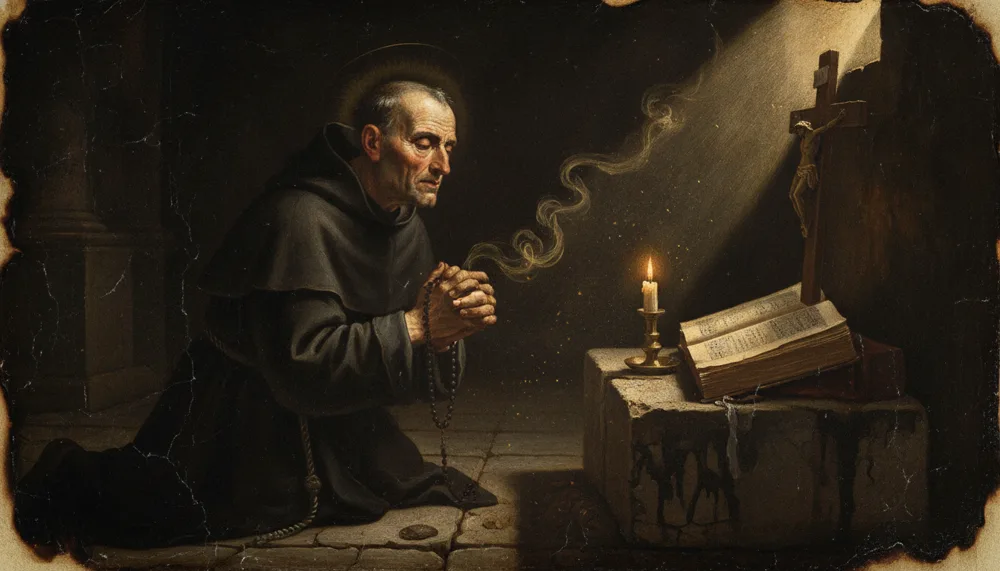
An Irish blessing is a short traditional prayer of Catholic Ireland asking God's providence over a person — his road, his home, his marriage, his death. The most famous begins "May the road rise up to meet you" and ends "may God hold you in the palm of His hand." These blessings are not folklore ornaments but prayers, born of the faith St Patrick planted in the fifth century. Below we give the classic texts — the road blessing, St Patrick's Breastplate in full, and the old blessings for weddings, funerals, new homes and birthdays — with the theology that carries them.
What is a traditional Irish blessing?
Ireland received the faith from St Patrick and kept it through centuries of poverty and persecution, and in that keeping the faith soaked into ordinary speech. A blessing (beannacht in Irish) was not reserved to the priest at the altar; the people blessed one another — at the door, on the road, over the cradle, at the graveside — because every good gift comes down from the Father of lights (James 1:17, Douay-Rheims). An old Irish blessing is therefore a petition, not a wish: it names a concrete good and asks God to give it. The form is homely; the theology underneath is the doctrine of Divine Providence.
"May the road rise up to meet you": the classic Irish blessing
The best known of all Irish blessings is a traveller's and a farewell blessing, handed down anonymously in the oral tradition:
May the road rise up to meet you,
may the wind be always at your back,
may the sun shine warm upon your face,
the rains fall soft upon your fields,
and until we meet again,
may God hold you in the palm of His hand.
Each line asks Providence to turn the created world to the traveller's good: the road easy, the wind a help and not a hindrance, the sun and the rain in their right measure. The last line is the whole point — the journey ends, as it began, in the hand of God. The English "rise" renders the Irish Go n-éirí an bóthar leat, literally "may the road succeed with you": the blessing asks that the journey prosper, not that the ground swell. Choral settings have made "the Irish blessing" a familiar hymn at weddings and funerals, but its native place is the doorstep, said over someone setting out. The Church's own formal prayers for a journey are given in A Prayer for Safe Travel.
St Patrick's Breastplate: the oldest Irish blessing prayer
Behind the homely blessings stands something older and sterner: the Lorica or Breastplate of St Patrick, an ancient Irish hymn of protection traditionally ascribed to the Apostle of Ireland himself. A lorica is a breastplate — a prayer that arms the soul as armour arms the body, binding the power of the Blessed Trinity onto a man against every enemy. Here is the traditional text, in the translation of Kuno Meyer (1911):
I arise today through a mighty strength, the invocation of the Trinity, through belief in the Threeness, through confession of the Oneness of the Creator of creation.
I arise today through the strength of Christ's birth with His baptism, through the strength of His crucifixion with His burial, through the strength of His resurrection with His ascension, through the strength of His descent for the judgment of Doom.
I arise today through the strength of the love of Cherubim, in obedience of angels, in the service of archangels, in hope of resurrection to meet with reward, in prayers of patriarchs, in predictions of prophets, in preaching of apostles, in faith of confessors, in innocence of holy virgins, in deeds of righteous men.
I arise today through the strength of heaven: light of sun, radiance of moon, splendour of fire, speed of lightning, swiftness of wind, depth of sea, stability of earth, firmness of rock.
I arise today through God's strength to pilot me: God's might to uphold me, God's wisdom to guide me, God's eye to look before me, God's ear to hear me, God's word to speak for me, God's hand to guard me, God's way to lie before me, God's shield to protect me, God's host to save me from snares of devils, from temptations of vices, from every one who shall wish me ill, afar and anear, alone and in a multitude.
Christ to shield me today against poison, against burning, against drowning, against wounding, so that there may come to me abundance of reward. Christ with me, Christ before me, Christ behind me, Christ in me, Christ beneath me, Christ above me, Christ on my right, Christ on my left, Christ when I lie down, Christ when I sit down, Christ when I arise, Christ in the heart of every man who thinks of me, Christ in the mouth of everyone who speaks of me, Christ in every eye that sees me, Christ in every ear that hears me.
I arise today through a mighty strength, the invocation of the Trinity, through belief in the Threeness, through confession of the Oneness of the Creator of creation. Salvation is of the Lord. Salvation is of the Lord. Salvation is of Christ. May Thy salvation, O Lord, be ever with us.
Every later Irish blessing is a child of this prayer: the gentleness of "may the sun shine warm upon your face" and the armour of "Christ before me, Christ behind me" are the same faith in two registers.
An Irish wedding blessing
For a marriage, the tradition hands down this blessing, fit to be spoken over the couple at the wedding feast:
May God be with you and bless you;
may you see your children's children.
May you be poor in misfortune, rich in blessings.
May you know nothing but happiness from this day forward.
The heart of it is the second line, which is Scripture: "and mayst thou see thy children's children" (Psalm 127, Douay-Rheims) — the psalm the Church has always associated with the blessing of a fruitful home. An Irish wedding blessing asks the goods the Church herself asks in the Nuptial Blessing at Mass: fidelity, fruitfulness, and a common old age. On what marriage is, see Catholic Marriage.
An Irish blessing for a funeral or for the deceased
At a death, Irish speech reaches first for one phrase: Ar dheis Dé go raibh a anam — "may his soul be at the right hand of God." That is the authentic Irish blessing for the deceased, and it is doctrine compressed to a breath: the dead stand before God, and our words for them are petitions on their behalf. The road blessing is also widely read at funerals, where "until we meet again" takes its full weight. But the Catholic dead need more than farewell; they need prayer. The old Irish wake was built around the Rosary said for the soul, and the Church's own blessing for the departed remains the surest: "Eternal rest grant unto them, O Lord, and let perpetual light shine upon them." We give that prayer and its meaning in Eternal Rest.
An Irish blessing for a new home
For a house blessing, the tradition offers this:
God bless the corners of this house,
and be the lintel blest;
and bless the hearth and bless the board
and bless each place of rest.
And with it the lighter, well-loved lines: "May your troubles be less and your blessings be more, and nothing but happiness come through your door." An Irish home blessing belongs with the Church's practice of actually blessing houses — the priest's blessing of a dwelling in the Roman Ritual, holy water at the door, the crucifix on the wall. The petition is the one the Church prays every night at Compline: "Visit, we beseech Thee, O Lord, this dwelling, and drive far from it all the snares of the enemy."
An Irish birthday blessing
For a birthday the tradition is brief and unsentimental: "May you live to be a hundred years, with one extra year to repent." The humour is real, and so is the theology — a long life is a gift, and its purpose is to reach God ready. A fuller Irish birthday blessing simply gathers the classic petitions over the year ahead: the road rising, the wind at the back, God's hand holding. The Church's own prayers for birthdays, with texts to say over children and friends, are gathered in Birthday Prayers and Blessings.
God bless you in Irish Gaelic
The Irish language itself carries the blessing habit. The ordinary greeting is Dia dhuit — "God to you" — answered Dia is Muire dhuit, "God and Mary to you": in Irish one cannot say hello without confessing the faith. "May God bless you" is Go mbeannaí Dia thú; "the blessing of God on you" is Beannacht Dé ort. These phrases are the record of a people whose whole day — meeting, parting, working, dying — was spoken under the Name of God.
Irish blessings for Christmas, the New Year and St Patrick's Day
The same blessings serve the turning points of the year. At Christmas the old Irish custom sets a lighted candle in the window on Christmas Eve — a sign that this house, unlike Bethlehem's inn, has room for Mary and Joseph. At the New Year the road blessing is the natural prayer, since a year is a journey. On the seventeenth of March the fitting blessing is the saint's own — a line of the Breastplate bound on for the day, as we describe in the article on St Patrick linked above.
The theology of the Irish blessing: Providence and protection
Two doctrines hold every Irish blessing together. The first is Providence: nothing on the road, in the field, or in the house falls outside the government of God, and so everything may be prayed over. The second is protection: the palm of God's hand is a real refuge, not a figure of speech.
"Behold, I have graven thee in my hands," God says through the prophet (Isaias 49:16, Douay-Rheims); and the psalm the Church prays every night promises that "he hath given his angels charge over thee; to keep thee in all thy ways" (Psalm 90). An Irish blessing is that psalm in a country accent. The Church's own arsenal of prayers of protection, from which these blessings draw, is set out in A Prayer for Protection. Say the blessings over the people you love, and mean them as petitions; God has never treated them as less.
Frequently Asked Questions
What is an Irish blessing?
An Irish blessing is a short traditional prayer from Catholic Ireland asking God's favour and protection over a person or household — on a journey, at a wedding, at a death, in a new home. Though the forms are homely and often anonymous, they are true prayers of petition, rooted in the faith St Patrick brought to Ireland in the fifth century.
What is the "may the road rise up to meet you" Irish blessing?
It is the most famous traditional Irish blessing, a farewell prayer for someone setting out, ending "and until we meet again, may God hold you in the palm of His hand." The English "rise" renders the Irish Go n-éirí an bóthar leat, "may the road succeed with you" — a petition that the journey prosper under God. The full text is given above.
What does "may the wind be always at your back" mean?
It asks that God turn circumstances to your help rather than your hindrance — a following wind speeds the traveller, a headwind exhausts him. Like every line of the blessing, it is a concrete image of Providence: the same God who commands the wind (Matthew 8:27) can command it in your favour.
What is the "may your troubles be less" Irish blessing?
The full traditional lines are: "May your troubles be less and your blessings be more, and nothing but happiness come through your door." It is most often used as a house blessing or a new-home blessing, and it pairs naturally with the older "God bless the corners of this house" verse.
What are the 7 Irish blessings?
There is no fixed or canonical list of seven Irish blessings; the tradition is a living body of prayers, not a numbered set. Modern collections under that title simply group seven of the best-loved texts — the road blessing, the wedding, house, birthday and funeral blessings among them. Any may be prayed freely; none carries a special power by being counted among seven.
The Iter Fidei app carries the traditional Catholic prayers and blessings, in Latin and English with audio, so the words of the old faith of Ireland are always at hand. Get the app link by email here.
Sources. The Lorica (Breastplate) of St Patrick, translation of Kuno Meyer (1911); traditional Irish blessings from the oral tradition; Douay-Rheims Bible (Psalm 90; Psalm 127; Isaias 49:16; Matthew 8:27; James 1:17); Butler, Lives of the Saints (St Patrick); the Roman Ritual (blessing of a dwelling) and the office of Compline.