
Apologetics
Why Do Catholics Pray to Saints?
Catholics pray to the saints to ask their intercession — as we ask a friend on earth to pray for us — not to worship them, for worship belongs to God alone.
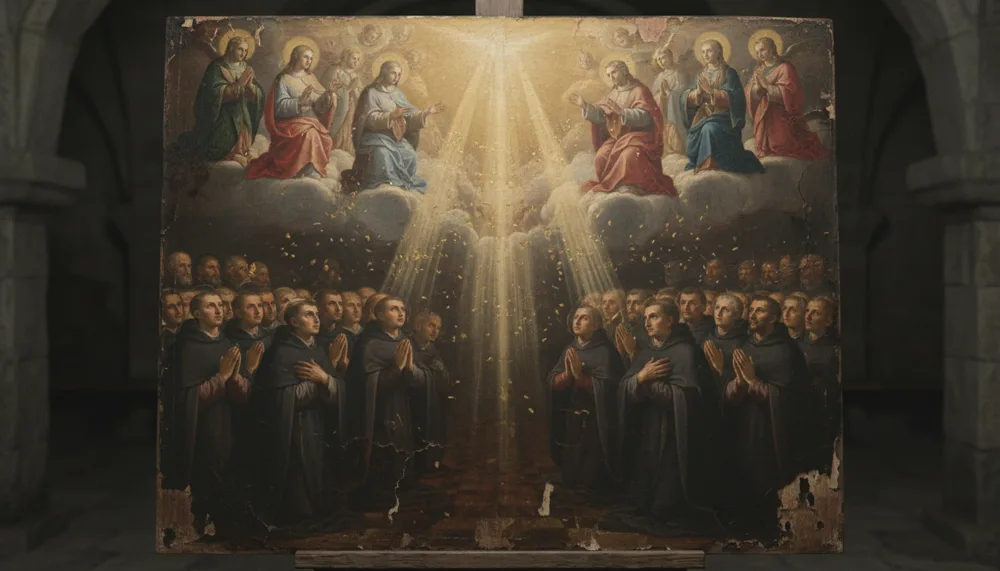
Catholics pray to the saints to ask them to pray to God for us — exactly as we ask a friend on earth to pray for us — and not to worship them, because worship belongs to God alone. The Catechism of Saint Pius X is precise on the difference: "we pray to God in order that, as the author of graces, He may give us good things and deliver us from evils, and we pray to the Saints in order that they may intercede for us as our advocates with God." Yes, Catholics pray to the saints; no, Catholics do not worship the saints. This is the distinction the whole question turns on, and we will set it out plainly, charitably, and from the sources.
Do Catholics pray to saints, or worship them?
To pray once meant simply to ask: when an Englishman of an earlier age said "I pray you, sir," he begged a favour of a fellow man, not adored him. In just that sense we pray to the saints — we ask them. We offer them no sacrifice; we credit them with being the source of no grace. The Catechism of Saint Pius X is without ambiguity: when we say that a saint has granted a grace, "we mean that this Saint has obtained it from God." The saint does not give; the saint asks, and God gives.
This is why the charge that Catholics worship the saints, though sincerely made, mistakes the thing for its opposite. The same catechism defines idolatry as "the rendering to some creature, for example to a statue, to an image, to a man, the supreme worship of adoration which is due to God alone" — and condemns it as gravely as any Protestant does. It then asks whether the First Commandment forbids us to honour and invoke the angels and saints, and answers: "No, it is not forbidden to honour and invoke the Angels and the Saints; we ought even to do so, because it is a thing good, useful, and highly recommended by the Church, for they are the friends of God and our intercessors with Him."
To ask the friends of God to pray for us is not to break the First Commandment but to keep it, for the honour terminates in God, whose friends they are. Whether this places Catholics inside the Christian fold we take up in are Catholics Christian and catholic vs Christian; this invocation of the saints is one of the many practices we explain in why do Catholics do as they do; and the Church which canonised the saints is the Church the Apostles founded — what is the Catholic Church.
Latria, dulia, hyperdulia: the worship that is God's alone
The tradition guards the difference with three precise words, and they answer the objection completely. The Catechism of Saint Pius X lays them side by side:
Between the worship which we render to God and the worship which we render to the Saints there is this difference, that God we adore for His infinite excellence; the Saints, on the contrary, we do not adore, but we honour and venerate them as the friends of God and our intercessors with Him. The worship which we render to God is called the worship of latria, that is to say, adoration; and the worship which we render to the Saints is called the worship of dulia, that is to say, of veneration for the servants of God; lastly, the particular worship which we render to the Most Blessed Virgin is called the worship of hyperdulia, that is to say, of altogether special veneration, as for the Mother of God.
Latria — adoration — is given to God alone; to give it to any creature is idolatry. Dulia — veneration — is the honour shown to a servant of God, as one honours a benefactor, differing from adoration not in degree but in kind. Hyperdulia is the higher veneration owed to the Blessed Virgin alone, because she is the Mother of God, conceived without sin in the Immaculate Conception — still veneration, still infinitely below the adoration due her Son. When the English ear hears all this as one undifferentiated "worship," the distinction is lost; but the distinction is the whole of the Catholic answer.
What Scripture says: the communion of saints
The practice is not an invention of later ages but the plain teaching of Scripture, which commands the living to pray for one another and shows the saints in heaven offering our prayers before God. Saint James lays the duty on every Christian: "pray one for another, that you may be saved. For the continual prayer of a just man availeth much" (James v. 16, Douay-Rheims). If the prayer of a just man on earth avails much, the prayer of the just made perfect in heaven avails more — for they are nearer to God, not farther, and death does not sever charity.
And Saint John, caught up into heaven, sees what the saints there are doing. Before the throne of the Lamb, "the four and twenty ancients fell down before the Lamb, having every one of them harps, and golden vials full of odours, which are the prayers of saints" (Apocalypse v. 8, Douay-Rheims). The elders in glory hold the prayers of the faithful and offer them to God.
This is the communion of saints in action — the one body of Christ, in heaven and on earth, the living asking and the blessed interceding. We unfold it in the communion of saints: no Christian prays alone, for the whole Church prays with him. To ask a saint's prayer is no stranger than to ask the prayer of a brother in the next pew — only that the saint is closer to the throne.
Why do Catholics pray to saints instead of God?
We do not pray to the saints instead of God; we pray to them together with God, and never in His place. This is the misunderstanding folded into the very question, so it deserves a plain answer. The whole of Catholic worship is ordered to God: every Mass is offered to Him, every adoration is His, every grace is begged of Him as the one author of grace. When we turn to a saint, we do not turn away from God — we ask the saint to turn toward God on our behalf, to add his prayer to ours.
The Catechism of Saint Pius X states the order exactly: "we pray to God in order that, as the author of graces, He may give us good things and deliver us from evils, and we pray to the Saints in order that they may intercede for us as our advocates with God." Two different prayers, two different ends: to God we say give; to the saint we say pray for me to Him who gives.
A man who asks his friends to pray for him has not stopped praying himself, nor replaced God with his friends; he has gathered allies before the throne. So with the saints — to invoke them is not a substitute for prayer to God but an enlargement of it, the whole Church praying at once. And because death does not break the body of Christ, the friends we gather include those already in glory, who "love, and pray, and avail" the more for being nearer to Him.
How many Catholic saints are there?
The Church has canonised more than ten thousand saints by name, and beyond these stands a countless multitude she has never named. A canonised saint is one the Church, after long inquiry, has solemnly declared to reign with God in heaven, so that he may be publicly venerated and invoked; their lives and patronages we gather under Catholic saints. Canonisation does not make a man holy — it only recognises a holiness God has already crowned. For every saint raised to the altars there are uncounted others, hidden and unrecorded, whom the Church honours together on All Saints' Day — that "great multitude, which no man could number." The saints we invoke by name are the small visible portion of an immense communion.
Why do Catholics pray to Mary and the saints?
Catholics pray to Mary and the saints for one and the same reason — to ask their intercession — but the Blessed Virgin holds a place no other creature holds, and so her honour is the highest of all. She is venerated above every other saint because she is the Mother of God, conceived without sin in the Immaculate Conception, and the surest of all intercessors; yet even her veneration, hyperdulia, remains infinitely below the adoration, latria, due to her Son. To pray to Mary is not to set her beside God but to ask the creature nearest to His throne to pray for us, as she once moved Him at Cana to His first miracle.
The form of every such prayer makes the order clear. We ask the saints, "pray for us"; we ask Our Lady, "pray for us sinners, now and at the hour of our death." In both the petition is the same — pray for us — and in both the grace asked for comes from God alone. The most ancient prayer to her, the Sub Tuum Praesidium, older than the third century, says it all:
We fly to thy patronage, O holy Mother of God; despise not our petitions in our necessities, but deliver us always from all dangers, O glorious and blessed Virgin. Amen.
Even there, where the Church flies to Mary's patronage, it is deliverance she begs the Mother to obtain — from God, whose mercy the Mother does not rival but implores. To pray to Mary and the saints together is simply to ask the whole Church in heaven to pray with us to the one God, joining our voices, as the Church joins them, to the Our Father and the Hail Mary.
How a Catholic rightly prays to a saint
A prayer to a saint is a request for intercession, joined to faith in God, and never a charm. Saint Pius X counsels us to pray "particularly to our Guardian Angels, to Saint Joseph, Patron of the Church, to the holy Apostles, to the Saints whose name we bear." The faithful turn to St Joseph — patron of the Church and of a holy death — in the novena to St Joseph; to St Anthony of Padua for things lost; and to St Jude, Apostle, in causes despaired of, with the old prayer:
St Jude, Apostle and martyr, great in virtue and rich in miracles, near kinsman of Jesus Christ, faithful intercessor of all who invoke thee in cases despaired of, pray for us. Amen.
Mark the closing words — pray for us. That is the whole of every invocation: not give us, but pray for us. We gather these forms among the catholic prayers, and they are best joined, as the Church joins them, to the Our Father and the Hail Mary.
The same rule governs a medal. A medal is a sacramental — a blessed sign that stirs devotion and turns the heart to God — and it works through the Church's prayer and the wearer's faith, never as magic. To suppose the metal itself bends events, apart from God and faith, is superstition, which the Church condemns. The St Benedict medal carries the Cross and the renunciation of Satan; the Miraculous Medal carries the confession of the Immaculate Conception and the petition:
O Mary, conceived without sin, pray for us who have recourse to thee.
Again the form is a request for prayer, and again the grace comes from God, obtained by her intercession. The man who wears the medal and neglects confession and refuses the last rites has the metal and not the grace. We treat the whole class of such signs under sacramentals.
The objection answered
So the charge dissolves once the words are sorted. Catholics do not worship the saints — that worship, latria, is God's alone, and to give it to a creature would be the very idolatry the Church condemns. Catholics ask the saints, as Scripture commands us to ask one another, because the saints in glory live, love, and pray, and their prayer avails much. To refuse them is not reverence for God but a denial of the communion of saints He established — the one body of Christ, in which the blessed in heaven hold our prayers in golden vials before His throne, and bear them up to the only One who answers.
Frequently Asked Questions
Why do Catholics pray to saints?
Catholics pray to the saints to ask their intercession — to beg them to pray to God for us, exactly as we ask a friend on earth to pray for us. We do not worship them or credit them with being the source of any grace; the Catechism of Saint Pius X says that when a saint grants a grace, "we mean that this Saint has obtained it from God." The saint asks; God gives.
Do Catholics pray to saints?
Yes — but in the older sense of pray, which means simply to ask. We ask the saints to intercede for us before God, as Saint James bids us "pray one for another, that you may be saved" (James v. 16, Douay-Rheims). We do not ask them to grant graces of themselves, for the grace comes from God alone.
Who do Catholics pray to?
Catholics pray to God — Father, Son, and Holy Ghost — as the one author of every grace, for adoration belongs to Him alone. We also pray to the saints and angels, not as adoring them but as asking their intercession; Saint Pius X counsels us to invoke especially "our Guardian Angels, Saint Joseph, the holy Apostles, and the Saints whose name we bear." All such prayer ends in God.
Do Catholics worship saints?
No. Worship in the full sense — latria, adoration — is given to God alone, and to render it to any creature would be the very idolatry the Church condemns. We honour the saints with dulia, the veneration owed to the friends of God, and we ask their prayers; we offer them no sacrifice and credit them with no grace of their own.
Why do Catholics pray to Mary and the saints?
We ask Mary and the saints to intercede because they live in glory, nearer to God, and "the continual prayer of a just man availeth much" (James v. 16). Saint John saw the elders in heaven holding "golden vials full of odours, which are the prayers of saints" (Apocalypse v. 8). The Blessed Virgin receives a higher veneration, hyperdulia, as the Mother of God — still veneration, still infinitely below the adoration due her Son.
Why do Catholics pray to saints instead of God?
We do not pray to saints instead of God — we pray to them together with God, never in His place. Every Mass, every adoration, every grace is begged of God as the one author of grace. To a saint we say only "pray for me to Him who gives"; to God we say "give." Asking a saint to pray for us no more replaces prayer to God than asking a friend's prayers replaces our own. The Catechism of Saint Pius X keeps the order exact: we pray to God "as the author of graces," and to the saints "that they may intercede for us as our advocates with God."
Why do Catholics believe in saints?
The saints are the friends of God whom He has crowned and the Church has recognised, given to us as intercessors and as patterns of holiness. Canonisation does not make a man holy — it only recognises a holiness God has already crowned. To honour them is to honour the grace of God that triumphed in them, and to invoke them is to keep the communion of saints.
Why do Catholics pray for the dead?
Because the souls in purgatory are still members of the body of Christ and our charity does not end at the grave; we pray that they may be loosed from their debt and brought swiftly to God. This too is the communion of saints — the living aiding the holy souls, who in turn pray for us. To deny the dead our prayers is to deny that the one body of Christ holds together across death.
How do Catholics pray?
A Catholic prays to God in adoration, thanksgiving, and petition, joining his prayers to those of the whole Church on earth and in heaven. To the saints he makes a request for intercession — never a charm — best joined to the Our Father and the Hail Mary. Mark how every invocation closes: not give us, but pray for us.
The Iter Fidei app carries the Douay-Rheims Bible, the catechism, and the traditional prayers and devotions. Get the app link by email here.
Sources. Catechism of Saint Pius X (1908), Part II, Chapter 4, The Invocation of the Saints (it is very useful to pray to the saints; the difference between prayer to God and prayer to the saints — God as author of graces, the saints as our advocates; when a saint grants a grace he has obtained it from God); and Part III, on the First Commandment (the definition of idolatry as the supreme worship of adoration due to God alone; the lawfulness of honouring and invoking the angels and saints; the threefold distinction of latria, dulia, and hyperdulia). Sacred Scripture, Douay-Rheims: James v. 16 (pray one for another; the continual prayer of a just man availeth much); Apocalypse v. 8 (the four and twenty ancients with golden vials full of odours, which are the prayers of saints); Apocalypse vii. 9 (the great multitude which no man could number). The traditional prayer to Saint Jude the Apostle, the Sub Tuum Praesidium (We Fly to Thy Patronage — the oldest known prayer to the Blessed Virgin, attested in the Greek papyrus Rylands 470, c. third century), and the prayer of the Miraculous Medal (Medal of the Immaculate Conception, 1832).