
Prayer
The Our Father (The Lord's Prayer): Text and Meaning
The Our Father, or the Lord's Prayer — the one prayer Christ Himself taught. The traditional text in English and Latin, the seven petitions explained one by one, and why we end at 'deliver us from evil.'
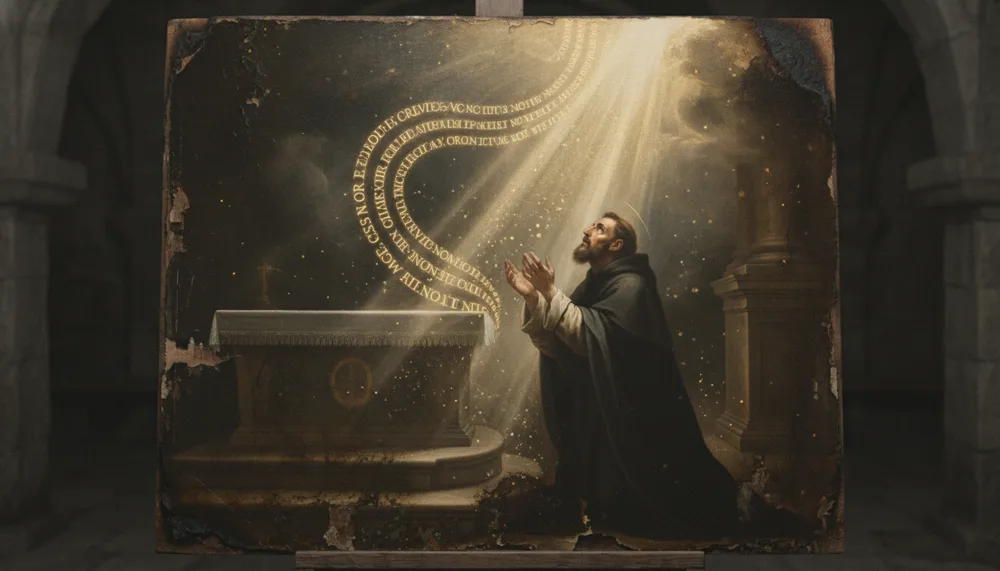
The Our Father is the prayer Jesus Christ Himself taught us, given from His own mouth when the Apostles asked Him to teach them to pray (Saint Matthew vi. 9-13; Saint Luke xi. 1-4). It is called the Lord's Prayer — the Pater Noster — for that reason, and the catechism calls it the most excellent of all vocal prayers: because Christ composed it, because it contains in few words all that we may hope for from God, and because it is the rule and model of every other prayer. It is the our father prayer the whole Church says every day. Here we give the traditional text and explain its seven petitions one by one, as the Church has always taught them.
The Our Father prayer (traditional text)
This is the Lord's Prayer in its traditional English wording:
Our Father, who art in heaven, hallowed be Thy name;
Thy kingdom come;
Thy will be done on earth as it is in heaven.
Give us this day our daily bread,
and forgive us our trespasses, as we forgive those who trespass against us,
and lead us not into temptation,
but deliver us from evil. Amen.
And in the Latin the Roman Church has prayed for centuries, the Pater Noster:
Pater noster, qui es in cælis, sanctificetur nomen tuum;
adveniat regnum tuum;
fiat voluntas tua, sicut in cælo et in terra.
Panem nostrum quotidianum da nobis hodie,
et dimitte nobis debita nostra, sicut et nos dimittimus debitoribus nostris,
et ne nos inducas in tentationem,
sed libera nos a malo. Amen.
The prayer opens with an address to God, then sets before Him seven petitions (Saint Matthew vi. 9-13, Douay-Rheims), which the catechism numbers as seven, preceded by a preamble. Where our English says daily bread, the Douay-Rheims renders Matthew's word supersubstantial bread — the bread above all bread, which is the grace of God and the Bread of the altar.
"Our Father who art in heaven" — the meaning of the opening
Before any petition, we call God our Father. Our Lord could have opened with a title of majesty, but, as the Catechism of Trent observes, such expressions "might have inspired in us sentiments of fear. He chose a term that necessarily inspires confidence and love." The Catechism of St Pius X teaches that we do so to awaken our confidence in His infinite goodness, since we are His children: He created us to His image, governs us by His providence, and in Baptism has adopted us as the brethren of Jesus Christ and co-heirs of eternal glory.
This is the heart of our father who art in heaven meaning — that the Almighty bids us approach Him not as strangers but as sons. We say our Father, not my Father, because we are all His children and must love one another as brethren. And though God is everywhere, we add who art in heaven to raise our hearts to heaven, where God manifests Himself in glory. For the wider life of prayer, see our overview of Catholic Prayers.
The seven petitions of the Lord's Prayer
The Lord's Prayer asks for seven things in a fixed order, and the order itself is a lesson: the glory of God first, our own needs after. True charity, Trent teaches, "ordaineth us to love God more than ourselves, and to ask first what we desire for Him"; and the goods of human life are subordinate to the goods of heaven. Trent adds that the words on earth as it is in heaven may be applied to each of the first three petitions.
First petition — Hallowed be Thy name. We ask that God may be known, loved, honoured, and served by all the world and by us in particular: that unbelievers may come to the knowledge of the true God, the divided return to the unity of the Church, sinners amend, and the just persevere. We ask this before all else, because the glory of God ought to be dearer to us than all our own goods.
Second petition — Thy kingdom come. By the kingdom of God the catechism understands a threefold spiritual kingdom: the kingdom of grace within us, by which God reigns in the soul through faith, hope, and charity; the kingdom on earth, which is the holy Catholic Church; and the kingdom of glory in heaven. We ask that God may reign in us by His grace, that His Church may spread for the salvation of men, and that we may one day be admitted into the paradise for which we were created.
Third petition — Thy will be done on earth as it is in heaven. We ask the grace to do the will of God in all things, obeying His commandments as promptly as the angels and saints obey Him in heaven, and living resigned to His will when He sends us tribulations. To do the will of God, the catechism says, is as necessary as to attain eternal salvation; in every event of our life, happy or unhappy, we ought to recognise the will of God, who disposes or permits all things for our good.
Fourth petition — Give us this day our daily bread. Here we turn to our own needs, asking God for what is necessary each day for soul and for body: for the soul, His grace and the food of His word and of the Most Holy Sacrament of the altar; for the body, what is needful to sustain temporal life. The catechism weighs every word. We say our bread, not the bread, to exclude all desire for the goods of others; give us, not give me, since what God gives in abundance He gives so that we may share with the poor; daily and this day, because we ought to desire what is necessary for the present, not the abundance of the goods of earth.
Fifth petition — Forgive us our trespasses, as we forgive those who trespass against us. We ask God to forgive us our sins, called debts because, on account of them, we owe satisfaction to the divine justice in this life or the next. And we bind our own forgiveness to it: those who do not forgive their neighbour have no reason to hope that God will forgive them, for in this very petition they condemn themselves, asking to be forgiven only as they themselves forgive.
Sixth petition — Lead us not into temptation. We ask God to deliver us from temptations, either by not permitting that we be tempted, or by giving us the grace not to be overcome. Temptation is an incitement to sin that comes from the devil, from the wicked, or from our own passions. It is no sin to be tempted; it is a sin to consent, or to expose ourselves willingly to the danger of consenting. God permits temptation to prove our fidelity and increase our merits — and we resist it by fleeing dangerous occasions, guarding our senses, frequenting the sacraments, and having recourse to prayer.
Seventh petition — But deliver us from evil. Last, we ask God to deliver us from evils past, present, and to come, and above all from the greatest evil, which is sin, and from the eternal damnation that is its punishment. Saint Cyprian, quoted by the Roman Catechism, calls this last petition a compendium of all the rest: once God's protection against evil is obtained, "we have nothing more to ask."
We say evil, not evils, the catechism notes, because we do not ask to be spared every hardship of this life, but only what truly harms the soul; and the Roman Catechism of Trent teaches that where God does not lift the burden, we are to bear it with patience, conformed to His will. The four last things are the horizon of this petition; on them see The Four Last Things and What Happens After Death.
Why Catholics end at "deliver us from evil"
The traditional Catholic form of the Our Father closes with but deliver us from evil. Amen. It does not include the doxology "for thine is the kingdom, and the power, and the glory, for ever and ever," which many of our Protestant brethren append to the prayer. This is no oversight. The seven petitions Christ gave end at deliverance from evil, and the Roman Catechism explains that Amen — "so be it" — is itself the seal and conclusion of the whole prayer; in the Mass the Church reserves that Amen to the priest, who as mediator answers the people that the Lord is appeased.
The doxology is a worthy form of praise and appears elsewhere in the liturgy, but it is no part of the Lord's Prayer as the Church hands it to us, and the Catholic who ends at deliver us from evil prays exactly as Christ taught. On this and other differences see Catholic vs Protestant and Are Catholics Christian.
How the Our Father is prayed
The Our Father is no magic formula, and reciting the words carelessly is not what wins their fruit. The catechism is plain: to obtain the graces asked for in the Pater Noster, it must be said without haste, with attention, and with the devotion of the heart. We ought to pray it every day, because every day we have need of the help of God. It opens the decades of the Rosary, where it stands before the Hail Mary; the Catechism of St Pius X observes that after saying the prayer Christ taught us, we pray the Blessed Virgin to obtain for us the graces we have asked — an intercession that belongs to the wider Communion of Saints.
The Our Father belongs likewise to the Mass, to the Angelus, and to the daily habit of every Christian soul. Whole peoples have carried that habit into ordinary speech — the traditional Irish blessings, asking God's providence over road and home, breathe the same filial confidence. It is the whole of Christian desire set in order — God's glory first, our needs after — given by Christ Himself, with its every word guarded by the Church. We have only to say it as He meant it to be said.
The Lord's Prayer for healing
Many turn to the Our Father in sickness, and rightly. Two of its petitions bear directly on the sick. Thy will be done on earth as it is in heaven is the prayer Our Lord made in His own agony — "not my will, but thine be done" (Saint Luke xxii. 42) — and it teaches the suffering Christian to desire the Father's ordering above his own relief. Deliver us from evil asks to be freed from every evil of body and soul, past, present, and to come.
To pray the Our Father over the sick is to ask first for the grace to bear the cross, and then for whatever bodily good God in His mercy wills to give; and the deepest healing of all comes through forgive us our trespasses, for the Church has always reckoned the pardon of sin the first cure of the soul. For a fuller prayer at the bedside, see A Prayer for Healing.
The Lord's Prayer for protection
The Our Father is also the Christian's daily plea for protection. Its last two petitions are a request for defence: lead us not into temptation asks God to keep us from being overcome by the snares of the enemy, and deliver us from evil — libera nos a malo — asks deliverance from the Evil One and every harm he works. The Catechism of Trent reads "evil" to include "all the calamities of this life." Prayed morning and night, it is the oldest Catholic prayer of protection there is, and it protects by placing us under the Father's care; the other prayers the Church gives for this need are gathered in Prayer for Protection: Psalm 91, St Michael, Guardian Angel.
The Lord's Prayer for kids
With the Hail Mary, the Our Father is the first prayer a Catholic child learns. Children may pray the full traditional text; for the smallest, the old custom is to have them repeat it slowly, line by line, after a parent, with a few plain words for each line:
- Our Father, who art in heaven — God loves us like the best of fathers, and He is in heaven.
- Hallowed be Thy name — we want everyone to love and honour God's name.
- Thy kingdom come; Thy will be done — we want God to be King, and to do what He wants, here as in heaven.
- Give us this day our daily bread — please give us what we need today.
- Forgive us our trespasses, as we forgive... — please forgive us when we do wrong, and help us forgive others.
- Lead us not into temptation, but deliver us from evil — keep us from doing wrong, and keep us safe.
Once learned by heart, it stays for life.
The Our Father in Latin (Pater Noster)
The Roman Church has prayed the Lord's Prayer in Latin for centuries, and the Latin name of the prayer is its first two words, Pater Noster. It is the form sung at every Mass and prayed at the Rosary and the Angelus. Here is the our father in latin in full:
Pater noster, qui es in cælis, sanctificetur nomen tuum;
adveniat regnum tuum;
fiat voluntas tua, sicut in cælo et in terra.
Panem nostrum quotidianum da nobis hodie,
et dimitte nobis debita nostra, sicut et nos dimittimus debitoribus nostris,
et ne nos inducas in tentationem,
sed libera nos a malo. Amen.
This is the text of the Clementine Vulgate and the Roman Missal. Note that it too ends at libera nos a malo — deliver us from evil — and at Amen, with no doxology, exactly as the Church hands the prayer down.
The Our Father in Spanish (Padre Nuestro)
Catholics the world over pray the same seven petitions in their own tongue. The Spanish form, the Padre Nuestro, is one of the most prayed. This is the traditional Spanish text of the Our Father:
Padre nuestro, que estás en los cielos, santificado sea tu nombre;
venga a nosotros tu reino;
hágase tu voluntad, así en la tierra como en el cielo.
El pan nuestro de cada día dánosle hoy,
y perdónanos nuestras deudas, así como nosotros perdonamos a nuestros deudores,
y no nos dejes caer en la tentación,
mas líbranos del mal. Amén.
It is the very same prayer of Christ — the our father in spanish asks the same things in the same order, ending at líbranos del mal. The meaning and the seven petitions explained above apply word for word.
The Our Father in Aramaic
Our Lord spoke Aramaic, and many ask after the prayer in His own household tongue. The Church, however, did not preserve and hand down the Lord's Prayer in Aramaic; the inspired text is the Greek of Saint Matthew, from which the Latin Vulgate and the Douay-Rheims are drawn. The Aramaic form most often quoted today (Abwoon d'bwashmaya...) comes from the Peshitta, the Syriac Bible, and is a translation rather than a verbatim record of the words Christ used.
The traditional Syriac opening, transliterated, reads: Abun d'bashmayo, nethqadash shmokh; tithe malkuthokh... — "Our Father who art in heaven, hallowed be Thy name; Thy kingdom come." We should be wary of the popular "Aramaic mistranslations" that recast the prayer in a vaguely mystical sense; the meaning of the Our Father is the meaning the Church has always taught from the canonical Gospel, set out petition by petition above.
"Our Father" in the King James Bible and the doxology
A great many readers know the Our Father from the King James Bible, where Matthew vi. 9-13 reads "Our Father which art in heaven, Hallowed be thy name." The KJV wording — our father which art in heaven rather than who art in heaven — is simply older English; the petitions are the same. The one real difference is that the King James text of Matthew closes with the doxology, "For thine is the kingdom, and the power, and the glory, for ever. Amen."
This doxology is not part of the prayer Christ gave. It is absent from the oldest and best Greek manuscripts and from Saint Luke's version of the prayer entirely; the Latin Vulgate and the Douay-Rheims, working from the more reliable text, end at "deliver us from evil." The doxology is an ancient and worthy form of praise that entered the liturgy early, but it was appended to the Gospel text later by copyists. So the Catholic who prays the our father in the bible as the Church received it ends at deliver us from evil, while the doxology familiar from the our father in the king james bible is a praise added to the prayer, not spoken by Christ within it. On this and other differences see Catholic vs Protestant.
Frequently Asked Questions
What does the Our Father mean?
The Our Father is the prayer Christ Himself composed (Saint Matthew vi. 9-13), and the catechism calls it the most excellent of all vocal prayers because it contains in few words all we may hope for from God. It sets God's glory before our own needs: the first three petitions ask that His name be hallowed, His kingdom come, and His will be done; the last four ask for our daily bread, the forgiveness of our sins, deliverance from temptation, and deliverance from evil. In sum it is the whole of Christian desire set in right order, given by Christ and guarded by His Church.
Are the Lord's Prayer and the Our Father the same prayer?
Yes. They are two names for one prayer, the Pater Noster. It is called the Lord's Prayer because the Lord composed it and dictated it to the Apostles, and the Our Father after its opening words, Our Father, who art in heaven.
Is the Lord's Prayer in the Bible?
Yes. Our Lord gives it in the Sermon on the Mount in Saint Matthew (vi. 9-13), and in a shorter form in Saint Luke (xi. 2-4), where the disciples ask Him, "Lord, teach us to pray." It is the one prayer in Scripture composed by Christ Himself, which is why the Church has never replaced it.
What are the seven petitions of the Lord's Prayer?
After the preamble Our Father, who art in heaven, the prayer asks: (1) hallowed be Thy name; (2) Thy kingdom come; (3) Thy will be done on earth as it is in heaven; (4) give us this day our daily bread; (5) forgive us our trespasses, as we forgive those who trespass against us; (6) lead us not into temptation; (7) but deliver us from evil. The first three are for God's glory, the last four for our own needs.
What does "Our Father who art in heaven" mean?
We call God our Father to awaken our confidence in His goodness, for in Baptism He has adopted us as His children and the brethren of Jesus Christ. We say our Father, not my Father, because we are all His children and must love one another as brethren. And though God is everywhere, we add who art in heaven to lift our hearts above the earth to where He manifests His glory.
Is Jesus our Father, or our brother?
Jesus Christ is not our Father; He is the eternal Son of the Father, the Second Person of the Blessed Trinity. By His Incarnation, and by the grace of Baptism that makes us co-heirs with Him, He becomes our brother: "that he might be the firstborn amongst many brethren" (Romans viii. 29, Douay-Rheims). So when we pray the Our Father we address the same Father whom Christ called Father, and we do so as His adopted brethren.
Is God our Father?
Yes. God is our Father first as our Creator, who made us to His image and governs us by His providence; and He is our Father in a higher way through grace, having adopted us in Baptism as His children and heirs of eternal glory. It is on this footing that Christ bids us begin His prayer with the word Father rather than approach God as strangers. The wider life of prayer that flows from this sonship is set out in our overview of Catholic Prayers.
What is the Our Father prayer in Spanish?
The Spanish Our Father, the Padre Nuestro, begins Padre nuestro, que estás en los cielos, santificado sea tu nombre; venga a nosotros tu reino; hágase tu voluntad, así en la tierra como en el cielo... and ends mas líbranos del mal. Amén. It is the identical prayer of Christ with the same seven petitions; only the language differs.
Is the Our Father in the King James Bible different from the Catholic version?
The petitions are the same; the wording is older English (the KJV says which art in heaven where Catholics say who art in heaven). The chief difference is that the King James text of Matthew ends with the doxology "For thine is the kingdom, and the power, and the glory, for ever. Amen," which is absent from the oldest manuscripts and from the Vulgate. The Catholic form, following the more reliable text, ends at "deliver us from evil."
Can the Lord's Prayer be prayed for healing or protection?
Yes. In Thy will be done and deliver us from evil we hand soul and body to the Father, asking the grace to bear the cross and whatever bodily good He wills; the Catechism of Trent reads "evil" to cover all the calamities of this life. Its deepest healing is the pardon of sin asked in forgive us our trespasses.
How do I teach the Lord's Prayer to a child?
Teach the full traditional text slowly, line by line, having the child repeat each phrase after you until it is known by heart, and explain each line in a few plain words: God is our loving Father; we want His name honoured and His will done; please give us what we need, forgive us, and keep us safe.
The Iter Fidei app carries the Douay-Rheims Bible, the catechism, and the traditional prayers and devotions. Join early access here.
Sources. Scripture: Saint Matthew vi. 9-13 and Saint Luke xi. 1-4 (the Lord's Prayer); Saint Luke xxii. 42; Douay-Rheims Bible (1582/1610). Catechism of St Pius X, Part II, ch. 2, The Lord's Prayer (the seven petitions, the preamble, and the manner of reciting the Pater Noster). Catechism of the Council of Trent (Roman Catechism), on the Lord's Prayer: ch. 39 (Our Father / Who art in heaven), ch. 46 (But deliver us from evil, and the conclusion Amen), with the treatise's preface on the order of the petitions, citing St Cyprian.