
The Faith
What Does God Say About Lust?
What does God say about lust? Christ teaches that even the lustful look is adultery in the heart (Matthew 5:28), and St Paul commands us to flee fornication. The Catholic teaching on lust, the sixth and ninth commandments, and the virtue of chastity, grounded in the Douay-Rheims Bible and the catechism.
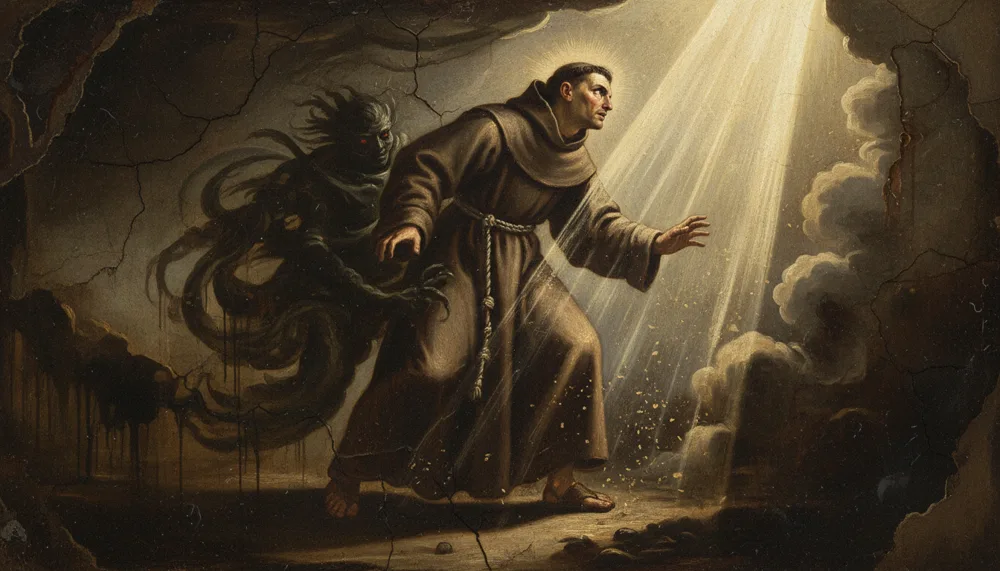
What does God say about lust? He forbids it, and He forbids it down to the desire itself. "Whosoever shall look on a woman to lust after her," Our Lord teaches, "hath already committed adultery with her in his heart" (Matthew 5:28), and St Paul commands plainly: "Fly fornication" (1 Corinthians 6:18). Lust is a sin — and when the soul consents to it deliberately, a mortal one. It is one of the seven capital sins, and it stands condemned by two of the Ten Commandments at once. We say this without flinching and without relish, because a soul is owed the truth.
What does the Bible say about lust?
The Bible does not treat lust as a minor weakness. It treats it as a sin that profanes the body and shuts the soul out of heaven. The decisive word is Our Lord's own, where He carries the law inward from the deed to the heart:
But I say to you, that whosoever shall look on a woman to lust after her, hath already committed adultery with her in his heart. (Matthew 5:28)
This is the verse that governs the whole question. Lust is not the act of impurity alone; it is the willed, consenting desire for it. Christ does not lower the old law — He shows its full reach. The Roman Catechism reads the sixth commandment in exactly this light: "the inward licentiousness of the heart is equally forbidden, for this Law is essentially spiritual" (Catechism of the Council of Trent, on the sixth commandment).
St Paul speaks with the same severity, and gives the sin a name — fornication — and a command of one word:
Fly fornication. Every sin that a man doth, is without the body; but he that committeth fornication, sinneth against his own body. (1 Corinthians 6:18)
And he warns the Corinthians that those who live in such sins are barred from the kingdom:
Know you not that the unjust shall not possess the kingdom of God? Do not err: neither fornicators... nor adulterers, nor the effeminate... shall possess the kingdom of God. (1 Corinthians 6:9-10)
These are not isolated proof-texts. They are the settled witness of Scripture, which lists "fornication, uncleanness, immodesty, luxury" first among "the works of the flesh," with the same verdict attached: "they who do such things shall not obtain the kingdom of God" (Galatians 5:19-21). For the wider testimony of the Word on this and every grave matter, see our gathered Catholic Bible verses.
Is lust a sin? Why it is grave
Yes. Lust is a sin, and the Church has never softened the point. The Catechism of St Pius X is blunt: impurity "is a most grievous and abominable sin before God and before men; it debases man to the condition of the brute beasts, draws him into many other sins and vices, and brings down the most terrible chastisements in this life and in the next" (Catechism of St Pius X, on the sixth and ninth commandments).
Why so grave? Because, as St Paul says, the impure man "sinneth against his own body" — his body, which for the baptised is "the temple of the Holy Ghost" (1 Corinthians 6:19). To give that body over to lust is to drive the Spirit of God out of His own temple. The Roman Catechism warns that habitual impurity ends in "the blindness of the mind," so that "God, reputation, dignity, children, themselves — all is forgotten." This is why lust is reckoned among the seven deadly sins: it is capital, a head from which a whole brood of other sins is born.
Lust and the sixth and ninth commandments
Lust offends against two of the Ten Commandments at once, and this double condemnation is no accident.
The sixth commandment — Thou shalt not commit adultery — names adultery, but the Church, following St Ambrose and St Augustine, teaches that it "extends to all that is dishonourable and impure." In forbidding adultery, "God has at the same time forbidden every kind of impurity capable of defiling the body" (Catechism of the Council of Trent). The Catechism of St Pius X states the same reach in a single line: the sixth commandment "forbids us every act, every look, every word contrary to chastity."
The ninth commandment — Thou shalt not covet thy neighbour's wife — reaches further still, into the desire itself. It "expressly forbids every desire contrary to the fidelity which spouses have sworn," and also "every guilty thought or desire of acts forbidden by the Sixth Commandment" (Catechism of St Pius X). Where the sixth commandment forbids the impure deed and look, the ninth forbids the inward, consented desire — exactly the lust of which Our Lord speaks in Matthew 5:28. Together they fence the soul in on every side: the act, the look, the word, and the will.
Are all impure thoughts sins?
Here the Church corrects a fear that troubles many earnest souls, and she corrects it charitably. Not every impure thought is a sin. The Catechism of St Pius X is precise: "The thoughts that come into our mind against purity are not in themselves sins; they are rather temptations and incitements to sin." A thought that merely arrives — unbidden, unwanted, fled from — is not lust; it is the matter of a battle, and to fight it is already to please God.
When, then, do such thoughts become sin? "Evil thoughts, even when they are not followed by effect, are sins when we give occasion to them in a culpable manner, or when we consent to them, or when we expose ourselves to the proximate danger of consenting to them" (Catechism of St Pius X). The line is consent. Temptation is not sin; the deliberate, willing welcome of the impure desire is. This is the answer to the scrupulous soul and the rebuke to the careless one alike: do not despair at the assault, and do not toy with what you must flee. To learn to govern this inner ground is the labour the masters call spiritual combat.
The virtue of chastity and custody of the eyes
Against the capital sin of lust God sets the virtue of chastity — and He commands it of every state of life, not of the unmarried alone. The Roman Catechism teaches that chastity "shines with a particular splendour" in those who keep virginity, "but it may also be practised by those who live in celibacy, and even by married persons who know how to keep themselves pure and innocent of all forbidden excesses." The single are called to continence, the married to fidelity, the consecrated to virginity; all are called to purity of body and of heart.
This is not asked of us beyond our strength. "Chastity is a gift of God," the Roman Catechism says, "which He never refuses to those who ask for it as they ought," for "He suffereth us not to be tempted above our strength" (1 Corinthians 10:13). And the Church names the means plainly, the same ordinary means by which all the capital sins are subdued: "frequent Confession and frequent Communion, together with assiduous and fervent prayers, almsgiving, and fasting." The way back from any fall is confession, where Christ's priest absolves; and no sin of impurity is too heavy for that absolution.
One remedy the catechism singles out, because it is the gate through which lust most often enters: the custody of the eyes. "What most ordinarily kindles the impure passion in hearts is the look," the Roman Catechism teaches, and it gives us Job for our model:
I made a covenant with my eyes, that I would not so much as think upon a virgin. (Job 31:1)
So the faithful are taught to flee what kindles the fire — "songs too tender," "licentious or unchaste books," and "pictures which represent something shameful" — and to avoid idleness and intemperance, "for it is a cause of impurity to take food to excess." A man does not keep a lawn dry by mopping it; he turns off the hose. Custody of the eyes is turning off the hose. The whole of this discipline is part of the ordinary Catholic life of prayer and of growth toward God.
We may add the surest help of all: recourse to the Mother of God, the spotless one. The Church has always sent her tempted children to Mary, "Virgin most pure," and the prayers of the Church — the Rosary and the litanies — make her purity our shield. To pray the Litany of the Immaculate Heart of Mary, or to keep her near in any of the Catholic litanies, is to ask the one creature wholly free of lust to win us a share in her cleanness of heart.
What God asks of us
God does not despise the body, and He does not despise desire; He made both, and He calls them good in their place. What He forbids is the disordering of desire — the consented look, the welcomed thought, the deed that tears the union of bodies out of the marriage He blessed. Lust is a sin; this is the plain word of Christ and of His Church, and we will not blunt it.
But the same God who forbids it offers the grace to be chaste and the mercy to rise when we fall. The fight is real, and it is winnable, because it is fought on grace and not on our own strength. For the related questions a faithful reader asks, see our “What does God say about?” series, including what God says about pride and the deeper teaching on the four last things that gives every battle its weight.
Frequently Asked Questions
What does God say about lust?
God forbids lust, and He forbids it down to the desire itself. Our Lord teaches that "whosoever shall look on a woman to lust after her, hath already committed adultery with her in his heart" (Matthew 5:28), and St Paul commands plainly, "Fly fornication" (1 Corinthians 6:18). Lust is a sin — one of the seven capital sins, condemned by both the sixth and the ninth commandments — and when the soul consents to it deliberately, it is a mortal sin. Yet God who forbids it also gives the grace of chastity to all who ask, and the mercy of confession to all who fall.
The Iter Fidei app carries the Douay-Rheims Bible, the prayers and litanies, in Latin and your own language. Get the app link by email here.
Sources. Holy Bible, Douay-Rheims (Matthew 5:28; 1 Corinthians 6:9-10, 6:18-19; 1 Corinthians 10:13; Galatians 5:19-21; Job 31:1). Catechism of the Council of Trent (1566), on the sixth and on the ninth and tenth commandments of the Decalogue. Catechism of St Pius X (1908), on the sixth and ninth commandments.