
The Faith
What Does God Say About Sex Before Marriage?
What does God say about sex before marriage? Scripture calls it fornication and forbids it: sexual union belongs within marriage alone. The Catholic teaching on the sixth commandment and chastity, grounded in the Douay-Rheims Bible and the catechism.
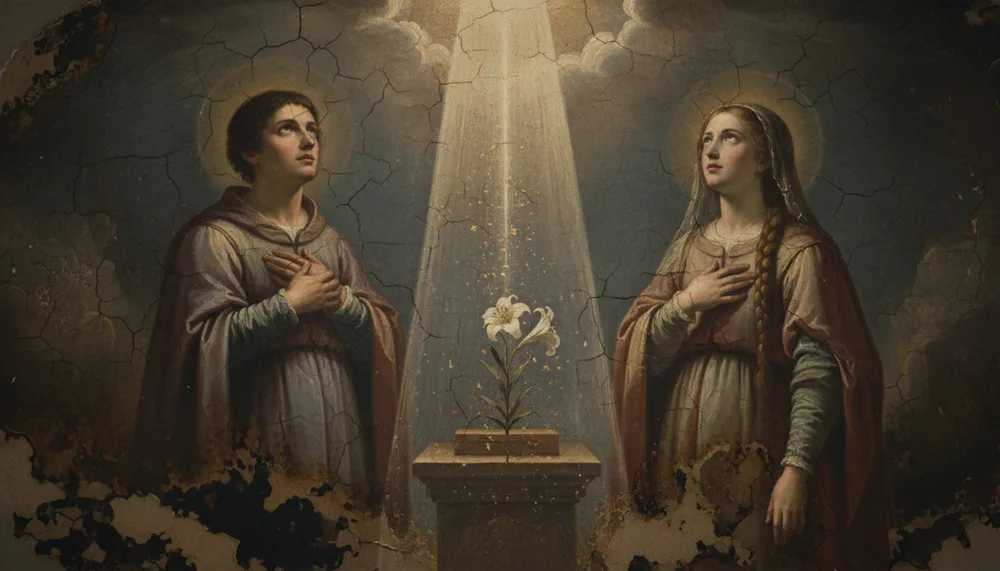
What does God say about sex before marriage? He forbids it. Scripture calls it fornication, names it among the sins that shut the soul out of heaven, and reserves the marriage act for marriage alone. Premarital sex is a sin — a grave one — and the Church has taught this without wavering from the Apostles to our own day. We say it plainly, not to condemn anyone, but because the truth is the first kindness owed to a soul.
What does the Bible say about sex before marriage?
The Bible does not speak of "sex before marriage" in modern language; it speaks of fornication, which is exactly that — sexual union between persons not married to one another. And it speaks of it with great severity. St Paul writes to the Corinthians:
Know you not that the unjust shall not possess the kingdom of God? Do not err: neither fornicators... nor adulterers, nor the effeminate, nor liers with mankind... shall possess the kingdom of God. (1 Corinthians 6:9-10)
This is not a stray verse. It is a settled judgment, repeated across the New Testament. To the same Corinthians the Apostle gives a command of one word and a reason:
Fly fornication. Every sin that a man doth, is without the body; but he that committeth fornication, sinneth against his own body. (1 Corinthians 6:18)
And to the Thessalonians he makes it the very content of God's will for us:
For this is the will of God, your sanctification: that you should abstain from fornication. (1 Thessalonians 4:3)
This is the consistent witness of the fornication passages of the Bible. The body is not a thing to be spent. "Know you not," St Paul continues, "that your members are the temple of the Holy Ghost?" (1 Corinthians 6:19). The Christian who profanes his body in fornication drives the Spirit of God out of His own temple.
Is premarital sex a sin? The sixth commandment
Yes — premarital sex is a sin, and a mortal one when committed with full knowledge and consent. It falls under the sixth of the Ten Commandments: Thou shalt not commit adultery. The Roman Catechism teaches that this commandment, though it names adultery by name, "extends to all that is dishonourable and impure," following St Ambrose and St Augustine. In forbidding adultery, "God has at the same time forbidden every kind of impurity capable of defiling the body" (Catechism of the Council of Trent, on the sixth commandment).
Our Lord Himself extends the law inward, to the heart:
But I say to you, that whosoever shall look on a woman to lust after her, hath already committed adultery with her in his heart. (Matthew 5:28)
So the sin is not only in the deed. It begins in the consenting look and the willed desire — which is why chastity is a labour of the whole soul, not merely of the body. St Paul lists fornication first among "the works of the flesh," and warns "that they who do such things shall not obtain the kingdom of God" (Galatians 5:19-21). This is the same verdict, given again. The Bible does not hedge on fornication, and neither may we.
Why marriage is the only place for this union
The teaching is not a prohibition only; it is the safeguarding of something holy. God ordered the union of bodies to the union of spouses — one man and one woman, joined for life, open to children. That union is good, and Scripture honours it:
Marriage honourable in all, and the bed undefiled. For fornicators and adulterers God will judge. (Hebrews 13:4)
Notice the single verse holds both truths at once: the marriage bed is undefiled, and the fornicator is judged. The Church has never been against the body or against this union — only against tearing it out of the covenant God made for it. Within marriage it is holy; outside marriage it is sin. This is why the Church raised marriage to a sacrament: it is one of the seven sacraments, and the sacrament of Matrimony gives the spouses grace to love one another in holiness and to raise their children for God. To take the act without the covenant is to want the gift while refusing the Giver's terms.
This is also why fornication wounds, even when it feels like love. It promises union and gives only its counterfeit, and it accustoms the soul to using what God meant to be given. Those who have fallen here are not beyond mercy — far from it; the same Apostle reminds the Corinthians, "and such some of you were; but you are washed... but you are sanctified" (1 Corinthians 6:11). The way back is confession. Christ gave His priests the power to absolve — "whose sins you shall forgive, they are forgiven them" — and no sin of impurity is too heavy for that absolution.
Chastity: a virtue for every state of life
Chastity is not asked of the unmarried alone. It is a virtue commanded of all, in every state. The Roman Catechism teaches that "if the virtue of chastity shines with a particular splendour in those who religiously preserve... virginity, it may also be practised by those who live in celibacy, and even by married persons who know how to keep themselves pure." The single are called to continence, the married to fidelity, the consecrated to virginity — but all are called to purity of body and of heart.
And it is not beyond us. "Chastity is a gift of God, which He never refuses to those who ask for it as they ought," the Catechism says, for God "suffereth us not to be tempted above our strength" (1 Corinthians 10:13). The ordinary means are the ordinary means of the Christian life, the same ones the Bible itself commends: frequent confession and Communion, fervent prayer, fasting, the custody of the eyes, and the avoidance of the occasions — the books, images, songs, and company that kindle the fire.
Lust is one of the seven deadly sins, and it is overcome as the others are: not by a single resolve, but by a daily one, leaning on grace. To grow in this is part of learning how to love God — for love that respects His order is the only love that is true.
What God asks of us
God does not ask us to despise the body or to fear love. He asks us to keep them holy. The marriage act is His gift, and He guards it within marriage the way one guards a fire within the hearth — where it warms, and not where it burns the house down. Sex before marriage is fornication, and fornication is a sin; this is the plain word of Scripture read with the Church. But the same God who forbids it offers the grace to live chastely and the mercy to rise when we fall. For more on the related questions a faithful reader asks, see our what does God say about series, including what God says about marriage, about divorce, and about forgiveness.
Frequently Asked Questions
What does God say about sex?
God made the union of bodies good, but He ordered it to one place: the marriage of one man and one woman, joined for life and open to children. "Marriage honourable in all, and the bed undefiled. For fornicators and adulterers God will judge" (Hebrews 13:4, Douay-Rheims). The same act is holy within that covenant and sinful outside it; Scripture honours the one and condemns the other in a single breath.
What does God say about premarital sex?
He forbids it. Scripture calls it fornication and names it first among "the works of the flesh," warning "that they who do such things shall not obtain the kingdom of God" (Galatians 5:19-21). When committed with full knowledge and consent it is a mortal sin, and the witness of the New Testament on this never wavers. Yet no soul that has fallen is beyond mercy: "such some of you were; but you are washed" (1 Corinthians 6:11), and the way back is confession.
What does God say about sex in marriage?
Within marriage, the union of husband and wife is good and holy; Scripture honours it: "Marriage honourable in all, and the bed undefiled" (Hebrews 13:4, Douay-Rheims). God ordered this act to the union of one man and one woman, joined for life and open to children, and the sacrament of Matrimony gives spouses the grace to live it in purity and fidelity. What is sin outside the covenant is, inside it, a gift of God to be received with reverence and self-mastery.
Can Catholics have sex before marriage?
No. The Church has taught without wavering, from the Apostles onward, that the marriage act belongs to marriage alone; outside it, it is fornication, which St Paul names among the sins that shut the soul out of the kingdom of God (1 Corinthians 6:9-10). When done with full knowledge and consent it is a mortal sin. A Catholic who has fallen here is never beyond mercy: the way back is confession and a firm purpose of amendment.
What does God say about kissing before marriage?
Scripture sets no rule on a kiss as such, but Our Lord teaches that sin begins in the heart: "whosoever shall look on a woman to lust after her, hath already committed adultery with her in his heart" (Matthew 5:28). What is forbidden is deliberately stirring up or consenting to impure desire, in oneself or another. Affection that respects the other's soul and avoids the occasions of lust is one thing; conduct chosen to kindle passion outside marriage is contrary to the custody of the heart that chastity asks of all.
What does God say about living together before marriage?
Cohabitation that includes the marriage act is fornication, and it also places the soul in the near occasion of grave sin, which we are bound to flee — "Fly fornication" (1 Corinthians 6:18). Even where the appearance alone scandalises others, the Christian is called to keep his body and his witness undefiled. The remedy is not delay in good but order: either separate until marriage, or, if the bond is true, receive the sacrament of Matrimony and live the union as God ordained it.
What does God say about relationships before marriage?
Scripture does not condemn courtship; it condemns impurity. A relationship ordered toward a holy, lifelong marriage is a good thing, provided it is lived in chastity, which is asked of the unmarried as continence and of all as purity of heart. The ordinary means keep it so: prayer, frequent confession and Communion, custody of the eyes, and avoidance of the occasions that kindle the fire — part of learning how to love God, for love that respects His order is the only love that is true.
The Iter Fidei app carries the Douay-Rheims Bible, the catechism, and the prayers of the Church. Get the app link by email here.
Sources. Holy Bible, Douay-Rheims (1 Corinthians 6:9-19; 1 Corinthians 10:13; 1 Thessalonians 4:3; Hebrews 13:4; Matthew 5:28; Galatians 5:19-21). Catechism of the Council of Trent (1566), on the sixth commandment of the Decalogue and on the sacrament of Matrimony. Catechism of St Pius X (1908), on the sixth commandment and the virtues.