
The Faith
What Does God Say About Marriage?
God instituted marriage in paradise and Christ raised it to a sacrament: the indissoluble union of one man and one woman, ordered to children and mutual help.
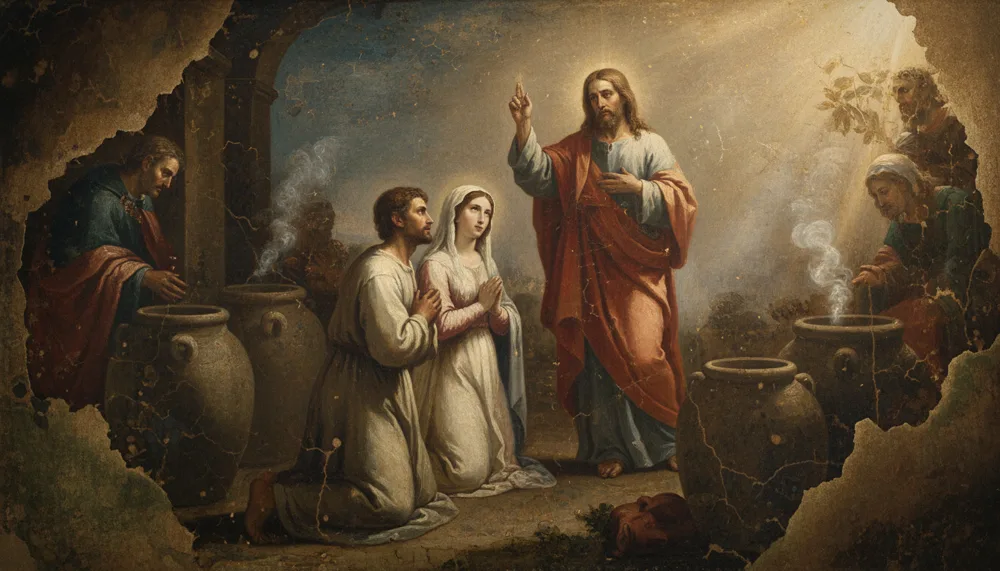
God says that marriage is His own work, not man's: He instituted it in paradise when He made man and woman one, and Our Lord Jesus Christ raised it to the dignity of a sacrament. What the Bible says about marriage is therefore one unbroken teaching from Genesis to St Paul: it is the union of one man and one woman, ordered to children and to their mutual help, sacred, and so binding that "what God hath joined together, let no man put asunder" (Matthew xix). This is the answer the Church has always given, and we set it out here as Scripture read with her, not as a string of isolated verses.
This question belongs to a wider series on what God says about the things that press on a Christian life, from anxiety and anger to money and forgiveness.
God instituted marriage: what the Bible says about its origin
Marriage is older than the Law, older than Israel, older than sin. God established it at the creation of the human race. When the Lord had made man, He judged that it was not good for him to be alone, formed the woman from his side, and joined the two. Scripture records the first word ever spoken about marriage:
Wherefore a man shall leave father and mother, and shall cleave to his wife: and they shall be two in one flesh. (Genesis ii)
The Roman Catechism draws the plain conclusion: Matrimony is first an institution not of men but of nature, willed by God Himself. When the Lord blessed the first couple and said, "Increase and multiply" (Genesis i), He fixed the cause for which marriage exists. So the Bible does not present marriage as a human invention or a social arrangement that men may reshape at will. God and marriage are bound together from the first page: He is its author, and what He has instituted, no human power can undo.
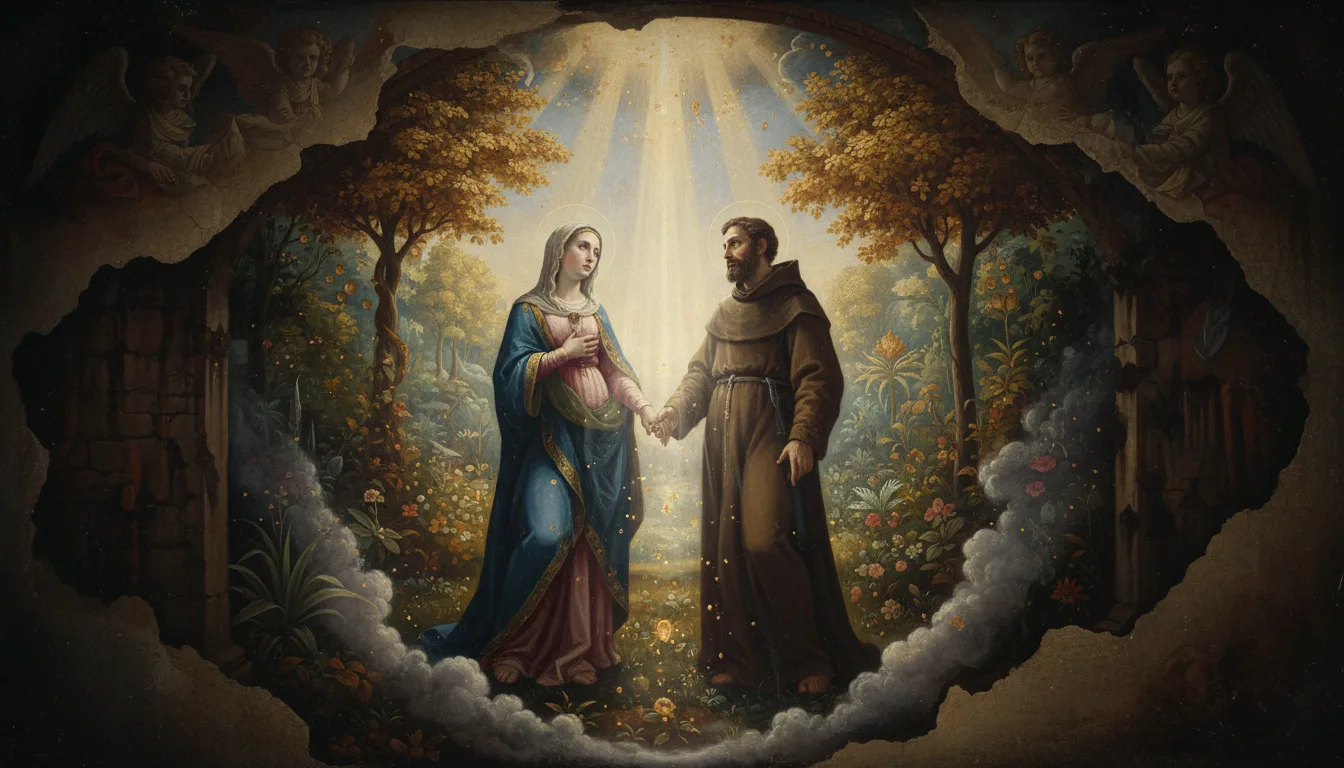
What the Bible says marriage is for: children and mutual help
Scripture and the Church teach that marriage is ordered to definite ends, and to set oneself against them is to wound the thing God made.
The first end, willed from the beginning, is the procreation and Christian education of children. The Roman Catechism is exact: the patriarchs took wives "less to leave heirs of one's goods and riches, than to give to God believing and faithful servants." When the angel Raphael instructed Tobias, he taught him to take his bride in the fear of God and the desire of children, "and not to satisfy thy passions" (Tobias vi). For this reason the same catechism warns that "they commit a very grave fault who voluntarily oppose themselves to this end of marriage; it has been willed and ordained by God."
The second end is the mutual help of the spouses: that they may bear together the burdens of life and the infirmities of age, each a support to the other. To this God added, after the fall, a third purpose: marriage is a remedy and a help to chastity for those who would not stand alone against the flesh. St Paul writes:
But for fear of fornication, let every man have his own wife, and let every woman have her own husband. (1 Corinthians vii)
This is why the Bible can speak so soberly of the duties of husband and wife. It does not flatter the passions; it orders them to God. The same Scripture that calls marriage honourable in all (Hebrews xiii) reserves the marriage bed to the married, and what God says about sex before marriage follows directly from this: the gift is holy because it is bound to the covenant God made.
Christ raised marriage to a sacrament
Marriage was holy from the creation, but Our Lord did more than restore it. He raised marriage between the baptised to the dignity of a sacrament, so that what had always joined husband and wife by nature now also gives grace. St Paul reveals what God had hidden in the first marriage of paradise:
For this cause shall a man leave his father and mother, and shall cleave to his wife, and they shall be two in one flesh. This is a great sacrament; but I speak in Christ and in the Church. (Ephesians v)
The Roman Catechism teaches that of all the bonds that join men together, none is closer than marriage, and that for this reason holy Scripture so often pictures the union of Christ with His Church under the image of nuptials. The husband is to love his wife as Christ loved the Church and delivered Himself for her; the wife is to be subject to her husband as the Church to Christ. The natural union becomes a living sign of the supernatural one. This is the heart of Catholic marriage, the sacrament of Matrimony, and one of the seven sacraments Christ left to His Church.
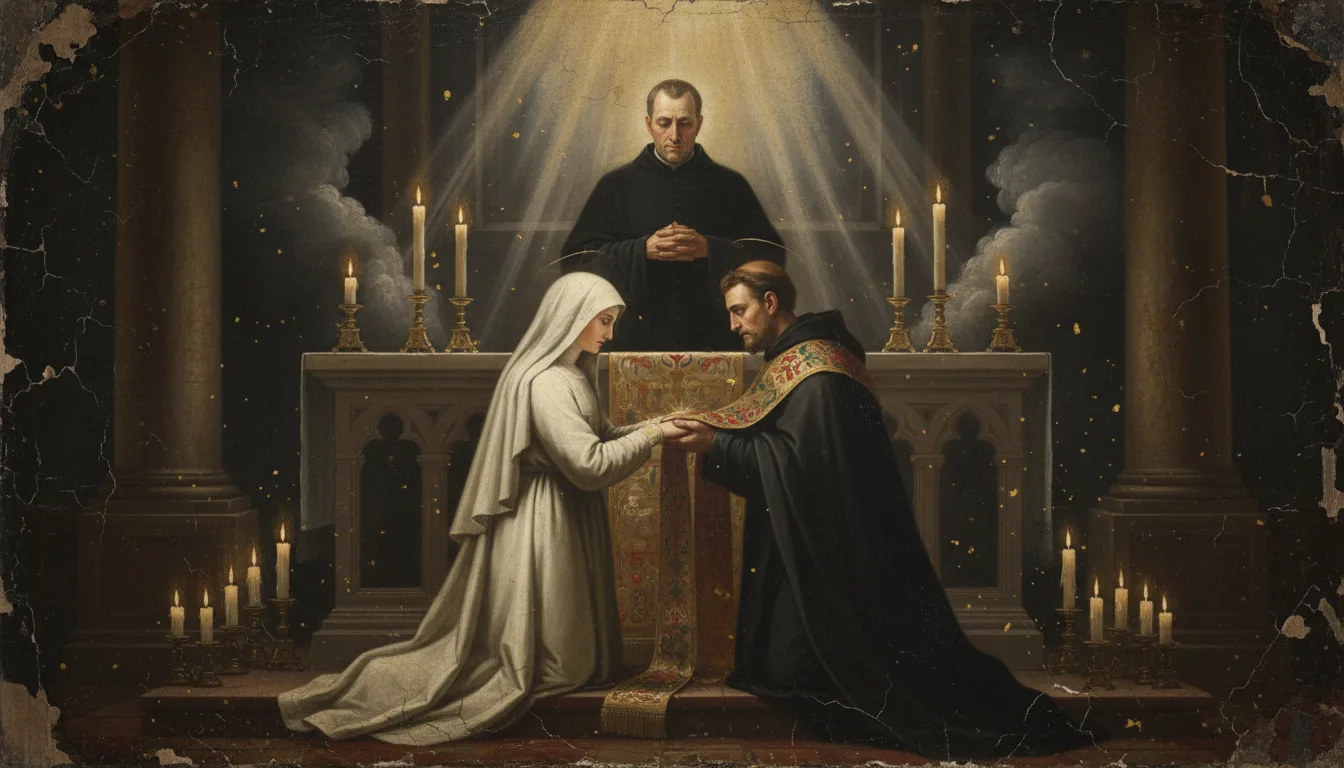
God says marriage is one and cannot be broken
Two properties belong to marriage as God established it, and Our Lord restored both to their first perfection.
It is the union of two, and only two. The Lord cites Genesis, "they shall be two in one flesh," and adds, "Therefore now they are not two, but one flesh" (Matthew xix). The Roman Catechism concludes that polygamy is contrary to the very nature of marriage; under the old Law the patriarchs had several wives by divine permission, but the Gospel brought marriage back to its first state, one man and one woman.
And the bond cannot be dissolved. This is among the most repeated of all the Bible verses about marriage, spoken by Christ Himself:
What therefore God hath joined together, let no man put asunder. (Matthew xix)
He goes further, and leaves no room for evasion: "Whosoever shall put away his wife, and shall marry another, committeth adultery against her" (Mark x). Death alone breaks the bond. The civil power cannot dissolve it, for it can neither touch a sacrament nor put asunder what God has joined. This is why what God says about divorce is so stark: the world grants it, but God does not, and the Church can only echo her Lord. The indissolubility is no cruelty but a safeguard; the Roman Catechism notes that spouses who know the bond holds are readier to be reconciled than those forever tempted to part.
What God asks of husband and wife
Because marriage is God's institution and Christ's sacrament, it carries real duties, and the sacrament gives the grace to keep them. The spouses must hold conjugal fidelity inviolably, love one another and bear with one another, live in peace and concord, dress and carry themselves with the modesty that guards married love, and raise for God the children He grants them. St Paul gathers it into one command of love: "Husbands, love your wives, as Christ also loved the church" (Ephesians v). This is a love that does not depend on feeling but on the will, the same patient charity asked of us in how to love God and in the whole of the spiritual life.
Where that love is wounded, the remedy God provides is not divorce but conversion: the forgiveness Our Lord made the law of His kingdom, opened to us in Confession and lived daily between the spouses. Many bible verses on marriage end where the Gospel always ends, in the forgiveness of one another as God in Christ has forgiven us. The married state is a path of salvation walked in common, and God supplies the strength to walk it.
What God says about love and marriage
The world treats love as a feeling that comes and goes, and marriage as the contract that follows it. Scripture reverses the order. The love God asks of the married is not first an emotion but an act of the will, a charity that endures when feeling fails. St Paul's measure is plain: "Husbands, love your wives, as Christ also loved the church, and delivered himself up for it" (Ephesians v). That is a love defined by self-gift and sacrifice, not by attraction.
The same Apostle gives the spouses the whole law of charity to live between them: love "is patient, is kind... beareth all things, believeth all things, hopeth all things, endureth all things" (1 Corinthians xiii). Married love grows precisely by being chosen daily, so that what begins as desire is purified into the steady charity that mirrors Christ's love for His Church. This is why God binds love and marriage together: He does not leave love to the mercy of moods but anchors it in a vow and feeds it with the grace of a sacrament.
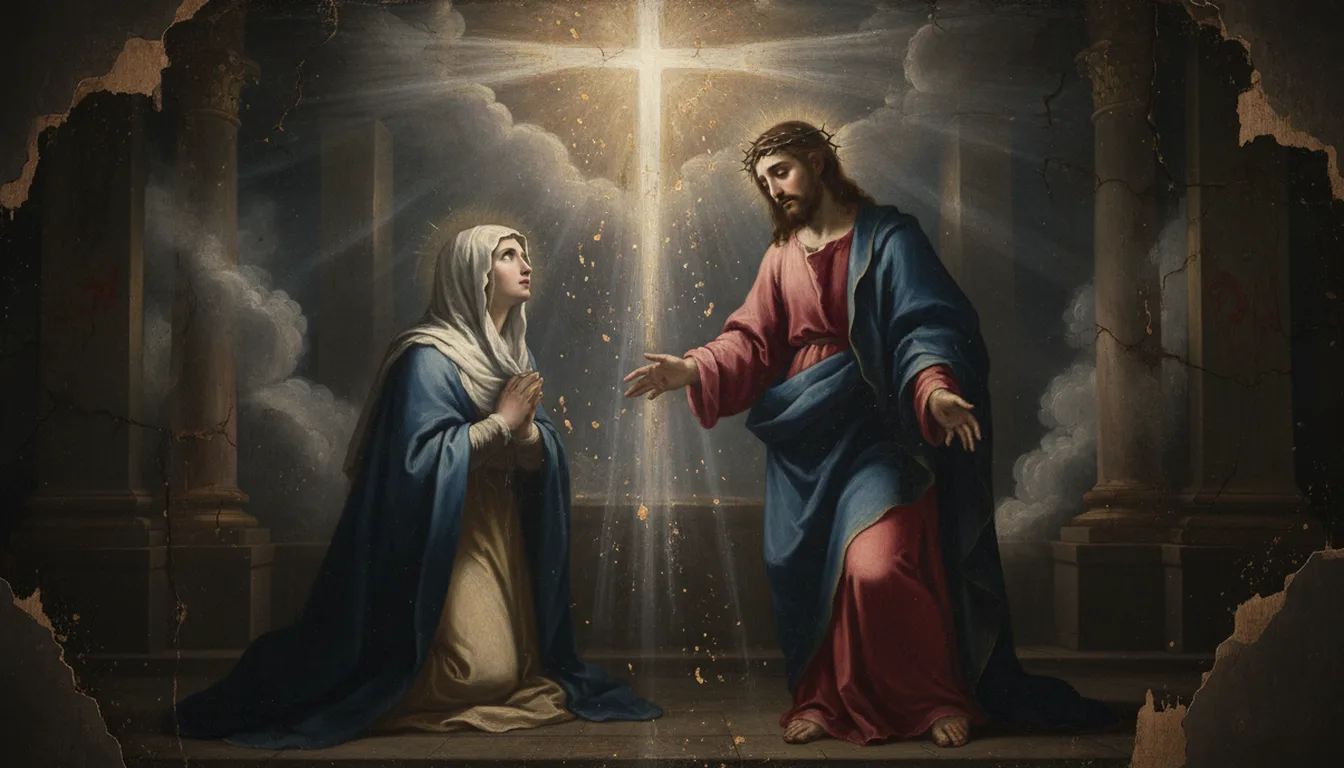
What God says about relationships before marriage
Scripture knows nothing of the modern "relationship" understood as a trial of intimacy before commitment. It does, however, set down the principle that governs all courtship: a man and woman not yet joined by God are not free to act as though they were. St Paul tells the young to treat one another "as sisters, in all chastity" (1 Timothy v), and reserves every conjugal act to the married alone.
A relationship ordered to marriage is good and blessed, for it seeks the very thing God instituted; but it must be lived in purity, with the body kept holy and the affections governed, not inflamed. The aim of a Christian courtship is discernment and preparation, not the rehearsal of marriage. We say more on this in what God says about dating and on the virtue that guards it in what God says about chastity.
What God says about kissing and conduct before marriage
Because the marriage bed is reserved to the married, so too is the conduct that belongs to it and tends toward it. Scripture calls the deliberate stirring of lust before marriage what it is, and St Paul warns that "fornication, and all uncleanness... let it not so much as be named among you" (Ephesians v).
Affection between a courting couple is not forbidden, but it must be ordered: a kiss or caress given to inflame the passions, knowing they cannot be lawfully satisfied, is itself an offence against chastity and a near occasion of grave sin. The traditional moral teaching of the Church is sober here precisely because it is kind: it asks the couple to guard one another, to avoid what they cannot honestly complete, and to keep their love clean for the covenant God will bless. Purity before marriage is not a denial of love but its protection.
What God says about sex in marriage
What is sinful outside marriage is holy within it, for God Himself ordered the conjugal act to the ends of marriage. Scripture is direct: "Let the husband render the debt to his wife, and the wife also in like manner to the husband" (1 Corinthians vii). The Roman Catechism teaches that the marriage act, used rightly, is good and willed by God, the means He appointed for the procreation of children and a remedy against concupiscence.
The Church therefore neither despises the conjugal union nor leaves it unbridled: it is honourable when it keeps its order to the goods God set in marriage, and disordered when those goods are deliberately frustrated. St Paul also teaches mutual self-restraint by consent, "that you may give yourselves to prayer" (1 Corinthians vii). So God says of marital intimacy neither that it is shameful nor that it is its own end, but that it is a holy gift bound to the covenant, to be received with reverence and used as He intends.
What God says about abuse in marriage
Nothing in Scripture or the Church's teaching commands a wife or husband to submit to cruelty, violence, or grave danger. The subjection St Paul asks of the wife is to a husband who loves her "as Christ also loved the church, and delivered himself up for it" (Ephesians v): a love of sacrifice, never of tyranny. He who mistreats his spouse sins gravely and tramples the very image of Christ he is bound to show.
The Church has always recognised that, while the marriage bond itself is indissoluble and cannot be dissolved by any human power, separation from bed and board is lawful for grave cause, including cruelty and danger to body or soul. To remove oneself and one's children from harm is not to break the bond God made; it is to refuse the sin of another while leaving the bond untouched. Such a separation is no licence to remarry, for the bond endures, but the safety of persons is never owed to an abuser, and the wronged spouse remains free to seek protection, counsel, and the help of the Church.
What God says about marriage, then, is consistent from Genesis to the Gospel and held whole by the Church: He made it, He blessed it, His Son raised it to a sacrament, and He alone may loose what He has bound. To honour marriage is to honour its Author.
Frequently Asked Questions
What does God say about marriage in the Bible?
Scripture speaks of marriage as one unbroken teaching from Genesis to St Paul: God made man and woman "two in one flesh" (Genesis ii), and Our Lord confirmed it, declaring "what therefore God hath joined together, let no man put asunder" (Matthew xix). It is the union of one man and one woman, ordered to children and mutual help, and raised by Christ to a sacrament (Ephesians v). What the Bible says about marriage is therefore not a set of human rules but the will of its Author.
What does God say about marriage in heaven?
Our Lord teaches plainly that the earthly bond does not continue in the life to come: "For in the resurrection they shall neither marry nor be married; but shall be as the angels of God in heaven" (Matthew xxii). Marriage is a holy state for this life, but heaven is the wedding it pointed toward all along, the eternal union of Christ and His Church. The love a husband and wife learn here is not lost but fulfilled in God; and the body in which they served Him, which the Church honours in burial as we explain in what God says about cremation, awaits the same resurrection.
What does God say about interracial marriage?
Scripture sets no barrier of race or nation against valid marriage; what it forbids is union with unbelievers, lest faith be corrupted. The Church has always taught that all men descend from one stock, Adam and Eve, so that there is one human family, and that the impediments to marriage are matters of faith and kinship, not of skin or people. What God requires is that the two be free to marry, baptised and of one faith, and joined in His sight; a difference of race is no obstacle to the sacrament.
What does God say about gay marriage?
God instituted marriage at the creation as the union of one man and one woman: "male and female he created them" (Genesis i), and "they shall be two in one flesh" (Genesis ii), a union Our Lord confirmed by citing this very text (Matthew xix). Marriage by its nature is ordered to the procreation of children and the mutual help of husband and wife, ends that a union of two of the same sex cannot serve. Scripture is grave on the sin itself (Romans i; 1 Corinthians vi), and the Church can no more redefine marriage than she can unmake what God has made; persons drawn this way are called, as all are, to chastity and to conversion.
What does God say about divorce and marriage?
God does not grant divorce as the world understands it. Our Lord restored marriage to its first state and left no evasion: "Whosoever shall put away his wife, and shall marry another, committeth adultery against her" (Mark x). The civil power may issue a decree, but it cannot dissolve a sacrament or part what God has joined; death alone breaks the bond. We treat this more fully in what God says about divorce, and we set out why a civil divorce gives no liberty to wed again in what God says about remarriage.
What does God say about a sexless marriage?
Scripture treats the conjugal due as a real obligation of the married state: "Defraud not one another, except, perhaps, by consent, for a time" (1 Corinthians vii), and even then only by mutual agreement and for prayer. A spouse may not unilaterally and lastingly refuse this duty without grave reason, for it wounds an end God gave to marriage. Where weakness or illness intervenes, charity and patience bind the spouses; the remedy is mutual help and self-denial offered to God, not resentment.
What does God say about living together before marriage?
Scripture reserves the marriage bed to the married and calls any union outside the covenant fornication, which St Paul says shall not inherit the kingdom of God (1 Corinthians vi). To live together as husband and wife before the vows are exchanged places a couple in that state, and the near occasion of it, whatever the intention. The same applies to kissing and conduct that inflame the passions before marriage: what God says about chastity asks that affection be ordered and the body kept holy until the covenant God blesses is truly made. The remedy is not to presume on a future wedding but to live now in the purity He commands.
What does God say about sex before marriage?
Scripture reserves the marriage bed to the married and calls every union outside the covenant fornication, which St Paul lists among the sins that "shall not possess the kingdom of God" (Galatians v; 1 Corinthians vi). The body, he teaches, is "the temple of the Holy Ghost" and is to be glorified in chastity. What God blesses within marriage is sinful before it, not because the act is evil but because it has been torn from the covenant that makes it holy. We treat this at length in what God says about sex before marriage.
What does God say about kissing before marriage?
Scripture does not legislate every gesture, but it forbids the deliberate stirring of lust that cannot be lawfully satisfied: "fornication, and all uncleanness... let it not so much as be named among you" (Ephesians v). Affection in a courtship ordered to marriage is not itself sinful, but conduct meant to inflame the passions, or that becomes a near occasion of grave sin, offends chastity. The Church's counsel is to keep affection ordered and the body holy until the covenant is made.
What does God say about love and marriage?
God binds love and marriage together but defines love as charity, not feeling. "Husbands, love your wives, as Christ also loved the church" (Ephesians v): a love of self-gift that endures when emotion fades. The patient, kind, all-enduring charity of 1 Corinthians xiii is the measure, and the sacrament supplies the grace to live it. Married love is meant to grow by being chosen daily, until desire is purified into the love that mirrors Christ and His Church.
What does God say about sex in marriage?
Within marriage the conjugal act is holy, for God ordered it to the procreation of children and as a remedy against concupiscence. St Paul calls it a mutual debt the spouses owe one another (1 Corinthians vii), to be set aside only by consent and for prayer. It is good when it keeps its order to the goods of marriage and disordered when those goods are deliberately frustrated; it is a gift to be received with reverence, never despised and never made its own end.
What does God say about abuse in marriage?
God never commands anyone to endure cruelty or danger. The husband is to love his wife as Christ loved the Church and gave Himself for her (Ephesians v); abuse is a grave sin and a betrayal of that command. While the marriage bond cannot be dissolved by any human power, the Church permits separation from bed and board for grave cause, including violence and danger to body or soul. To flee harm protects persons without breaking the bond, though it gives no liberty to remarry, since the bond endures.
The Iter Fidei app carries the Douay-Rheims Bible, the catechism, and the prayers of the Church. Get the app link by email here.
Sources. Holy Scripture (Douay-Rheims): Genesis i–ii; Tobias vi; Matthew xix, xxii; Mark x; Romans i; 1 Corinthians vi, vii, xiii; Galatians v; Ephesians v; 1 Timothy v; Hebrews xiii. Catechism of the Council of Trent (Roman Catechism, 1566), Part II, "On the Sacrament of Matrimony." Catechism of St Pius X (1908), Part IV, ch. 9, "Matrimony." Council of Trent, Session XXIV, on the indissolubility and grace of Matrimony (as cited in the Roman Catechism).