
Apologetics
Who Founded the Church of Christ?
The modern 'Church of Christ' was founded by men in the 1800s American Restoration Movement. The Church Christ Himself founded — on Peter, two thousand years ago — is the Catholic Church. We distinguish them plainly from the Douay-Rheims and the catechisms.
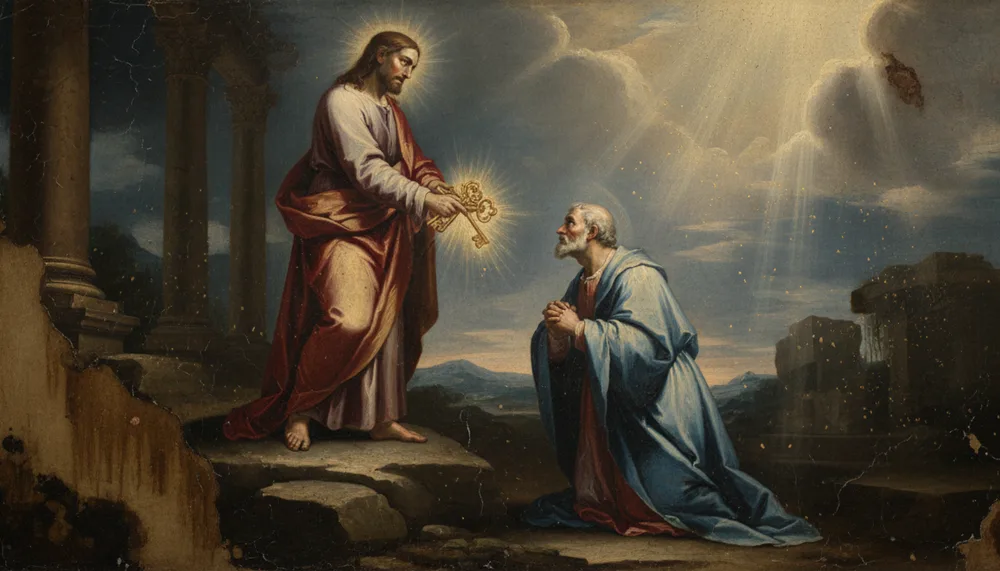
Two different things go by the name "Church of Christ," and the honest answer depends on which one is meant. The modern denomination called the Church of Christ — also the Churches of Christ and the Disciples of Christ — was founded by men: Thomas Campbell, his son Alexander Campbell, and Barton Stone, in the American "Restoration Movement" of the early nineteenth century. The Church that Jesus Christ Himself founded is older by eighteen centuries: it is the one, holy, catholic, and apostolic Church, built by Christ upon St. Peter, and it has never ceased to exist.
So the question who founded the Church of Christ has two answers, and they must not be confused — one is a body founded by reformers in Kentucky and Tennessee, joined together in 1832; the other is the Catholic Church, founded by the Son of God.
When was the Church of Christ founded? The Restoration Movement
The denomination most people mean by "Church of Christ" today has a traceable, recent, human origin. It grew out of the Restoration Movement (also called the Stone-Campbell Movement) on the American frontier in the early 1800s. Thomas Campbell, a Presbyterian minister from Ulster, published his Declaration and Address in 1809; his son Alexander Campbell became the movement's chief figure. Independently, Barton W. Stone had led a revival party out of the Cane Ridge meeting in Kentucky (1801). In 1832, at Lexington, Kentucky, the Stone and Campbell groups joined together. From this union descend the bodies known today as the Churches of Christ, the Christian Church (Disciples of Christ), and the independent Christian Churches.
These are facts of recent history, and we state them without rancour. The men who led the Restoration Movement were sincere; they wanted to strip away what they saw as human additions and return to the simple Christianity of the New Testament. But the word that names their project — restoration — already concedes the difficulty. To restore is to bring back something that was lost. The whole movement rests on the assumption that the Church Christ founded had disappeared, or been so corrupted as to need re-founding in the 1800s. That assumption is the point on which everything turns, and it is false.
What church did Jesus found?
Jesus founded one Church, and He founded it on a man whose name He changed. At Caesarea Philippi, when Simon confessed Him to be the Son of God, Our Lord answered in the words of Matthew 16:18, in the Douay-Rheims:
And I say to thee: That thou art Peter; and upon this rock I will build my church, and the gates of hell shall not prevail against it.
Three things in that one verse settle the matter. First, the Church is His — "my church," not a federation of congregations each restoring it for itself. Second, He builds it on a rock, Peter, and gives him the keys: "I will give to thee the keys of the kingdom of heaven" (Matthew 16:19). Third, He promises it permanence — "the gates of hell shall not prevail against it." The Catechism of St. Pius X draws the conclusion in a single line: "the ninth article of the Creed teaches us that Jesus Christ founded upon earth a visible society which is called the Catholic Church." We treat this verse and the office it establishes in Thou Art Peter.
This is not a vague spiritual fellowship but a visible society with a visible head. The same catechism defines it: "The Catholic Church is the society or assembly of all the baptised who, living upon earth, profess the same faith and the same law of Jesus Christ, partake of the same sacraments, and obey the lawful pastors, principally the Roman Pontiff." What that Church is, and what it means to belong to her, we set out in What Is the Catholic Church?
Why the Church never needed restoring
Here is the heart of the difference, and we put it plainly because charity requires clarity. If Christ said the gates of hell would not prevail against His Church, then His Church cannot have been overthrown. A Church that had to be restored from nothing in 1830 would be a Church that hell had, in fact, prevailed against for some seventeen centuries — which is exactly what Christ promised could not happen.
The catechism is direct on this point. Asked whether the Catholic Church can perish, the Catechism of St. Pius X answers: "No; the Catholic Church can be persecuted, but she cannot be destroyed nor perish. She will endure until the end of the world, because, until the end of the world, Jesus Christ will be with her, as He promised."
Our Lord's own last words in St. Matthew are the warrant: "behold I am with you all days, even to the consummation of the world" (Matthew 28:20). All days leaves no gap of fifteen centuries in which the Church vanished and waited for frontier preachers to rebuild it. The premise of the Restoration is therefore mistaken — not because its founders were wicked, but because the thing they set out to restore had never been lost. One cannot restore what has never ceased.
What is the true Church founded by Jesus Christ?
The true Church founded by Jesus Christ can be told apart from every body founded by men, and the catechism gives the test. The Catechism of St. Pius X asks: "How can the Church of Jesus Christ be distinguished from so many societies or sects founded by men and calling themselves Christian?" The answer is the four marks: "it is One, Holy, Catholic, and Apostolic." We examine each in The Four Marks of the Church, but one mark answers our question outright.
The Church is Apostolic — and apostolicity is precisely what a movement born in 1809 cannot claim. The catechism: the true Church "is also called Apostolic, because she goes back without interruption to the Apostles; and because she believes and teaches all that the Apostles believed and taught; and because she is directed and governed by their lawful successors." A body that begins with Thomas Campbell does not "go back without interruption to the Apostles"; its line stops at its founder. The Catholic Church alone has an unbroken succession of bishops reaching back to the Twelve, and through Peter to Christ. As the catechism concludes, "the four characteristics of unity, holiness, catholicity, and apostolicity are to be found only in the Church which acknowledges as its head the Bishop of Rome, the successor of St. Peter."
This is why the answer to who is the founder of the Church of Christ — meaning the true Church — is not a reformer at all, but Christ, "her divine Founder," in the catechism's phrase. The Catholic Church founded by Christ is not one option among many Christian bodies; she is the original, and the others, however much of His name and word they carry, are later and human in origin. We address that honest comparison in Catholic vs. Protestant and answer the kindred question in Are Catholics Christian?
"Church of Christ" and "Catholic Church" — the same Founder
A word about the name itself, because here too there is honest ground for agreement. Every Christian body wants to belong to Christ, and the title "Church of Christ" expresses a true desire. The Catholic Church does not dispute that the Church is Christ's — she insists on it. What she denies is that the Church of Christ began in the nineteenth century, or in the sixteenth, or anywhere but Galilee under Pontius Pilate. The distinction between Roman Catholic and Catholic, often pressed in these debates, we untangle in Roman Catholic vs. Catholic; what Catholics actually hold, in What Do Catholics Believe?
And the Founder is no dead teacher whose institution outlived Him. He is risen. The whole claim of the Church stands or falls on the empty tomb, the subject of The Resurrection; the body of Jesus was never produced because there was none to produce, which we take up in Has the Body of Jesus Been Found? The Founder of the Church of Christ is the Christ who died, rose, and remains with His Church "all days." For the reader who would begin not with controversy but with Him, we point to How to Find God and to Catholic Bible Verses; and for a school of following the Founder Himself, to The Imitation of Christ, the book the Church has placed in Christian hands for five centuries.
So, who founded the Church of Christ? If the question means the modern denomination, the answer is plain and recent: Thomas and Alexander Campbell and Barton Stone, joined together in 1832. If it means the Church Jesus Christ founded — the one against which the gates of hell shall not prevail — the answer is older and surer: Christ founded it, upon Peter, and it stands today as the one, holy, catholic, and apostolic Church. It was never lost, and so it was never restored. To those who love the name "Church of Christ," we say only this: the Church that is truly His is still here, and has been all along.
Frequently Asked Questions
Who Founded the Church of Christ?
The name covers two things. The modern Church of Christ denomination was founded by men — Thomas Campbell, his son Alexander Campbell, and Barton Stone — in the American Restoration Movement, joined together at Lexington, Kentucky, in 1832. The Church that Christ Himself founded was built by Him upon St. Peter two thousand years ago: "upon this rock I will build my church, and the gates of hell shall not prevail against it" (Matthew 16:18). The two must never be confused.
When Was the Church of Christ Founded?
It depends which Church is meant. The modern Church of Christ denomination dates to the American Restoration Movement: Thomas Campbell's Declaration and Address in 1809, and the union of the Stone and Campbell groups at Lexington, Kentucky, in 1832. The Church that Christ Himself founded has no such founding date in the modern era, for He established it upon Peter two thousand years ago, and "the gates of hell shall not prevail against it" (Matthew 16:18).
Who Is the Founder of the Church of Christ?
Again, two answers. The Church of Christ denomination was founded by men — Thomas Campbell, Alexander Campbell, and Barton Stone. The true Church of Christ has but one Founder, her "divine Founder" in the words of the Catechism of St. Pius X: Jesus Christ, the Son of God, who built her on the rock of Peter and remains with her "all days, even to the consummation of the world" (Matthew 28:20).
What Church Was Founded by Jesus Christ?
The Catholic Church. Our Lord founded one Church and built it on one man: "That thou art Peter; and upon this rock I will build my church" (Matthew 16:18). The Catechism of St. Pius X states it plainly — "Jesus Christ founded upon earth a visible society which is called the Catholic Church" — a visible body with a visible head, the Bishop of Rome, the successor of St. Peter.
What Is the True Church Founded by Jesus Christ?
The true Church can be told from every body founded by men by her four marks: she is One, Holy, Catholic, and Apostolic. The Catechism of St. Pius X teaches that these four marks "are to be found only in the Church which acknowledges as its head the Bishop of Rome, the successor of St. Peter." Apostolicity alone settles it: the true Church "goes back without interruption to the Apostles," whereas a denomination born in 1809 traces its line only to its founder.
Who Founded the Catholic Church?
Jesus Christ founded the Catholic Church. He built it on one man whose name He changed: "That thou art Peter; and upon this rock I will build my church, and the gates of hell shall not prevail against it" (Matthew 16:18). He gave Peter the keys of the kingdom (Matthew 16:19) and promised to remain with His Church "all days, even to the consummation of the world" (Matthew 28:20). The Catechism of St. Pius X states it plainly: "Jesus Christ founded upon earth a visible society which is called the Catholic Church," whose visible head is the Bishop of Rome, the successor of St. Peter.
When Was the Catholic Church Founded, and by Whom?
The Catholic Church was founded by Jesus Christ Himself two thousand years ago, in Galilee and Judea under Pontius Pilate, when He chose the Twelve Apostles and built His Church on St. Peter. She was made manifest to the world at Pentecost, when the Holy Ghost descended on the Apostles. She has no founding date in any later century and no human founder, for she "goes back without interruption to the Apostles" and through Peter to Christ — which is precisely why she could never need "restoring" in the 1800s.
The Iter Fidei app carries the Douay-Rheims Bible, the catechism, and the prayers of the Church. Get the app link by email here.
Sources. Douay-Rheims Bible (Rheims New Testament 1582; Challoner revision) — Matthew 16:18-19; Matthew 28:20; Catechism of St. Pius X (1908), On the Ninth Article of the Creed ("Jesus Christ founded upon earth a visible society which is called the Catholic Church"; the definition of the Catholic Church as the society of the baptised under the Roman Pontiff; "How can the Church of Jesus Christ be distinguished from so many societies or sects founded by men… by four marks: One, Holy, Catholic, and Apostolic"; the Church "goes back without interruption to the Apostles… governed by their lawful successors"; the four marks "found only in the Church which acknowledges as its head the Bishop of Rome"; "the Catholic Church can be persecuted, but she cannot be destroyed nor perish… because, until the end of the world, Jesus Christ will be with her"; "her divine Founder"); Catechism of the Council of Trent (1566), On the Ninth Article (Christ the one invisible Head and the visible Head, the lawful successor of St. Peter; the visible head necessary for the Church's unity). On the Restoration (Stone-Campbell) Movement: Thomas Campbell, Declaration and Address (1809); the Cane Ridge revival under Barton W. Stone (1801); the union of the Stone and Campbell movements at Lexington, Kentucky (1832) — matters of documented American religious history.