
The Liturgical Year
Catholic Fasting and Abstinence: the Rules
The traditional Catholic rules of fasting and abstinence, explained: the difference between the two, the fast of Ash Wednesday and Good Friday, abstinence from meat on Fridays, the Ember days, and the pre-1962 discipline of the Church.
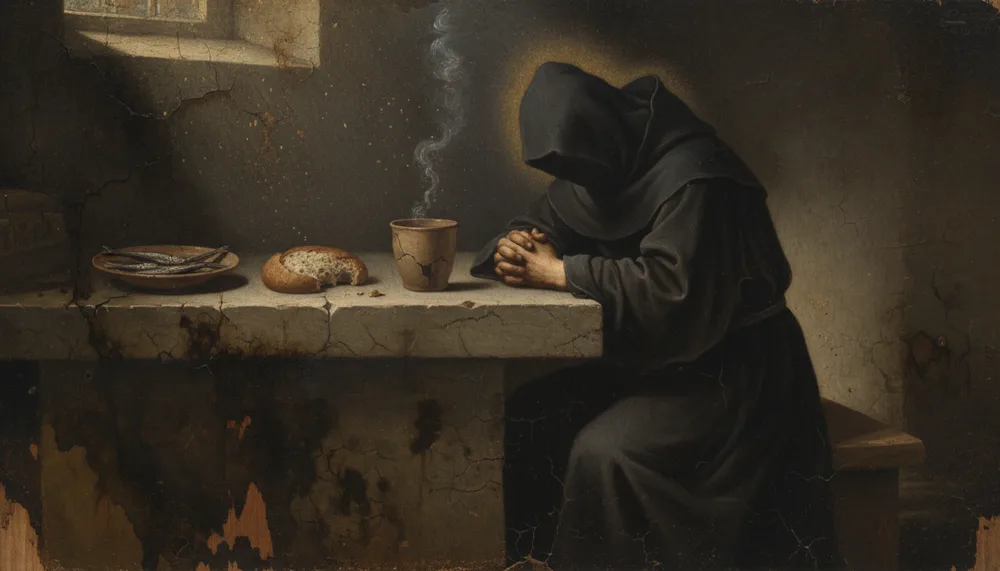
Fasting and abstinence are the two great forms of bodily penance the Church lays upon the faithful, and they are not the same thing. To fast is to take only one full meal in the day. To abstain is to eat no flesh-meat at all. A day may carry one obligation, the other, or both. In the traditional Roman discipline a Catholic fasts on Ash Wednesday and Good Friday, abstains from meat on every Friday of the year, and keeps both fast and abstinence through the great penitential seasons. The Church binds us to this because, as her catechism teaches, "we are all bound to do penance."
Fasting and abstinence are not the same obligation
The single most common confusion among searchers is to treat fasting and abstinence as one rule. They govern two different things.
Fasting governs the quantity of food. The Catechism of St Pius X states it plainly: "Fasting consists in taking only one meal a day, and in abstaining from the forbidden foods." By a long-standing condescension of the Church, on a fast day "one may take a small collation in the evening" — and from this comes the familiar rule of one full meal with two light collations that together do not equal a second meal.
Abstinence governs the kind of food. On days of abstinence "it is forbidden us to eat meat." This means the flesh of warm-blooded animals: beef, pork, lamb, and fowl such as chicken and turkey. Fish is permitted, which is why fish has always been the food of penitential days. Eggs, milk, butter, and cheese are not flesh-meat and are not forbidden by the law of abstinence itself.
A day can bind one obligation without the other. Most Fridays of the year are days of abstinence but not of fasting. Ash Wednesday is a day of both.
Why the Church commands fasting and abstinence
These are not arbitrary burdens. The catechism gives three reasons fasting "serves to prepare us better for prayer, to do penance for the sins committed, and to preserve us from committing new ones." Penance is woven into the whole of Scripture. The prophet Joel cries: "Be converted to me with all your heart, in fasting, and in weeping, and mourning. And rend your hearts, and not your garments" (Joel 2:12-13). Our Lord Himself "fasted forty days and forty nights" (St Matthew 4:2), and of one stubborn demon He said, "this kind is not cast out but by prayer and fasting" (St Matthew 17:21).
He also corrected the manner of fasting before commanding its substance: "When you fast, be not as the hypocrites, sad... But thou, when thou fastest, anoint thy head, and wash thy face; that thou appear not to men to fast, but to thy Father who is in secret" (St Matthew 6:16-18). The fast is offered to God, not displayed to men.
The days of fasting in the traditional calendar
Under the pre-1962 discipline the fast bound far more days than most modern Catholics realise. The Catechism of St Pius X lists the fasting days as Lent, certain days of Advent, the Ember days, and the commanded Vigils of great feasts. The chief days are these.
Ash Wednesday and Good Friday
These two days anchor the Lenten fast and remain the strictest in the year. On Ash Wednesday, the first day of Lent, the faithful both fast and abstain, receiving the ashes with the words Remember man that thou art dust. On Good Friday, within Holy Week, the Church keeps her most solemn fast of all, mourning the death of her Lord. In the older discipline these were not the only fast days but the gravest.
The Ash Wednesday fasting and abstinence rules
Because Ash Wednesday opens the Lenten fast, its rules are worth stating exactly. The day binds both obligations at once. The fast permits one full meal, taken at any hour, together with two small collations — a light morning portion and a light evening portion — which together must not equal a second full meal. Flesh-meat is forbidden the entire day, so the full meal itself contains no meat. In the traditional discipline the fast of Ash Wednesday bound those from completed age twenty-one to the beginning of their sixtieth year, while the abstinence bound from age seven. The same shape of rule applies to Good Friday, the other great fast-and-abstinence day of the year. Those who are sick, pregnant, nursing, or engaged in heavy labour are excused from the fast, though not from some lesser penance.
The whole of Lent
Traditionally the forty days of Lent were days of fast, not merely the bookends. Every weekday of Lent was a fasting day, and Fridays of Lent added abstinence. We treat the season in detail in our article on Lenten fasting and abstinence. Lent itself, the catechism says, "was instituted to imitate in some manner the rigorous fast of forty days which Jesus Christ kept in the desert."
Catholic fasting and abstinence during Lent, day by day
Lent is the season in which fasting and abstinence overlap most heavily, and the traditional rule for the forty days can be stated simply.
- Every weekday of Lent (Monday through Saturday) is a day of fasting: one full meal with two light collations.
- Every Friday of Lent adds abstinence from flesh-meat to the fast; in many places Wednesdays and Saturdays of Lent were kept as days of abstinence as well.
- Ash Wednesday and Good Friday are the two strictest, binding both fast and abstinence with the greatest gravity.
- The Sundays of Lent are never fasting days. Sunday is always a feast of the Resurrection, and the Church does not fast on the Lord's Day even within a penitential season — which is why the "forty days" are counted excluding the Sundays.
This is the older, fuller discipline. We treat the season at length, including the modern mitigations, in our article on Lenten fasting and abstinence.
The Ember days
The Ember days are the forgotten penance of the Roman calendar. They fall four times a year — in Advent, in Lent, after Pentecost, and in September — each set being a Wednesday, Friday, and Saturday. The catechism teaches they were instituted to thank God for the fruits of each season, to ask Him to use His gifts with moderation, and "to pray Him to give to His Church holy ministers, whose ordination is performed on the Ember Saturdays." They are days of fast, and the Ember Wednesday, Friday, and Saturday also carry abstinence.
The Vigils
The fast of the Vigils, the catechism explains, "was instituted to prepare us to celebrate holily the principal feasts." The chief commanded Vigils in the traditional calendar are those of Christmas, Pentecost, the Assumption, and All Saints — days of fasting that ready the soul for the joy of the feast to come.
Friday abstinence: every week, all year
Abstinence from meat is not a Lenten rule alone. In the traditional discipline every Friday of the year is a day of abstinence, unless a great feast dispenses it. The catechism is explicit: "On Fridays... it is forbidden us to eat meat, except in case of necessity." The reason is given with great tenderness: "That we may do penance each week, and especially on Friday in honour of the Passion." Saturday was in many places also a day of abstinence, kept "in memory of the burial of Jesus Christ, and in honour of the Most Blessed Virgin." This weekly Friday penance is one of the precepts of the Church, binding under pain of sin.
Who is bound, and who is excused
The law of fasting and the law of abstinence bind differently by age. In the traditional discipline, "all Christians who have completed their twenty-first year are bound to fast" up to the beginning of their sixtieth year, while abstinence from meat binds from the age of seven. Those legitimately impeded — the sick, the pregnant and nursing, those engaged in heavy labour, the genuinely poor — are dispensed from the fast by the very mind of the Church.
Yet dispensation from the letter is not dispensation from penance. "Those who are not bound to fast are not absolutely dispensed from all mortification, because we are all bound to do penance." One who cannot keep the fast should keep some other mortification in its place, that the spirit of penance not be lost.
Frequently Asked Questions
What is the difference between fasting and abstinence?
Fasting limits how much you eat — one full meal a day, with two small collations that together do not equal a second meal. Abstinence limits what you eat — no flesh-meat at all. A day can require one, the other, or both.
What are the days of fasting and abstinence?
In the traditional Roman discipline, Ash Wednesday and Good Friday are days of both fast and abstinence, all of Lent is a fast, every Friday of the year is a day of abstinence, and the Ember days and commanded Vigils are fasting days. The strictest are Ash Wednesday and Good Friday.
Can you eat meat on days of abstinence?
No. Abstinence forbids the flesh of warm-blooded animals — beef, pork, lamb, and fowl such as chicken. Fish is permitted, along with eggs and dairy, since these are not flesh-meat.
What are the Ember days?
The Ember days are three days of fast and abstinence — Wednesday, Friday, and Saturday — kept four times a year at the turn of the seasons. They thank God for His gifts, beg moderation in their use, and pray for holy priests, who in the old rite were ordained on Ember Saturdays.
Who is bound to fast?
In the traditional discipline, those who have completed their twenty-first year up to the beginning of their sixtieth are bound to fast, unless dispensed or excused by a legitimate impediment such as illness or hard labour. Abstinence from meat binds from the age of seven.
Is fasting still required outside of Lent?
Yes. Beyond Lent the traditional calendar fasts on the Ember days and the commanded Vigils, and abstains from meat on every Friday of the year. Those excused from the fast itself remain bound to some form of penance.
What are the Ash Wednesday fasting and abstinence rules?
Ash Wednesday binds both obligations. You may take one full meal plus two small collations that together do not equal a second meal, and you eat no flesh-meat the whole day. In the traditional discipline the fast bound from completed age twenty-one to the beginning of the sixtieth year, and abstinence from age seven, with the sick, pregnant, nursing, and heavy labourers excused from the fast.
What is Catholic fasting and abstinence during Lent?
In the traditional discipline every weekday of Lent is a fasting day, every Friday of Lent adds abstinence from meat (with Wednesdays and often Saturdays abstaining in many places), and Ash Wednesday and Good Friday are the strictest, binding both. The Sundays of Lent are never fasting days, since the Church never fasts on the day of the Resurrection.
Sources/Fonti/Fuentes/Fontes/Źródła. Catechism of St Pius X (Part III, on the precepts of the Church); Sacred Scripture, Douay-Rheims version (Joel 2:12-13; St Matthew 4:2; 6:16-18; 17:21).
Iter Fidei serves the liturgical calendar, prayers and psalms, in Latin and English with audio. Get the app link by email here.