
Prayer
The Anima Christi (Soul of Christ)
The Anima Christi — 'Soul of Christ, sanctify me' — is a prayer of devotion to the suffering Christ, said especially in thanksgiving after Holy Communion. Full text in English and Latin.
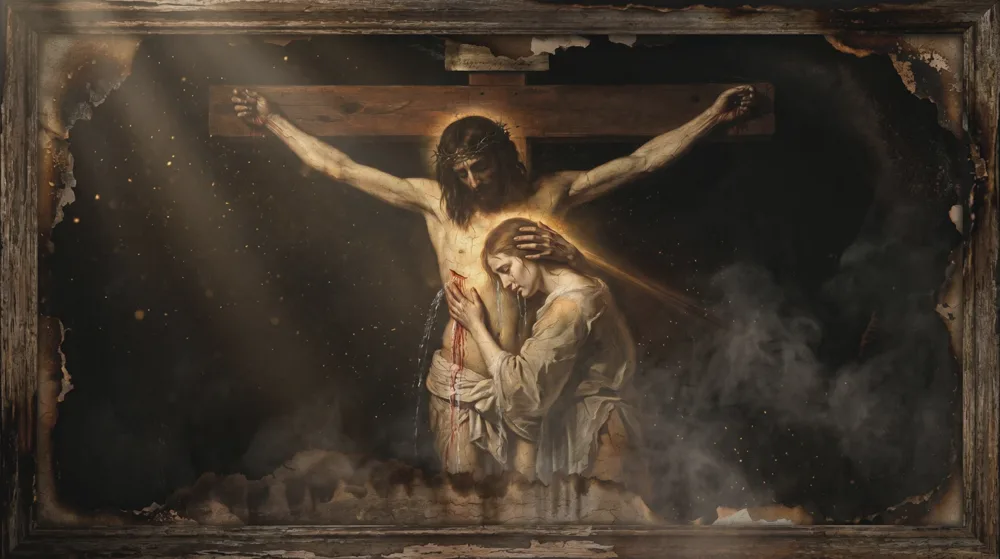
The Anima Christi — Latin for Soul of Christ — is a short prayer of devotion to the suffering Christ, addressed to Him present in the Blessed Sacrament and said especially in thanksgiving after Holy Communion. It opens with the words "Soul of Christ, sanctify me," and pleads, line by line, the whole mystery of His Passion: His soul, His Body, His Blood, the water from His side, His wounds. We here give the Anima Christi in English and in its traditional Latin form, and explain what it means and when to pray it.
The Anima Christi prayer in English
Soul of Christ, sanctify me.
Body of Christ, save me.
Blood of Christ, inebriate me.
Water from the side of Christ, wash me.
Passion of Christ, strengthen me.
O good Jesus, hear me.
Within Thy wounds hide me.
Suffer me not to be separated from Thee.
From the malicious enemy defend me.
In the hour of my death call me,
And bid me come unto Thee,
That with Thy Saints I may praise Thee
For ever and ever. Amen.
The Anima Christi in Latin
The prayer is far older than its most famous user, St Ignatius of Loyola, who placed it at the front of his Spiritual Exercises; it is found in manuscripts well before his birth, dating from the early fourteenth century. Its traditional Latin form is this:
Anima Christi, sanctifica me.
Corpus Christi, salva me.
Sanguis Christi, inebria me.
Aqua lateris Christi, lava me.
Passio Christi, conforta me.
O bone Iesu, exaudi me.
Intra tua vulnera absconde me.
Ne permittas me separari a te.
Ab hoste maligno defende me.
In hora mortis meae voca me,
Et iube me venire ad te,
Ut cum Sanctis tuis laudem te
In saecula saeculorum. Amen.
The USCCB / ICEL English wording
The English text above is the traditional rendering used in countless prayer books. A second, lightly modernised English version is the one circulated by the United States Conference of Catholic Bishops (USCCB) and broadcast on EWTN, which begins "Soul of Christ, sanctify me. Body of Christ, save me. Blood of Christ, inebriate me. Water from the side of Christ, wash me. Passion of Christ, strengthen me." The two differ only in small turns of phrase — "within your wounds hide me," "do not allow me to be separated from you," "from the malicious enemy defend me," "at the hour of my death call me and bid me come to you." Both translate the same Latin; either may be prayed.
The Anima Christi in Spanish (Alma de Cristo)
Because so many of the faithful pray the Anima Christi in Spanish, we give the traditional Castilian form, Alma de Cristo:
Alma de Cristo, santifícame.
Cuerpo de Cristo, sálvame.
Sangre de Cristo, embriágame.
Agua del costado de Cristo, lávame.
Pasión de Cristo, confórtame.
¡Oh, buen Jesús!, óyeme.
Dentro de tus llagas, escóndeme.
No permitas que me aparte de Ti.
Del enemigo maligno, defiéndeme.
En la hora de mi muerte, llámame.
Y mándame ir a Ti,
para que con tus santos te alabe,
por los siglos de los siglos. Amén.
This is the same prayer, line for line, as the Latin and the English: a thanksgiving to the whole Christ received in Holy Communion.
What the Anima Christi means
Every line of this prayer is built directly upon the doctrine of the Blessed Sacrament, which is why it belongs after Communion. The Catechism of St Pius X teaches that the Eucharist "contains truly, really, and substantially the Body, the Blood, the Soul, and the Divinity of Jesus Christ Our Lord, under the species of bread and wine, to be our spiritual food." When the communicant prays Soul of Christ, sanctify me. Body of Christ, save me. Blood of Christ, inebriate me, he is not naming abstractions: he is addressing the very Body, Blood, Soul, and Divinity he has just received. The whole Christ is within him, and the prayer speaks to that whole Christ, member by member.
"Soul of Christ, sanctify me. Body of Christ, save me." The Roman Catechism teaches that this Sacrament is "the spiritual Aliment which sustains our souls and repairs their strength," and that it "unites us to Jesus Christ, and makes us partakers of His flesh and of His divinity." To ask the Soul and Body of Christ to sanctify and save us is simply to ask that this union do in us what it was instituted to do. The same Catechism, with St John Damascene, adds that the Sacrament "draws us together, it unites us in Him, so as to make of us all but one body" — the reason it is called the Sacrament of Peace and of Charity.
"Blood of Christ, inebriate me. Water from the side of Christ, wash me." Here the prayer turns to Calvary. From the pierced side of the dead Christ flowed blood and water, and the Church has always read in them the price of our salvation and the cleansing of the soul. The Eucharist is the same Sacrifice made present; the Precious Blood we adore in the chalice is the Blood that ransomed us. To be "inebriated" by it is to ask that charity flood the soul to the point of forgetting self.
"Passion of Christ, strengthen me. Within Thy wounds hide me." The Roman Catechism observes that the Eucharist principally calls to mind a thing past — "the Passion of Our Lord Jesus Christ" — by His own command, Do this in remembrance of Me. The wounds of Christ are the refuge the prayer asks for. Against the assaults of "the malicious enemy," the soul does not trust its own strength; it hides in the open side of the Crucified.
"Suffer me not to be separated from Thee." This is the heart of the prayer and the heart of the Christian life. After Holy Communion, the Catechism of St Pius X teaches, "Jesus Christ remains in us by His grace as long as we do not sin mortally." To ask never to be separated from Him is to ask the gift of final perseverance — that the union begun at the altar be broken by nothing, least of all by our own sin.
"In the hour of my death call me… that with Thy Saints I may praise Thee." The prayer ends where every Communion points: heaven. The Eucharist received worthily is, the catechisms teach, a pledge of glory; the Sacrament carried to the dying is even called Viaticum, "because it sustains them in the journey which they make from this life to eternity." The Anima Christi gathers the Mass, the Cross, and our last hour into a single petition.
When to pray the Anima Christi
The Anima Christi is, before all else, a prayer of thanksgiving after Holy Communion. The Catechism of St Pius X is explicit that to communicate with devotion means "to make the preparation before holy Communion and the thanksgiving after," and that this thanksgiving "consists in remaining in recollection, honouring the presence of the Lord within us and renewing the acts of faith, hope, charity, adoration, thanksgiving, oblation, and petition." The Anima Christi does exactly this. It is best prayed quietly in the pew while Christ remains sacramentally present — that is, the Catechism teaches, "as long as the sacramental species are not consumed." We say it slowly, line by line, letting each invocation of His Body, Blood, Soul, and Passion be a true conversation with the Guest within.
To make that thanksgiving fruitful, the Communion that precedes it must be worthy. The catechism names the necessity of being in the state of grace, "pure of all mortal sin," and warns that whoever knows himself guilty of mortal sin "ought, before communicating, to make a good confession." A soul cleansed in the Sacrament of Penance comes to the altar rightly disposed; this is why the Eucharist and Confession belong together in the Catholic's life. The Anima Christi is also fitting outside Mass: before a crucifix, during a visit to the Blessed Sacrament, in time of temptation when we beg to be hidden in His wounds, and among the prayers we keep for the hour of death.
It sits naturally beside the great daily prayers of the Church. Many keep it with the Glory Be and the Hail Mary as part of their thanksgiving, or pray it after the Rosary and the Hail Holy Queen. However it is used, its end is always the same: that we be not separated from Him whom we have received.
The Anima Christi prayer card
Because it is short and is meant to be said quietly after Communion, the Anima Christi is one of the most common texts printed on a small holy prayer card — a card the faithful keep in a missal, a breviary, or a pocket and draw out at the altar rail. A traditional Anima Christi card carries the full text on one side, often with an image of the Sacred Heart, the pierced side of Christ, or the Crucifixion, and frequently the older indulgence notice beneath it. Keeping the card where it will be reached for is itself a small discipline: it turns the minutes after Communion, which are easily lost, into the thanksgiving the Church asks of us.
The Anima Christi in music: Marco Frisina and the chant settings
The Anima Christi has been set to music many times, from Gregorian chant to modern composition. The setting most searched for today is the one by Marco Frisina, the Italian priest and composer whose Anima Christi is widely sung at Communion in Italy and beyond; its gentle, flowing melody carries the Latin (and vernacular) text without obscuring it. Older settings exist too, including plainchant tones and a well-known eighteenth-century melody.
For those who wish to sing or play it, sheet music and piano arrangements of both the chant and the Frisina setting are readily available from Catholic music publishers and parish music repositories; when choosing one, prefer an edition that keeps the full text and serves the prayer rather than overwhelming it. A sung Anima Christi is still, first of all, a prayer of thanksgiving to the Christ just received.
Frequently Asked Questions
What does Anima Christi mean?
Anima Christi is Latin for "Soul of Christ," the opening words of the prayer: "Soul of Christ, sanctify me." The title names the first of the petitions, in which the soul addresses the very Body, Blood, Soul, and Divinity of Christ received in Holy Communion. Each line then pleads a part of His Passion — His Body, His Blood, the water from His side, His wounds — that He may sanctify, save, strengthen, and hide the one who prays.
Who wrote the Anima Christi?
The author is unknown. The prayer is far older than its most famous user, St Ignatius of Loyola, who placed it at the front of his Spiritual Exercises; it is found in manuscripts dating from the early fourteenth century, well before his birth. Tradition has long associated it with him only because of his recommendation, but he did not compose it.
Is the Anima Christi a prayer after Communion?
Yes — that is its primary use. The Anima Christi is a prayer of thanksgiving said after receiving Holy Communion, while Christ remains sacramentally present in the soul. It addresses the Body, Blood, Soul, and Divinity just received, which is why every line speaks to one part of Christ's person and Passion. It may also be prayed before a crucifix, during a visit to the Blessed Sacrament, or in time of temptation.
How do you say the Anima Christi in Spanish?
In Spanish the prayer is Alma de Cristo and begins "Alma de Cristo, santifícame. Cuerpo de Cristo, sálvame. Sangre de Cristo, embriágame." The full Castilian text is given above; it is identical, line for line, to the Latin and English forms.
What is the Latin of the Anima Christi?
The traditional Latin opens "Anima Christi, sanctifica me. Corpus Christi, salva me. Sanguis Christi, inebria me. Aqua lateris Christi, lava me. Passio Christi, conforta me." The complete Latin text is given above; the English "Soul of Christ, sanctify me" translates it directly.
Who composed the Anima Christi musical setting?
The most widely sung modern setting is by the Italian priest-composer Marco Frisina. Older musical forms exist as well, including Gregorian plainchant tones and an eighteenth-century melody. Sheet music and piano arrangements of both the chant and the Frisina setting are available from Catholic music publishers.
The Anima Christi asks for nothing the Blessed Sacrament does not already give. It only names, with the boldness of love, what Christ does in the soul that receives Him: sanctify, save, strengthen, hide, and at the last, call.
The Iter Fidei app serves the Anima Christi in Latin and in your own language, with audio to pray along — at the altar rail, before the tabernacle, or at the close of the day. Get the app link by email here.
Sources. Catechism of St Pius X, Part IV, ch. 4 (The Eucharist) — definition of the Sacrament; the effects of Holy Communion; dispositions for a worthy Communion; the thanksgiving after Communion; the duration of Christ's presence. Catechism of the Council of Trent (Roman Catechism), on the Holy Eucharist — the Sacrament as spiritual food that unites us to Christ and to one another, the Sacrament of Peace and Charity, the memorial of the Passion, and Viaticum.