
The Faith
What Does God Say About Laziness?
What does God say about laziness? Scripture condemns the sluggard, and the Church names sloth (acedia) among the seven capital sins. The remedy is diligence and fervour.
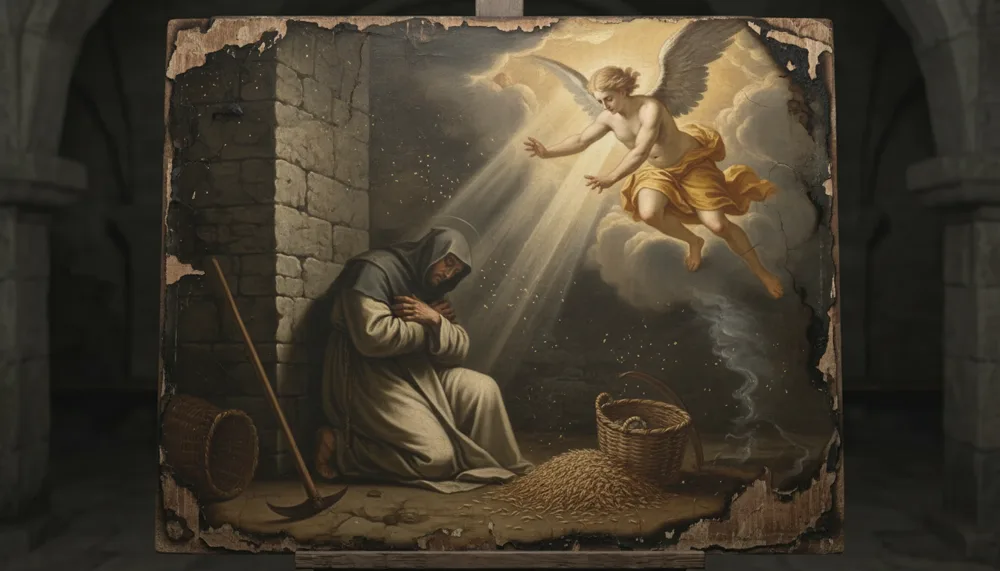
God condemns laziness plainly: "Go to the ant, O sluggard, and consider her ways, and learn wisdom" (Prov. vi. 6), and Saint Paul lays down the rule, "if any man will not work, neither let him eat" (2 Thess. iii. 10). What the Bible says about laziness is not a counsel of mere busyness but a warning against sloth — acedia — which the Church numbers among the seven capital sins. Laziness is a sin when it is the refusal of the work and the duties God has laid upon us, and its worst form is spiritual: a sadness and distaste in the face of the good, even of the things of God. This is one of the questions we answer in our series on what God says about the things that trouble men.
What does the Bible say about laziness
Scripture treats laziness with a sober severity. It does not condemn rest, which God Himself blessed, nor weariness, which is the lot of fallen man. It condemns the sluggard — the man who loves his ease above his duty. The book of Proverbs returns to him again and again: "Go to the ant, O sluggard, and consider her ways, and learn wisdom" (Prov. vi. 6). The ant, with no captain over her, "provideth her meat for herself in the summer" (Prov. vi. 8); the sluggard, with reason and law over him, will not.
The clearest picture is the slothful man's field: "behold it was all filled with nettles, and thorns had covered the face thereof, and the stone wall was broken down... And poverty shall come to thee as a runner" (Prov. xxiv. 31-34). Here is the doctrine in an image: laziness does not stand still. Where the soul is not cultivated by labour, thorns grow of themselves, and the wall that guarded it falls.
The New Testament makes the precept binding under Christ. Saint Paul commands the Thessalonians: "if any man will not work, neither let him eat. For we have heard there are some among you who walk disorderly, working not at all, but curiously meddling" (2 Thess. iii. 10-11). Idleness is no private failing; it breeds the meddling and disorder that trouble the whole body.
Is laziness a sin
Laziness is a sin, and the question deserves a plain answer rather than the flattering excuses our age prefers. Man was made for work. When God placed Adam in paradise, He placed him there "to dress it, and to keep it" (Gen. ii. 15) — work before the Fall, not only as its punishment. To this law the slothful man fails; he commits a sin, as Tanquerey teaches: sloth "springs from the love of pleasure inasmuch as it inclines us to avoid effort or discomfort," and the slothful man "wishes to avoid all hardship, all that can disturb his repose" (The Spiritual Life, n. 883).
But the Church distinguishes. Not every weariness is sloth. Genuine tiredness, sickness, the limits of the body, the lawful rest of the Lord's Day — these are not sins but the conditions of a creature. Sloth is of the will: the settled refusal to do what one's state requires, the choice of ease over duty. As with anger and the other passions, the fault lies not in feeling the pull of the lesser effort, but in yielding to it against what God asks. This is why an honest examination of conscience asks not only "what did I do" but "what did I leave undone that I owed."
Sloth in the Bible: acedia, a capital sin
When laziness reaches the things of God, it has its proper name: sloth, acedia, one of the capital sins. The Catechism of Saint Pius X teaches that "one triumphs over sloth by diligence and fervour in the service of God," and that these vices are called capital "because they are the source and the cause of many other vices and sins" (Catechism of Saint Pius X, On the Capital Sins). Sloth is capital because it fathers a whole brood: negligence in prayer, the shortening and then the omitting of duty, and at last that coldness toward God which Scripture loathes above open sin.
Tanquerey is exact: when sloth "bears upon the exercises of piety, it is called spiritual sloth; it is a certain disgust for spiritual things, which leads one to perform them negligently, to shorten them, and even sometimes to omit them under vain pretexts. It is the mother of tepidity" (The Spiritual Life, nn. 883ff). Acedia is not yawning at Mass after a hard day's labour; it is a sadness in the face of the good — the soul shrinking from God as from a burden.
Against this God speaks His sharpest word. To the lukewarm He says: "because thou art lukewarm, and neither cold, nor hot, I will begin to vomit thee out of my mouth" (Apoc. iii. 16). There is no tepidity in heaven. The slothful soul that will not be roused is in graver peril than the sinner who at least burns, for it has made peace with mediocrity and calls its sleep "rest" — the slow cooling of fervour that asks nothing of a man, only that he do less and less, until he does nothing at all.
What does God say about not taking action
There is a laziness that hides behind devotion itself — the man who will pray but not work, who waits on God for what God has given him hands to do. Scripture cuts this off. "Faith without works is dead" (James ii. 26), and the parable of the talents shows what God says about not taking action: the servant who buried his one talent, harming no one and taking no risk, is condemned as "wicked and slothful" and cast "into the exterior darkness" (Matt. xxv. 26, 30). He did not squander; he did nothing. And doing nothing, when God has given arms, a mind, and a duty, is itself the offence.
Tanquerey presses the point against every excuse: "Let no one say, I am rich, I have no need to work. If you have no need to work for yourselves, you must do so for others." God gives a man strength and resources "in order that you may use them for His glory and the good of your brethren" — and good works never lack: "how many poor to relieve, how many ignorant to instruct" (The Spiritual Life, n. 883).
The father who provides for his household, the labourer who does his task well, the soul who keeps its hours of prayer: each refuses sloth by the daily act of taking up the duty in front of him. Our Lord's word stands over every idle hour: "What do you here all the day idle? ... Go you also into my vineyard" (Matt. xx. 6-7).
The remedy: diligence, fervour, the duty of one's state
The Church never names a vice without setting a virtue against it. Over sloth she sets diligence and fervour in the service of God (Catechism of Saint Pius X, On the Capital Sins). The remedy is not frenzy but faithfulness: to do the next duty, and the one after it, with a willing heart, rather than letting the soul go cold. The cure for a man who shrinks from effort is to make the effort, in small things first, until the will is bent the right way as surely as sloth had bent it the wrong way.
This is the ordinary path of spiritual combat: rising at the appointed hour, keeping the meditation we are tempted to shorten, finishing the task we would abandon. Where tepidity has crept in, the soul is brought back through confession, where the grudging negligences and omitted duties are named and loosed. The same diligence guards the vocation of marriage and the family, where the labour of providing is itself a school of virtue. The man who knows his own worth before God — see what God says about you — does not waste the gifts entrusted to him, but trades with them, that he may hear at the last: "Well done, good and faithful servant" (Matt. xxv. 21).
Conclusion
God does not condemn rest; He condemns the sluggard who lets his field go to thorns and the lukewarm soul that finds His service a burden. Laziness is a sin when it is the refusal of duty, and sloth — acedia — is among the capital sins because it breeds tepidity and ends in coldness toward God. Against it stands diligence: the faithful, unglamorous doing of the work and the prayer that one's state requires. "Go to the ant, O sluggard" (Prov. vi. 6) — and take up, today, the duty in front of you.
Frequently Asked Questions
What does God say about laziness?
God condemns laziness through the sluggard of Proverbs: "Go to the ant, O sluggard, and consider her ways, and learn wisdom" (Prov. vi. 6), and through Saint Paul's rule, "if any man will not work, neither let him eat" (2 Thess. iii. 10). He does not condemn rest, which He blessed, but the refusal of the work and duty He has laid upon us. Its worst form is spiritual sloth — acedia — a sadness in the face of the good, even the things of God.
Is laziness a sin?
Yes. Man was made for work: God placed Adam in paradise "to dress it, and to keep it" (Gen. ii. 15), work before the Fall, not only as its punishment. Sloth is a sin of the will — the settled choice of ease over duty — though genuine tiredness, sickness, and the lawful rest of the Lord's Day are not sins but the conditions of a creature.
What is the sin of sloth (acedia)?
Sloth, or acedia, is one of the seven capital sins. It is "a certain disgust for spiritual things, which leads one to perform them negligently, to shorten them, and even sometimes to omit them under vain pretexts" (Tanquerey, The Spiritual Life, n. 883). It is capital because it fathers a whole brood of other sins, and it is "the mother of tepidity."
Why is sloth a capital sin?
The Catechism of Saint Pius X teaches that the capital sins are so named "because they are the source and the cause of many other vices and sins." Sloth breeds negligence in prayer, the shortening and then omitting of duty, and at last that coldness toward God which Scripture loathes above open sin.
What does the Bible say about not taking action?
Scripture condemns inaction where God has given the means to act: "Faith without works is dead" (James ii. 26). In the parable of the talents, the servant who buried his one talent — harming no one, taking no risk — is condemned as "wicked and slothful" and cast "into the exterior darkness" (Matt. xxv. 26, 30). Doing nothing, when God has given arms, a mind, and a duty, is itself the offence.
What is the Catholic remedy for laziness?
The Church sets diligence and fervour in the service of God against sloth (Catechism of Saint Pius X, On the Capital Sins). The cure is not frenzy but faithfulness: doing the next duty, and the one after it, with a willing heart — rising at the appointed hour, keeping the meditation we are tempted to shorten, finishing the task we would abandon. Where tepidity has crept in, the soul is restored through confession, where omitted duties are named and loosed.
Why does God hate lukewarmness?
To the lukewarm God speaks His sharpest word: "because thou art lukewarm, and neither cold, nor hot, I will begin to vomit thee out of my mouth" (Apoc. iii. 16). The slothful soul that will not be roused is in graver peril than the open sinner, for it has made peace with mediocrity and calls its sleep "rest" — the slow cooling of fervour until a man does nothing at all.
The Iter Fidei app carries the Douay-Rheims Bible, the catechism, and the prayers of the Church. Get the app link by email here.
Sources. Douay-Rheims Bible: Proverbs vi. 6, 8; Proverbs xxiv. 31-34; Genesis ii. 15; 2 Thessalonians iii. 10-11; James ii. 26; Matthew xx. 6-7; Matthew xxv. 21, 26, 30; Apocalypse iii. 15-16. Catechism of Saint Pius X (1908), On the Capital Sins (Part V, Chapter 6). A. Tanquerey, The Spiritual Life (Précis de théologie ascétique et mystique), nn. 883ff, on sloth, spiritual sloth, and tepidity.