
News
Emma Bonino, Italy's abortion champion, dies at 78
Emma Bonino, architect of the legalisation of abortion in Italy and a public friend of Pope Francis, has died at 78; tradition measures her against the fifth commandment.
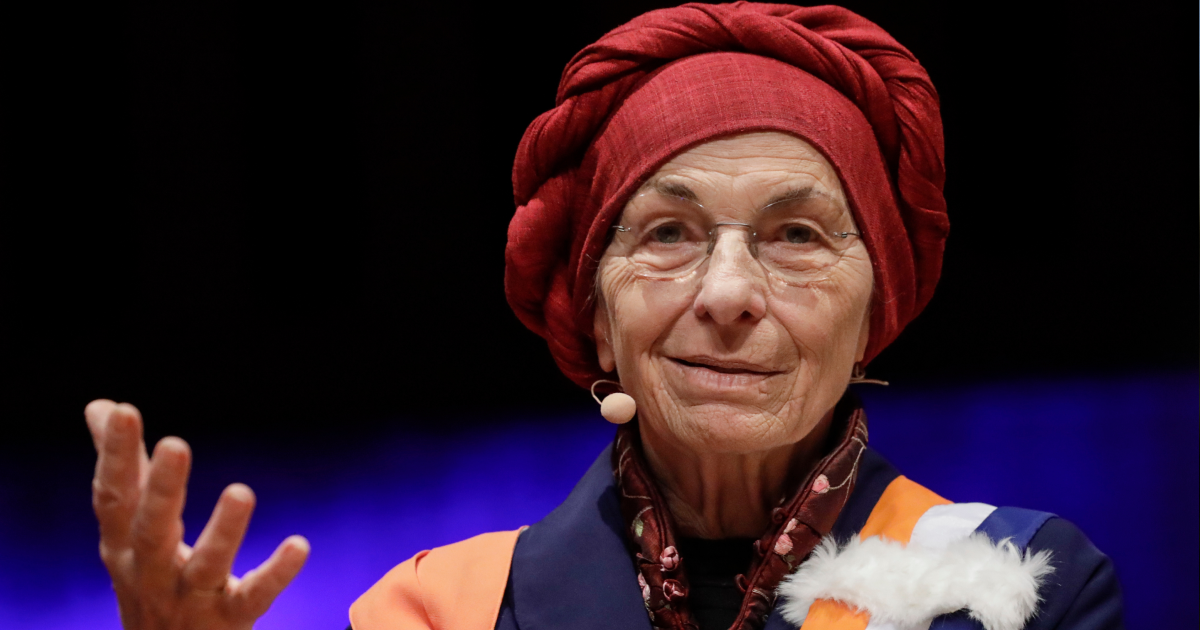
Emma Bonino has died at the age of 78. A leading figure of the Italian Radical Party, in the 1970s she led the campaigns that legalised first divorce and then abortion, in an Italy still overwhelmingly Catholic and against the opposition of the Vatican; the Italian law permitting abortion was passed in 1978. The exact date of her death remains uncertain: some place it on Friday 11 September 2026, the day her party +Europa announced it, others on the day after.
At twenty-seven she had herself undergone a clandestine abortion; in 1975 she founded the Information Centre on Sterilisation and Abortion (CISA), the country's principal abortion lobby before the 1978 law. The figures attached to her name exceed ten thousand: by one account, she personally professed to having been involved in more than 10,100 abortions; by another, it was the organisation she had founded that claimed more than ten thousand. She never recanted her position, neither on abortion nor on euthanasia.
Pope Francis maintained a public friendship with her: a first meeting in June 2013, a personal invitation to an audience in May 2015, a visit to her home in November 2024 after she left hospital. In 2016 he called her "among the greats of Italy today [...] the person who knows Africa best"; in 2022, "I do not share her ideas, but she knows Africa better than anyone. Before this woman, I say: hats off." Bonino herself reported that Francis had confided to her: "I am old and near death, but you are young: hurry and get well, and carry forward our ideas." Voices opposed to abortion feared that these gestures might appear to endorse her causes, she who had never changed sides.
What the Church has always taught
The fifth commandment is without appeal: "Thou shalt not kill" (Ex 20:13). The Catechism of the Council of Trent, explaining this precept, teaches that these words absolutely forbid homicide, that the Law was given to guard the life of the innocent, and that no human design or law can make it lawful to take the life of one who has committed no crime. Long before it, the Didache, the most ancient Christian discipline, already counted this prohibition among the first: "thou shalt not murder a child by abortion." And in 1930 Pius XI, in the encyclical Casti Connubii, expressly ranked abortion among the killings of the innocent, whatever motive might be invoked.
The measure
Measured by this rule, a whole life devoted to tearing down the protections of the unborn child, and claimed to the end without repentance, stands entirely on the side that the law of God condemns. The number itself, more than ten thousand, is not a statistic: it is as many innocents as the fifth commandment defended.
As for the friendship on display, the reported words are those of a man, not an act of the Church: it was Francis who, personally, said "hats off" and spoke of "our ideas." But to honour publicly, without a word calling for conversion, the woman who made abortion her life's work, is to run the risk of what tradition calls scandal: "Woe to the world because of scandals" (Mt 18:7). The faithful need not judge the soul of the deceased, whom God alone knows; it falls to them not to confuse the esteem borne to a person with approval of her works, and to hold firm what the Church has always taught: the life of the innocent is not negotiable.
Sources. Sacred Scripture: "Thou shalt not kill" (Exodus 20:13, Douay-Rheims from the Vulgate), and "Woe to the world because of scandals" (Matthew 18:7); the Didache, or Teaching of the Twelve Apostles (first century), which forbids the murder of a child by abortion; the Catechism of the Council of Trent (1566), on the fifth commandment; Pius XI, encyclical Casti Connubii (1930), on abortion as the killing of the innocent.