
News
Leo XIV asks priests for fidelity to the rubrics of the Paul VI Mass
Leo XIV asks priests for fidelity to the approved texts of the Mass and respect for the rites of Paul VI and John Paul II; we measure it against the Tridentine teaching on the ceremonies of the holy sacrifice.
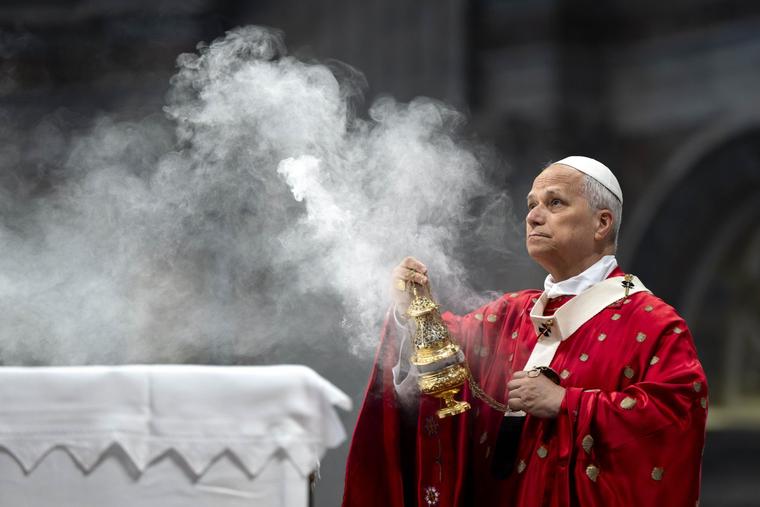
On August 14, 2026, Pope Leo XIV made public a letter addressed to Cardinal Arthur Roche, prefect of the Dicastery for Divine Worship and the Discipline of the Sacraments. Sent on the occasion of a liturgical formation session held from August 14 to 19 at Mount Angel Abbey, in Saint Benedict, Oregon, gathering cardinals, bishops and laypeople, the letter asks priests to remain faithful to the approved texts and instructions of the Mass and to receive the formation needed to celebrate the sacred mysteries with dignity.
"In order to promote the dignified celebration of the sacred mysteries, we must emphasize the need for fidelity to the approved texts and instructions," the pope writes. He adds that he has "called attention to the respect that all those called to prepare the celebration of the divine mysteries, and priests in particular, must show toward the rites promulgated by Pope Saint Paul VI and Pope Saint John Paul II." And he holds that, through proper education and reverent worship, Catholics will be "formed both for the liturgy and by the liturgy."
The pope stresses that every Sunday Mass is a concrete occasion of formation, and that the ars celebrandi engages the whole assembly, not the celebrant alone. The dicastery, for its part, states that the meeting intends to "continue the path traced by Sacrosanctum Concilium" and pertains to spiritual discernment rather than scholarly study. In his text, the pope draws exclusively on writings later than the Council, citing in particular the 2022 apostolic letter Desiderio desideravi.
The reading of this letter is disputed. On a first reading, it is a simple reminder of fidelity to the rubrics and of liturgical formation, in continuity with the conciliar constitution on the liturgy. On another, it is the signal that the pope does not intend to walk back the restrictions imposed on the Mass prior to the reform. The prefect of the dicastery said as much in an interview: "Pope Leo will not change Traditionis custodes, and he will not go back to Summorum pontificum." These are the words of a prefect, an expectation voiced in an interview, not a decree: no formal act has been promulgated to that effect, and the text itself is variously dated according to the reports.
What tradition teaches about the rites of the Mass
The Catechism of the Council of Trent, in the chapter on the holy sacrifice of the Mass, teaches that "this sacrifice is accompanied by ceremonies imposing and majestic." It specifies that not one of them "can be regarded as useless and superfluous," all having for their object "to make the majesty of so great a Sacrifice shine forth the more" and to lead the faithful, by these signs which strike the sight, to the contemplation of the hidden mysteries. The reverence due to the rite, fidelity to the fixed prayers, the refusal of the celebrant's arbitrariness: these are principles the Church has always held. The priest does not own the liturgy; he receives it and serves it.
The measure
In principle, the call to fidelity and dignity stands. To recall that the celebration is not the priest's private property, to require reverence and exactness, to refuse improvisation: this accords fully with the Tridentine teaching on the ceremonies of the holy sacrifice, and it must be acknowledged wherever it is heard.
The difficulty lies elsewhere. In his letter, the pope measures fidelity only against the reformed books and draws exclusively on texts later than the Council. Tradition, for its part, measures the fidelity of a rite by what the Church has always offered, and not by the approved book of the moment. There is the tension: reverence and fidelity are rightly recalled, even as the rites of 1969 are defended and, on one reading, the Roman rite the Church celebrated for centuries is kept under restriction. We pronounce nothing on the man or on his office; we note where the principle meets tradition and where the act departs from it, and we hold as decided only what an act has actually decided.
What the faithful should take from it
The lesson is twofold. Reverence, fidelity to the rite, the horror of liturgical arbitrariness are Catholic demands, and one may rejoice in them. But the measure of every rite remains the sacrifice the Church has always offered, not the usage of the day. We hold to the faith and the worship as the Church has always handed them down, without clamor and without rupture.
Sources. Catechism of the Council of Trent (1566), chapter on the holy sacrifice of the Mass, section on the ceremonies of the Mass.