
News
Nepal: a glacier collapses, at least 165 dead and a thousand missing
A glacier collapse on the Nepal-Tibet border unleashed a deadly flood: at least 165 dead and about a thousand missing, most of them pilgrims and tourists.
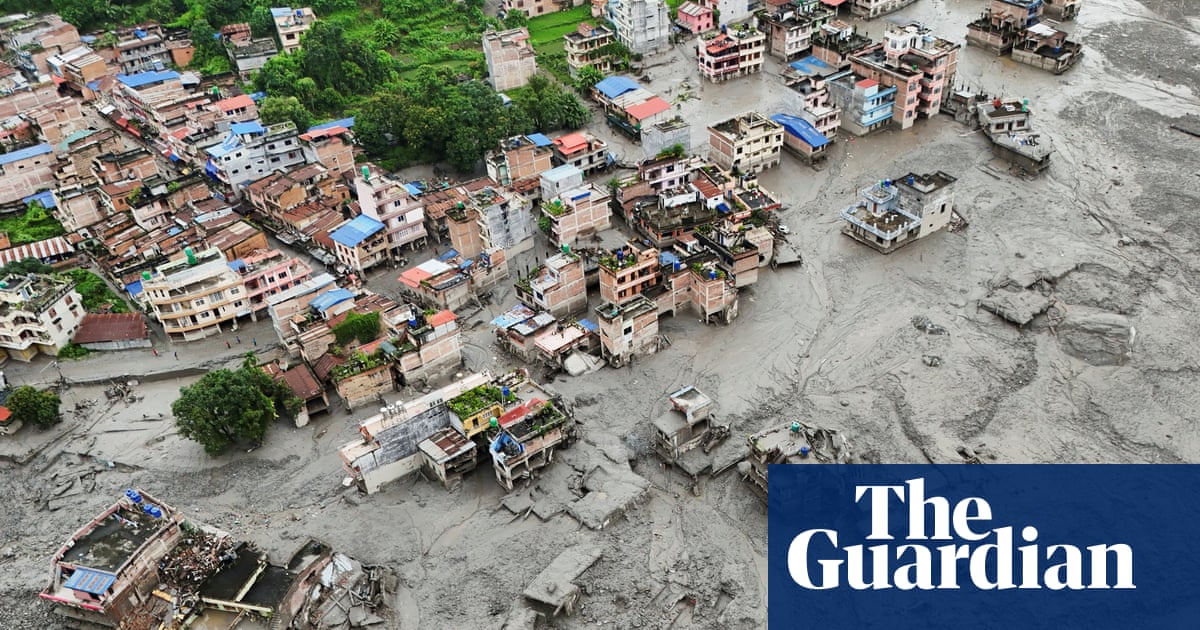
On Wednesday 26 August 2026, the collapse of a glacier, ice and rock together, on the border dividing Nepal from Tibet sent a flood of debris crashing down the Lhende river, some twenty kilometres north-east of the Rasuwagadhi frontier post. The torrent ravaged the districts of Rasuwa and Nuwakot: at least 165 bodies were pulled out before the day was over. Whole villages were swept away, trucks overturned, houses, roads and hydroelectric works destroyed.
The count of the missing remains uncertain and may overlap from one side to the other. On the Nepalese side, between 800 and 826 people are reported missing, nearly 600 of them foreigners; on the Tibetan side, the Chinese authorities report at least 558 missing and three confirmed dead. Depending on the tally, the total runs between “a thousand” and close to 1,500. Many were pilgrims on their way to Kailash-Mansarovar, a Himalayan height venerated by Hindus and Buddhists; among the tourists being searched for are Indian, American, British, Australian and Canadian nationals.
What was first announced as a magnitude 4.4 earthquake was in fact the tremor produced by the collapse itself: the American geological service established that “no earthquake had taken place.”
The measure of tradition
Nothing announced the hour. A slope of ice held for centuries gives way in an instant, and hundreds of lives are taken before a cry can rise. Scripture knows no other law for man: “Boast not for to morrow, for thou knowest not what the day to come may bring forth” (Proverbs, XXVII). And the Saviour, without detour: “Watch ye therefore, because you know not the day nor the hour” (St Matthew, XXV).
Death is certain, its hour hidden. The Church teaches this not to frighten, but to keep the soul ready: “In all thy works remember thy last end, and thou shalt never sin” (Ecclesiasticus, VII). The Catechism of the Council of Trent recalls that death is the penalty of sin, and that no mountain, no shelter, no journey puts man beyond the reach of the judgment that follows it.
The lesson of mourning
We do not weigh the lot of these souls: that belongs to God alone. But we say what the disaster lays bare. These crowds were climbing toward a summit held sacred by cults that are not the faith; yet man's safety is never in the place where he walks, but in the state in which death finds him. A pilgrimage saves only if it leads to the true God, and the sole refuge against the unforeseen hour remains grace, received and kept before it comes.
Let the faithful, before so many dead, draw the one useful lesson: to pray for the departed, to keep his own lamp lit, to put off to no tomorrow his reconciliation with God. For no man knows the day nor the hour.
Sources. Proverbs, XXVII, 1; St Matthew, XXV, 13; Ecclesiasticus, VII, 40 (Douay-Rheims, from the Vulgate). Catechism of the Council of Trent (1566), on the fifth commandment and on death as the penalty of sin.