
Novenas
Novena to St Francis Xavier
The Novena of Grace to St Francis Xavier — the full prayer, its March 4-12 dates and the December feast, the promise reported at Naples in 1633, and why it is called the novena of grace.
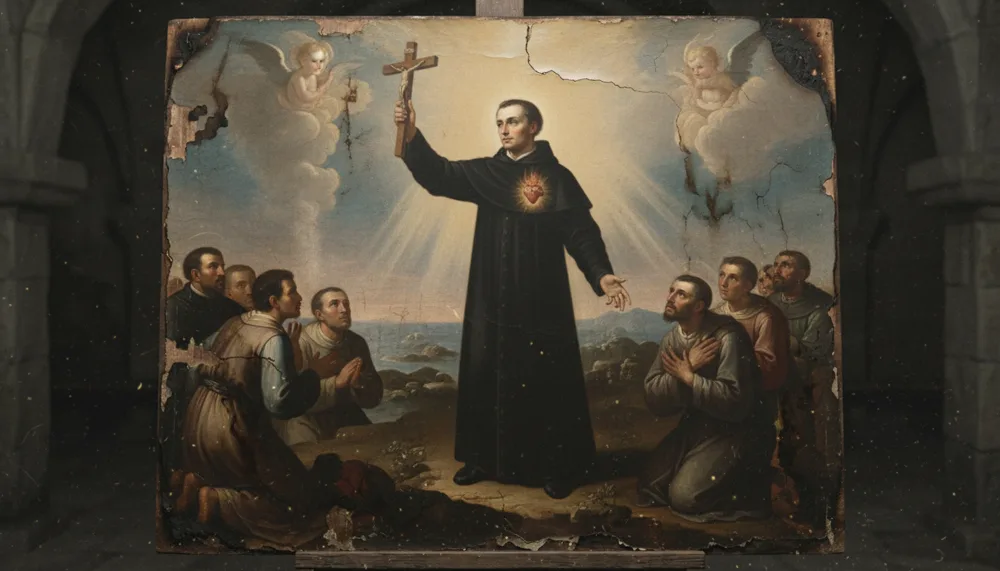
The novena to St Francis Xavier is the famous Novena of Grace, nine days of prayer to the great Jesuit missionary of the Indies, asking through his powerful intercession for the grace of living and dying in the state of grace and for one particular favour named throughout. It is commonly kept from 4 to 12 March, ending on the anniversary of his canonization, and again in the nine days before his feast on 3 December; on one of the nine days the devout receive Confession and Holy Communion. Below is the full authentic prayer, the promise from which the novena takes its name, and the life of the saint who made it.
The Novena of Grace: the full prayer
The Novena of Grace is one prayer, said once on each of the nine days, with your petition named where indicated. It is a devotional prayer of the Jesuit prayer-books, not a liturgical text, and we cannot cite an exact reference for an approval of its own. Cross-checked against the Jesuit form, the prayer runs:
O most amiable and most loving Saint Francis Xavier, in union with thee I reverently adore the Divine Majesty. I rejoice exceedingly on account of the marvellous gifts which God bestowed upon thee. I thank God for the special graces He gave thee during thy life on earth, and for the great glory that came to thee after thy death. I implore thee to obtain for me, through thy powerful intercession, the greatest of all blessings — that of living and dying in the state of grace. I also beg of thee to secure for me the special favour I ask in this novena.
(Here name the grace you desire.)
But if what I ask is not for the glory of God and the good of my soul, do thou, I beseech thee, obtain for me what is more conducive to both. Amen.
The prayer is then followed by these acts, in memory of the saint and of his devotion to the Holy Trinity:
Our Father (three times), and Hail Mary (three times), in memory of St Francis Xavier's devotion to the Most Holy Trinity.
Glory be to the Father (ten times), in thanksgiving for the graces bestowed upon the saint during the years of his apostolate.
It closes with a versicle and the collect of his feast in the Roman Missal (3 December, a feast of the third class in 1962):
V. Pray for us, Saint Francis Xavier.
R. That we may be made worthy of the promises of Christ.Let us pray. O God, who didst vouchsafe, by the preaching and the miracles of Saint Francis Xavier, to join unto Thy Church the nations of the Indies: grant, we beseech Thee, that we who reverence his glorious merits may also imitate the example of his virtues; through Christ our Lord. Amen.
That is the whole of the daily devotion. It is short, and it is meant to be said with attention rather than haste. If you are new to these nine-day prayers, see our guide to what is a novena; for the friend and founder at whose side St Francis was formed, see St Ignatius of Loyola.
Why it is called the "Novena of Grace"
The name comes from a promise. In 1633, at Naples, a young Jesuit named Father Marcello Mastrilli lay dying, his skull crushed by a falling hammer during the festival of the Immaculate Conception. St Francis Xavier appeared to him, healed him, and — according to the account Mastrilli gave — made this promise: that all who would implore his help for nine consecutive days, from the 4th to the 12th of March, and who would worthily receive the Sacraments of Penance and Holy Communion on one of those days, should experience his protection and might hope with entire confidence to obtain from God any grace they asked that was for the good of their souls and the glory of God.
Restored to health, Mastrilli went out to the missions of the East, and was martyred in Japan in 1637 — the very field St Francis had opened. The nine days he taught spread through the Church and became the Novena of Grace, kept above all in the days closing on 12 March, the date on which Gregory XV canonized St Francis Xavier in 1622. This is a devotion of the Church's living tradition, sober and confident: it does not compel God, but it leans on the plain promise of a saint whose intercession has been proved for four centuries. Because it is asked "if it be for the glory of God and the good of my soul," it never truly returns empty, in the manner of the Novena to St Jude for desperate causes.
When to pray the novena — the start date
There are two usual times, and you may keep either.
- 4 to 12 March — the classic Novena of Grace, ending on the anniversary of his canonization (12 March 1622). This is the start date most people mean when they ask for it: begin on the 4th, pray through the 12th.
- 25 November to 3 December — the nine days ending on his feast of 3 December, kept especially in Goa and in mission churches the world over.
In truth the Novena of Grace may be prayed at any time of year and for any worthy need; the promise is not limited to March in its substance, though March is its proper and most graced season. What matters is the nine consecutive days, the one intention held throughout, and — where you are able — the reception of Confession and Communion on one of the nine days, as the promise itself asks.
The Novena of Grace at Old Goa
Nowhere is this novena kept with more fervour than at Old Goa, where the incorrupt body of St Francis Xavier rests in the Basilica of Bom Jesus. Ten weeks after his lonely death on the island of Sancian, his grave was opened and his body found whole and fresh; it was borne to Malacca and at last to Goa, where it remains to this day, drawing pilgrims from across India and beyond. The nine days before the 3 December feast are a great mission-tide there, prayed in Konkani, in Malayalam, and in English, with the same trust that the Goencho Saib — "the Lord of Goa," as the Konkani faithful call him — will obtain the graces his children ask. Wherever you pray it, in whatever tongue, it is the same novena and the same intercessor.
Praying it for a particular intention
The Novena of Grace is by design a novena for one specific favour. Where the prayer says (Here name the grace you desire), name your need plainly — a healing, a conversion, work, a marriage, the return of a straying soul, guidance in a hard choice. The saint who crossed the seas for the salvation of strangers is not deaf to the smaller crossings of your own life. Hold the same intention through all nine days; do not change it midway. And keep the prayer's own condition in your heart: that if the thing you ask is not truly for God's glory and your soul's good, you would rather have what is. This is not a loophole but the very disposition that makes the prayer safe to say.
The novena for a holy life and a happy death
Notice that the petition for the special favour is second in the prayer. The first and greatest grace asked is "that of living and dying in the state of grace" — a holy life and a happy death. This is the deep purpose of the whole devotion, and the reason it is fittingly prayed even when we have no particular earthly need. St Francis himself, worn out at forty-six on a bare island within sight of the China he longed to enter, died with the name of Jesus on his lips and a candle in his hand: a missionary's happy death. To ask his help for our own last hour is among the surest uses of this novena — joined, as the dying have long joined it, to the patronage of St Joseph, patron of a happy death.
A note for those who want a printed copy
The full text you need for a printable sheet or PDF is given complete above: the daily prayer, the three Our Fathers and Hail Marys, the ten Glory Bes, and the versicle and collect. That is the entire novena — copy it out, keep it by you for the nine days, and name your intention each time. The Iter Fidei app also carries the devotion in Latin and English with audio and day-by-day reminders, so it can be prayed from a phone without a paper sheet.
How to pray this novena
A novena is measured by the soul that prays it, not by the count of its words. To keep the Novena of Grace well:
- Choose your nine days. Begin on 4 March (ending the 12th) or on 25 November (ending 3 December), or any nine consecutive days when a real need presses.
- Name one intention and hold it through all nine days.
- Say the prayer once each day — the invocation, the three Our Fathers and Hail Marys, the ten Glory Bes, the versicle and collect — unhurried, at a fixed hour if you can.
- Receive the Sacraments of Penance and Holy Communion on one of the nine days, as the promise given to Father Mastrilli asks. This, more than anything, is the heart of the devotion.
- Ask in submission — if it be for the glory of God and the good of my soul. Then wait in trust, content with the favour you named or the better thing God sends instead.
Who is St Francis Xavier?
St Francis Xavier (1506-1552) is one of the greatest missionaries in the history of the Church, the Apostle of the Indies and of Japan, and the patron of foreign missions. He was born at the castle of Xavier in Spanish Navarre, near Pamplona, the youngest of a large family, his mother-tongue Basque. Sent to study at the University of Paris at eighteen, he there met a fellow Basque, St Ignatius Loyola, whose patient question — "What doth it profit a man to gain the whole world, and lose his own soul?" — at last conquered the ambitious young scholar. Francis was one of the first seven companions who vowed themselves to God at Montmartre in 1534, and so among the first Jesuits.
Ordained at Venice, he was sent in 1540 as the very first missionary of the young Society of Jesus to the East Indies, and constituted apostolic nuncio by the Pope. After a thirteen-month voyage he reached Goa in 1542. From there, for eleven tireless years, he laboured up and down the East: among the Paravas of the Pearl Fishery coast, whom he baptized in such multitudes that his arms failed him from the labour; in Travancore, in Malacca, in the Molucca islands; and at last in Japan, which he entered in 1549 and of whose people he wrote that "among all unbelievers, no finer people will be found."
He came before every people as one of themselves — living on rice and water, sleeping on the ground, ringing a bell through the streets to gather the children and slaves to catechism, and setting the truths of the Faith to popular tunes so that they were sung in the fields and workshops.
Longing to enter the closed empire of China, he sailed in 1552 for its coast, but was left stranded on the desolate island of Sancian, half a dozen miles offshore, when the merchant hired to smuggle him in never came. There he fell into a fever, was abandoned on the sands by sailors who feared to offend their master, and died in a poor hut in the early morning of 3 December 1552, aged only forty-six, with the name of Jesus on his lips.
His body, packed in lime, was found incorrupt ten weeks later, and rests to this day at Old Goa. He was canonized by Pope Gregory XV on 12 March 1622, together with St Ignatius; his feast is kept on 3 December. For his devotion to the Trinity the novena repeats its acts three by three; for the ten years of his apostolate, ten times it gives glory to God.
Frequently Asked Questions
When do you pray the Novena of Grace?
The classic dates are 4 to 12 March, ending on the anniversary of the saint's canonization (12 March 1622); begin on the 4th and pray through the 12th. It is also kept from 25 November to 3 December, the nine days ending on his feast of 3 December. In substance it may be prayed at any time of year for any worthy need, but March is its proper and most graced season.
Why is it called the "Novena of Grace"?
Because of a promise. In 1633 at Naples, according to the account he gave, St Francis Xavier appeared to a dying Jesuit, Father Marcello Mastrilli, healed him, and promised that all who implored his help for nine days, from the 4th to the 12th of March, and worthily received the Sacraments on one of them, might hope with confidence to obtain from God any grace for the good of their soul and the glory of God. From that promise of grace the novena takes its name.
What is St Francis Xavier the patron saint of?
He is the patron of foreign missions and of all works for the spreading of the Faith, so declared in honour of his labours as the Apostle of the Indies and of Japan. He is also invoked as a patron of Goa and of India, of navigators and travellers, and, with St Thérèse of Lisieux, is honoured as a principal patron of the Church's missions — see our Novena to St Thérèse of Lisieux.
When is the feast of St Francis Xavier?
His feast is kept on 3 December, the day of his death on the island of Sancian in 1552. In Goa, where his incorrupt body rests at the Basilica of Bom Jesus, the feast is a great pilgrimage, kept with the nine days of novena from 25 November through the feast itself.
Do I have to receive Communion during the novena?
The promise given to Father Mastrilli asks that one receive the Sacraments of Penance and Holy Communion on one of the nine days — not all nine. This is the heart of the devotion and should not be omitted where you are able; a novena of grace is above all a return to the state of grace. If circumstances truly prevent it, pray the nine days in trust and receive the Sacraments as soon as you can.
Is the novena the same in Konkani, Malayalam, and English?
Yes. The Novena of Grace is prayed across the world and in many tongues — in Konkani and Malayalam in India, in Portuguese, in English, and in Latin. The language changes; the prayer, the promise, and the intercessor do not. Pray it in the tongue of your own heart.
Are there daily meditations for each of the nine days?
The Novena of Grace is a single prayer repeated on each of the nine days, without distinct daily meditations — its power lies in the constancy of one petition faithfully held. Some later editions add a short daily meditation on an episode of the saint's life; these are a help, not a requirement. The essential novena is the prayer given above, said nine days running.
Pray this novena with day-by-day reminders and audio in the Iter Fidei app — the Novena of Grace and its collect, in Latin and your own language. Join early access here.
Sources. The devotional Novena of Grace prayer to St Francis Xavier (O most amiable and most loving Saint Francis Xavier), with its versicle and collect O God, who didst vouchsafe by the preaching and miracles of Saint Francis Xavier, as carried in Jesuit prayer-books; the promise made to Father Marcello Mastrilli, S.J. (Naples, 1633); the life of the saint from Butler's Lives of the Saints (December 3); Matthew 16:26; the canonization of St Francis Xavier by Pope Gregory XV, 12 March 1622.